Kathleen Alcott - Infinite Home
Здесь есть возможность читать онлайн «Kathleen Alcott - Infinite Home» весь текст электронной книги совершенно бесплатно (целиком полную версию без сокращений). В некоторых случаях можно слушать аудио, скачать через торрент в формате fb2 и присутствует краткое содержание. Год выпуска: 2015, Издательство: Riverhead Books, Жанр: Современная проза, на английском языке. Описание произведения, (предисловие) а так же отзывы посетителей доступны на портале библиотеки ЛибКат.
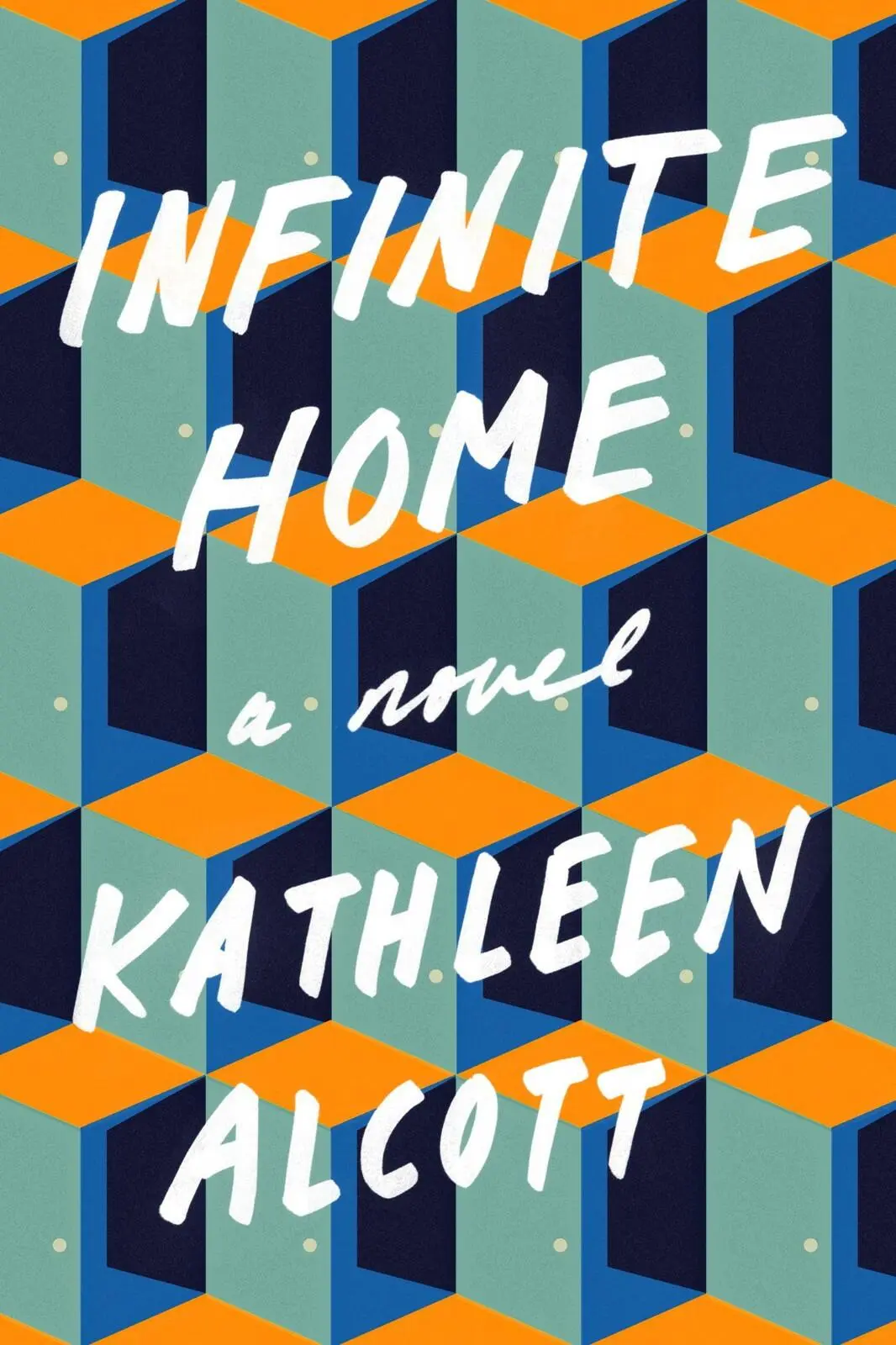
- Название:Infinite Home
- Автор:
- Издательство:Riverhead Books
- Жанр:
- Год:2015
- ISBN:нет данных
- Рейтинг книги:5 / 5. Голосов: 1
-
Избранное:Добавить в избранное
- Отзывы:
-
Ваша оценка:
Infinite Home: краткое содержание, описание и аннотация
Предлагаем к чтению аннотацию, описание, краткое содержание или предисловие (зависит от того, что написал сам автор книги «Infinite Home»). Если вы не нашли необходимую информацию о книге — напишите в комментариях, мы постараемся отыскать её.
Faced with eviction by Owen and his designs on the building, the tenants — Paulie, an unusually disabled man and his burdened sister, Claudia; Edward, a misanthropic stand-up comic; Adeleine, a beautiful agoraphobe; Thomas, a young artist recovering from a stroke — must find in one another what the world has not yet offered or has taken from them: family, respite, security, worth, love.
The threat to their home scatters them far from where they’ve begun, to an ascetic commune in Northern California, the motel rooms of depressed middle America, and a stunning natural phenomenon in Tennessee, endangering their lives and their visions of themselves along the way.
With humanity, humor, grace, and striking prose, Kathleen Alcott portrays these unforgettable characters in their search for connection, for a life worth living, for home.
Infinite Home — читать онлайн бесплатно полную книгу (весь текст) целиком
Ниже представлен текст книги, разбитый по страницам. Система сохранения места последней прочитанной страницы, позволяет с удобством читать онлайн бесплатно книгу «Infinite Home», без необходимости каждый раз заново искать на чём Вы остановились. Поставьте закладку, и сможете в любой момент перейти на страницу, на которой закончили чтение.
Интервал:
Закладка:
In her bedroom he moved slowly, aware that a future version of himself wanted to remember this. He showed her where and how to lie, tried to cover as much of her skin as possible with his mouth, placed his working hand beneath her chin and tilted it once in a while to make sure she knew he was looking at her. Naked with another person for the first time since the change to his body, Thomas listened to himself carefully. He discovered that the inability of his left side lent an urgent creativity to the act, that leaning into her from his good side left him humming. Magnified and daubed with the glow of sweat, the colors of her grew vivid, and he saw finally that under the champagne and brown of her hair was the suggestion of red, that her shoulders retained a secret smattering of ripe, peach-hued freckles. Her hips accommodated his movements with a slight delay and a buck, each of them an assent, a continued urging.
After, she examined him, the soft tufts of armpit hair and his jagged collarbone, with a laugh in her throat and her pupils dilated.
“Where did you come from?” she said, her head on his bare chest.
“I’m a private investigator,” he said, and formed a monocle with his thumb and forefinger. “Came to find you.”
They laughed a little at his meager, placid joke, at the assured banter the situation had temporarily afforded. The sliding shadow of a passing car appeared on the wall and advanced over them. After a while she sat up, her elbows locked and hands splayed, and scanned her bedroom rapidly, as though expecting to find it rearranged.
~ ~ ~
PAULIE FELT BADLY FOR CLAUDIA, all crumpled on the couch for weeks on end. He wanted to help, didn’t always understand, knew that. Seeing her like that left him electric in the bad way, opening all the cupboards and closing them, throwing the pillows off his bed and then placing them back, running his hands under the hottest water he could stand. He had no idea what it was like to be her and didn’t know if this meant his love was insufficient. Once, when she came back from work and said it’d been a rough day, he started doing jumping jacks, told her to try, thought the funny waggling of the body could help, and she started to cry. He was confused and so he just kept going, faster and faster, and she wept harder, sounding out like a whale across a dark ocean.
She was staying with Paulie for the time being, she said. To take care of him. Also because she and Drew were fighting. Paulie asked why.
“Are you mad because in the morning he doesn’t ask you what your dreams are like or tell you about his?
“Does he forget to call at lunch?
“Does he talk over the ends of your sentences?
“Does he not take you to the zoo enough?”
“Some of that.”
Paulie could see her face doing an impression of a smile.
“He definitely does not take me to the zoo enough.”
At this, Paulie grabbed the head of lettuce that was sitting out for the dinner Claudia hadn’t yet started to prepare and got down on one knee. He held up the bouquet.
“Claudia, I’ve wanted to ask for a long time. Will you come with me to the zoo?”
Her head bowed in assent, then connected with the fan of green, the cool droplets of the water on its outer leaves attaching to her eyelids.
“I can’t hear you, lettuce head. Are you trying to get back into the ground or what?”
He remembered the end of a joke then, one that begins when a refrigerator door opens: “Lettuce alone! Lettuce alone!”
Claudia pushed her face deeper.
“Lettuce alone!”
~ ~ ~
BETWEEN MOMENTS SPENT wrapped around Adeleine, Thomas sat with Edith and tried to believe or recognize her. He moved like something deflating down the stairs, then rapped with the tops of his knuckles, breath held, hoping that she wouldn’t be home, would be out shopping with her old creaky bustle of efficiency.
Most days, she sat at her kitchen table, hands firmly planted on the soiled tablecloth, and spoke in platitudes. Nowhere was the nodding or eye fluttering that had meant her thorough listening, the careful gathering of information that had made him feel seen.
Thomas spoke to her at length, described the strange relationship that had grown up around himself and Adeleine — thick and ragged, hard to see out of — and how much time they spent together but how little they spoke of their lives before. He wanted Edith to cast a suspect glance in his direction, to get up and fiddle with something as she picked out her thoughts, but she only said, “Oh, wonderful! Marvelous! Very, very good.”
Thomas tried gently to explore the topic of her children, whom she’d mentioned only in the past tense, and her mouth became a strictly measured line.
“My daughter,” she said, and waved her hand above her head like poof .
“Dead?”
Her head wobbled in what seemed neither confirmation nor dissent.
“And Owen?”
“Can’t be bothered. Very, very busy.”
He tabled the issue, but it ate at him, the thought of their desertion in her decline, of Owen surfacing just to shelve her in some facility, and his idea of Edith’s past life acquired an unsettling tinge he grew afraid to address. What kind of children had they been, to leave her so completely, and what kind of mother had she been, to let them go?
Thomas grew determined to engage her in some new way. He took out the media of color and shadow late one night, unlocked and removed and wondered at the paints and the bristles and charcoal nubs spread out wide. He would make Edith feel like an agent of her body and brain again, show her what it was to look back at your own effort. Perhaps, he thought wistfully, caught up in the dusted-cocoa smell of a sable brush, he would remember his own relationship with production, find the lesson there. Could the wisdom he’d acquired from all those years of making really have vanished with the abilities of his left forearm and long fingers, like an ex-lover who vows never to speak to a certain chapter of her past?
A year and five months had passed since the stroke had entered him and left him changed, and nearly as long since the days he shoved so much of his life into closets: limp rolls of unstretched canvas, folding cotton cases of pencils, a wooden box of acrylics covered in half-inch tests of blues and grays. Thomas had not told anyone what he was doing, suspecting they would protest and intervene, and so he’d strained to carry the boxes of rulers and pastels and oils, the bouquets of pencils short and long, the paintbrushes of varying thicknesses, and shoved them in whichever way he could manage, sometimes with his temple, sometimes with the arch of his back. He had collapsed, damp, on the floor, admired the smooth lines of the hardwood planks leading out and away.
So much later, used to the quiet of a space free of clutter, when he finally released the doors of cabinets and closets, he held his breath for the inevitable tumble and crash. But the instruments, pressed together so long, came out shyly, adjusting to the newly available space with small sounds, like the creaking of frosted branches, the meeting of utensils over a plate.
The brown paper grocery bag, which Thomas cradled with his arm and chin as he descended the stairs, held a modest sampling: a watercolor set he’d never used (he thought Edith might like to just see colors bleed into each other), a set of crayon-pastel hybrids whose smears always felt forgiving, some glue to accompany a number of rice paper scraps of emerald green and pink and cyan he couldn’t remember acquiring. Feeling confident and duplicitous both, Thomas strode purposefully into Edith’s increasingly chaotic space and set the bag down on the tablecloth, which still held stains from the party, clouds of oil that had spread and set.
Читать дальшеИнтервал:
Закладка:
Похожие книги на «Infinite Home»
Представляем Вашему вниманию похожие книги на «Infinite Home» списком для выбора. Мы отобрали схожую по названию и смыслу литературу в надежде предоставить читателям больше вариантов отыскать новые, интересные, ещё непрочитанные произведения.








Обсуждение, отзывы о книге «Infinite Home» и просто собственные мнения читателей. Оставьте ваши комментарии, напишите, что Вы думаете о произведении, его смысле или главных героях. Укажите что конкретно понравилось, а что нет, и почему Вы так считаете.