Kathleen Alcott - Infinite Home
Здесь есть возможность читать онлайн «Kathleen Alcott - Infinite Home» весь текст электронной книги совершенно бесплатно (целиком полную версию без сокращений). В некоторых случаях можно слушать аудио, скачать через торрент в формате fb2 и присутствует краткое содержание. Год выпуска: 2015, Издательство: Riverhead Books, Жанр: Современная проза, на английском языке. Описание произведения, (предисловие) а так же отзывы посетителей доступны на портале библиотеки ЛибКат.
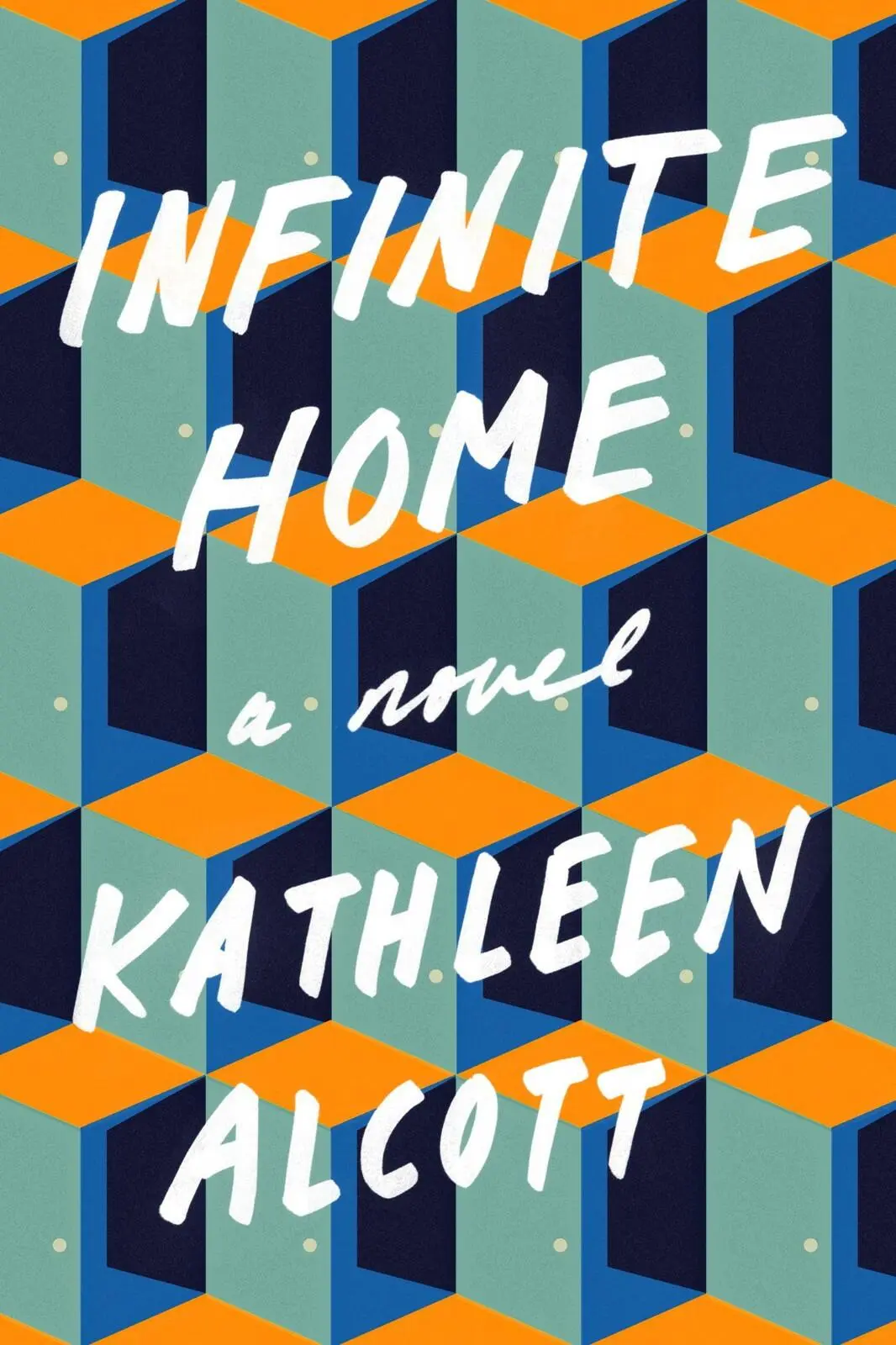
- Название:Infinite Home
- Автор:
- Издательство:Riverhead Books
- Жанр:
- Год:2015
- ISBN:нет данных
- Рейтинг книги:5 / 5. Голосов: 1
-
Избранное:Добавить в избранное
- Отзывы:
-
Ваша оценка:
Infinite Home: краткое содержание, описание и аннотация
Предлагаем к чтению аннотацию, описание, краткое содержание или предисловие (зависит от того, что написал сам автор книги «Infinite Home»). Если вы не нашли необходимую информацию о книге — напишите в комментариях, мы постараемся отыскать её.
Faced with eviction by Owen and his designs on the building, the tenants — Paulie, an unusually disabled man and his burdened sister, Claudia; Edward, a misanthropic stand-up comic; Adeleine, a beautiful agoraphobe; Thomas, a young artist recovering from a stroke — must find in one another what the world has not yet offered or has taken from them: family, respite, security, worth, love.
The threat to their home scatters them far from where they’ve begun, to an ascetic commune in Northern California, the motel rooms of depressed middle America, and a stunning natural phenomenon in Tennessee, endangering their lives and their visions of themselves along the way.
With humanity, humor, grace, and striking prose, Kathleen Alcott portrays these unforgettable characters in their search for connection, for a life worth living, for home.
Infinite Home — читать онлайн бесплатно полную книгу (весь текст) целиком
Ниже представлен текст книги, разбитый по страницам. Система сохранения места последней прочитанной страницы, позволяет с удобством читать онлайн бесплатно книгу «Infinite Home», без необходимости каждый раз заново искать на чём Вы остановились. Поставьте закладку, и сможете в любой момент перейти на страницу, на которой закончили чтение.
Интервал:
Закладка:
~ ~ ~
THE DEGREE TO WHICH the space expressed Adeleine, the fact that she had found and touched and arranged all these things — this alone made Thomas happy to be there each night. The supply of treasures seemed endless, as did the gentle exuberance with which she presented them, though he noted the bowed shelves, the lack of counter space, and wondered about the difference between pleasure and need.
Adeleine smoked out the window with a frequency that worried him. She cycled between a standing ashtray with a marble top and another, disc-shaped but thick, which spun to receive butts in a hidden underbelly. She had a record player and a whole wall of albums and invited him to run his fingers over them and choose. With her projector they watched movies on the one bare patch of wall — a tipsy Clark Gable stroked his mustache and charmed his way out of corners, Harpo Marx absconded with someone’s hat again — and as the hours passed in the monochromatic and jerking light, he felt peaceful, saturated. He caught her laughing and turned to see her mouth open. Adeleine had a past, but it was distinctly absent from the display.
On a night when she seemed particularly pliable and garrulous, giggling at and mouthing punch lines like a sugar-addled child, he resolved to chip away at her mystery. When the film ended, he crossed his legs Indian-style, willing confidence.
“You know, I was wondering. How did your parents give you your name?”
“With a great deal of hope and fear, I guess.” She grinned. “Like anyone faced with accounting for the life they’ve unexpectedly created.”
“I guess I meant—”
“Was it a family name? Did it appear to my mother in a dream? Did an old woman place her hand on the bump that was me and divine it?”
“I wasn’t betting on those situations, exactly, but—”
“My father drank a lot — drinks a lot. It was a good choice for slurring. Can’t really fuck it up. All soft consonants. I’m sleepy. Are you?”
She exaggerated a yawn, patting her fingertips on the oval of her mouth, and walked him to the door, where she gave his arm an avuncular squeeze before locking herself in.
~ ~ ~
THOUGH EDWARD HAD TAKEN to dressing like someone who spent recreational hours outside a small-town 7-Eleven, he showered and shaved and dressed up for therapy: cardigans buttoned up his chest and crisp collared shirts of muted blues and pinks, corduroys ironed and creased. During the sessions he was painfully conscious of his facial expressions, eager to convey an intelligent thoughtfulness, a willing openness, a sense of humor despite it all. He found Mariana’s frequent nods erotic, the cross of her ankles too much to glance at for long.
He tried to find the brand of tissues she kept in her office — they were the softest he’d ever touched, slightly scented with aloe and something else probably only people like Mariana knew the name of — and even the health food stores, the places where imported peaches sold for two dollars each, didn’t carry it.
Mariana identified Edward’s late mother’s behavior during his childhood as wildly inappropriate, and urged him to understand that cultivating forgiveness and assigning accountability were not mutually exclusive. It was no wonder, Mariana said, that being kept inside and overly protected from all hypotheticals for much of his childhood had led to a great deal of wildness and experimentation later on. Mariana’s speech was peppered with words like choice and self and journey , and much of the time she spent talking, Edward spent trying not to think of how he might arrange her naked form, how all the firm parts of her might move together.
He wanted to kiss her until she no longer resembled the upright and incisive figure in the chair, to erase the wall behind her and the three framed degrees from liberal arts schools that sounded like poisonous plants, to upset the precise arrangement of pins at the nape of her neck. Afterward, he would tell her, “That was a thoroughly positive and expansive experience,” and take her out for cheeseburgers, in jest spurning the sparkling probiotic drinks he’d seen in her mini-fridge.
He wanted to feel that the distance between men like him and women like her was not so great, that he hadn’t been doomed from birth to struggle, to run from one dysfunctional corner to the next while another stratum of people functioned gracefully and fell asleep easily.
Sometimes when these visions floated across his brain, the thought of her sock on his floor or locket on his nightstand, his face betrayed him, and Mariana would pause and say, “Well, Edward, you’re smiling broadly now — can you tell me what that’s about?” He would reply, “Oh, sure. I think I just made a breakthrough. Several, in fact.” So far, therapy had cost him $42,563. His money was disappearing, running from him like some feral animal.
~ ~ ~
YOU’RE AN EMPTY BAG of a person and I know you have it!”
Edith, at the door of Edward’s apartment, dressed in a polka dot dress with misaligned shoulder pads and a bowler hat that obscured her forehead entirely, lurched forward, gesturing menacingly with a ballpoint pen. “Let me in!”
Edward, woken that day by a particularly crippling fugue of melancholy, could not contend with the figure at his door. He could barely even follow the sounds and images of his television. He’d been dreaming of Helena again.
She’d been waiting for him for hours in a Victorian greenhouse, ready for a road trip they’d planned carefully, her evenly worn leather bag packed and her hair tightly braided, but he was stuck in a club, trying to squeeze in one last gig: he’d been sweating under the lights, telling the audience about how his mother used to lock him inside for days, and tasting the blood that was filling his mouth.
“Have what?” he mumbled, reminding himself that the day was happening to him, despite his brain urging him elsewhere. He found it laughable that anyone could believe he possessed anything of transferable value. In his long-unwashed corduroys, lacking the crucial fly button and permanently tented open, with his beard that grew in temperamental patches and smelled of inexpensive soup, he stood and waited for her to clarify her accusation. He felt a pathetic thrill at the opportunity to expound upon how little he had.
“You’ve got my checkbook,” she hissed, pointing at him. “I know you do!”
“I do, huh?” He knew it was wrong to indulge her, but something acidic in his body had turned over. “Is that how I’ve managed to finance this luxurious lifestyle of mine? Cars and women, all the time? Why don’t you come in! View my collection of expired milk and secondhand sweaters! Gilded! Rare!”
Unfazed by his teasing, Edith shuffled closer with the determination of a prospector, her elbows forming sharp angles.
“Woolworth’s called. You’re buying up the jewelry department on my dime, you big-nosed faggot!”
“Listen,” said Edward. He found that the nastiness he felt towards himself shifted easily to another target. “Why don’t you just head back downstairs in your crazy hat and fix yourself a cup of bathwater tea, pick a fight with one of your moldy couches—”
Читать дальшеИнтервал:
Закладка:
Похожие книги на «Infinite Home»
Представляем Вашему вниманию похожие книги на «Infinite Home» списком для выбора. Мы отобрали схожую по названию и смыслу литературу в надежде предоставить читателям больше вариантов отыскать новые, интересные, ещё непрочитанные произведения.








Обсуждение, отзывы о книге «Infinite Home» и просто собственные мнения читателей. Оставьте ваши комментарии, напишите, что Вы думаете о произведении, его смысле или главных героях. Укажите что конкретно понравилось, а что нет, и почему Вы так считаете.