Kathleen Alcott - Infinite Home
Здесь есть возможность читать онлайн «Kathleen Alcott - Infinite Home» весь текст электронной книги совершенно бесплатно (целиком полную версию без сокращений). В некоторых случаях можно слушать аудио, скачать через торрент в формате fb2 и присутствует краткое содержание. Год выпуска: 2015, Издательство: Riverhead Books, Жанр: Современная проза, на английском языке. Описание произведения, (предисловие) а так же отзывы посетителей доступны на портале библиотеки ЛибКат.
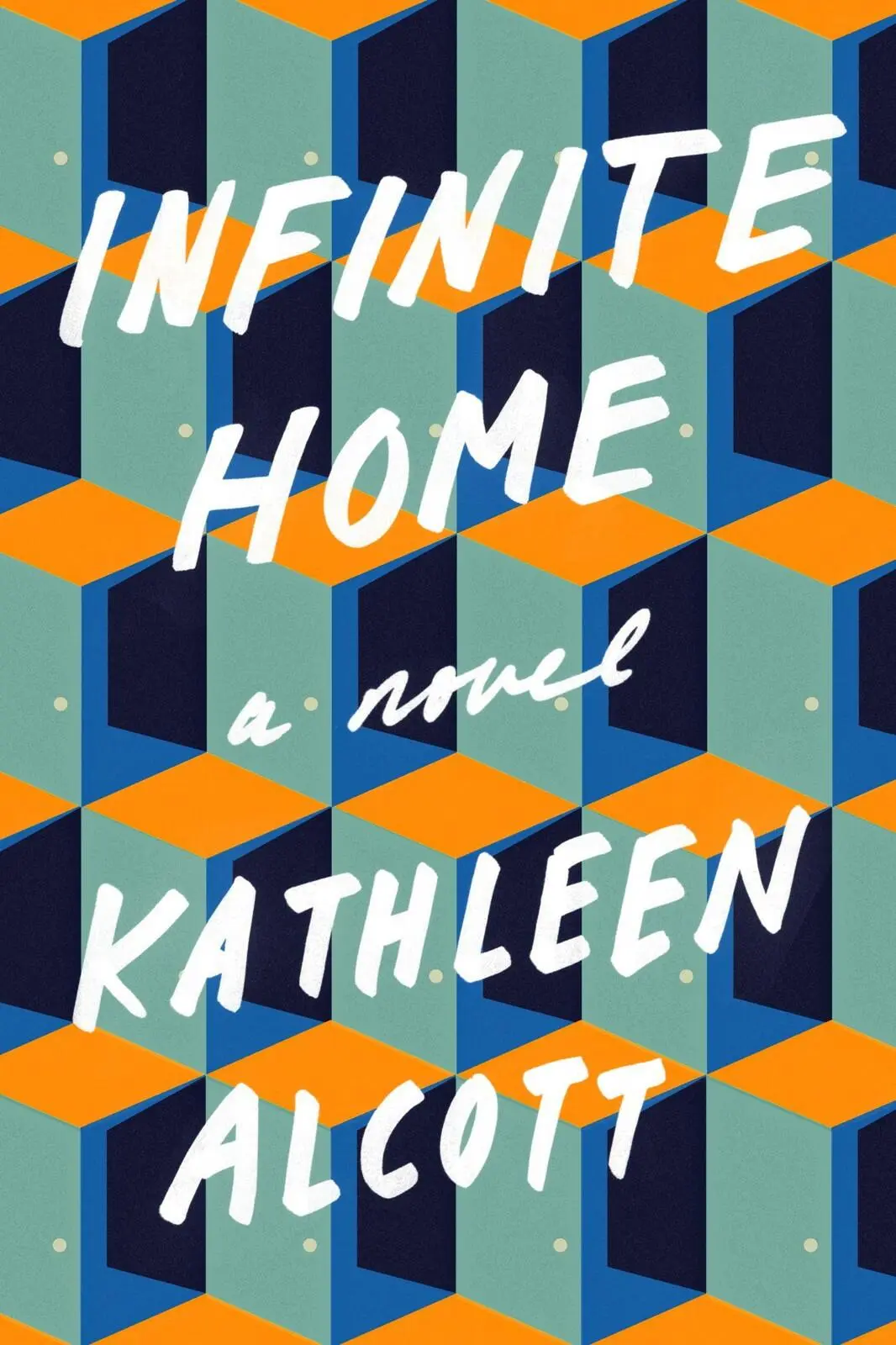
- Название:Infinite Home
- Автор:
- Издательство:Riverhead Books
- Жанр:
- Год:2015
- ISBN:нет данных
- Рейтинг книги:5 / 5. Голосов: 1
-
Избранное:Добавить в избранное
- Отзывы:
-
Ваша оценка:
Infinite Home: краткое содержание, описание и аннотация
Предлагаем к чтению аннотацию, описание, краткое содержание или предисловие (зависит от того, что написал сам автор книги «Infinite Home»). Если вы не нашли необходимую информацию о книге — напишите в комментариях, мы постараемся отыскать её.
Faced with eviction by Owen and his designs on the building, the tenants — Paulie, an unusually disabled man and his burdened sister, Claudia; Edward, a misanthropic stand-up comic; Adeleine, a beautiful agoraphobe; Thomas, a young artist recovering from a stroke — must find in one another what the world has not yet offered or has taken from them: family, respite, security, worth, love.
The threat to their home scatters them far from where they’ve begun, to an ascetic commune in Northern California, the motel rooms of depressed middle America, and a stunning natural phenomenon in Tennessee, endangering their lives and their visions of themselves along the way.
With humanity, humor, grace, and striking prose, Kathleen Alcott portrays these unforgettable characters in their search for connection, for a life worth living, for home.
Infinite Home — читать онлайн бесплатно полную книгу (весь текст) целиком
Ниже представлен текст книги, разбитый по страницам. Система сохранения места последней прочитанной страницы, позволяет с удобством читать онлайн бесплатно книгу «Infinite Home», без необходимости каждый раз заново искать на чём Вы остановились. Поставьте закладку, и сможете в любой момент перейти на страницу, на которой закончили чтение.
Интервал:
Закладка:
Adeleine was different: symmetrical and soft and glossy to an extent that didn’t seem naturally occurring, with cheeks that glowed like peaches in commercials and eyes as violet as industrial fireworks.
Even after he realized the extent of her beauty, Thomas had no interest in talking to her. He only wanted to watch, to fully appreciate the precision of her making. It helped that she never spoke or looked at him as she put out a bag of trash or opened the door for a deliveryman.
When her nighttime weeping began, he was blindsided by his vision having grown complex and animate and tried to will the noises away. The stroke had left him cold, and sometimes slowed reactions to other people’s pain, but the sounds coming from her body were without rhythm, impossible to become accustomed to and ignore, and he quickly felt moved to mollify them.
The first time he knocked, he heard the strangled stifle of a sob and the hurried footsteps to switch off the light. He burned with embarrassment at a rejection so obvious, but the next night found him at her door again, listening. He did not bring his knuckles to the wood, only crouched and slipped a note under the door: I thought you could use a drink. — Apt. 3A. When he checked a half hour later, the mug of bourbon and lemon and honey had disappeared. In bed that night, he thought of her lips on the porcelain, and his skin grew tight, his pectorals and hamstrings newly awake, tensing under her image. He arranged his dead hand on his abdomen, then slid his other under the elastic band of his boxers and moved it forcefully, repeatedly, until every part of him ceased to complain.
What followed was like some archaic dance, one that required mastery not only of the steps but also the nuanced system of nods and glances that marked its transitions. After ten days, Thomas realized with mild panic that he’d sacrificed all of his cups, the university mugs and the gifted beer stein and the ridged water glasses. He hadn’t left her with any instructions as to their return, of course, and she hadn’t offered any communication beyond the simple receipt of his nightly gifts. He thought about it with pain throughout the day until the ritual hour passed. After several hours of sleep, he woke with an urgent feeling and drank several bowls of water in the kitchen, surprised by how the act of sleeping had induced such a thirst. He looked out at the unlit room as a thief might, scanning for value and an unhindered escape.
—
TWO NIGHTS LATER, the knock came.
“The little bell’s been going off and I’ve been salivating, but the Russian scientist in charge has forgotten me,” she said. Her eyes remained somewhere to his left, and it was unclear whether she was seeking his laughter.
The mass of her heavy hair was pinned up and swirled above her face, and her chin jutted from a crisp lilac linen that buttoned all the way to the neck. Though he hadn’t considered what her voice might sound like, the reality of it, scratched and thick-throated, still seemed incorrect. It was that of a tollbooth operator, worn in by rote speech, eroded by fumes. The door of her apartment remained open behind her, and one of her hands clung to its knob as she straddled the hall.
“I–I ran out of glasses,” Thomas answered. He emphasized glasses as though discussing something irreplaceable and watched with resounding discomfort as her fine face flushed, her body retreated homeward by an inch, then two. He heard the measured voice of some nature-channel narration and tried to push it away, but the black humor nagged at him : meeting the rare creature out in the open, should he play dead, or offer his food, or wave his arms and yell?
“You can—” she began, gesturing towards her apartment’s rose glow. “Bring?” He understood, with a thrill, that the exchange made her nervous, and he nodded as though they’d done this before and knew their parts, and went to retrieve the bottle. The smell of all her things, fusty and smoky and dense, had already reached him.
~ ~ ~
SHORTLY AFTER their father Seymour’s hair had grown so white and downy that Paulie took to calling him Sir Dandelion, he’d suffered a coronary during an early-morning walk, binoculars around his neck and a grocery list in his pocket. Claudia had selected an oak-stained casket for the viewing and baked gingerbread cookies for the reception; she had picked up her three-quarter-length black dress from the dry cleaner and twisted her hair into an unmoving knot at the back of her neck; she had thanked people for coming and accepted their condolences; she had repainted the stairwells and appointed a real estate broker; she had met with Seymour’s lawyer and accountant and wept in each of their antiseptic bathrooms; and, imagining that the death of her father would install in her some compassionate wisdom if only she waited a few weeks, she had left the question of Paulie for very last.
Though she and Seymour had discussed a number of assisted living communities in which well-trained aides and social workers would see that Paulie lived his fullest life — and Paulie had even visited some of these places with his father and enjoyed chatting with the staff and residents, as well as testing the bounce of the mattresses and the texture of the food — when it came down to signing the last of the forms, Claudia could not put pen to paper. Having witnessed both of her parents reduced to dismayingly small boxes of ashes, remembering Paulie’s insistence upon singing at both services and how tightly he’d gripped her hand, Claudia had decided to take her younger brother’s life into hers as closely as she could.
Made anxious by suburban Connecticut dusk the day after the wake, she had prepared an excess of stew, something with the potential to feed many more people than their family of two. When he had stopped slurping, she raised the question.
“Paul? Where is it you think you’d most like to live now?”
“Dad and I visited some places—”
“Could you imagine yourself living there, though?”
“They were real clean, with chefs. I could imagine so much, Claude. I could imagine it is an okay place to be. I could also imagine walking for a long time until you found exactly the place you wanted. There are so many homes, I think, and you could spend the wrong kind of life following them.”
Various aging aunts who phoned had clucked their tongues and expressed concern, emphasizing repeatedly that no one could judge her for placing Paulie under the care he needed. But she had helped her brother pack his things — the long-beloved crescent moon lamp, with a cherubic face and a half-smile; the quilt their mother had embroidered over the course of a year, with a panel for the forest, the ocean, the desert, and the town — and she urged him to imagine the fun they might have in New York.
“We’ll have picnics on Sundays when the weather’s nice, and clap at the men who play mariachi on the subway, and go to museums of sound and art and transportation and history and police and science. You’ll have your very own apartment, right near mine, and we’ll paint it whatever colors you like.” Her breathing had become uneven, as though her safety was the one being discussed offhandedly in a nearly vacant house.
“Okay, Claude,” Paulie had said. “Okay, Claude!” He had pulled her to where he sat on the bare mattress and taken her hand, formed a brief O of suction on each of her fingertips as he kissed them. Claudia had brought his head to her shoulder as though he weren’t thirty years old and three inches taller, and closed her eyes so as not to look out the window at the yard, now empty of the peeling red picnic table that had stood there for thirty years, Seymour’s much beloved barbecue, the hammock where their mother had read her mystery novels and spread coconut-scented tanning oil on her thick calves. The tree Claudia had climbed to peer down at her family remained, but appeared to understand its obsolescence, and drooped.
Читать дальшеИнтервал:
Закладка:
Похожие книги на «Infinite Home»
Представляем Вашему вниманию похожие книги на «Infinite Home» списком для выбора. Мы отобрали схожую по названию и смыслу литературу в надежде предоставить читателям больше вариантов отыскать новые, интересные, ещё непрочитанные произведения.










Обсуждение, отзывы о книге «Infinite Home» и просто собственные мнения читателей. Оставьте ваши комментарии, напишите, что Вы думаете о произведении, его смысле или главных героях. Укажите что конкретно понравилось, а что нет, и почему Вы так считаете.