Kathleen Alcott - Infinite Home
Здесь есть возможность читать онлайн «Kathleen Alcott - Infinite Home» весь текст электронной книги совершенно бесплатно (целиком полную версию без сокращений). В некоторых случаях можно слушать аудио, скачать через торрент в формате fb2 и присутствует краткое содержание. Год выпуска: 2015, Издательство: Riverhead Books, Жанр: Современная проза, на английском языке. Описание произведения, (предисловие) а так же отзывы посетителей доступны на портале библиотеки ЛибКат.
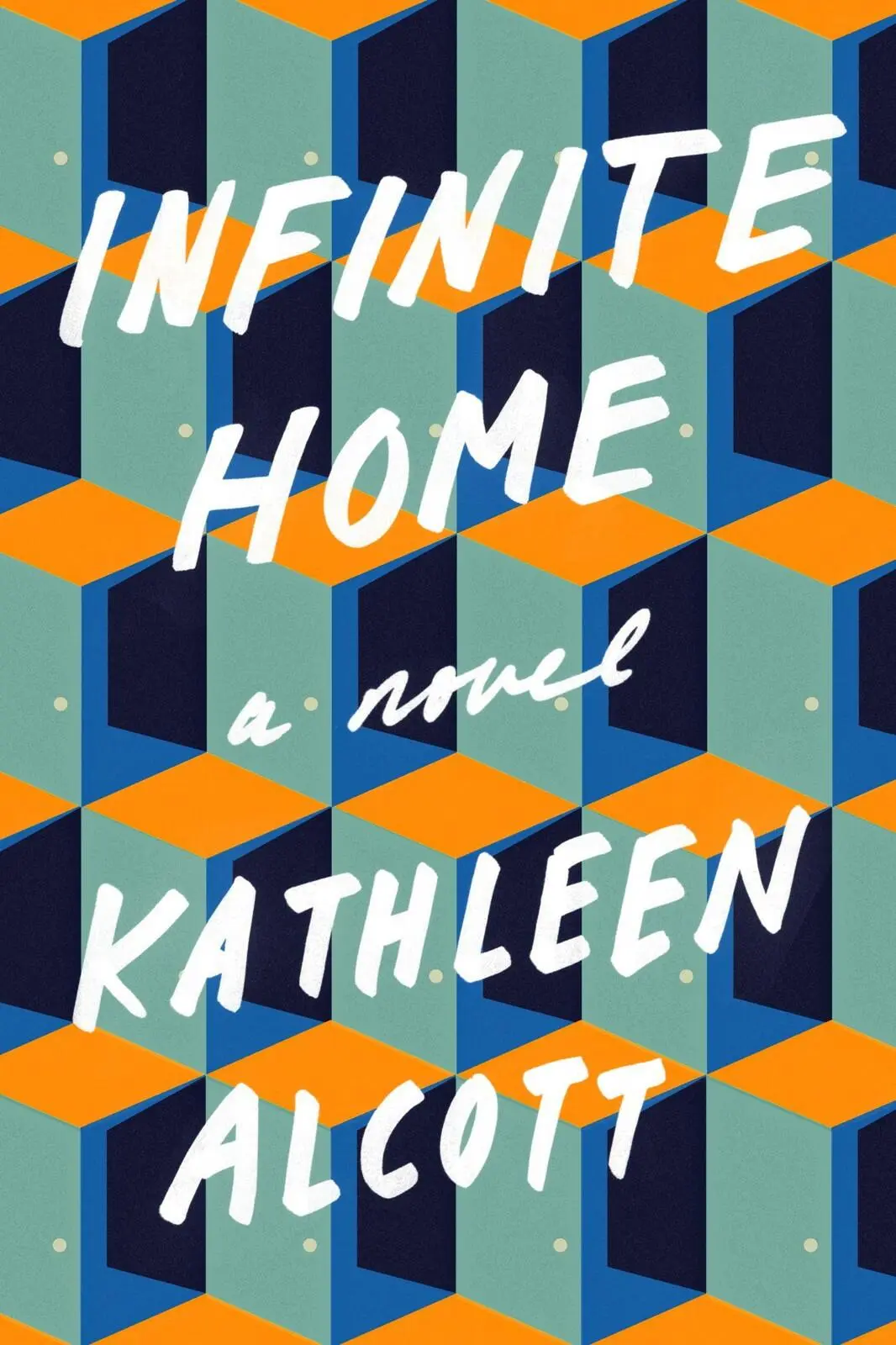
- Название:Infinite Home
- Автор:
- Издательство:Riverhead Books
- Жанр:
- Год:2015
- ISBN:нет данных
- Рейтинг книги:5 / 5. Голосов: 1
-
Избранное:Добавить в избранное
- Отзывы:
-
Ваша оценка:
Infinite Home: краткое содержание, описание и аннотация
Предлагаем к чтению аннотацию, описание, краткое содержание или предисловие (зависит от того, что написал сам автор книги «Infinite Home»). Если вы не нашли необходимую информацию о книге — напишите в комментариях, мы постараемся отыскать её.
Faced with eviction by Owen and his designs on the building, the tenants — Paulie, an unusually disabled man and his burdened sister, Claudia; Edward, a misanthropic stand-up comic; Adeleine, a beautiful agoraphobe; Thomas, a young artist recovering from a stroke — must find in one another what the world has not yet offered or has taken from them: family, respite, security, worth, love.
The threat to their home scatters them far from where they’ve begun, to an ascetic commune in Northern California, the motel rooms of depressed middle America, and a stunning natural phenomenon in Tennessee, endangering their lives and their visions of themselves along the way.
With humanity, humor, grace, and striking prose, Kathleen Alcott portrays these unforgettable characters in their search for connection, for a life worth living, for home.
Infinite Home — читать онлайн бесплатно полную книгу (весь текст) целиком
Ниже представлен текст книги, разбитый по страницам. Система сохранения места последней прочитанной страницы, позволяет с удобством читать онлайн бесплатно книгу «Infinite Home», без необходимости каждый раз заново искать на чём Вы остановились. Поставьте закладку, и сможете в любой момент перейти на страницу, на которой закончили чтение.
Интервал:
Закладка:
He would be on the couch, chasing a nap despite having been awake only two hours, and hear the clearing of her throat, the sound in two parts.
“Okay,” she would say, with the voice of someone speaking to a colleague about a routine procedure, an issue with the copy machine or a slight change in schedule. “I’m leaving a few things here. Something for eating and something for reading and something else just because. They’re just out the door to your left. I know you probably have silverware but I put some in there because what the hell. All these things are only if you want. The vegetables are a little swampy. Can’t ever seem to avoid that hellish feature. It’s food. It’s definitely food. All right, I’m headed back to my pensioner’s grotto now.”
After a week of that, her odd discursions often the only points of amusement in his otherwise black days, he heard the shuffle of her approach and startled her by opening the door. It was he who should have been embarrassed, he thought, he who had not bothered to crawl even briefly from his depressive hole and leave a note of thanks, but as she entered, she kept her sight fixed on the tray she had brought, reddening like someone allergic.
“Well, I know I’ve been a busybody,” she said, her eyes scanning the room for a place to set the platter down.
“Anywhere is fine. Here, on the counter. You haven’t at all. You’ve been some kind of magic post-catastrophe elf. And I haven’t paid rent.” He gestured for her to sit at the bare kitchen table, and she gripped her hands on its edge to lower her stooped frame into a chair. Her hair was carefully curled, the stiff white reminiscent of a subaquatic reef formation, and her wedding ring sat bright but noticeably off-center on her diminished finger.
“Elves are meant to be a little quieter, probably.”
“It’s true I could hear you bustling out there.”
He laughed for the first time since his injury, and it surprised his voice, which strained at the exertion. She had the kind of older face that hinted at its young features, as though it were a hologram that could be tilted, the murky slate of the eyes restored to their former inquiring blue, the wattle of the neck tightened to reveal the stark line of the jaw.
“Never my strong suit. Never a suit at all, in fact. Not even hanging in my closet.”
He carried them over one by one, the teapot, the mugs, a jar of almonds, and Edith knew not to offer her help, not to watch as he arranged the things on the table. She drank the still-warm tea gratefully, as though she hadn’t prepared it herself, thanking him, looking around and complimenting the large wooden blocks he used as coffee tables, the bright teal of the couch, a series of octagonal shelves he had mounted on the longest wall. She didn’t mention the vestiges of his work, which infested the sizable corner of his space where a tarp lay to protect the floor.
And then she barked out the question, the one nobody else had posed alongside the stilted condolences they’d e-mailed. She offered it without the upward lilt at the end, like an appraisal of something obvious, a foul smell or a probable rain.
“And how are you.”
“I’m shit,” he said. It was a relief to say so.
“Can’t say I expected anything else. You were handed some misadventure. Is this retribution for some former crime of yours? A nun you robbed?”
He smiled modestly, as though afforded a compliment, grateful under the generous cover of her humor.
“At nun-point,” they said, nearly at the same time, their embarrassment about the weak pun turning to delight in the coincidence.
“About the rent,” she said. “You shouldn’t—”
He put his hand up, let the unkempt line of his amber hair fall over his eyes.
“I should,” he said. “And I will. I’ll get you a check—”
“But how are you going to—”
She stopped, immediately aware her brash tongue had taken her for the wrong turn, and communicated her apology by tapping a hand to her mouth and cringing.
“That’s okay, Edith. It’s a good question. I’m okay for a few months, and then I don’t know. My gallerist wants to put together some… memorial show, it seems like to me, although of course no one will call it that. The things I had finished and a number I hadn’t.”
“Then I’ll buy some. I don’t have anything on my walls but twenty years ago.”
“I hope that won’t be necessary. Maybe I can give you one.”
In the way that it sometimes does for people whose rapport has advanced very quickly, the open speech had dried up, as if to reflect on how recently theirs had been a cordial but transactional relationship. They assessed each other in the silence, making eye contact then letting it break.
“Well,” she said. “I could bring you some lunch tomorrow. Will you be here?”
He was. She did. For weeks it became his only routine, and he had showered for it, cracked windows here and there, swept.
—
“WHY DON’T YOU CALL IT A Living Question ,” he’d said, over coffee with his gallerist, a woman whose hair was always mounted asymmetrically and who typed intermittently on her smartphone as she spoke to him, ostensibly taking notes.
“Oh, that’s good,” she’d answered, not detecting the dark humor in his voice, spitting a little through the signature gap in her front teeth.
“No, Ivy, it’s— I’m the—”
“Of course this is all up to you. But I was thinking we could mount them from finished to un-, so we’re sort of watching the progress in reversal, almost a record of decay.” Her voice was rich with her own regard for it. Thomas tried to cover the disgust he felt appearing on his face with a hand over his mouth and a series of discerning nods.
Chased by absurd nightmares of poverty in which debt collectors followed him in Groucho Marx masks, Thomas had agreed to meet Ivy for the sake of his practical future, but the thought of his unfinished pieces on display, the naked lines in pencil, made all the pulse points in his body raise up and hammer.
In the weeks that followed he agreed to almost everything she suggested, curatorial statements and promotional photos and times and dates. He made clear that he would not be in attendance at the opening, and she didn’t protest, his absence being something she believed might sell. Several anticipatory write-ups appeared, which she forwarded to him, and which remained unread.
The night that people in ironic jumpsuits and vintage fur coats gathered in oblique lighting before his paintings, he was perched on tiptoe in Edith’s bathtub, making marks in pencil on the wall above it. Thomas had kept one for her: six by four feet, a pictorial rendering of continental drift. Over several years, in fertile browns and cold blues and sylvan greens, he had translated the formation of the Appalachians, the dwindling of seaways, the birth of glaciers, the rise of submerged islands. He had worked at it as though it were a marriage, fighting with it and watching it change, and he was glad to appoint it here, let it alone.
He felt the hum of his telephone in his pocket and silenced it without a look. It was Ivy, texting to say that some tech celebrity, the founder of a location-based dating app, had purchased a triptych of his paintings. The sale could support him for a year, two if he was careful.
When he had finished he called to Edith in the kitchen, where she was cursing to herself and filling the building with the smell of a roast, carrots in brown sugar and butter. In another life, one he had enjoyed until just recently, he would have refused to hang it there, would have warned her that the steam from her long baths would warp it. Instead, he offered her the strength of his forearm as she climbed over the porcelain lip, and they raised the wooden frame of the canvas together, making small adjustments as they searched for the nails he had driven, commenting on the angle, tugging at it until it was straight, and flush, and bright.
Читать дальшеИнтервал:
Закладка:
Похожие книги на «Infinite Home»
Представляем Вашему вниманию похожие книги на «Infinite Home» списком для выбора. Мы отобрали схожую по названию и смыслу литературу в надежде предоставить читателям больше вариантов отыскать новые, интересные, ещё непрочитанные произведения.






Обсуждение, отзывы о книге «Infinite Home» и просто собственные мнения читателей. Оставьте ваши комментарии, напишите, что Вы думаете о произведении, его смысле или главных героях. Укажите что конкретно понравилось, а что нет, и почему Вы так считаете.