Kathleen Alcott - Infinite Home
Здесь есть возможность читать онлайн «Kathleen Alcott - Infinite Home» весь текст электронной книги совершенно бесплатно (целиком полную версию без сокращений). В некоторых случаях можно слушать аудио, скачать через торрент в формате fb2 и присутствует краткое содержание. Год выпуска: 2015, Издательство: Riverhead Books, Жанр: Современная проза, на английском языке. Описание произведения, (предисловие) а так же отзывы посетителей доступны на портале библиотеки ЛибКат.
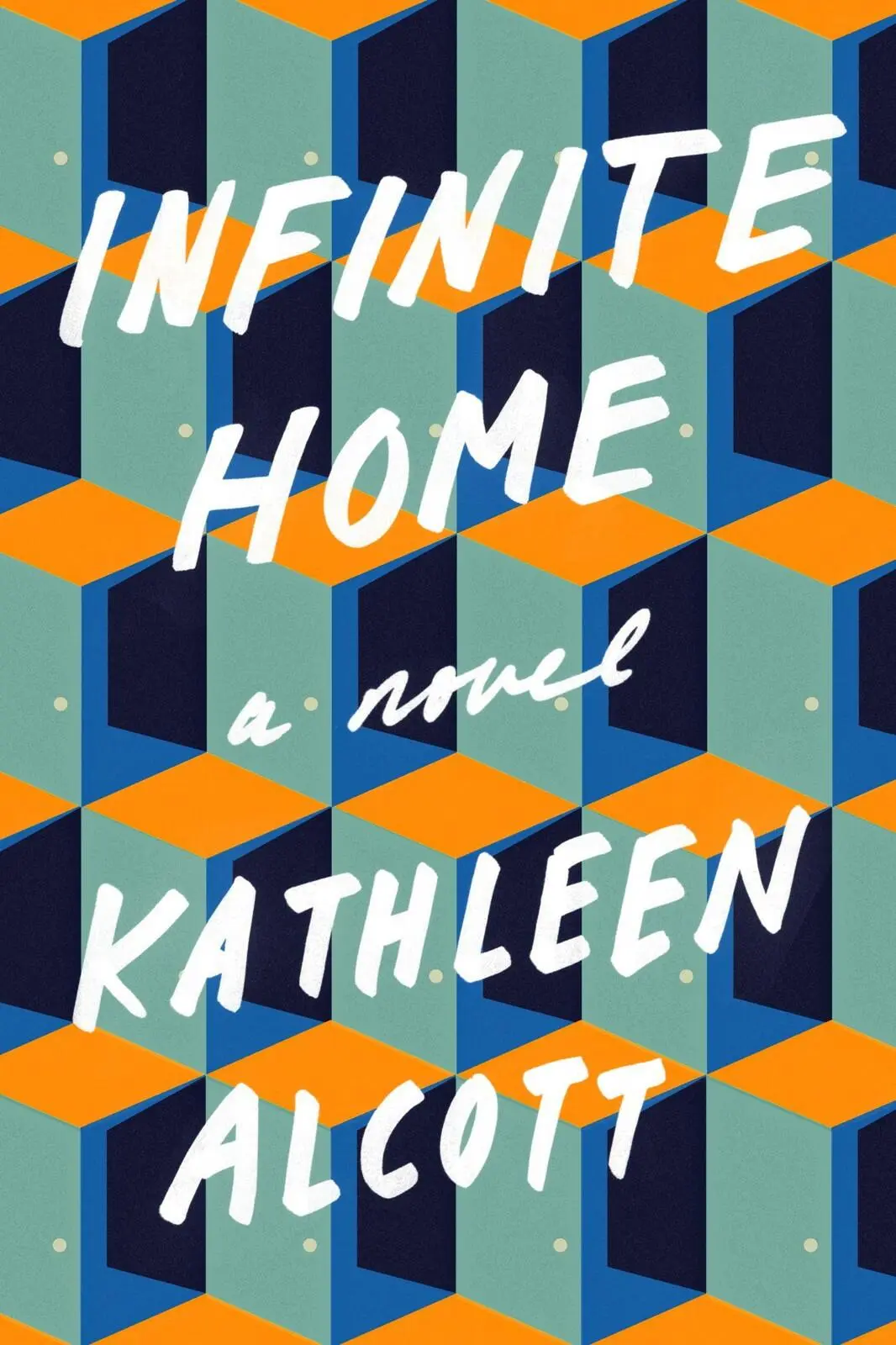
- Название:Infinite Home
- Автор:
- Издательство:Riverhead Books
- Жанр:
- Год:2015
- ISBN:нет данных
- Рейтинг книги:5 / 5. Голосов: 1
-
Избранное:Добавить в избранное
- Отзывы:
-
Ваша оценка:
Infinite Home: краткое содержание, описание и аннотация
Предлагаем к чтению аннотацию, описание, краткое содержание или предисловие (зависит от того, что написал сам автор книги «Infinite Home»). Если вы не нашли необходимую информацию о книге — напишите в комментариях, мы постараемся отыскать её.
Faced with eviction by Owen and his designs on the building, the tenants — Paulie, an unusually disabled man and his burdened sister, Claudia; Edward, a misanthropic stand-up comic; Adeleine, a beautiful agoraphobe; Thomas, a young artist recovering from a stroke — must find in one another what the world has not yet offered or has taken from them: family, respite, security, worth, love.
The threat to their home scatters them far from where they’ve begun, to an ascetic commune in Northern California, the motel rooms of depressed middle America, and a stunning natural phenomenon in Tennessee, endangering their lives and their visions of themselves along the way.
With humanity, humor, grace, and striking prose, Kathleen Alcott portrays these unforgettable characters in their search for connection, for a life worth living, for home.
Infinite Home — читать онлайн бесплатно полную книгу (весь текст) целиком
Ниже представлен текст книги, разбитый по страницам. Система сохранения места последней прочитанной страницы, позволяет с удобством читать онлайн бесплатно книгу «Infinite Home», без необходимости каждый раз заново искать на чём Вы остановились. Поставьте закладку, и сможете в любой момент перейти на страницу, на которой закончили чтение.
Интервал:
Закладка:
Later, he would come to wonder. As she lay in the bath, her mind going, did she consider what hung there? And was it the thing that called her back, to her cluttered papers, to her life’s quiet routine; or was it the thing that lied to her, muddling chronology and nibbling at private truths, and led her, with a gentle hand, away?
~ ~ ~
PAULIE TRIED not to give in to the feeling but some facts rendered him melancholy no matter what kinds of songs he’d been playing or if the clouds were forming pointy faces or if he’d run into any ugly dogs that day.
For as long as his memory went, Paulie had loved children. When his mother’s sister had a baby and brought it over and it started crying, Paulie was the only one who could get it to stop: he’d made up a song about the ocean, about how waves only leave so they can come back larger. The choking sobbing had stopped, the starfish hands reached up to grab Paulie’s nose, the eyes formed invisible lines right to his, and he had known right away how much he wanted this, to be the center and the protection of another’s life.
For his tenth birthday he asked for a baby doll, a blue-eyed boy in washable velour, and named it Oscar and tried to never lose sight of him. He slept with him in his bed and sometimes his breath grew constricted, so nervous did he feel that he might fall asleep and roll over onto him. He learned how to sleep like a pencil. He brought Oscar along on trips in the car and pointed out the trees whose names he knew, white pine and dogwood and redbud. He made sure his socks and soft blue cap and clean cotton pants went into the wash frequently. He stayed up in bed explaining the things that had puzzled him once, where all the household garbage went and who decided when to open the post office and what made heat lightning and how sex must feel.
Oscar’s silence and slumped way of sitting grew tedious, but Paulie valued the feeling of worth that came from putting the world in order for someone else, from folding the tiny sweaters. When he was fourteen, his true capacity for love filled with the arrival of Eleanor, a neighborhood beauty imported from the mysterious wilds of North Carolina who spoke slowly, wore old-fashioned saddle shoes, and had a cocoa-colored birthmark shaped like a bow tie on her nose. After a long week spent skulking around the street they shared, singing the romantic songs he knew on the edge of her lawn, he confessed his affliction to Seymour, asked how one went about asking a girl to be the mother of his children.
“Do I go up to her and say, let’s combine bodies forever?”
“I think that might scare her, Paul. People generally like to think of their bodies as just theirs.”
“Okay, how about—”
He thought his father was joking when he told him. Seymour said the probability of passing it on was about fifty percent, that the limits of his condition made parenthood impossible. Paulie, stunned, protested. “But you’ve always said I was an exception to a lousy rule. But I can look at a person and know what kind of story they need, you said. But I can light a room like that’s my job on the planet, you said!”
He had cried with dedication, the tears leaking down onto his teal hoodie and matching sweatpants. He saw in front of him the visions he’d always cherished — himself as father, tucking a lock of hair behind an ear at bedtime, teaching his son about which fish glow in the dark, sitting with him at the piano every day after school — and tried to reach them but couldn’t. His gut felt like fire spreading through a forest. “It hurts me, and I’m so sorry to have to tell you this,” Seymour kept saying. “Then don’t,” Paulie said. “Then why would you?”
Wants could remain possible, Paulie still believed, so long as you didn’t speak them aloud.
He remembered, then, the synchronized sacrifice of all childhood things. How the boys and girls from his street suddenly sprouted longer limbs and adult shadows, how they dropped their baseball mitts and water balloons and Halloween masks and turned away. His father held him, and Paulie tightened his shoulders against the embrace as he saw the unbearable length of it, the life in which he would always be a child.
~ ~ ~
EDITH WAS IN GRAND CENTRAL STATION and did not know why or how or even when. She wished for hats, a sea of them, cashmere gloves and polite nods, leather suitcases of browns and greens with sturdy locks. Fine pocketbooks where the tickets paid for lived until you pulled them out to show the conductor proudly, there on the train, where everything fit into roomy compartments above and below, where the world was stacked neatly.
But where were they, the fine pressed brims and tie clips and stockings with the clean black line down the back of the leg? No matter how long she closed her eyes, each time she opened them the people did not belong. Little girls crossed the floor in baseball caps, and under scrolling electronic screens grown women in clingy whites bickered. They all carried beach bags and neon-colored towels and not one of them stood up straight, not one of them was someone she could imagine knowing.
Where was Declan? Had he gone to buy the tickets? Was it already the season for the cabin and the red-and-white-checked tablecloth and chicken salad and watermelon? Edith scanned the little vendor windows, their gratings’ gilded curlicues familiar, the counters still marble. That, at least. But his shape was nowhere, and the shoes on her feet had two strange straps that did not buckle, that just stayed somehow. Her elbows had pasty folds and the skin on her hands looked as if it would tear. Not one of them was someone she could imagine knowing!
And then she was or had been yelling “Declan,” but she had stopped because he always said if they lost each other in an urban sea to root herself just like a tree. She looked through the glass at the moving dark tunnel and knew many truths about her life at once: that Jenny practicing spelling on the kitchen table while she steamed spinach was what she liked best, that when she sat upright in her wooden school desk she could feel the sixteen-year-old boy behind her thinking of undoing the button at the back of her neck, that she liked math for its clear-cut authority and always found test days reassuring. That her father liked to braid her hair when the chores were done and the chairs were on the porch with their familiar groan and the smell of biscuits drifted outside. That when she was particularly well behaved her mother would place her on her lap, let Edith steer the big round leather wheel and look through the windshield at the people lining up for the matinee under the marquee the town got together to pay for.
But then there was a new set of competing facts: This train moving fast. The woman next to her, with a cloth over her breast, nursing a baby of indeterminable gender. And the sounds that must be coming from her body, words that didn’t come together in the way she needed them to, where and stop and Declan and Jenny and Declan and stop. The mother of the baby had vanished and there were several faces around her asking, asking, asking, and Edith said, “ You fucking people, I don’t know any of you fucking people, not one.” Later, in the back of a police car, made frightened by the cage that divided front and back, she practiced a small form of weeping, determined to keep any more of herself from them. When they pulled up at the brownstone she and Declan had bought to fill with their life and future, they insisted on walking her in. She flinched at the policeman’s light touch on her elbow, thanked God and heaven none of her tenants were descending the stairs. When she went to retrieve her keys, she saw that the hands that couldn’t be hers were reluctant as abused animals, and the broad-shouldered policeman moved to place the brass in the lock and she hissed, “ I don’t need your help .” Finally in her chair, the scalloped velvet worn in the seat and arms, she rocked a little, but the motion didn’t soothe. She waited to recognize the place around her, the room growing dark as a well, her life crouching somewhere nearby, hiding from her.
Читать дальшеИнтервал:
Закладка:
Похожие книги на «Infinite Home»
Представляем Вашему вниманию похожие книги на «Infinite Home» списком для выбора. Мы отобрали схожую по названию и смыслу литературу в надежде предоставить читателям больше вариантов отыскать новые, интересные, ещё непрочитанные произведения.











Обсуждение, отзывы о книге «Infinite Home» и просто собственные мнения читателей. Оставьте ваши комментарии, напишите, что Вы думаете о произведении, его смысле или главных героях. Укажите что конкретно понравилось, а что нет, и почему Вы так считаете.