Hedi Kaddour - Waltenberg
Здесь есть возможность читать онлайн «Hedi Kaddour - Waltenberg» весь текст электронной книги совершенно бесплатно (целиком полную версию без сокращений). В некоторых случаях можно слушать аудио, скачать через торрент в формате fb2 и присутствует краткое содержание. Год выпуска: 2009, Издательство: Vintage, Жанр: Современная проза, на английском языке. Описание произведения, (предисловие) а так же отзывы посетителей доступны на портале библиотеки ЛибКат.
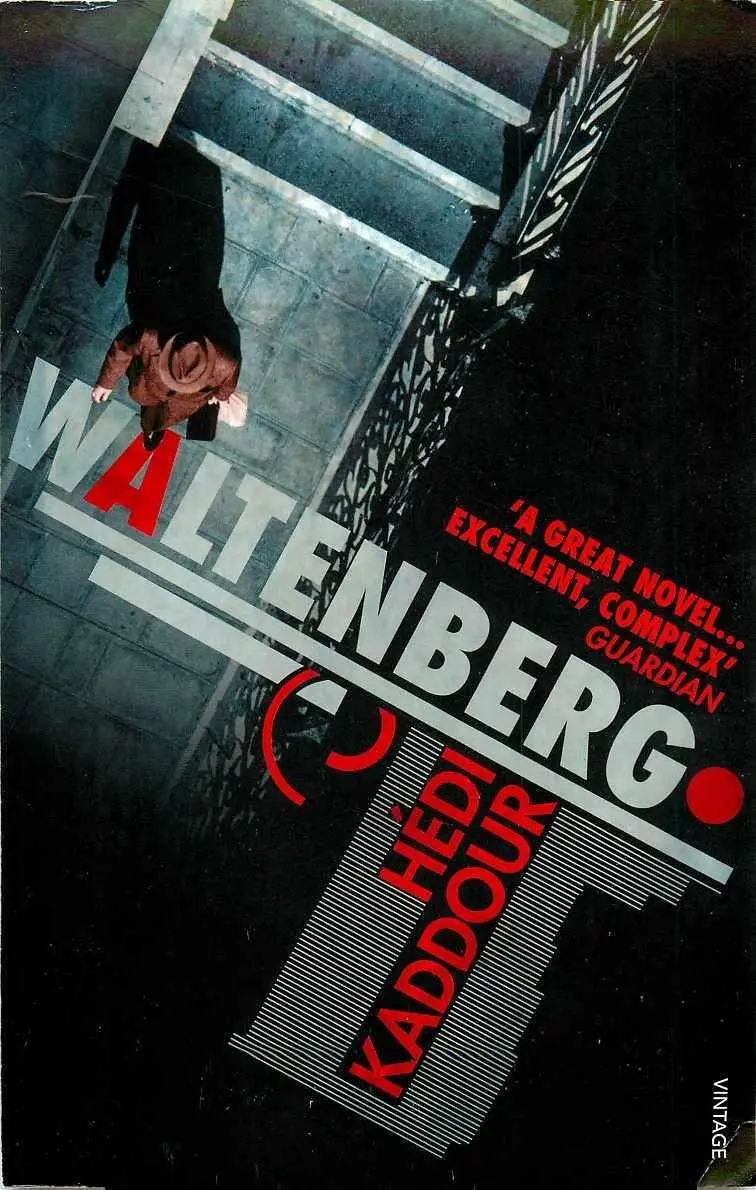
- Название:Waltenberg
- Автор:
- Издательство:Vintage
- Жанр:
- Год:2009
- ISBN:нет данных
- Рейтинг книги:3 / 5. Голосов: 1
-
Избранное:Добавить в избранное
- Отзывы:
-
Ваша оценка:
Waltenberg: краткое содержание, описание и аннотация
Предлагаем к чтению аннотацию, описание, краткое содержание или предисловие (зависит от того, что написал сам автор книги «Waltenberg»). Если вы не нашли необходимую информацию о книге — напишите в комментариях, мы постараемся отыскать её.
Waltenberg
Waltenberg — читать онлайн бесплатно полную книгу (весь текст) целиком
Ниже представлен текст книги, разбитый по страницам. Система сохранения места последней прочитанной страницы, позволяет с удобством читать онлайн бесплатно книгу «Waltenberg», без необходимости каждый раз заново искать на чём Вы остановились. Поставьте закладку, и сможете в любой момент перейти на страницу, на которой закончили чтение.
Интервал:
Закладка:
‘Shall we exchange tobaccos? Tobacco is the recreation of a gentleman.’
They talk for hours; the Hun tells him he intends to go looking for a woman, while Max says he has no idea what he is going to do.
Since then, they have arranged to meet at least once a year. Today is a September morning, the first phase of autumn, before the cold sets in: autumn of fruits, a palette of brown, dark green, orange, rust, with hints of ash and lavender blue. Max and Hans saunter, make their way back to the gardens’ north exit, passing sequestered nooks as they go, the bronze statue of Bacchus on his donkey with the nymphs writhing around him, the bust of Verlaine, there’s rain at intervals, then a wind to chase the rain away, the trees drip and an emerald light bursts from the verges of the walkways.
They go as far as the edge of the orchard, head back to the centre of the gardens via the little Punch and Judy show. Through the foliage, the light forms patches of fluctuating brightness which warm the fragrance, to which the damp earth adds its quotient of sweet chestnut, plane and sometimes the tang and sweetness of spruce resin when the sun revives their scents and holds them suspended in the space where light turns to shadow for the delight also of the eye — trees, aromas and light join together to perform a fleeting role, for they are at the mercy of the cloud which will descend and wrap the gardens in unyielding grey.
By the ornamental pond, children with sticks launch their hired sailing boats which set off in pursuit of fierce pirates.
‘Listen to this,’ says Max, opening his newspaper, ‘I’m quite fond of Monsieur Sarraut at present, you Germans can have no real idea of what a colonial empire is and the effect it has on the beauty of verbal expression: “Since the native population claim the right to express their wishes directly, Monsieur Albert Sarraut said he believes that this rightful claim must be examined before it has an opportunity to turn into a shrill demand.” Shrill demand! Rightful claim! The colonials will flay Sarraut alive for saying such a thing.’
Max aims a kick at a pile of dead leaves.
‘Hans, this is going to turn nasty, look!’
Another kick.
‘The past is rotting before our very eyes.’
They continue strolling.
‘What are you writing at the moment?’
Max it is who asked the question, anxious to know what the other man is up to, a concern which will make him speak about the thing which he finds hurtful.
It is both considerate and cruel, like all good questions; the two men get on famously together, Hans is the anxious type, Max feels increasingly that he is a failure, especially when he is with Hans, they are friends, Hans looks away into the shrubbery and answers, saying he’s keeping a diary, that’s all, he has already published four novels, three of them since the end of the war; he also translates a great deal of French literature for a Stuttgart publisher; he is what is called an established writer.
Max again:
‘Have you really done with fiction?’
Hans doesn’t know. All he wants for the moment is to keep a diary, like Jules Renard, write in short bursts, a vertical style, with no images, images put whiskers on a style, every day try to create an effect like the one of the shy friend who wipes his feet when he leaves a house, or the woman who remains silent at the top of her voice, do I really like Renard? Renard tries a fiction cure to get fiction out of his system, I need to do the same with his Journal, read it until I’ve had more than my fill, oh yes, Hans knows what Renard said, about a diary killing off the novel you might have written, Max’s questions sting Hans who never knows if he can do better than what people have thus far admired in the tales he has spun. For Hans, Renard’s Journal is a collection of hundreds of brief stories, life on the hoof, superb, I’d like to translate it, even if the style is a touch brittle for my taste.
‘A very written life,’ says Max, Renard always has a phrase in his head ready to lasso whatever is going on around him, ‘he goes out hunting through the streets of Paris, all he lives for is his journal, and he calls that being free.’
‘And what do you do?’
Hans has taken Max by the elbow, French style, he tries to put his question as delicately as possible, Max wanted to be a writer before the war, now he’s trying to tell a story, a story which slips through his fingers.
‘I’m a novelist who’s started keeping a journal,’ says Hans, ‘and you are…’
‘… a journalist who’s begun writing a novel, you’re extremely kind, but it’s not exactly a novel ; it’s a true story, some people I met last year, in the Haute-Savoie.’
Hans didn’t much care for that ‘you’re extremely kind’, a hint of sourness, but he says with forced cheerfulness ‘Haute-Savoie! Regionalism!’ at any moment Max will start burbling on about a three-cheese Swiss fondue, the little chimney sweep and the kind-hearted maids, and unFrench Swissisms.
‘It’ll do me good, it’ll be a change from journalism and spewing out words like a machine gun, a year ago I was still reporting from the Riff.’
‘I read your stuff,’ says Hans.
No, Hans didn’t read anything, it was copy for press consumption only, what could be printed, not everything, Hans, you couldn’t say everything if you wanted to stay in the field and not get sent home courtesy of the military, not easy being a reporter in the Riff with the military around, you stay on willy-nilly, rotten job, a month or two, you leave, you go back.
For four years, Max made the round-trip at least twice a year, each time I told myself I’d write about it later, I kept my eyes open, for my articles I kept mostly to the beauty of the branches of acacia in the beds of the wadis and the doctors who treated trachoma. When you write like that, you cut anything that oversteps the mark; the more you cut, the less your eye sees, what you preferred not to see resurfaces in the night, so don’t let anyone tell us that the war should have acted on us like a vaccine, it was a soldier’s world, now I hear screams in the night, no not in the night, in my dreams, and I wake up screaming, Hans I’m sick and tired of being a war correspondent, you get to see too much of what happens to the civilian population, or maybe I should take up sports reporting.
‘And the best you could manage after the Riff was to swan off to Shanghai?’
Max had wanted a change of scene, Shanghai, the floating brothel, the first time he’d read about it was in his father’s favourite paper, Paris-Soir, he was thirteen, he burst out laughing, it was in the drawing room, there were guests, he was sitting by himself in a corner, he giggled.
‘What’s so funny, Max?’
His father is very proud of having a son who reads newspapers.
‘I’m reading an article about Shanghai, papa.’
The two words were hidden in a paragraph, ‘floating brothel’, Max reads them out to the whole drawing room, time for bed, in another family it would have been a clip round the ear and get up to bed, in our house no clip on the ear, just time for bed, an infinite iciness in my father’s voice and no newspapers for two years.
Instead Max took up the piano, he played Bach, and Wagner arranged for keyboard, it helped him when he became a journalist, a real asset in any drawing room, in the best families, throughout the whole of Europe.
China also means painting with a fine brush, people who spend three years learning how to draw a rock, the five shades of black ink, a waterfall as a living thing, the brush which makes the wind flow between the mountains, that’s what Max was looking for, not floating brothels, but rather the scroll that is opened in the back of a shop, time which stops devouring the minutes, recapture time, before painting a bamboo first give it time to grow inside you.
Читать дальшеИнтервал:
Закладка:
Похожие книги на «Waltenberg»
Представляем Вашему вниманию похожие книги на «Waltenberg» списком для выбора. Мы отобрали схожую по названию и смыслу литературу в надежде предоставить читателям больше вариантов отыскать новые, интересные, ещё непрочитанные произведения.





Обсуждение, отзывы о книге «Waltenberg» и просто собственные мнения читателей. Оставьте ваши комментарии, напишите, что Вы думаете о произведении, его смысле или главных героях. Укажите что конкретно понравилось, а что нет, и почему Вы так считаете.