Hedi Kaddour - Waltenberg
Здесь есть возможность читать онлайн «Hedi Kaddour - Waltenberg» весь текст электронной книги совершенно бесплатно (целиком полную версию без сокращений). В некоторых случаях можно слушать аудио, скачать через торрент в формате fb2 и присутствует краткое содержание. Год выпуска: 2009, Издательство: Vintage, Жанр: Современная проза, на английском языке. Описание произведения, (предисловие) а так же отзывы посетителей доступны на портале библиотеки ЛибКат.
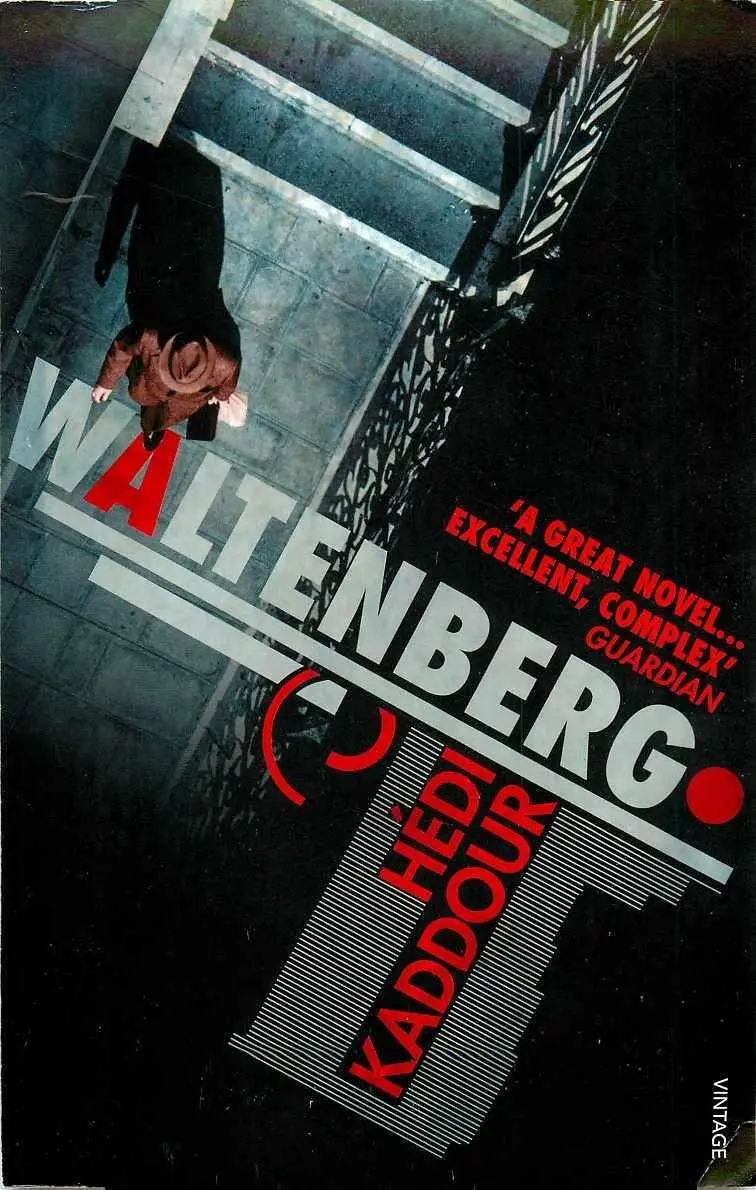
- Название:Waltenberg
- Автор:
- Издательство:Vintage
- Жанр:
- Год:2009
- ISBN:нет данных
- Рейтинг книги:3 / 5. Голосов: 1
-
Избранное:Добавить в избранное
- Отзывы:
-
Ваша оценка:
Waltenberg: краткое содержание, описание и аннотация
Предлагаем к чтению аннотацию, описание, краткое содержание или предисловие (зависит от того, что написал сам автор книги «Waltenberg»). Если вы не нашли необходимую информацию о книге — напишите в комментариях, мы постараемся отыскать её.
Waltenberg
Waltenberg — читать онлайн бесплатно полную книгу (весь текст) целиком
Ниже представлен текст книги, разбитый по страницам. Система сохранения места последней прочитанной страницы, позволяет с удобством читать онлайн бесплатно книгу «Waltenberg», без необходимости каждый раз заново искать на чём Вы остановились. Поставьте закладку, и сможете в любой момент перейти на страницу, на которой закончили чтение.
Интервал:
Закладка:
‘Very well, but no crosses or medallions, she doesn’t believe in God and she’s guessed that he’s a Protestant from the way he sees things, by his clothes, a Protestant who does not hate himself and finds it difficult to pretend to be innocent, just like me. And towards the end of the afternoon
‘One moment, Max! Leave them to me for five minutes, after all this is Lake Geneva! What is it about Thomas that caught the woman’s eye?’
‘Maybe my ears,’ says Max, ‘I think I’d like to lend him my ears.’
‘Some people might think you’re too sensitive about your ears, I know what they’re like, I can see them!’
‘You can see my ears?’
‘Don’t go on, I can see Thomas, and Hélène, they’re walking along the side of Lake Geneva, they’re pretending to identify the trees on the embankment or in the gardens of the houses, they’re sauntering, the branches of some trees hang so low that the leaves kiss their own shadows on the ground, others still have just a soft dusting of buds, she knows that they are thuyas, she knows far more about all this than yon Thomas, some gardens are virtually well-tended parks, with whole expanses of violets or dahlias, or form large-scale arrangements in which the yellow of the hydrangea rubs shoulders with the pale blue of the asters, and the eye skips away only to alight for a moment on the musky orange, old-gold, ochre and burned-toast of a clump of helenium, the hardest ones to grow are the ochre, the trick is how to preserve that warmth without letting it turn shrill.’
With his hands, Hans traces a circle in the air, the warmth of the ochre, what Lena said about singing, smuggle ochre into the voice, a round voice, full, ochre is a colour which has retained a degree of chiaroscuro in its warmth. He resumes:
‘Ochre is more difficult than the red you get in those poker-shaped flowers that stand on tall stems, Knophofia.’
Hans is getting heated, he always gets heated when he’s speaking French, the names of flowers, the pleasure of manipulating rare words, lush flora, of course he has been cheating, Max points to beds full of flowers spread out before them, all labelled, the meticulous labours of the squad of gardeners responsible for the Luxembourg. Hans adds: ‘I’m sure they have the same flowers in Geneva.’
Now and then Thomas and Hélène hear, in the bushes, a flutter of wings, or the raucous, caressing cry of the crows as they fly up into the oaks.
‘No, Hans, in France the caressing cry of crows doesn’t work, it sounds pretty but the word crow has been tainted by our anti-clerical battles and has never been the same since, so not easy to use it as a sound effect for a lover’s tryst.’
‘All right I’ll make it blackbirds,’ says Hans, ‘males or maybe females, I need something to liven up the background.’
‘Use rooks, I’ve no idea why but rooks seem to me to be more noble than blackbirds. Hans, we’re not getting anywhere.’
‘Did you or did you not put me in charge of sets and props? Right then. So what jobs do they do?’
‘She’s a nurse and midwife and he’s a schoolteacher.’
‘You’re full of surprises.’
‘He quickly realises that she is drifting.’
‘Max!.. And does he already know that she has just been left badly shaken by a first love affair?’
‘He’ll soon find out.’
‘Yo! An affair with a married man…’
‘I can’t hide anything from you.’
There’s only one way for Max to get out of this corner, and that is to ensure that the rest follows plausibly from this start which you might call novelettish, the only drawback being, if it’s true, that people always guess everything, but maybe they’ll like it even so. So how does the rest go?
‘The rest? Thomas will take Hélène back home with him where they need someone just like her, this won’t happen without the cat being set among the pigeons, a Swiss woman in the middle of Haute-Savoie.’
‘She’ll be terrified by your Savoyards, Max, she’ll want to bring hygiene to the natives, to those one-room mountain hovels, cow on one side, humans on the other, a channel in the middle for the slurry, and the cow’s tail attached with a line to ensure she doesn’t spray too much, they’ll have to wash, so there’ll be confrontations in the offing, and the sheep sleeping under the bed, and the empty racks where they put the hay, and all those wonderful objects…’
‘Talking of objects, Hans, did you know that in those parts the barber still charges you thirty centimes extra for the “spoon”?’
‘What “spoon”?’
‘He slides it into your mouth to make your cheek swell out for the razor.’
‘And if you don’t want the spoon?’
‘He does it with his thumb.’
‘ Scheisse !’
‘There must be the equivalent in your part of the world.’
‘In the South, in Bavaria, but we must get on.’
‘Thomas settles Hélène there,’ says Max, ‘but we’ve forgotten something, the boat trip, from Geneva to Évian, there’s nothing quite like it.’
‘You’re right, the boat is called The Simplon, it was commissioned in 1911, it sails in a triangle serving Geneva, Ouchy and Évian, it’s white, very wide, with one big paddle-wheel on each side, displacement two thousand eight hundred tons, can carry more than a thousand passengers; from the side, the sloped yellow-and-black funnel gives her a racing look, and in the prow, when there’s fog, youngsters can imagine they’re on an ocean-going liner ploughing through the spray on the high seas.’
‘I was forgetting that in another life Monsieur Kappler was a marine engineer.’
‘It’s a thing of unalloyed beauty, Max, when you stand in the middle of the lower deck and get a good look at the Winterthur mechanism the builder left open to the elements: two steel rods each two metres long are propelled horizontally from the boiler and thrust into the cast-iron cradle which receives them, they are then pulled back by an invisible hand before being pushed forward once more, they alternate, a mixture of fury and concentration, turning the axle of the paddle-wheels by means of two enormous cranks, two great asymmetrical blocks of steel which once they start rotating first check then boost the thrust, and over each joint of the whole mechanism, over each friction point, is a glass jar with a brass cap full of oil which keeps all moving parts lubricated, a pretty amber-coloured oil.’
‘That’s more than enough about your Winterthur, we must get on, Hans, we must start climbing and install our couple up in the mountains, in a village a thousand metres high.’
‘You want me to do it for you?’
Max takes his friend by the arm and makes as if to move him along: ‘Must get on.’
‘Did he marry her?’
‘Not straight away.’
‘We’ll have to explain how they settle in, the formalities, how a foreign national can take her place in a French village, Max, but it’ll be static, any ideas for livening it up?’
‘A trollop.’
‘A what?’
‘A trollop, the one who was there before.’
‘In the schoolteacher’s life?’
‘The daughter of a factory-owner in the valley, also a Protestant.’
‘With big feet?’
‘No, I was told she was beautiful, a bit on the thin side by rural standards, but beautiful, she made their lives impossible.’
‘That’s good, very good! In Germany, women wouldn’t dare. What does it mean in those parts, made their lives impossible?’
‘One morning, Hélène found thirty villagers on the doorstep of the house she’d been allocated, grim faces, the most awful scene. Hans, do you know who all those ladies were?’
Around them, statues of the queens of France, Hans looks up at Catherine de Medici, profile, shoulders, his mind wanders; twenty metres away, under the trees, girls wearing frocks are playing tennis, they’ve strung a red rope between two tree trunks, they shout, they don’t have the proper footwear, one of them has just come from the fountain carrying a bucket, the bucket has a hole in it, it lets water escape in a thin jet, the girl carrying the bucket redraws the markings of their court with the jet of water, where have these tennis-playing young women come from?
Читать дальшеИнтервал:
Закладка:
Похожие книги на «Waltenberg»
Представляем Вашему вниманию похожие книги на «Waltenberg» списком для выбора. Мы отобрали схожую по названию и смыслу литературу в надежде предоставить читателям больше вариантов отыскать новые, интересные, ещё непрочитанные произведения.








Обсуждение, отзывы о книге «Waltenberg» и просто собственные мнения читателей. Оставьте ваши комментарии, напишите, что Вы думаете о произведении, его смысле или главных героях. Укажите что конкретно понравилось, а что нет, и почему Вы так считаете.