Hedi Kaddour - Waltenberg
Здесь есть возможность читать онлайн «Hedi Kaddour - Waltenberg» весь текст электронной книги совершенно бесплатно (целиком полную версию без сокращений). В некоторых случаях можно слушать аудио, скачать через торрент в формате fb2 и присутствует краткое содержание. Год выпуска: 2009, Издательство: Vintage, Жанр: Современная проза, на английском языке. Описание произведения, (предисловие) а так же отзывы посетителей доступны на портале библиотеки ЛибКат.
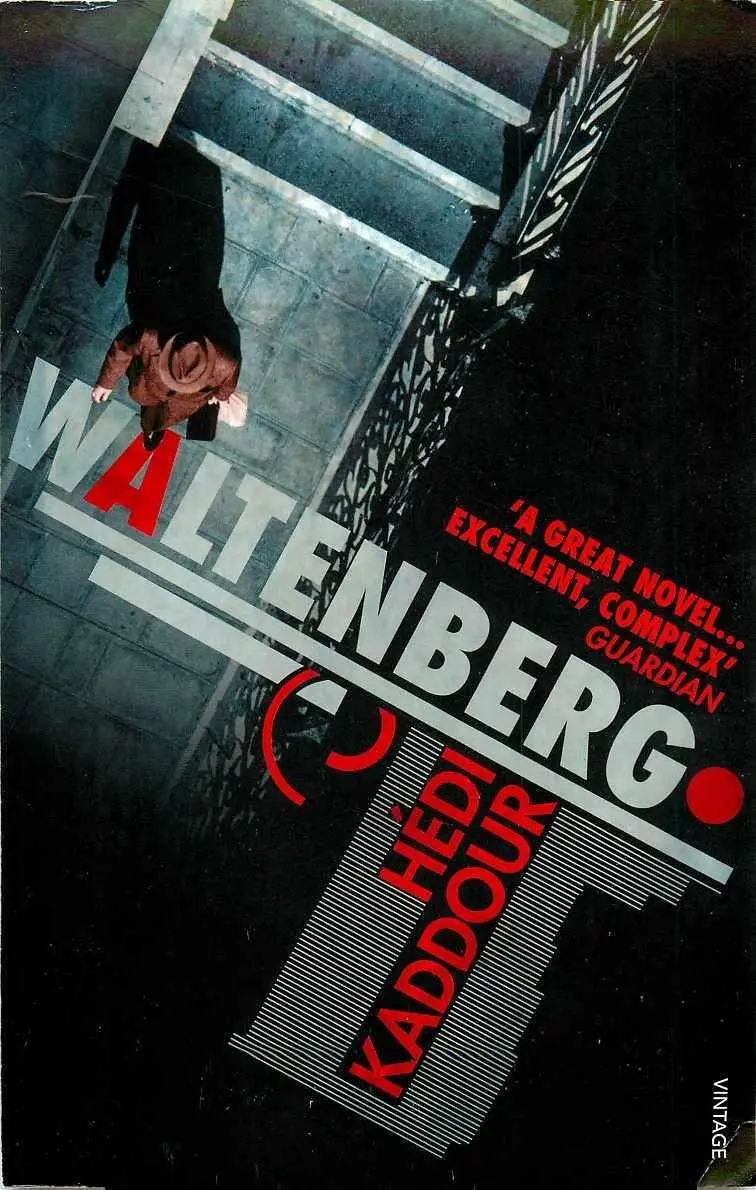
- Название:Waltenberg
- Автор:
- Издательство:Vintage
- Жанр:
- Год:2009
- ISBN:нет данных
- Рейтинг книги:3 / 5. Голосов: 1
-
Избранное:Добавить в избранное
- Отзывы:
-
Ваша оценка:
Waltenberg: краткое содержание, описание и аннотация
Предлагаем к чтению аннотацию, описание, краткое содержание или предисловие (зависит от того, что написал сам автор книги «Waltenberg»). Если вы не нашли необходимую информацию о книге — напишите в комментариях, мы постараемся отыскать её.
Waltenberg
Waltenberg — читать онлайн бесплатно полную книгу (весь текст) целиком
Ниже представлен текст книги, разбитый по страницам. Система сохранения места последней прочитанной страницы, позволяет с удобством читать онлайн бесплатно книгу «Waltenberg», без необходимости каждый раз заново искать на чём Вы остановились. Поставьте закладку, и сможете в любой момент перейти на страницу, на которой закончили чтение.
Интервал:
Закладка:
Hans would have liked Max to let him tell at least part of the love scene between Thomas and Hélène, he’s cross with Max for having beaten him to it:
‘A scene on the steamy side, Max, you’ve taken the best bit! I long to write something like that.’
‘It won’t be published.’
‘But you’ll let me read the scene you’ve written?’
‘No,’ says Max, ‘I had the nerve to put it down on paper but I wouldn’t dare let anyone read it, I’m afraid of what they would say.’
‘If you wrote it, it means that you did meet a woman.’
‘You know how it works, the only assignation you have is with your reader.’
And Max explains to Hans that he finds it hard to face the public, to abandon the public he imagines while he’s writing and face the real public, he has a very complicated notion of the public, obviously he has a number of imaginary allies who accompany his every sentence, but always looming before him, on his right, is someone who keeps an eye on him and never approves of anything he writes, and someone sitting in front of him, who cannot read the sentence Max is writing but seems to know it even as it is being written, it seems as if it is being written in the head of this person at the same time as it is being written on Max’s page and the sentence brings a smile to the face of this faceless person, a smile which is unbearably knowing, it isn’t a friendly reader who might say I can hear too many iambic pentameters in that clause, too much blank verse, too many things that are self-evident, do you really want to say that the milkman came at ten past five? No, the person who sits opposite Max and smiles is a person who is ready to deride everything Max thinks particularly fine in his writing.
Not a person as kindly disposed as the Hans who warned him he was perilously close to melodrama, not someone meticulous like his boss François Mérien, who told him this sentence lacks rhythm, take out a verb here, put a full stop there, no, someone who doesn’t need Max’s book but in Max’s mind is nevertheless a person of some importance, a person who smiles when he says:
‘Does this serve a useful purpose?’
Max hasn’t called this faceless face names as he most assuredly would if he were dealing with some stupid critic, the blank face is that of both the public he needs to win over and the public which will never be won over, the public which Max masters for all its peevish ill-temper and its ideas about what a proper novel should be, the public which is there every time Max removes or amends a word and whispers in his ear:
‘Surely you don’t think you can get away with just doing that?’
The loathsome, indispensable public with its insane and insatiable demand for nebulous quality, everything that makes Max feel furious with himself for not responding to the madness that is his, and angry also with this public which asks so much of him, he has finally grown to resent everyone who constitutes the real public, people like him, his contemporaries, everyone, every phrase becomes a cage and he resents all the people he invites to watch him in his cage, he feels he’d like to stuff their heads down a lavatory pan.
He begins to hate people who never did anything to him, simply because he himself admits he’s no good at anything, and sometimes Max turns pragmatic, holds forth, what comes closest to it in tone is the small, shrill voice of the modish journalist, a touch limp-wristed, a touch corrupt.
Max knows that limp-wristed and corrupt are idiotic words, but he needs them to give a name to the hate which seizes him, to give a name to what will be his failure, he has laid his book before that faceless face, saying here you are, know me, I who have done everything to ensure that you will recognise yourself in me, a struggle for recognition, he will lose, limp-wristed, corrupt, a name for the someone who would make fun of his love scene, of the fornucopia, as Flaubert might say, which Max wrote at a time when it could still cost an author dear, when at the very least it would get your book banned in public and limit you to the market for erotic books aimed at lawyers.
And Max is all the more wary because not long ago, in Paris, a writer was found guilty of uttering an obscenity, Victor Margueritte, fined, stripped of his Legion of Honour for having written in La Garçonne , ‘she was picking the dark-hued lavender, seeing her crouching loins he had seized his chance, he had pulled up her skirt and she had felt the fiery god possess her.’
His Legion of Honour, they say he got it for gallantry in the field. Stripped of it for crouching loins. Plus two or three paragraphs of Sapphic delights. Max wrote his sex scene because he is jealous, not of Margueritte, a novelist whom you can see pulling the strings rather too obviously, but jealous of an Englishman whose book he has read which in London circulates under the counter.
This book has infuriated Max because as he read it he realised that it was exactly what he would have liked to write himself, it would have established his reputation in a blaze of lightning as a novelist out of the ordinary run of novelists, and he begins to hate the novelist he would like to have been as much as he hates the reader he would like to have.
So it transpired that this middle-aged Englishman wrote the book Max should have written, it wasn’t so much the story of a gamekeeper and a lady, but the man’s direct way with words like hole, penis, fuck, balls, and at the same time a great tenderness, a taste of apple, delicate gestures, everything that made Max want to say that this happened with Thomas because Hélène could no longer put up with Thomas’s hangdog manner, she took her decision, despite all the smiles of the reader whose sarcastic comments already ring in Max’s ears, she will give him what he has been wanting since the day they first met, only Max will use fewer metaphors than the Englishman, and Hélène will take the lead, for she will no longer allow herself to be taken.
One evening she goes to Thomas’s house, a nightdress under her cloak, goes up to his room, he is already asleep, she takes off her cloak, the rustle wakes him, don’t move! she gets into the bed, pins Thomas on his back, prevents him making the movements which men always think necessary for the seduction of the female, she doesn’t want him to try to seduce her, men always hurt her, so she will undress him.
Thomas’s penis when she removes his short drawers, but she has no wish to touch it, she is not a whore, she comes to him out of tenderness, now Thomas is naked the skin softer than she expected she is melted by it she repeats don’t move! and lowers herself on to Thomas laying her head next to his neck, the penis, an apprehension, Thomas makes a movement which hurts her, she says sh! she takes the penis, and Max thinks that the word penis is not entirely appropriate but what other word is there? penis is medical, phallus, too erudite, sex, that’s it, his sex.
It’s the word Max thought of first on the métro, when the frightened look in the eyes of a woman passenger made him realise that he’d just said it out loud while searching for what he wanted to say, but actually the word came to mind too soon, Max amused himself trying out other words, cock, tail, prick, dick, he changes his mind, and Hélène guides the penis with her hand saying ‘gently’, she is the one who thrusts, the contact surprises her, it’s more than a year since she felt it and the sensation is not the same as with the man then, Thomas does not dare look at Hélène, he has closed his eyes and breathes more loudly, she says ‘don’t hold back’.
She prevents Thomas from moving, she does not want him to go off as they say, she’d be afraid, and though she had not planned it in advance she’s the one now who, I’ll have to reread the English author thinks Max, he can prolong, describe, change the metaphors the one about melting her all molten, the one about the sword, the one about heaving waves breaking over the very quick of her, leave all that to the poets along with the one about the yielding scissors and the cloth, Hélène moves slowly, just think about what she’s doing, faster keep an eye on Thomas his breathing thinks of herself she tenses suddenly, and when it’s over don’t have too many flowers not as many hyacinth bells as the English writer has, nor meadowsweet nor bluebells, Thomas has given a little cry, she is prone on top of him, from time to time faint stirring between her legs, how many years has she wasted? She kisses Thomas’s face, licks the tears on his cheeks, he tries to caress her she restrains him she does not want to find just another male, with their jerking, their writhing, that stupid look they put on their faces when they dominate, the ridiculous thrusting of their buttocks, some really bite, others just leave unbearable lovebites on the neck, one of her friends told her, ‘They learn about love in the army, at the same time as they learn to march in step.’
Читать дальшеИнтервал:
Закладка:
Похожие книги на «Waltenberg»
Представляем Вашему вниманию похожие книги на «Waltenberg» списком для выбора. Мы отобрали схожую по названию и смыслу литературу в надежде предоставить читателям больше вариантов отыскать новые, интересные, ещё непрочитанные произведения.







Обсуждение, отзывы о книге «Waltenberg» и просто собственные мнения читателей. Оставьте ваши комментарии, напишите, что Вы думаете о произведении, его смысле или главных героях. Укажите что конкретно понравилось, а что нет, и почему Вы так считаете.