Hedi Kaddour - Waltenberg
Здесь есть возможность читать онлайн «Hedi Kaddour - Waltenberg» весь текст электронной книги совершенно бесплатно (целиком полную версию без сокращений). В некоторых случаях можно слушать аудио, скачать через торрент в формате fb2 и присутствует краткое содержание. Год выпуска: 2009, Издательство: Vintage, Жанр: Современная проза, на английском языке. Описание произведения, (предисловие) а так же отзывы посетителей доступны на портале библиотеки ЛибКат.
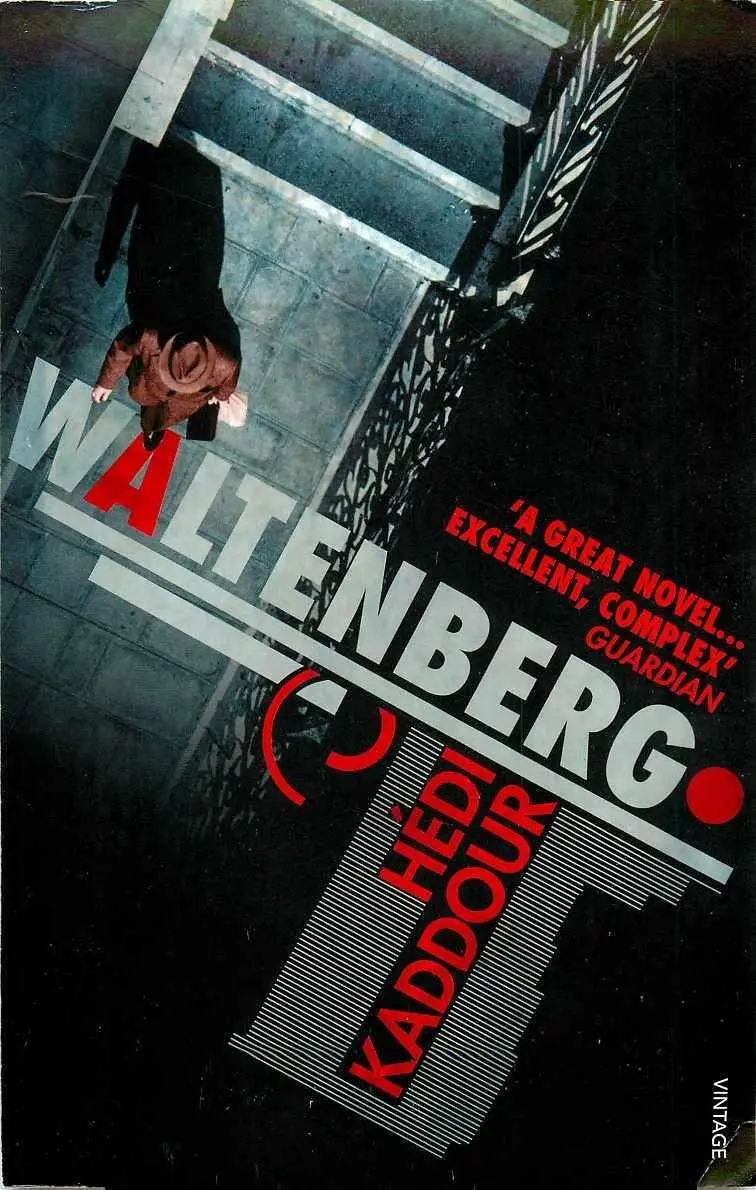
- Название:Waltenberg
- Автор:
- Издательство:Vintage
- Жанр:
- Год:2009
- ISBN:нет данных
- Рейтинг книги:3 / 5. Голосов: 1
-
Избранное:Добавить в избранное
- Отзывы:
-
Ваша оценка:
Waltenberg: краткое содержание, описание и аннотация
Предлагаем к чтению аннотацию, описание, краткое содержание или предисловие (зависит от того, что написал сам автор книги «Waltenberg»). Если вы не нашли необходимую информацию о книге — напишите в комментариях, мы постараемся отыскать её.
Waltenberg
Waltenberg — читать онлайн бесплатно полную книгу (весь текст) целиком
Ниже представлен текст книги, разбитый по страницам. Система сохранения места последней прочитанной страницы, позволяет с удобством читать онлайн бесплатно книгу «Waltenberg», без необходимости каждый раз заново искать на чём Вы остановились. Поставьте закладку, и сможете в любой момент перейти на страницу, на которой закончили чтение.
Интервал:
Закладка:
‘Amusing, don’t you think? Yes, Ensor also does pastiches of Rembrandt, Doctors Pouffamatus and Transmouffe examining the stools of King Darius after the battle of Gaugamela, to determine if the defeat can be attributed to the disorders of the royal intestine, which is quite an undertaking! The Belgians reckon him to be a great painter, but they can’t control him, the burghers lose sleep over him, he paints a strike and demonstration, he has this man with his skull split open by a rifle butt, people living on a second floor spew their dinner over police underneath, while on the top floor a man with a pig’s head kisses a woman who makes a face, I’m going to take another look at all that with my boy genius, sure you won’t come to Brussels with us?’
Hans has run out of time, at least that’s what he tells Max, what he doesn’t say is that he wants to call in at the Paris office of Cunard, information about transatlantic crossings, perhaps even cross on the Queen Mary from Le Havre to Southampton, just to see what it’s like to stride around the decks thinking of Lena, Hans makes up a story about having to be in Berlin in two days, shall they meet up again at Waltenberg, at the Waldhaus, in March?
Sure, says Max. It’s not that he’s that terribly keen to make the trip to Waltenberg in March, but his boss wants him to go. Max would much rather cover some sporting event, yes, write a novel and report on a sports event, lend his support to the French rugby team which is going through a bad patch, that’s what I need, creativity, play, it would make a change from the Riff and Shanghai, you know what I’ll miss by going to Waltenberg? I’m going to miss the Six Days, I’ll miss the France-Portugal football match, France-England at rugby at the Stade Colombes, and I shall also miss, here Max does a shuffle with his legs, jabs the air with his fists, a child stares at him, Battalina v. Genscher, the world light-heavyweight title fight, because I’m also going to have to report on a session of the council of the League of Nations before travelling up that mountain, I’m quite happy, long live Waltenberg and its yahoos! And meanwhile I shall continue to beaver away at my story set in Savoie, I’ll leave blanks for you to add landscapes and objects.
Max stops, grabs Hans by the sleeve and brings him to a halt, an affectionate look:
‘Hans, wouldn’t you like the both of us to go to America and look for her? Mérien would find me an assignment. You could tell me why you’re afraid to find her, why you’re such a difficult man. What happened up there, all those years ago?’
*
Silence, the silence and the stillness must have woken him, Max listens, a moment later metallic clangs, voices, then silence again, Max does not like it, it’s not long ago since silence like this was a direct threat to life and limb, his and those of any number of others, a silence which was a prelude to earthquake or apocalypse, depending on the ideas and beliefs of the individual, ideas and beliefs which in the coming minutes would no longer carry any weight whatsoever, the grotesque lull which turns you into a lump of meat smelling of fear, flattened to the ground, ready for the mincer.
Max listens, dispersing any remaining sleep in his state of high alert.
Creaking sounds. They come from outside, though not entirely, the creaking of metal and wood, very clear in the silence, small jolts, bustle and activity at one end of the coach. Max pulls back the curtain over his window, it’s very dark, he must be in Switzerland, he scrapes away enough frost to make a hole to see through the glass: feeble light cast by two lamp posts, a clock, nobody about, a quarter to four, no sound of any machinery, and the world, or what is left of it at this hour, has ceased turning.
On a sign Max reads Landquart, it’s the start of the Grisons, the high mountains. The coach has stopped rocking. More jolts. Max realises now that his coach is being hitched to a high-altitude train. Silence again, a voice says something in German, a lilting kind of German, and slowly the coach starts moving, accompanied by the puffing of a shorter-breathed engine than the ‘Mountain’ which Max had admired before boarding it in the Gare de l’Est. The platform slips past, then a few houses, they scowl under an uncertain moon.
He’s on his way to Küblis, from there he can get a bus or car to Waltenberg, his left shoulder aches, and it will get worse and worse, he tells himself, as he thinks of his wounds for the first time that day, of the after-effects that will be his legacy into old age.
The spring of 1929 began officially a few days ago and it is even colder here than it was in Paris, all Max can make out through the fog of his own breath are the high walls the snowplough has left along each side of the track, they’re so close to the sides of the coaches you could almost touch them with your hand. In places the sides of this corridor are lower, and permit glimpses of a landscape muffled by snow under the moon, dimpled with occasional swellings, like large bubbles: buried villages.
Even during the winters of the Great War he had never seen as much snow, under the stars the land is broken white, as far as the eye can see, a cold planet.
The train is not travelling fast, Max tries to get back to sleep, try to keep off that left shoulder, he lies on his other side, shuts his eyes, but he hears the blood thumping in his temples, a sure sign of insomnia, he is cross with himself for waking up, don’t get all het up, breathe slowly, stop thinking about it, try inventing one of those conscious dreams you use for getting off to sleep, he closes his eyes, imagines he is a policeman, a superintendent, calm temperament, and he embarks on his favourite plot, a story about a beautiful suspect who says she committed a murder but whose innocence he sets out to prove and thus unmask the husband, but the woman is strange, the more she wins Max over to her side and makes him want to get her out of trouble, the more inextricably guilty she seems, and on the contrary the superintendent’s well-meaning enquiries merely multiply the charges against the woman whose name he wants to clear.
Ordinarily, it’s a pretty effective dream, his mind, unable to break out of the labyrinth and come up with some way of saving the woman, overheats, gives up and surrenders to the security of real dreams which he can feel gradually encroaching on his initial reverie, they provoke short-circuits which last longer and longer, commotions, things that happen for no reason: the suspect he is interrogating suddenly turns into the teacher he had when he was little or a dead friend with whom he sallies forth to buy a bunch of violets in an unknown town.
Max fights against these genuine dreams, he takes back the initiative, questions his suspect with glee, brings her to the edge of a confession, then the friend returns, turns nasty, the violets disappear, his old teacher takes off her overall, the motor races wildly and Max swings into a copper-bottomed sleep.
At least that’s the theory, but in this train which will take more than another three hours to deposit him below Waltenberg, Max senses that his little subterfuge isn’t working, he is much too wide awake now, all the problems of his waking hours will start up, he’s thirsty, he knows that if he gets out of his couchette and puts the light on to pour himself a glass of water he will start something irreversible, he won’t be able to go back to bed.
Sleep? what’s the point? sleep, silence: death’s antechambers. Not feeling too cheery this morning, he gets up, drinks the glass of water, he feels another need, he opens the small cupboard, shuts it again, without using the chamber pot, he doesn’t like them, even the ones provided by the Compagnie internationale des wagons-lits et des grands express européens, with gold border and blue monogram, he smiles, Mérien’s neat observation:
Читать дальшеИнтервал:
Закладка:
Похожие книги на «Waltenberg»
Представляем Вашему вниманию похожие книги на «Waltenberg» списком для выбора. Мы отобрали схожую по названию и смыслу литературу в надежде предоставить читателям больше вариантов отыскать новые, интересные, ещё непрочитанные произведения.








Обсуждение, отзывы о книге «Waltenberg» и просто собственные мнения читателей. Оставьте ваши комментарии, напишите, что Вы думаете о произведении, его смысле или главных героях. Укажите что конкретно понравилось, а что нет, и почему Вы так считаете.