Hedi Kaddour - Waltenberg
Здесь есть возможность читать онлайн «Hedi Kaddour - Waltenberg» весь текст электронной книги совершенно бесплатно (целиком полную версию без сокращений). В некоторых случаях можно слушать аудио, скачать через торрент в формате fb2 и присутствует краткое содержание. Год выпуска: 2009, Издательство: Vintage, Жанр: Современная проза, на английском языке. Описание произведения, (предисловие) а так же отзывы посетителей доступны на портале библиотеки ЛибКат.
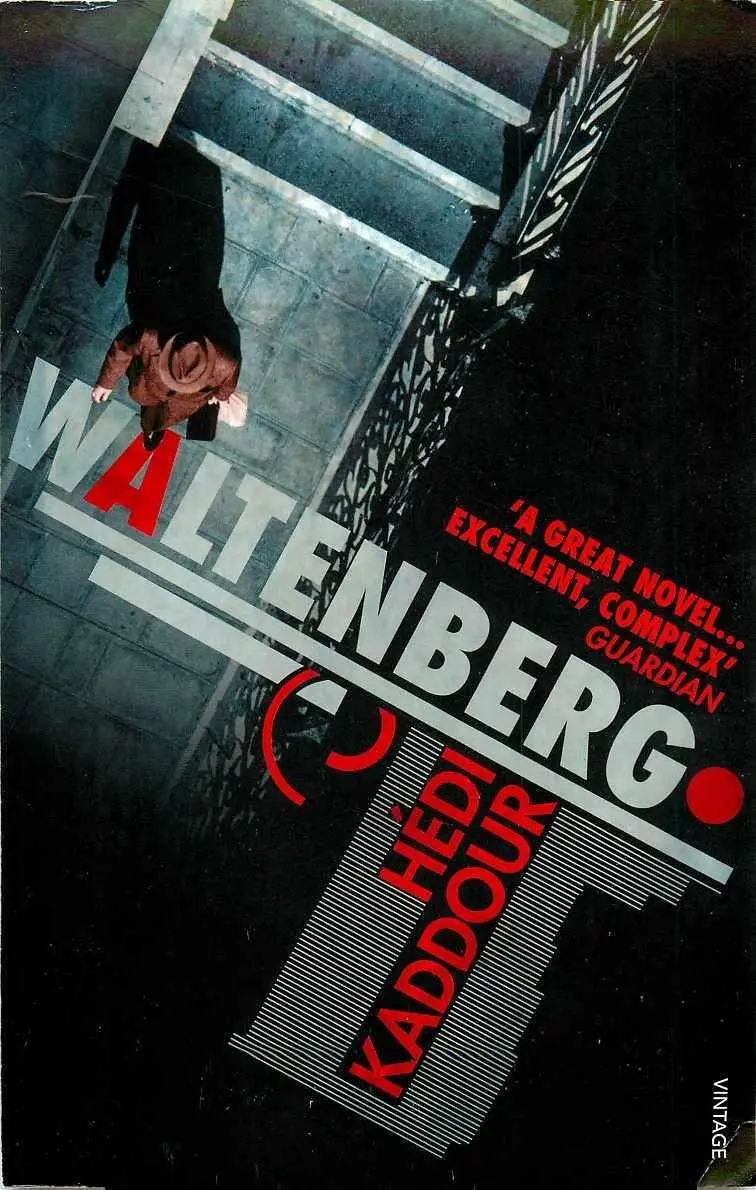
- Название:Waltenberg
- Автор:
- Издательство:Vintage
- Жанр:
- Год:2009
- ISBN:нет данных
- Рейтинг книги:3 / 5. Голосов: 1
-
Избранное:Добавить в избранное
- Отзывы:
-
Ваша оценка:
Waltenberg: краткое содержание, описание и аннотация
Предлагаем к чтению аннотацию, описание, краткое содержание или предисловие (зависит от того, что написал сам автор книги «Waltenberg»). Если вы не нашли необходимую информацию о книге — напишите в комментариях, мы постараемся отыскать её.
Waltenberg
Waltenberg — читать онлайн бесплатно полную книгу (весь текст) целиком
Ниже представлен текст книги, разбитый по страницам. Система сохранения места последней прочитанной страницы, позволяет с удобством читать онлайн бесплатно книгу «Waltenberg», без необходимости каждый раз заново искать на чём Вы остановились. Поставьте закладку, и сможете в любой момент перейти на страницу, на которой закончили чтение.
Интервал:
Закладка:
‘I want a journalist to be as curious as a piss-pot.’
He pulls his coat over his pyjamas and puts on his slippers, as a young man he loathed the slippers his mother bought him, he preferred leather mules, even in winter.
One night, in the trenches, a comrade had said:
‘When it’s all over I’m going to buy myself some slippers, and I’ll kill the first bastard who laughs.’
Max steps out of his compartment and walks all the way to the toilet at the far end of the coach.
When he gets back, he is no longer sleepy nor does he want to be sleepy, he just feels stiff and sluggish, with a migraine in the offing, he opens one of the windows in the corridor, holds his face into the icy air, reaches out with one hand to snatch snow from the walls that are so close and rub it over his eyes and cheeks, not such a good idea, the roughness under the crystals, no more hand or even no more arm, it only takes a moment, like that time at Veneux, at the start of 1918, a series of appalling howls and hissings, the trench is about to collapse, they’d looked at each other: a whizzing shell bursts, just metres away! they were all there, Stéphane with his mouth hanging open, eyes like chapel hatpegs, short of one hand, he wasn’t screaming yet as he would in the seconds that followed, Max remembers that at that moment he’d thought:
‘So that’s what’s meant by looking surprised.’
Then the screams, which gangrene had turned into moans a few days later in the battalion infirmary, Stéphane whom they comfort through the smell of disinfectant and rot:
‘Thought we’d come and cheer you up, take you out of your shell.’
And the medic who sees no point in further amputations:
‘The gangrene has spread everywhere.’
Max closes the window, he looks down the length of the corridor of his sleeping-car, the designs on the lampshades overhead, he runs his hand over the grained lemonwood veneer, the discreet brass handrail, and proceeds slowly, so that he feels the thickness of the pile of the carpet under his feet, everything is so very orderly, luxurious, calm, he enters his compartment, gives up all thought of his couchette, sits on the seat opposite, somewhat put out that he’s not facing the engine, but if you’re that pernickety then you’re going to find growing old something of a strain.
Stéphane’s father was Mérien, François Mérien, owner of Le Soir, more than a million copies sold daily. Six months ago, in September, he’d said to Max:
‘I’m sending you to cover these shenanigans because I want the real behind-the-scenes story, what they’re saying about Europe, their thinking, their politics, all their discussions, what’s behind it all, cash? Power? Treason? A conspiracy? They’ll talk about values, that’s good, I like values, I want every man jack of them stripped bare! You’ll be staying with them at the Waldhaus, all expenses paid, keep the bar bill down, off you go, and make the most of it.’
That was the boss for you, short-fuse, but he was very fond of Max, Max had written to him immediately with an account of Stéphane’s death, without frills, death of a hero, Mérien had been grateful to Max, he’d never tried to check what was hidden behind what he had written and, as the years passed, he, who was obsessed with clarity, assuaged his fatherly grief with the myth of a bullet in the head on the field of honour that he would never have entertained for one moment if it had been someone else.
‘So what are you going to do now?’ Mérien had asked Max at the very start of their relationship, when he took Max to lunch so he could hear him talk about his son.
It was just after what had been called the Victory. Max had not answered, he was drifting; before the war, he’d wanted to be a writer, he’d given that idea up. One day, Mérien had pressed him and the only thing Max could think of to say was:
‘I’d like to be a Nosy Parker.’
Mérien had given him a job and turned him into a reporter:
‘From this day henceforth, subject, verb, object. For adjectives, see me first!’
He’d also ordered him not to write any sentence more than fifteen words long, then he’d loosened the reins. Max had become one of his best reporters.
As the years passed, Max had come to like François Mérien very much. His boss had a reputation for being a coarse man, but Max knew that he set aside one hour every day to translate Pindar or Tacitus, he had known Mallarmé, Jules Renard, Gabriel Fauré, and at least once a day he would go into the editorial room and shout:
‘Make Wendy feel weepy and Andy feel randy! And let’s do it with style!’
He had interests in a company that made a vitamin-enriched cordial, he handed out bottles of the stuff to politicians terrorised by his paper and its two and a half million readership, an ambiguous gift, some ministers tried to find out through Max whether the cordial was a friendly gesture or if it meant Mérien considered that they were finished.
Even Poincaré had been scared the day Max asked him for his opinion of the cordial:
‘Tell your employer that I partake regularly. And that I never felt better in my life.’
Another minister had offered to make the cordial part of the weekly rations given to colonial troops, Mérien had refused and laughingly told Max:
‘That would be like something out of Feydeau. It’s best if all this stays between him and me.’
And Max never did discover if Mérien seriously believed in the effectiveness of his cordial.
In the train, too late now to go back to sleep, too early for breakfast, Max tries to think, morning is his best time for ideas, before midday you can still put one thought with another and shake them up with a stub of pencil and a notebook, a number 2 lead pencil, not too bold but soft enough to keep up with your thoughts, a 2B. After lunch, all Max is good for is living.
He shuts his eyes, opens them again, it’s daylight, the frost has gone from the window, slopes now figure much more prominently in the landscape, Max muses, remembers, lets his mind wander, abandons his memories, stops tapping a pointless rhythm with his pencil, these European conferences, find a subject for a real think-piece, with more punch than usual, make it dramatic, deep down it’s all theatre, difficult, when they’re on stage the characters refuse to play down their personalities, or rather Max himself finds it difficult to keep his distance, you feel much too much at home with these people, money, power, you were a pawn in the game, not insignificant but a pawn nonetheless, surplus to requirements.
Max never completed his studies after the war was over, a writerly vocation, I’d have been better off becoming a respectable solicitor, with wife, in some market-town, then I wouldn’t be hearing someone like Wendel saying you know, a job like mine, pure fluke, and if I stay it’s because I don’t really have a choice, no one else would do it.
All these people want to spend time with Max, they need him, he is the intermediary between them and the hoi polloi they all want to nobble, organise, direct, control, and above all be loved by.
‘Single-minded about collective action’: a phrase that goes into the notebook, Max is not entirely happy with it, come back to it later, big people convinced they are right to bully the little people they rule and become even more authoritarian and inflexible, make this clearer, find an image, a parable, newspaper readers like a parable, a story:
‘Max! find me a story!’ Mérien would say sometimes when one of his pieces seemed too abstract.
A life spent as a famous reporter, you drink champagne with Van Ryssel who owns a fifth of all the steelworks in Europe, you lunch as the guest of Duissard whose bank holds a large percentage of Van Ryssel’s shares, and you even bought a hat with Merken, at Freiburg, as if you could care less, Merken put one hand on your shoulder saying good choice I’ll get one too, Merkel copied you, a dark-grey bowler, we have the same tastes, true, but it’s not you who goes home, picks up a pen and writes What is Metaphysics? No, you go back to the paper to churn out copy and you never made anything of that meeting, you were taught for two years by Bergson and you never made anything of that either, at least Merken got a hat out of it, Max also likes Willi Münzenberg, one of the men Moscow never fails to send to congresses like this, and there’s also Hans who doubts everything and is the only really new writer to have emerged since the war, Max even recalls the beauty spot on the thigh of Madame de Valréas, their common muse, whose strength of will is the driving force behind these conferences, everyone here likes Max and wants to be liked by him.
Читать дальшеИнтервал:
Закладка:
Похожие книги на «Waltenberg»
Представляем Вашему вниманию похожие книги на «Waltenberg» списком для выбора. Мы отобрали схожую по названию и смыслу литературу в надежде предоставить читателям больше вариантов отыскать новые, интересные, ещё непрочитанные произведения.






Обсуждение, отзывы о книге «Waltenberg» и просто собственные мнения читателей. Оставьте ваши комментарии, напишите, что Вы думаете о произведении, его смысле или главных героях. Укажите что конкретно понравилось, а что нет, и почему Вы так считаете.