Hedi Kaddour - Waltenberg
Здесь есть возможность читать онлайн «Hedi Kaddour - Waltenberg» весь текст электронной книги совершенно бесплатно (целиком полную версию без сокращений). В некоторых случаях можно слушать аудио, скачать через торрент в формате fb2 и присутствует краткое содержание. Год выпуска: 2009, Издательство: Vintage, Жанр: Современная проза, на английском языке. Описание произведения, (предисловие) а так же отзывы посетителей доступны на портале библиотеки ЛибКат.
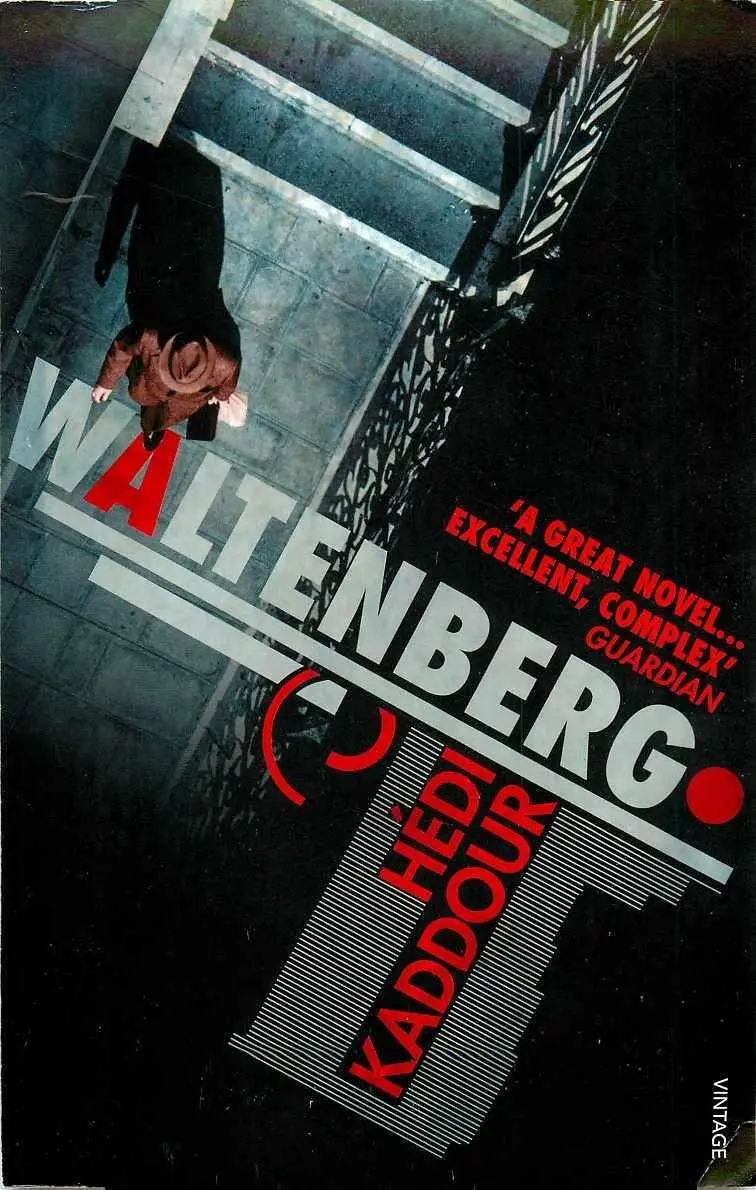
- Название:Waltenberg
- Автор:
- Издательство:Vintage
- Жанр:
- Год:2009
- ISBN:нет данных
- Рейтинг книги:3 / 5. Голосов: 1
-
Избранное:Добавить в избранное
- Отзывы:
-
Ваша оценка:
Waltenberg: краткое содержание, описание и аннотация
Предлагаем к чтению аннотацию, описание, краткое содержание или предисловие (зависит от того, что написал сам автор книги «Waltenberg»). Если вы не нашли необходимую информацию о книге — напишите в комментариях, мы постараемся отыскать её.
Waltenberg
Waltenberg — читать онлайн бесплатно полную книгу (весь текст) целиком
Ниже представлен текст книги, разбитый по страницам. Система сохранения места последней прочитанной страницы, позволяет с удобством читать онлайн бесплатно книгу «Waltenberg», без необходимости каждый раз заново искать на чём Вы остановились. Поставьте закладку, и сможете в любой момент перейти на страницу, на которой закончили чтение.
Интервал:
Закладка:
Throughout his entire youth, Max sought to win them over, I am becoming the finest writer of my generation, all doors are open to me, wonderful pages you put in the waste-paper basket without even rereading them, and it’s only when you can no longer be bothered to write any more pages wonderful or otherwise that people start swarming all over you asking for articles for newspapers, parties at the Valréases, highly enjoyable, until the day Mérien yelled at you:
‘No fancy literary stuff! An article is only something you’ve got time to read in the bog!’
Max knows all that, he forgets, the dream of writing that will endure, he pulls himself together, keep at the daily task, he learns to forget just enough to allow him to cling to his dream, to make the most of it, like a good cigar or a liqueur, reread Maupassant, Turgenev fast enough for you to come away with the impression that you could do as well.
Madame de Valréas! Universal muse to the fine assembled company, a Baroness, and there is no shortage of Baronesses in these circles, but she has a genuine ancestry, money, the talents which go with money, good legs, teeth extremely suitable for smiling with, has a certain je ne sais quoi, as they used to say before the war, Max has slept with her, just once, at the close of the Belle Époque, a fine house, the property of a banker, in Brittany, with a wheat field which sloped directly down to the beach, the gold of the sand, the green of the ears of corn dotted with bright red freckles, ribbons, parasols, and all of it whipped by squally showers and blustering winds combined with whatever the cloud-factory threw up at the sun, the gleam of molten metal, the flap of flags, the tumults of opium, sandstorms, blowing with a strength which lent an aura of bravery to the little dolls in their Sunday best who had come to the beach to kill their germs in the foaming brine and uttered coltish shrieks of terror each time a wave nibbled a crinoline hem or a shoe, in May 1914, the good times.
By about two in the morning, all the couples had formed up, Max and Madame de Valréas had found themselves alone in the lounge, Max is not very susceptible to the charms of La Valréas, a state of affairs which allows him to risk a remark:
‘It looks, Baroness, as if we’ve been left to ourselves.’
Was she really tight? Just drunk enough for you to be allowed to do whatever you wanted? She’d followed Max, glass in hand, and had made him go first as they went up the stairs, saying:
‘The best bit is always the stairs.’
The Baroness is a virtuoso conversation-maker, when she speaks she backs her words with movements of her hands:
‘You know, I’m from the south of France.’
Not quite. The way she speaks is altogether more calculated than loquacious, she makes a point of flexing the joints of each finger and puts you in mind of a crazed orchestra maestro, or a spider’s legs, her voice is metallic, her eyes violet, her body a touch on the skinny side, but buttocks which fear no man’s scrutiny, she is an expert, she knows that what she does with her hands takes in only the simpletons, and that it captivates men who are receptive to well-oiled gestures, she has a dream: to reconcile France and Germany and help build a Europe free of Russians and Yanks, from Danzig to Bordeaux and Athens.
‘Not forgetting Italy, where very interesting things are happening.’ A Europe with clout, with workers who turn up on time, who are paid fairly but not excessively, well-behaved adolescents, large families, full churches and respect for success.
Max tries to sum up all that in one phrase, for a cross-title for the paper, he notes: ‘The Values of Wartime Togetherness Applied to Entire Continent’. He puts his pencil down, stares at his reflection in the window and murmurs to himself: ‘with La Valréas having the right to open her legs whenever she feels like.’
In the corridor, a bell, a voice:
‘Breakfast! First Sitting!’
Already. Max gets washed and dressed quickly.
He is sitting at a table in the restaurant-car, he has half an hour before he arrives at Küblis, he makes a few more notes, the main points of what will happen, four or five people are already in the process of drawing up the Seminar’s end-of-conference resolution, this sort of conference only works if the organisers know in advance where they’re going, it’s only a talking-shop but it’s precisely on these occasions that they fine-tune ideas on which political campaigns and votes in parliaments will later turn, an old-fashioned free-for-all, Max had seen what had happened in London the previous year.
Six days spent on a few odds and ends of phrases, ‘how we must give shape to the natural momentum of the European economy’, that was included at the behest of Van Ryssel and the steel cartel, ‘maintaining the status quo of frontiers inside Europe’, one for the Poles and the Czechs, ‘safeguarding the sovereignty of nations’, for the Germans this means withdrawing the French and Belgian occupying troops, and then other forms of words, rather more cryptic, ‘to give full scope to initiatives taken by industry’, trade unionists insisted on the addition of ‘with proper regard to social justice’, so it gets added, all under the beaming smiles of the bankers and the socialists, the carp, the rabbit and a sickly-sweet sauce.
And behind all that, other arguments about words among philosophers or economists, even artists get stuck in, apparently at Waltenberg a great deal will turn on the question of values, value, what actually defines value? In economics, in morality, in art? The value of a loaf of bread, of a painting, an idea, a machine, an alliance, Max feels exhausted at the mere thought of having to write it all up, he ought never to have accepted the Globe assignment, should have just stuck to reporting it for Le Soir, Le Globe is a stylish weekly, glossy paper, fine photos, in-depth articles across two pages, prestige.
For Le Soir, no problem, a piece of five hundred words maximum every day, the most common words in the language, make absolutely clear what’s at stake, ‘between the supporters of the United States of Europe and the defenders of old-style nationalism, who will run out winners?’ or possibly ‘tension at Waltenberg between theorists and pragmatists’, no, that would never get through, Max can hear Mérien’s voice, journalism, Wendy and Andy, imagine the look on Andy’s face if you plonked him down in front of Merken’s musings about ‘the spatiality of available intrasocietal being’, no point including anything about philosophy for Le Soir, or else find another angle, turn it into a fight, the boar, Merken is a definite boar, now what’s Regel like? Battle Royal between the Heron and the Boar, in François Mérien’s view this argument between philosophers would turn out badly:
‘In private the Germans, at this juncture, aren’t doing themselves any favours.’
With Le Globe it’s altogether different, almost too much space, in it Max has just read a remarkable article it has published, three full pages on the theory of relativity, a major paper by a young physicist, name of Tellheim, you can follow it as easily as a detective story, you can understand every word but it’s not over-simplified, Max has been told that Tellheim would be at the Waldhaus, the thought of sharing the hospitality of Le Globe with such a clever man paralyses Max, he should have stayed in Paris, covered sports events, the light-heavies, Battalina v. Genscher! And the Vel’ d’hiv!
Chapter 10. 1929, An Artichoke Heart
In which we observe many philosophers, economists, politicians, artists, and even young Lilstein, as they meet in the Swiss Grisons to help make Truth manifest.
Интервал:
Закладка:
Похожие книги на «Waltenberg»
Представляем Вашему вниманию похожие книги на «Waltenberg» списком для выбора. Мы отобрали схожую по названию и смыслу литературу в надежде предоставить читателям больше вариантов отыскать новые, интересные, ещё непрочитанные произведения.




Обсуждение, отзывы о книге «Waltenberg» и просто собственные мнения читателей. Оставьте ваши комментарии, напишите, что Вы думаете о произведении, его смысле или главных героях. Укажите что конкретно понравилось, а что нет, и почему Вы так считаете.