Hedi Kaddour - Waltenberg
Здесь есть возможность читать онлайн «Hedi Kaddour - Waltenberg» весь текст электронной книги совершенно бесплатно (целиком полную версию без сокращений). В некоторых случаях можно слушать аудио, скачать через торрент в формате fb2 и присутствует краткое содержание. Год выпуска: 2009, Издательство: Vintage, Жанр: Современная проза, на английском языке. Описание произведения, (предисловие) а так же отзывы посетителей доступны на портале библиотеки ЛибКат.
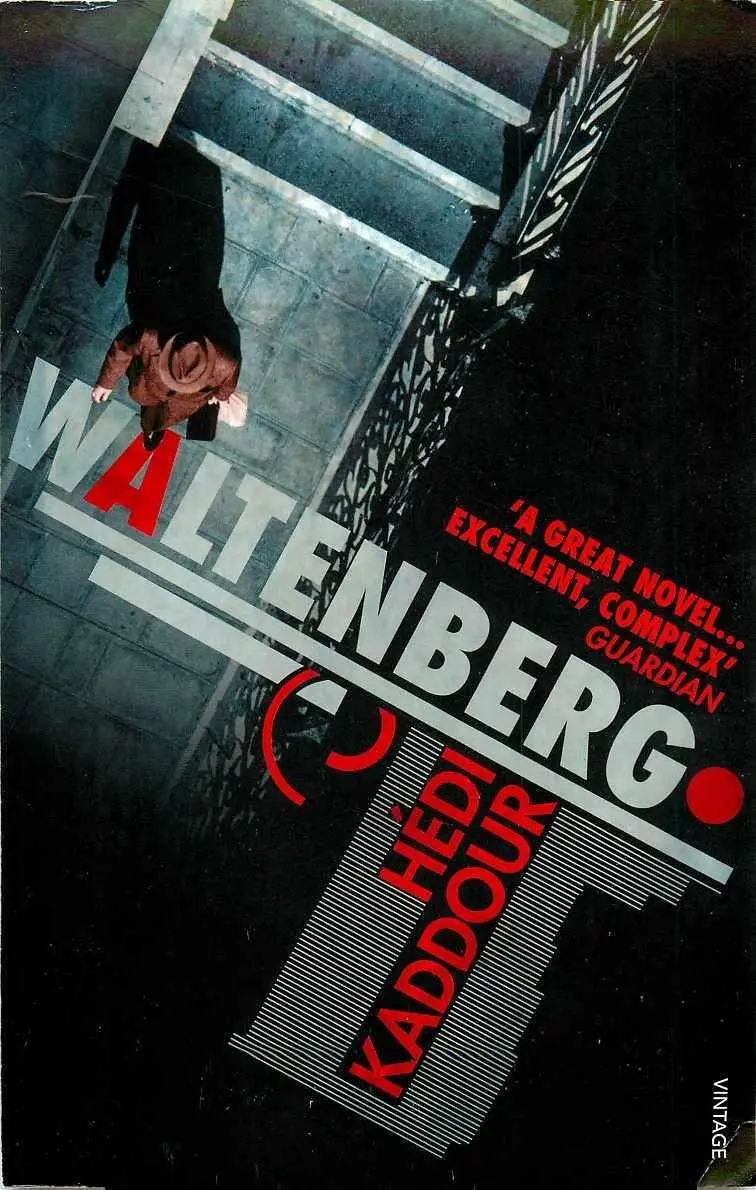
- Название:Waltenberg
- Автор:
- Издательство:Vintage
- Жанр:
- Год:2009
- ISBN:нет данных
- Рейтинг книги:3 / 5. Голосов: 1
-
Избранное:Добавить в избранное
- Отзывы:
-
Ваша оценка:
Waltenberg: краткое содержание, описание и аннотация
Предлагаем к чтению аннотацию, описание, краткое содержание или предисловие (зависит от того, что написал сам автор книги «Waltenberg»). Если вы не нашли необходимую информацию о книге — напишите в комментариях, мы постараемся отыскать её.
Waltenberg
Waltenberg — читать онлайн бесплатно полную книгу (весь текст) целиком
Ниже представлен текст книги, разбитый по страницам. Система сохранения места последней прочитанной страницы, позволяет с удобством читать онлайн бесплатно книгу «Waltenberg», без необходимости каждый раз заново искать на чём Вы остановились. Поставьте закладку, и сможете в любой момент перейти на страницу, на которой закончили чтение.
Интервал:
Закладка:
Three weeks after Max arrived in China, Chiang Kai-Shek started liquidating his revolutionaries, Shanghai, stationary locomotives, boilers, screams, yes, the world’s press reported it, the absolute height of horror said the papers, there were also more classical forms of giving quietus, the main square, men in single file, women too, the majority civilians, decapitation by sword, not easy, even when people have their hands tied, they lie down, they just won’t kneel, some crawl around screaming, especially the innocent, they don’t get far, scream hard enough to shatter their larynxes, not enough blocks to put heads on, the blade does not always strike clean, Chiang Kai-Shek’s troopers roll up their sleeves, work in groups, yank them by the hair, use their bayonets, the work hardly progresses, the prisoners are lined up one behind the other by the hundred, occasionally one is calmer, steps forward without having to be pushed or pulled, shouts out a few words, no one will translate the words for Max, and Chiang’s officers beat the more ineffectual troopers with English-style canes, they turn to Max, English-style jibes directed at those about to die:
‘They’ll never have toothache again!’
Not enough sand, not enough sawdust, men slip in the blood like in a Chaplin film, the officers put their side of the argument:
‘No, no coups de grâce, we have to save money, my dear fellow, it’s war, let’s hope it’s all over soon, no, you can’t leave now, the streets around the square have not been made secure, yes, all afternoon, still, you’re not too badly off here, I’d gladly change places with you, neither victim nor executioner, and this evening you’ll have hard words for us in your despatch.’
*
In Max’s story set in Savoie, there won’t be any little chimney sweeps, and not too much fondue, and nor of tartiflette, tartiflette is less well known but if you use the best potatoes it’s a dish fit for kings. Max searches for a simple turn of phrase, as simple as the air up there, simple as a Jules Renard anecdote, to forget Shanghai, to forget the Riff, sunset of an evening over dun-coloured hills that ripple like a horse’s chest, in the Riff too prisoners had their throats cut, thousands of Spanish soldiers in the hands of Abd el-Krim, no, not officers, and the Spaniards gassed Riffian villages, three waves of bombers at dawn, green-fingered dawn, the chemicals work more efficiently in the morning dew, put all that behind you and tell a story set in the Alps, a couple, they walk through fields on the edge of a village, they have a dog on a lead.
‘And in the background,’ says Hans, ‘we’ll hear the soughing of the wind, the rich earth, smells of the underwood, and a few clouds over the mountain tops to catch the last flames of the sun, French-style Alpenglühen ?’
That’s about the size of it, it would be good if Hans would agree to write the descriptive bits, Max would include beneath the title ‘Sets and props by Hans Kappler’, very smart, but don’t give me any of those meandering sentences with endless ramifications, subordinate clauses, interpolated clauses, antepositions, breast-beating, details, twenty lines of self-torment before we reach a full stop or the end of the paragraph, exactly the sort of thing that goes down so well in Germany, here readers are on the lazy side.
Hans smiles, Max does not realise that Hans is currently struggling with a fit of melancholia, he shouldn’t have mentioned meandering sentences, he searches for a word that will correct his lapse, but Hans goes on as if nothing had happened:
‘You know, talking of descriptions, Colette went on writing descriptions for Willy’s books long after they went their separate ways, one day he ordered a few pages of Mediterranean landscape for a novel, she started and then stalled, though she knew the Côte d’Azur well, she asked if she could change it for Franche-Comté, it didn’t bother Willy, and when the book was going to press someone asked if it was true that if you looked out of a window in Franche-Comté you could really see the sea.’
Actually, Hans would do it much more seriously, look, we’re being watched, Max and Hans are in a dark, unused corner of the Jardin du Luxembourg, a few badly parked wheelbarrows, a great heap of dead leaves and, in the middle, staring out at them, on a small plinth, a rather unprepossessing bust, an awkward-looking customer, a bronze done by some second-rater, modelled in haste, Flaubert.
Max and Hans immediately drop everything and start talking about Flaubert, there were moments when he loathed descriptions, the ridiculous accuracy, the lumbering effort, art lies in the imprecise, true but what about Madame Arnoux and her ribbons right at the beginning, pressing against her temples, and her grey hair at the end, and also in his correspondence, old Gustave, when he speaks of the detail which draws attention away from the larger picture but must be retained because ultimately everything falls into perspective, wonderful details, Hans has raised one finger, a scholarly gesture, then he blushes.
And for Max it is unheard of to see Hans do such a thing, Hans, eyes shining, cheeks red, finger raised in the direction of the front of the Senate building, a letter by Flaubert, he recites:
‘“The woman…”’
Hans tries to capture the manner of a teacher dictating Thales’s theorem in the middle of the Jardin du Luxembourg, but his face goes red the moment he starts, he cannot control his face, he recites in French:
‘“The woman you fuck…”’
He hesitates, or pretends to hesitate, he specifies, it’s a letter to Bouilhet. And for Max, it’s unprecedented, if it had been in German Hans would never have dared. He recites in his virtually accentless French, one finger towards the Senate:
‘“…who you fuck doggy-style, naked, in front of an old veneered mahogany pier-glass,” Max, I think it was particularly the pier-glass and the mahogany that interested him, veneered mahogany.’
‘You’re right,’ says Max, ‘and in your novels you too have put some very fine furniture.’
‘True, but not everything a man can do when he’s enjoying the company of a lady.’
‘Not even in a first draft?’
Hans does not reply, a short silence, Max restarts the conversation, how will Hans manage to make his descriptions stick? trade secret, says Hans, but why don’t you tell me your story that has no chimney sweeps from Savoie in it but contains tartiflette, a true story, which I take to mean ninety-five per cent made up; no, Hans has got it wrong, it really is a true story, Max spent two weeks up there and was told it by the whole village and the valley; Hans continues to have his doubts, a couple, a stroll, a hunting-dog, that rings true enough, but it would be enough to hold the reader? it needs something which is out of the ordinary, and fast.
‘What struck me,’ says Max, ‘is that the man had a wooden leg.’
‘And these days is a wooden leg particularly striking? Did he come back with it from the war?’
‘Douaumont. The woman had this strange look in her eye, intense and absent, a faint smile, she was physically stronger, but it seemed that he was supporting and guiding her. She looked as if she was miles away.’
‘Yes…’
Hans almost said ja or even yo, that ever-so-slightly below-the-salt yo used by his friend Johann, all those years ago, at the start of the war, just before the sabre-thrust, that’s what’s left of Johann in Hans’s mind, a hesitation between ja and yo, has been happening several times a day for fifteen years, but Hans says oui, in Paris he takes more trouble, he forces himself to say every last word in French, to get oui to come as naturally as it does to any true-born Parisian is the most difficult thing of all, he says:
Читать дальшеИнтервал:
Закладка:
Похожие книги на «Waltenberg»
Представляем Вашему вниманию похожие книги на «Waltenberg» списком для выбора. Мы отобрали схожую по названию и смыслу литературу в надежде предоставить читателям больше вариантов отыскать новые, интересные, ещё непрочитанные произведения.





Обсуждение, отзывы о книге «Waltenberg» и просто собственные мнения читателей. Оставьте ваши комментарии, напишите, что Вы думаете о произведении, его смысле или главных героях. Укажите что конкретно понравилось, а что нет, и почему Вы так считаете.