Hedi Kaddour - Waltenberg
Здесь есть возможность читать онлайн «Hedi Kaddour - Waltenberg» весь текст электронной книги совершенно бесплатно (целиком полную версию без сокращений). В некоторых случаях можно слушать аудио, скачать через торрент в формате fb2 и присутствует краткое содержание. Год выпуска: 2009, Издательство: Vintage, Жанр: Современная проза, на английском языке. Описание произведения, (предисловие) а так же отзывы посетителей доступны на портале библиотеки ЛибКат.
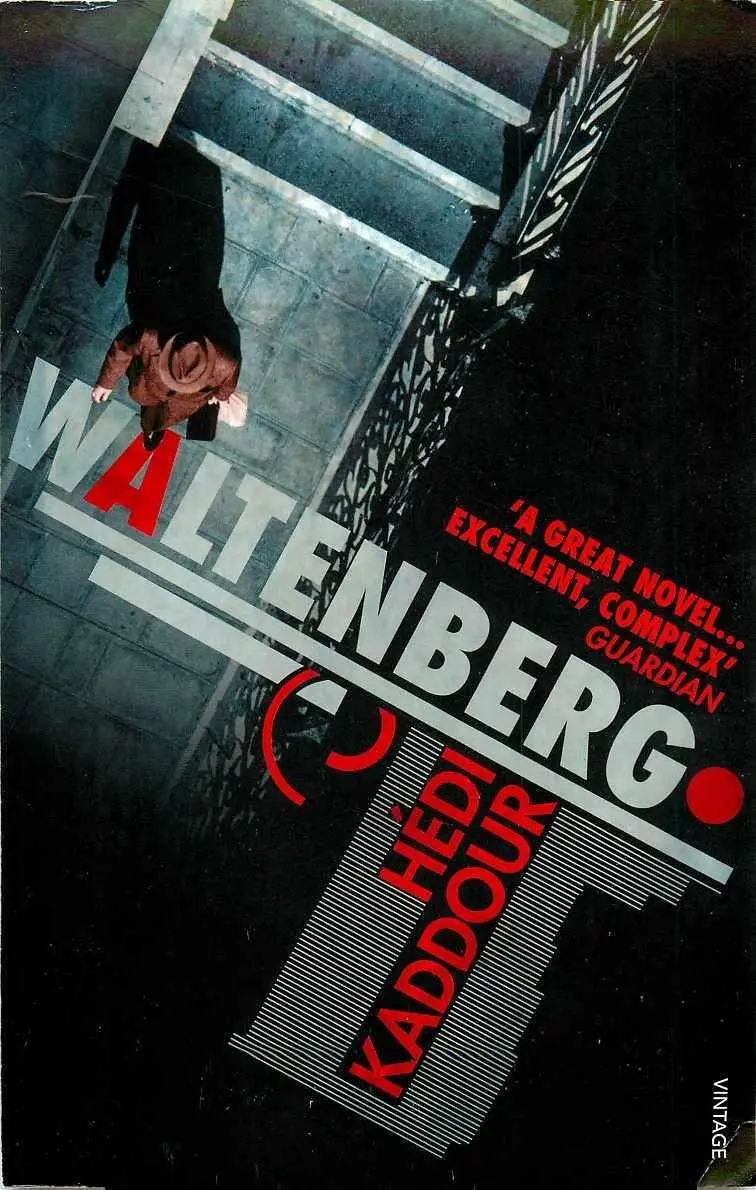
- Название:Waltenberg
- Автор:
- Издательство:Vintage
- Жанр:
- Год:2009
- ISBN:нет данных
- Рейтинг книги:3 / 5. Голосов: 1
-
Избранное:Добавить в избранное
- Отзывы:
-
Ваша оценка:
Waltenberg: краткое содержание, описание и аннотация
Предлагаем к чтению аннотацию, описание, краткое содержание или предисловие (зависит от того, что написал сам автор книги «Waltenberg»). Если вы не нашли необходимую информацию о книге — напишите в комментариях, мы постараемся отыскать её.
Waltenberg
Waltenberg — читать онлайн бесплатно полную книгу (весь текст) целиком
Ниже представлен текст книги, разбитый по страницам. Система сохранения места последней прочитанной страницы, позволяет с удобством читать онлайн бесплатно книгу «Waltenberg», без необходимости каждый раз заново искать на чём Вы остановились. Поставьте закладку, и сможете в любой момент перейти на страницу, на которой закончили чтение.
Интервал:
Закладка:
‘I love those lines by Hugo,’ says Malraux, ‘that grotesque side he has to him.’
‘Which poem is it from?’ enquires Morel.
‘It’s the story of the Russian ogre who is in love with a fairy, he eats her brat because she’s kept him waiting,’ says Malraux, ‘but also because he takes everything literally.’
‘And also because brat rhymes with fat,’ concludes Max.
De Vèze can’t find it, starts feeling annoyed, somebody’s moved my shoe, it’s that big-eared bastard who’s made my shoe vanish, or else it’s her, that’s why she’s grinning like that.
Malraux again:
‘In fact, no one knows if Hugo is mocking lovestruck ogres or if he’s making a case for men to have the right to devour women.’
‘He certainly,’ says the Consul, ‘had a big reputation as a man-eater.’
‘His darling Juliette could have told you all about that,’ says Max. De Vèze feels the dinner drawing to a close, he’ll have to stand up in full view of his fellow diners without his right shoe, there’ll be jokes, worse: there won’t be jokes.
The young woman smiles at Max.
‘Is it true,’ asks the grey diplomat, ‘that towards the end of their life together Juliette refused to let him go upstairs and devour the maids in the attic?’
‘Yes,’ answers Malraux, ‘she forbade him to devour anyone but he made her eat, she had cancer, swallowing was agony; at dinner, in front of everybody, he’d say “aren’t you eating anything, Madame Drouet?” She’d force herself to take a few mouthfuls just to please her old ogre.’
‘The end of loving,’ says Max.
‘The end of everything, my dear Baron,’ says Malraux, right elbow on the table, hand open and palm up, carrying an invisible tray.
And in that ‘my dear Baron’ there is something surprising that suddenly holds the assembled company in its thrall, an unexpected tenderness, it’s not irony, nor politeness, nor the affection a novelist might feel, all things considered, for the model for his character, but a tenderness which is exaggerated, yet also scrupulous and attentive, the sort of tenderness hands might show for a thousand-year-old death mask, as if Malraux — putting their present difference of opinion behind him — was remembering, and wanting now only to remember the time when, still very young, at the close of a war in which he had not fought, he had met a Goffard who used fits of the giggles and comments about James Ensor as a means of escaping the shadows of hell, look here, young man, Ensor’s pictures are treee — menn — doussly— shush! don’t interrupt! its done, got our tickets for Brussels, and Antwerp, masked figures fighting over a hanged man, tremendously far in advance of real life!
Later, Malraux published his own account of that evening in Singapore, he did not mention de Vèze, who has always wondered why, nor did he mention the Morels, he spoke mainly about Clappique, with affection, but omitting any reference to the ‘Lolita Incident’.
In Singapore, at dinner, there was one other moment of tension, when they’d talked about Churchill’s funeral, in February, superb, what with Moulin and Churchill we’ve had some magnificent funerals recently, Max launched into one of his verbal flights, the beautiful spectacle of three hundred sailors pulling the gun carriage, the slow march, the foot which freezes in mid stride and then unfreezes, it’s not a march, it’s the celebration of a rite, no question of one-two, one-two, that’s for the living who will go on, here — shush! not a word! — what lies in wait is a hole in the ground, so they go one, mark time, two, mark time, one, mark time, two, and it creates a kind of pitch or swell, three hundred sailors.
Three hundred white caps like the foam on slow waves bearing off the First Lord of the Admiralty.
‘And not before time,’ said Max, ‘he was getting out of control, he started raging against what he called the “negrification” of the United Nations, when my friend Linus went to interview him ten years ago, Churchill showed him an English newspaper, in it was a photo of a black man and a white woman, both members of the Salvation Army, and he said to Linus “Is this what I’ll find when I get to heaven? if so, I don’t want to go anywhere near a place like that”, Churchill’s wife was much more dignified than him, he was really very old.’
In Malraux’s account, he and Clappique get on swimmingly, mostly they talk about the script for a film which was never mentioned in de Vèze’s hearing, Malraux also omitted any reference to the two diplomats, the pink and the grey.
Nor did he record the awkwardness which settled over the table when Max brought up the rumours about moles which were already doing the rounds at the time, Malraux had dismissed the issue with a wave of his hand, OAS officers trying to sell old floor-sweepings to the Americans, assassins sitting on their hands in exile while they waited for the next amnesty, Max had quoted his friend Linus Mosberger again:
‘Shush! don’t say anything! according to Linus there are a lot fewer moles in France than in England or Germany, because if you confront a Frenchman with a photo of his off-duty extra-marital activities he’ll order half-a-dozen copies for his friends, whereas for Anglo-Saxons regular caning until the age of twenty tends to leave them vulnerable.’
Nor does Malraux seem to have had dealings with the same Consul, did he talk to Clappique next day at the Raffles and get this other conversation mixed up with the one of the previous evening? Did he make it up? After all, he was perfectly free to do so, certainly he makes Clappique quote the Hugo poem but he never said anything about the kangaroo on Valerie’s bed, but he did talk about another kangaroo, the one belonging to Nina de Callias, a rich patroness of the arts, friend of Verlaine, who posed for Manet’s Lady with the Fans, the magnificent Nina.
When he read Malraux, de Vèze realised that the young woman’s neckline that evening had been the same as Nina de Callias’s in the painting, but without the gauze, without the necklace at her throat, otherwise the beauty spot on her cleavage would have been less visible, nor feathers in her hair, nor fans on the wall behind her, there hadn’t been a wall behind her, she’d been sitting with her back to the night, the white of her shoulders, the soft line of her chin, in his account Malraux recalled that the kangaroo had eaten all the green parts of Nina’s large carpet during the siege of Paris in 1870.
Just as people were saying goodnight at the gates of the villa in Singapore, Max had shown de Vèze the sky:
‘Look, see the moon that makes hearts ache, shush! we must see each other again soon, lots to tell you, we’ve met before, obviously you can’t remember, you’d just turned five, we can meet in Rangoon or Paris, or in the Alps.’
Chapter 9. 1928, Flaubert’s Bust
In which Hans Kappler dreams of Lena Hotspur and has a conversation with his friend Max Goffard.
In which Max Goffard tries his hand at erotic writing and suggests that Hans Kappler might care to become a landscape painter.
In which Max Goffard finally gets on a train for Waltenberg and the European Seminar.
In which we learn how Max Goffard became a great reporter and is now a sports enthusiast.
He was a member of a croquet club and played assiduously on the paths of the Jardin du Luxembourg
Georges Duhamel, SalavinParis, September 1928
This happens in the Jardin du Luxembourg, Hans and Max are strolling, like old friends. One day they emerged from their fox-holes, came face to face, a ringing of bells, the Armistice, it’s all over. Max sees a Hun officer who comes towards him and says, in French:
Читать дальшеИнтервал:
Закладка:
Похожие книги на «Waltenberg»
Представляем Вашему вниманию похожие книги на «Waltenberg» списком для выбора. Мы отобрали схожую по названию и смыслу литературу в надежде предоставить читателям больше вариантов отыскать новые, интересные, ещё непрочитанные произведения.






Обсуждение, отзывы о книге «Waltenberg» и просто собственные мнения читателей. Оставьте ваши комментарии, напишите, что Вы думаете о произведении, его смысле или главных героях. Укажите что конкретно понравилось, а что нет, и почему Вы так считаете.