Hedi Kaddour - Waltenberg
Здесь есть возможность читать онлайн «Hedi Kaddour - Waltenberg» весь текст электронной книги совершенно бесплатно (целиком полную версию без сокращений). В некоторых случаях можно слушать аудио, скачать через торрент в формате fb2 и присутствует краткое содержание. Год выпуска: 2009, Издательство: Vintage, Жанр: Современная проза, на английском языке. Описание произведения, (предисловие) а так же отзывы посетителей доступны на портале библиотеки ЛибКат.
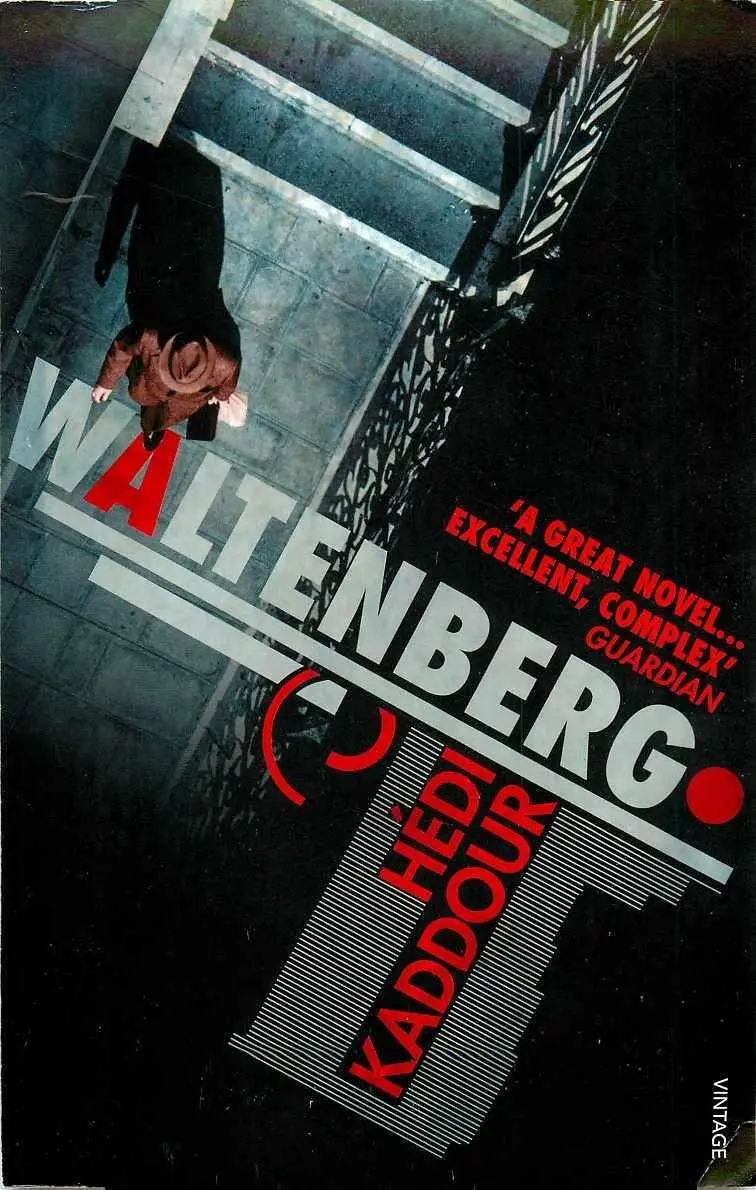
- Название:Waltenberg
- Автор:
- Издательство:Vintage
- Жанр:
- Год:2009
- ISBN:нет данных
- Рейтинг книги:3 / 5. Голосов: 1
-
Избранное:Добавить в избранное
- Отзывы:
-
Ваша оценка:
Waltenberg: краткое содержание, описание и аннотация
Предлагаем к чтению аннотацию, описание, краткое содержание или предисловие (зависит от того, что написал сам автор книги «Waltenberg»). Если вы не нашли необходимую информацию о книге — напишите в комментариях, мы постараемся отыскать её.
Waltenberg
Waltenberg — читать онлайн бесплатно полную книгу (весь текст) целиком
Ниже представлен текст книги, разбитый по страницам. Система сохранения места последней прочитанной страницы, позволяет с удобством читать онлайн бесплатно книгу «Waltenberg», без необходимости каждый раз заново искать на чём Вы остановились. Поставьте закладку, и сможете в любой момент перейти на страницу, на которой закончили чтение.
Интервал:
Закладка:
‘Readers are morons,’ cries Max, ‘they’re too busy sniffing out clichés to see the kangaroos!’
‘You mustn’t deny Monsieur de Vèze the pithiness of his axiom,’ says the young woman.
Morel does not care at all for the way his wife defends the man, but he knows there’s nothing he can do about it, nothing has gone right this evening, an insignificant moron, that’s what you are to these people, your expertise, all you know about the peasantry in the eighteenth century, they couldn’t care less, they have the power, they invite you, you give lectures, you have dinner in Singapore, beautiful plates, they separate you from your wife, tomorrow they’ll tell you that you were rather grim.
‘Monsieur de Vèze has a very elegant way of rescuing clichés,’ says the young woman.
I’m going to go for the foot, de Vèze decides, but not with my shoe on. How can she possibly have hands like that? Bigger, heavier than you’d expect, lips that smile, hands that don’t mess about.
‘Well I at least wasn’t a cliché,’ says Max.
‘Are you sure?’ asks Malraux, ‘cliché, pastiche, imitation, it goes to the very heart of the thing, writers don’t express themselves, they imitate, what is the writer’s raw material? The work of other writers, and the cliché is what remains of them at the level of language.’ Malraux, chin cupped in his left hand, right hand in the air, forefinger pointing, you have first to write down the adjective ‘terrible’ so that you can be free of it, you imitate, the finger lands on the table, there’s no stopping him now, Malraux is launched, de Vèze presses the toe of his left shoe against the heel of his right shoe.
‘It’s better than not writing a novel at all, just because you’re afraid of adjectives, isn’t that so, Baron?’ Malraux’s voice is a hiss.
‘But you had a very good story to tell in those days, Kappler had told me about it, in the offices of Preuves, the fear of adjectives, you need to stand back a little.’
Malraux draws a line on the table with his finger.
‘You pastiche and you isolate the tenth which isn’t imitated, and then you try to make sure the rest matches that tenth.’
Malraux has moved back, his hands above the plate begin to caress the thought like a conscientious potter.
‘You go beyond pastiche, you play around with it, the opening of my novel, Baron…’
Little by little the fullness and the affection return to his voice: ‘Obviously it’s like a crime thriller, ordinary, night, car horns, suspense, you must ensure the reader’s hair stands on end, nothing to feel ashamed of, take Hugo, Les Misérables, the tension that hits you in the stomach.’
Malraux’s hands are together again, one index finger extended: ‘It’s a pastiche of a crime novel, or of Laclos.’
Slowly de Vèze eases off his right shoe.
‘Valerie is a small-scale Merteuil,’ says Max with a smile.
‘That’s right,’ says Malraux, ‘you pastiche Faulkner or twenties Russian novelists, your overripe pastiche becomes a filter which you use to look at the world through new eyes.’
Malraux puts his left hand up to his eyes with his fingers spread wide, like bars.
‘You look at Shanghai through a haze of pulp crime fiction, or you strain the Pensées through the Pieds Nickelés ’ — the right hand up now, also with the fingers out wide, held against the left, like a trellis — ‘a double filter, Filochard and the two infinites, put it all together and you get a decent book.’
He puts out both arms in front of him, forefinger extended on each hand, he beats time to his words with nods of his head, his face forward, chin in, pupils raised to compensate, eyes wide open:
‘It takes a writer years before he can write with the sound of his own voice, get past other people’s voices, at any rate his own is there, and if you don’t pastiche as you imitate you’re just a parrot, you rewrite Maupassant or Turgenev without realising it or pretending you’ve forgotten, like Nabokov or your friend Kappler, Baron.’
Malraux’s left hand is on the table, arched like a spider, on the tips of the fingers.
‘And it doesn’t have kangaroos!’
‘It also lacks cats,’ says the young woman, displaying the large black cat which has jumped unnoticed on to her lap.
De Vèze decides that a woman who reduces him to this state in the middle of a dinner with Malraux is a pearl without price. At last he manages to slide his foot out of his right shoe.
A faint crackle in the sky, above the young woman’s head, the first star, the star that favours the bold, a draught of air blows under the table, cools the sock, the floor of the veranda is warm.
‘They say I don’t do cats very well in my stories,’ says Malraux.
He has backed his chair away, hands crossed on his knees, face down again, eyes looking up, he waits.
‘That’s not true,’ asserts the young woman stroking the animal, ‘actually, cats are your double.’
‘What do you mean?’ de Vèze asks belligerently.
He’s not angry with her, not as he was a while back when he could have told her to go to hell, now he’s scared, scared that he’ll start thinking again what a blue-stocking she is, that she’s read too many books, one of those women who pass their time picking you up on everything you say, a friend of his lived with a woman like that for twenty years, he’s now in an asylum, scared to separate from her, scared to stop wanting her body, and now she comes out with this business of a double, and everyone is all agog because the minute you start talking about doubles at a dinner party people think you must be very smart.
‘When Kyo watches Monsieur Clappique in the Black Cat, you describe the scene from a point of view that places you behind Kyo, who moves like a cat,’ the young woman says to Malraux, ‘and behind Clappique, in the background, there is the glow from the luminous outline of a cat which is watching us, which means that the scene is enacted between two cats.’
Malraux smiles, a rare expression on his face, never in photos, the delight of a cat who’s been at the cream, perhaps a few woman are entitled to see this expression.
‘Cat to the front!’
Max has shouted out.
‘Cat to the rear! Cat everywhere. Raminagrobis be with us!’
A sudden hush, Max stares at his plate, everyone is looking at him, he remains silent, the Consul starts fiddling with his pipe-cleaner again, Max doesn’t look at anyone, could these people guess how kids used to play with cats in the back streets of Rabat? Lyautey played croquet, the kids played shooting-star cats, in the towns, not in the Riff, there weren’t any animals left in the Riff, nothing edible, like us in the trenches, a cat you caught was called a rabbit, the agent for Native Affairs said they don’t even have standard scarcity fare, no wild artichokes, mallow stems, prickly pears, roots, nor tobacco or hashish to beguile hunger, hunger eats at your muscles, what with the bombs and hunger they eventually gave up, they came down hoping to get something to eat, they had nothing left to sell, they traded parts of their clothes, in certain douars in the Riff there wasn’t a single man left alive, the women sold themselves, we behaved very decently, we staged surrender ceremonies, large gatherings, the colours of France and the flag of the Shereef, the whole shooting match.
An order, atten-shun ! heels click, brains close, the conquered standing in a semi-circle, bugles, drums, let the ceremony begin, it’s called the targuiba , the conquered chief brings a bull to the conquering chief, a single stroke with a knife, hamstring severed, the bull collapses, thrashes around, and thus the violence ends, allegiance sworn, pardon given, bull on its side, ten men to hold it, bull kicking out, a thrust of the knife to slit its throat, it’s the only thing moving in front of the crowd which watches it die, the violence drains away through the aorta, the smell of warm blood in the noses of those in the front rows, if the tribe didn’t have a bull then the military government provided the sacrificial beast, to be paid for in kind by forced labour, Bournazel was there, with his Arab scouts, no, he didn’t die during the Riff wars, that was later, further south.
Читать дальшеИнтервал:
Закладка:
Похожие книги на «Waltenberg»
Представляем Вашему вниманию похожие книги на «Waltenberg» списком для выбора. Мы отобрали схожую по названию и смыслу литературу в надежде предоставить читателям больше вариантов отыскать новые, интересные, ещё непрочитанные произведения.





Обсуждение, отзывы о книге «Waltenberg» и просто собственные мнения читателей. Оставьте ваши комментарии, напишите, что Вы думаете о произведении, его смысле или главных героях. Укажите что конкретно понравилось, а что нет, и почему Вы так считаете.