Hedi Kaddour - Waltenberg
Здесь есть возможность читать онлайн «Hedi Kaddour - Waltenberg» весь текст электронной книги совершенно бесплатно (целиком полную версию без сокращений). В некоторых случаях можно слушать аудио, скачать через торрент в формате fb2 и присутствует краткое содержание. Год выпуска: 2009, Издательство: Vintage, Жанр: Современная проза, на английском языке. Описание произведения, (предисловие) а так же отзывы посетителей доступны на портале библиотеки ЛибКат.
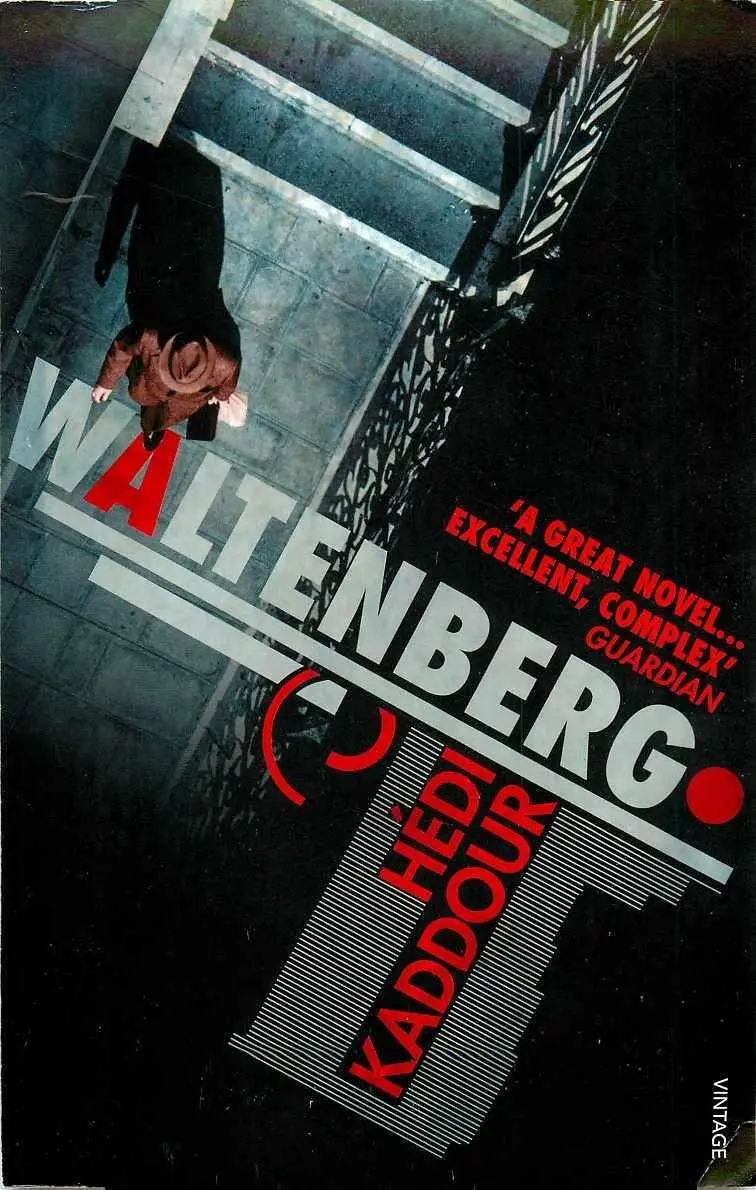
- Название:Waltenberg
- Автор:
- Издательство:Vintage
- Жанр:
- Год:2009
- ISBN:нет данных
- Рейтинг книги:3 / 5. Голосов: 1
-
Избранное:Добавить в избранное
- Отзывы:
-
Ваша оценка:
Waltenberg: краткое содержание, описание и аннотация
Предлагаем к чтению аннотацию, описание, краткое содержание или предисловие (зависит от того, что написал сам автор книги «Waltenberg»). Если вы не нашли необходимую информацию о книге — напишите в комментариях, мы постараемся отыскать её.
Waltenberg
Waltenberg — читать онлайн бесплатно полную книгу (весь текст) целиком
Ниже представлен текст книги, разбитый по страницам. Система сохранения места последней прочитанной страницы, позволяет с удобством читать онлайн бесплатно книгу «Waltenberg», без необходимости каждый раз заново искать на чём Вы остановились. Поставьте закладку, и сможете в любой момент перейти на страницу, на которой закончили чтение.
Интервал:
Закладка:
‘Was I in love with the woman who made me dance the waltz and the tango thirty years ago? For a Frenchman you ask very direct questions, I do hope that when you ask your friend the Minister questions you aren’t so sharp with him, there was a swimming pool in the hotel even in those days, small blue tiles, burnished copper handrails, round windows, she was at full stretch in the water, on her back, moving over the surface, chin tucked in, head very mobile, finely arched neck, she was swimming lengths, leaving swirls of foam where she beat her feet, arm movements very expansive, not at all fast, it was a very new stroke at the time, I stayed out of the water, I didn’t want to swim with her, all I’ve ever been able to manage was a sort of doggy paddle, sometimes she asked me to time her, or sometimes I’d leave, I’d go down into the maintenance gallery which ran all round the pool, that’s where the round windows were.
‘I’d watch her body, the way her abdomen swelled was captivating, she couldn’t see me, she must have suspected I was there, she behaved as if she couldn’t see me, her muscles were long and she was beginning to thicken around the middle, she’d do fifty lengths without stopping, she said she had to do the backstroke, a singer always works standing up, she had to take care of her spine, when I stood by the little round window at the end of the pool I could see her coming towards me head first, when she turned and set off again I was just on a level with her legs, when she finished I’d bring her bathrobe, I deliberately set it down some distance from her so that I could go to her and watch her as she came to me, at the time the other women said that her legs and her shoulders were deeply unattractive, too many muscles, you may well smile, mustn’t let our Linzer get cold. Really? You don’t understand what I meant by the third shore?’
Confronted by your dejection and your uncertainties, Lilstein eventually came out with this rather harsh thought:
‘When people like us lose their nerve, they become as pathetic as everybody else, that’s what lies in wait for us.’
*
‘There was another tomfool story,’ adds Max, ‘the one about the man who wanted to send whole trainloads of prostitutes to Communist Party headquarters.’
‘It was to soften them up,’ said Malraux.
Max looks right into Malraux’s eyes:
‘According to what the Americans are saying just now about the great Helmsman and his whims, several coachloads must have got there, whole compartments crammed with little Lolitas for the comrade President who hasn’t seen what he’s got dangling south of his paunch for many a year, they’ve been trained to go looking for it.’
De Vèze observes the young woman, Goffard is out of order, doesn’t know how to behave around a dinner table, too much alcohol, de Vèze wonders if the young woman will blush again, he imagines her with Mao, looking for it, she has her back against the twilight, hair almost black, the white of her shoulder, of her cleavage, the yellow dress, the clear look, the oh-so soft line of her chin, like a child’s, if there were some of those cattleyas so beloved of tourists on the table I could stare at the pistil, that would be as vulgar as you could wish for, what the hell’s she doing with a historian?
It’s settled, at midnight de Vèze will reach out and take the young woman’s hand in his, but he’s not nineteen any more, he’s not sitting next to her but opposite, surely I’m not going to have to play footsie under the table like some damned Russian? What else can I do? Wait for tomorrow? Pay formal court to her? By then she’ll have gone away with her historian, goodbye brioche, her backside, assume softly swelling curves.
‘Lolitas,’ says Malraux, ‘Baron, that’s such a cliché!’
De Vèze taken aback, Malraux thrown off-balance, Goffard has gone overboard with Mao who is to receive Malraux in Peking.
‘A cliché,’ Malraux says again, ‘Baron, you disappoint me, I wouldn’t have thought you had this amazing appetite for CIA or Soviet tittle-tattle.’
Amazing appetite, de Vèze repeats to himself, coming from Malraux that means he is treating Goffard as an agent provocateur, a reputation he’s been stuck with ever since the thirties, and the accusation is very Gaullist, the CIA and the KGB in the same bag, Lolitas was the word too far.
De Vèze, the Consul, the grey diplomat, all the guests try to find some way of changing the subject, but they can’t think of anything, don’t really want to, would prefer not to be there, can’t be helped, something is definitely going on, no one can resist a tasty revelation, they don’t say anything, they stand back and let it come, wrapped in its own shadow.
In the years between the wars, the albatross around Goffard’s neck was the Russians and no one else, he was very critical of them but his information, which he got from Moscow, was first rate; and on Morocco he was every bit as well informed as the English journalists on The Times, everybody knows that Times correspondents also reported back to the Intelligence Service, Goffard touted information between Paris, London and Moscow, but no one in the final analysis knew on whose behalf.
Many would have liked to ask him face-to-face, but he played poker with Briand and Berthelot, and later with Daladier and Chamberlain, yes, in Munich, with half the ministers of Europe, so sitting here at the same table as Malraux is no big deal for him, he was taught by Bergson at Henri-IV, he was there in 1919 when Lloyd George remarked while looking at a map of Czechoslovakia ‘it’s not a country, it’s a sausage’, he undertook an unofficial tour through Europe for Briand, in 1928, the Pan-European Movement, very close also to Lyautey, he never succeeded in reconciling him with Briand.
Basically Briand agreed with Lyautey, but he hated him, had done so since 1916 when Lyautey had got the better of him in a Cabinet meeting. In Morocco, Goffard chummed up with the agents for Native Affairs who had been trained by Lyautey, he knew everything that was happening on the ground, the Spaniards were suspicious of him, he had managed to get his hands on a general order given by a coronel, collect all bomb debris, don’t leave any lying around, if necessary the Spaniards would buy back any such debris from the same Riffians who had been under them when they fell, they used gloves to handle them, no, gas wasn’t used at Chefchaouen, there they just dropped 100-kilo bombs, French sector, a town full of women, a strategic air raid, there’s no evidence that the French used gas anywhere in their sector, Pétain was prepared to, to hurry things along, but Chambrun said no, those air raids broke the Riffians.
The women especially. They were fearsome, like the Gaulish women Caesar tells of, they got the men fired up with songs deriding cowards.
But after Chefchaouen they began to calm down, it was high time they did, the cataclysm was fast approaching, at headquarters there was talk of abandoning Fez, the trough of a wave, or rather a snowball, a Mediterranean country with lots of snowballs will … snowball, the parts merge, overnight thousands of men lining up behind Abd el-Krim, an impetus that carries all before it, an avalanche, a rolling snowball army, he even tried to create a state, a snowball state, he had begun as a good and faithful servant, an adviser to the Spanish governor, a journalist on the Telegrama del Rif, they were later dubbed the ‘Beni-oui-oui’, he could have taken a well-earned retirement, after thirty years of publishing jackal-bites-man stories in Spanish newspapers, he had no choice but to rebel, found himself between a country bent on destroying itself with vendettas and not overly civilised civilisers who let you see their motor cars and their aeroplanes and remind you at every turn that you, Abd el-Krim el-Khattabi, are still an ignorant savage; you end up thinking that this is the only reason they are there, to remind you.
Читать дальшеИнтервал:
Закладка:
Похожие книги на «Waltenberg»
Представляем Вашему вниманию похожие книги на «Waltenberg» списком для выбора. Мы отобрали схожую по названию и смыслу литературу в надежде предоставить читателям больше вариантов отыскать новые, интересные, ещё непрочитанные произведения.











Обсуждение, отзывы о книге «Waltenberg» и просто собственные мнения читателей. Оставьте ваши комментарии, напишите, что Вы думаете о произведении, его смысле или главных героях. Укажите что конкретно понравилось, а что нет, и почему Вы так считаете.