Hedi Kaddour - Waltenberg
Здесь есть возможность читать онлайн «Hedi Kaddour - Waltenberg» весь текст электронной книги совершенно бесплатно (целиком полную версию без сокращений). В некоторых случаях можно слушать аудио, скачать через торрент в формате fb2 и присутствует краткое содержание. Год выпуска: 2009, Издательство: Vintage, Жанр: Современная проза, на английском языке. Описание произведения, (предисловие) а так же отзывы посетителей доступны на портале библиотеки ЛибКат.
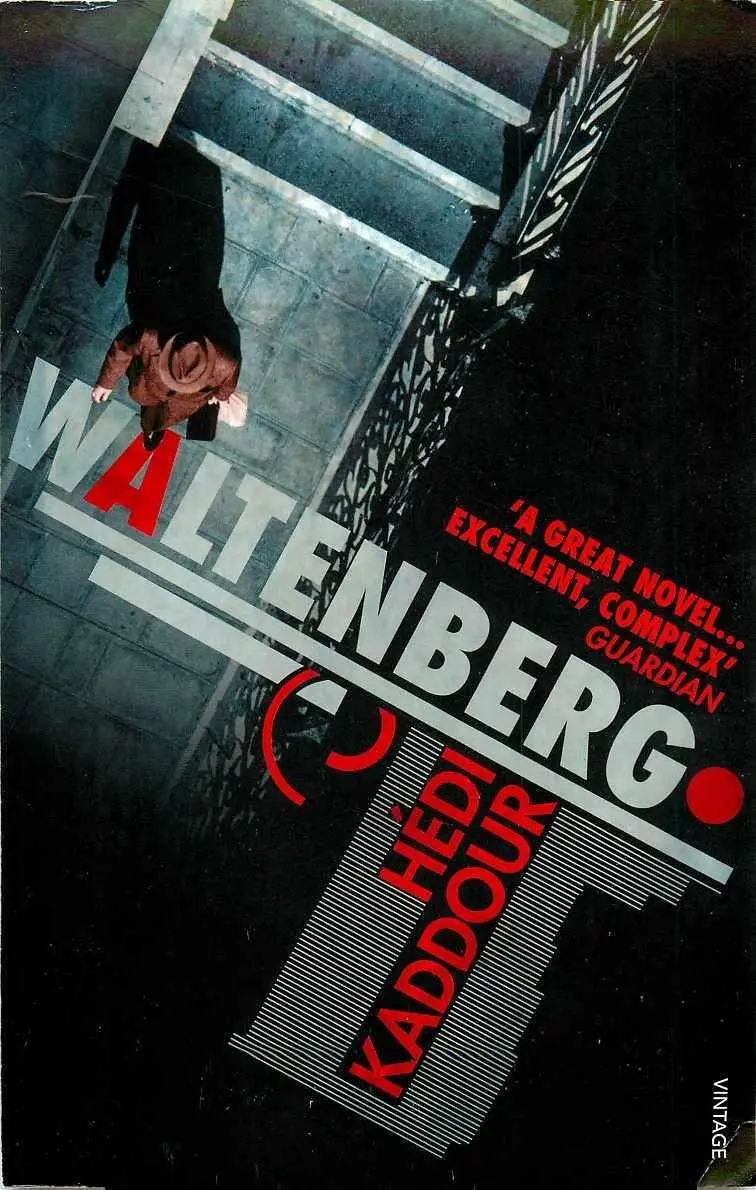
- Название:Waltenberg
- Автор:
- Издательство:Vintage
- Жанр:
- Год:2009
- ISBN:нет данных
- Рейтинг книги:3 / 5. Голосов: 1
-
Избранное:Добавить в избранное
- Отзывы:
-
Ваша оценка:
Waltenberg: краткое содержание, описание и аннотация
Предлагаем к чтению аннотацию, описание, краткое содержание или предисловие (зависит от того, что написал сам автор книги «Waltenberg»). Если вы не нашли необходимую информацию о книге — напишите в комментариях, мы постараемся отыскать её.
Waltenberg
Waltenberg — читать онлайн бесплатно полную книгу (весь текст) целиком
Ниже представлен текст книги, разбитый по страницам. Система сохранения места последней прочитанной страницы, позволяет с удобством читать онлайн бесплатно книгу «Waltenberg», без необходимости каждый раз заново искать на чём Вы остановились. Поставьте закладку, и сможете в любой момент перейти на страницу, на которой закончили чтение.
Интервал:
Закладка:
‘For Monsieur Clappique,’ says the grey diplomat turning to Malraux, ‘ The Human Condition is “entertaining”, but that’s only the opinion of a minor character.’
Malraux lets it go and turns to the young woman:
‘There’s another gift apart from the cyanide.’
He has his elbows on the table, his hands are crossed under his chin, his face forward, he is looking upwards and the whites of his eyes are visible below the pupils, his voice is sober but there is something about the pupils that seems to suggest that he is amused.
‘I can’t remember any other gift,’ says the grey diplomat.
De Vèze can’t either, although he thought he knew the novel by heart, he has forgotten, just as he has forgotten everything else he spent all those nights reading, glass of whisky at his elbow, during the war, after the war, read too quickly, reread skipping whole pages, all of Faulkner, all Dostoyevsky, Gogol, Flaubert, all Malraux, thirsting, like Malraux, as thirsty as the man whose education was cut short, could recite whole pages from memory, he can still remember odd sentences, read The Human Condition ten times, and he didn’t remember the parrots or the offer of the cyanide, it’s all he knows and he can’t think of what Malraux calls ‘the other gift’.
‘The caramels! It’s the gift of caramels!’ cries Max. ‘You don’t read attentively, shush! no interruptions, you never see anything! On your toes! Caramels cremes, three pages after the cyanide in the novel, when he’s about to write time regained, when Malraux himself behaves like Clappique, minor character my foot, an author who does that every three pages, children, no one gets it; right, dotty every five pages, it’s the caramels, when the Finance Minister hands round little caramels in his office in Paris to Ferrai and the bankers, chewy, stick to the teeth, it punctures the poignancy of the moment, all the selfless acts, the other twerp who offers his cyanide to the two youngsters to save them from being tossed into the boiler, a compelling moment of charity, well he’s not the only one who puts something in the collection box, the twit, the caramels, history, recto, verso, ‘The Great Adventure is buggered!’ the revolution has gone down like a lead balloon, so it’s cyanide and caramels all round!’
‘That’s a journalist’s phrase,’ Morel interjects.
‘Get away with you,’ says Max, coming back at him, ‘a historian is only a journalist who looks back.’
Pow! take that! thinks de Vèze, as half-dreaming he sees Malraux’s novel filling up with unexpected beings, a dream or something seen in a drunk’s spinning head, an old man with a head like a cat who says I sell women, a Russian with a face like Croquignol leaning on a nickel-plated bar-rail, the corpse of a strangled man dancing the dance of the veils, a lunatic beaten to death, fat girls with huge breasts huddled on top of one another, and Clappique suddenly emerging from the heap as if out of some Pandora’s box, skeletons in a trance, Hercules dressed as a woman, camera-eating rabbits, ah, if only alcohol didn’t make you feel ill, trains full of whores sent hurtling towards Communist Party headquarters by connoisseurs of the human soul, a monster part-bear, part-man and part-spider coming towards you, a young woman standing at a top-floor balcony watching the sunset, de Vèze kneeling behind her, he removes her knickers, and in the street a coachman weeps for his horses surrounded by human victims and repeats over and over, all this for nothing, for nothing, the young woman says kiss me.
‘I like these young people,’ says Max, ‘so modest, and they recite your work to you, they surely have great futures! Not like me, and that matelot’s broom you hung over my shoulder, I can’t forgive you that, you treat me as if I’m just some joker, you never believed I had a serious side, cyanide and caramels, recto and verso.’
Malraux doesn’t react to this, smoothes the tablecloth by his plate, the Consul doesn’t know what to say, he thinks Goffard is getting more and more out of hand, no one should speak like that to the Minister, he shouldn’t even witness such scenes, mustn’t say anything, behave like it never happened or else intervene to stop it, but if that fails you turn into the man who drew attention to something that should never have happened in the first place.
Max has stopped talking, his head is spinning, he feels free but not well, I burn, you eat, and then it is all repeated, everything smokes and everything is repeated, everything smokes, the people throw themselves on the ground, the red earth of the Riff, mouth full of a metallic taste, something was falling, it was like sulphur, people were going blind, their skin was turning black and peeling off, the livestock swelled up and died, plants shrivelled within hours, the people left with their animals and headed for the caves, you couldn’t drink from the streams any more, lungs flooding with white froth which asphyxiates the victims who linger for two days, it’s exactly like drowning, at first you feel nothing, then it starts with sand under your eyelids, Churchill saying ‘we were the bees of hell’, diphosgene, chloropicrin and tabun, Berenguer, Spanish High Commissioner at Tetuán, August 1922: ‘I have always been opposed to the use of combat gases against native populations, but after what they did to us at Annual I shall use them with great pleasure,’ and Alphonse XIII in 1925 to the French military attaché in Madrid: ‘We must set aside otiose humanitarian considerations, the urgent task is to exterminate the Beni Ourriaguel, even Churchill did not rule out using gas on villages in Iraq in 1919’, if chemical gases are used before the great heat of the day, they are very effective, directive of the Spanish military command: ‘I remind you once again that the regulation period before entering zones on which special bombs have been dropped must be strictly observed; in a regrettable incident yesterday, sixty of our own troops were among the victims’, and the whistle of the train in Shanghai goes toot-toot every time a prisoner is fed into the boiler.
Around the table, no one says anything. So Max:
‘Shush! not a word!’ Max resumes, ‘ The Human Condition is the locomotive and the parrot!’
‘Rather,’ says the young woman, looking at de Vèze, ‘it’s the locomotive and the kangaroo.’
Silence all round, she blushes, small red patches reaching down as far as her throat, Max has stopped moving, suddenly he seems smaller, but with him on the contrary the blood has drained from his cheeks.
‘You’re having us on,’ he says.
‘As you see, he doesn’t know everything,’ remarks Malraux.
Morel looks at his wife as if he had never seen her before.
‘What kangaroo?’ asks de Vèze.
And Max, his gaze faltering:
‘Where’s the kangaroo? you’re taking the piss, darling, where do you get a kangaroo?’
Malraux, smile like a cat’s:
‘At the exact point where the ladies suddenly start paying close attention, tell them, Madame, while I enjoy both the pleasure of having truly serious women readers and that of tasting a truly excellent Sauternes, my compliments, Consul.’
De Vèze raises his glass until it is level with his eyes and tilts it forward.
‘Now remind me, what’s the word for wine when it slides slowly down the inside of the glass, legs or tears?’
My wife just has to look at him, thinks Morel, and he starts talking like some simpering oaf, and he’s supposed to be a French ambassador!
‘People say both,’ said Max, ‘legs and tears, you need both words, to keep everybody happy, the formula for success, make Wendy feel weepy and Andy feel randy, as an old boss of mine used to say before the war.’
Читать дальшеИнтервал:
Закладка:
Похожие книги на «Waltenberg»
Представляем Вашему вниманию похожие книги на «Waltenberg» списком для выбора. Мы отобрали схожую по названию и смыслу литературу в надежде предоставить читателям больше вариантов отыскать новые, интересные, ещё непрочитанные произведения.







Обсуждение, отзывы о книге «Waltenberg» и просто собственные мнения читателей. Оставьте ваши комментарии, напишите, что Вы думаете о произведении, его смысле или главных героях. Укажите что конкретно понравилось, а что нет, и почему Вы так считаете.