Boualem Sansal - The German Mujahid
Здесь есть возможность читать онлайн «Boualem Sansal - The German Mujahid» весь текст электронной книги совершенно бесплатно (целиком полную версию без сокращений). В некоторых случаях можно слушать аудио, скачать через торрент в формате fb2 и присутствует краткое содержание. Год выпуска: 2009, Издательство: Europa Editions, Жанр: Современная проза, на английском языке. Описание произведения, (предисловие) а так же отзывы посетителей доступны на портале библиотеки ЛибКат.
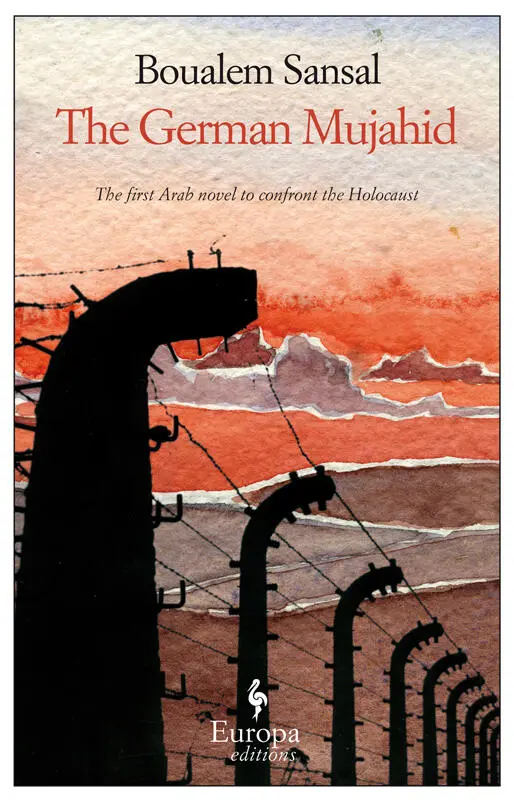
- Название:The German Mujahid
- Автор:
- Издательство:Europa Editions
- Жанр:
- Год:2009
- ISBN:нет данных
- Рейтинг книги:4 / 5. Голосов: 1
-
Избранное:Добавить в избранное
- Отзывы:
-
Ваша оценка:
The German Mujahid: краткое содержание, описание и аннотация
Предлагаем к чтению аннотацию, описание, краткое содержание или предисловие (зависит от того, что написал сам автор книги «The German Mujahid»). Если вы не нашли необходимую информацию о книге — напишите в комментариях, мы постараемся отыскать её.
is a heartfelt reflection on guilt and the harsh imperatives of history.
The two brothers Schiller, Rachel and Malrich, couldn't be more dissimilar. They were born in a small village in Algeria to a German father and an Algerian mother, and raised by an elderly uncle in one of the toughest ghettos in France. But there the similarities end. Rachel is a model immigrant — hard working, upstanding, law-abiding. Malrich has drifted. Increasingly alienated and angry, his future seems certain: incarceration at best. Then Islamic fundamentalists murder the young men's parents in Algeria and the event transforms the destinies of both brothers in unexpected ways. Rachel discovers the shocking truth about his family and buckles under the weight of the sins of his father, a former SS officer. Now Malrich, the outcast, will have to face that same awful truth alone.
Banned in the author's native Algeria for of the frankness with which it confronts several explosive themes, The German Mujahid is a truly groundbreaking novel. For the first time, an Arab author directly addresses the moral implications of the Shoah. But this richly plotted novel also leaves its author room enough to address other equally controversial issues; Islamic fundamentalism and Algeria's "dirty war" of the early 1990s, for example or the emergence of grim Muslim ghettos in France's low-income housing projects. In this gripping novel, Boualem Sansal confronts these and other explosive questions with unprecedented sincerity and courage.
The German Mujahid — читать онлайн бесплатно полную книгу (весь текст) целиком
Ниже представлен текст книги, разбитый по страницам. Система сохранения места последней прочитанной страницы, позволяет с удобством читать онлайн бесплатно книгу «The German Mujahid», без необходимости каждый раз заново искать на чём Вы остановились. Поставьте закладку, и сможете в любой момент перейти на страницу, на которой закончили чтение.
Интервал:
Закладка:
I feel like screaming, like ripping my skin off. I don’t know, I don’t know what to do, I feel crushed by the silence, this terrifying silence, it is impossible for me to tell things apart. Dream, nightmare and reality have merged. There is no way out.
I woke up sweating. It was — I don’t know, it might be night, it might be day. I called out for Ophélie. I shouted again, “Ophélie, Ophélie!” I heard a noise in the kitchen, a dull drone. . the hiss of gas expanding. . the fridge. “Ophélie. . Ophélie!” She isn’t there. She hasn’t come home. She has left me. The silence is preternatural. . I can hear it, it smells of burning, it clings to your skin. Something falls off the sofa. My God, the noise! A book. . Mein Kampf . I take it into the garage and burn it.
RACHEL’S DIARY, APRIL 1995
I found Jean 92. It was easy. I simply turned up at the return address he wrote on the letters he sent to papa. He lives in a tumbledown shack at the end of a dark alley in a dismal part of a village somewhere near Strasbourg that has shrivelled away as families have died out. Driving from the urban masterpiece that is Strasbourg to this hamlet which appears on no maps and whose name, out of humanity, I won’t mention, I felt as though I might reach the end of the world and bitterly regret it. In France there are still godforsaken places so out of the way you wonder where you are. My Renault 4 didn’t know the place, though I rented it in Strasbourg and it must have roamed this hinterland often enough. Coming in to the village, a surly farmer jerked his thumb towards the arse-end of the street when I stopped and asked, “Could you tell me where I might find Ernest Brucke?” There seemed no point thanking him, he’d lost the power of speech, he would have been incapable of saying, “You’re welcome, monsieur.”
After scaring three miserable old witches leaning on their brooms, and setting a pack of stray dogs yapping, I finally found the place. It was the last house in the village. Beyond, there was nothing but a wall of wild vegetation.
I had been expecting to be met by an old man and was worrying whether he would still have wits enough to understand my questions; what I found was a man of indeterminate age wearing a curious getup, his belly swollen and distended, his face as mottled and pockmarked as that of only the most dedicated alcoholic. His fly was gaping open but he clearly didn’t care. He was sitting outside in a tiny garden full of flaking, peeling junk — a handkerchief-sized wasteland. He sat at a rickety metal table on which stood a bottle of schnapps; there was a chipped glass whose existence was nominal, fused as it was to the table, half-filled with an oily liquid on which floated leaves, pine needles and dead flies; and there was an improbable ashtray buried under a mound of ashes, cigarette butts and cremated insects. The man stared straight in front of him, saying nothing. He did not even see me arrive.
I felt a surge of pity. Here was a human wreck on the brink of extinction. An image flashed into my mind and I was convinced that this was what would happen: the man would die here, covered in lichen, glued to his chair, the bottle within easy reach, thinking nothing, saying nothing, seeing nothing of what was around him. I found it difficult to imagine papa — a picture of austerity, a very German austerity — being friends with such a man. But a lot of time had passed, I thought, and maybe this man had had his day in the sun. However, a little mental arithmetic persuaded me that he and papa did not know — could not have known — each other. It was a matter of age and circumstance. Papa hadn’t set foot outside Algeria since 1962, at which point this man would have been playing cowboys and Indians with the dirty little village pigs or playing hide-and-seek in the bushes with the sheep before he and his Kameraden discovered alcohol. Now, the man was about fifty years old — clearly fifty years too many — but a far cry from seventy-six, the age my father had been when he died. I didn’t even consider the possibility that he had been to Algeria and had met my father there. They don’t stand for any bullshit in Algeria, they have a border, they have fearsome guards and draconian laws, no one is allowed to visit and there is no question of making exceptions. There are places like that, places where you are not allowed to enter, to leave, or to know why. Perhaps alcohol had preserved him, or prematurely aged him, or maybe it had given him the means to become a different person. There was obviously something I didn’t understand.
The man finally looked up and saw me. His brooding eyes and tremulous lips, like a rapacious old pervert, made me uncomfortable. I felt like a cornered child. I took a deep breath and adopted the posture of a boy accustomed to terrorizing girls in pigtails. I didn’t want to put his back up, the way I had the old man in Uelzen, by asking awkward questions.
“If you’re Ernest Brucke, aka Jean 92, I’d like to shake your hand and thank you on behalf of my father Hans Schiller.”
The man sat lost in thought for a moment, then, exhausted by the sheer effort, stretched his hand past the bottle and said in a gravelly voice, “Schiller?. . Who’s Schiller? You’re the son?”
“Too right I’m his son! On his deathbed, my father asked me to come and say goodbye to some old friends, people who helped him when times were. . “
“Hold on a minute, I’m not Jean 92. . ”
“Then who might you be, monsieur?
“I’m Adolph, his son. . the old man kicked the bucket years ago. . ”
“Oh. . ”
“So what did you want with the old man. . apart from to say thank you?”
“I just wanted to talk about old times. . ”
“Really? What for?”
“I’m, um. . I’m looking for stories, background stuff, I’m writing a book about my father’s struggle, his fight to save humanity, as far as I know Neo-Nazism is alive and well.”
“Yeah, you look like a writer.”
“If you don’t mind, I’d like to interview you, for a chapter I’m writing about your father, and about you, obviously. . ”
Bingo. I’d hit the jackpot. This drunken slob could see himself at the top of the bestseller list. He sat up, cleared his throat and looked at me a little more warmly. It hadn’t occurred to me — I’d forgotten that this sickness was still out there, this smug self-righteousness, the overweening pride that goes before a fall. I wasn’t about to let this guy slip through my fingers, the wonderful Jean 92 Junior.
“Maybe I didn’t mention it, mon cher Adolph, but I’ve already got a publisher, they pay well. . you’ll get a cut.”
“How much?”
“It all depends on the sales, but it could be a nice little earner. Here, here’s a hundred francs, call it an advance.”
It was a done deal. We sat back and chatted like partners in some lucrative scam. It was pretty futile, as it turned out. And it was hard work. The drunken slob kept trying to sideline his father and hog the limelight. He wanted a chapter to himself. He told me about his childhood, about his grandmother Gertrude who taught him to speak German, his military service in the “fucking French army,” the little wars in Africa where he did a little nigger-bashing to make up for the shame of having to fight for France, some bitch named Greta who ruined his life, some cousin Gaspard or Hector who ripped him off, his aunt Ursula who lived in Brazil with some guy called Felix who trafficked diamonds or maybe it was emeralds, how his house was falling down around his ears, how the village was under threat from some urban renewal scheme, how the fuckers at the city council, etcetera, etcetera. And he told me everything about his work with his Nazi father. Just paperwork at first, a little spying on the neighbours, watching the comings and goings from the post office, his role as acolyte at the shadowy ceremonies and, later, when he attained the age of unreason, the endless get-togethers, the secret meetings of freaks and failures, the summary justice dealt out to traitors and revisionists, the beatings meted out to local hooligans, the altercations with the local police, the winters spent drinking with old veterans depressed at how the world had changed. All in all, a rewarding catalogue of misery. He even showed me his files. I was surprised he was capable of standing up. He had a whole cupboard full of documents and I fell on them like a man possessed. An hour later, I was covered in dust and smelled of rotting flesh. I felt ashamed to be human. I poked around through the sort of jumble and clutter you would expect to find in the attic of a former torturer who has finally gone to meet the Prince of Darkness. It reeked of old men, of misfits, mildew and madness, of futility and horror. Dead or alive, a torturer is still a torturer. Poor Jean 92 should have died at birth. There were grubby posters, tattered books, a book of hours in a linen slipcase, hunters’ catalogues, faded pennants, hideous letters and even more appalling photographs, bile-filled notebooks and nauseating tracts. Adolph offered to sell me the lot for 200 francs. It was a lot of money for such unspeakable shit, but I had come here in search of the roots of evil. There was a pistol, too, and some copper bullets grey-green with age. “A Luger — best gun in the whole world,” he said, gripping it proudly. “You said it,” I nodded. “My old man swore by his.” What with Adolph and his Luger and me carrying a sheaf of Nazi pamphlets and pennants, we looked like we were about to take on the whole world. Any young firebrand who saw us would have signed up to fight with us.
Читать дальшеИнтервал:
Закладка:
Похожие книги на «The German Mujahid»
Представляем Вашему вниманию похожие книги на «The German Mujahid» списком для выбора. Мы отобрали схожую по названию и смыслу литературу в надежде предоставить читателям больше вариантов отыскать новые, интересные, ещё непрочитанные произведения.





Обсуждение, отзывы о книге «The German Mujahid» и просто собственные мнения читателей. Оставьте ваши комментарии, напишите, что Вы думаете о произведении, его смысле или главных героях. Укажите что конкретно понравилось, а что нет, и почему Вы так считаете.