Boualem Sansal - The German Mujahid
Здесь есть возможность читать онлайн «Boualem Sansal - The German Mujahid» весь текст электронной книги совершенно бесплатно (целиком полную версию без сокращений). В некоторых случаях можно слушать аудио, скачать через торрент в формате fb2 и присутствует краткое содержание. Год выпуска: 2009, Издательство: Europa Editions, Жанр: Современная проза, на английском языке. Описание произведения, (предисловие) а так же отзывы посетителей доступны на портале библиотеки ЛибКат.
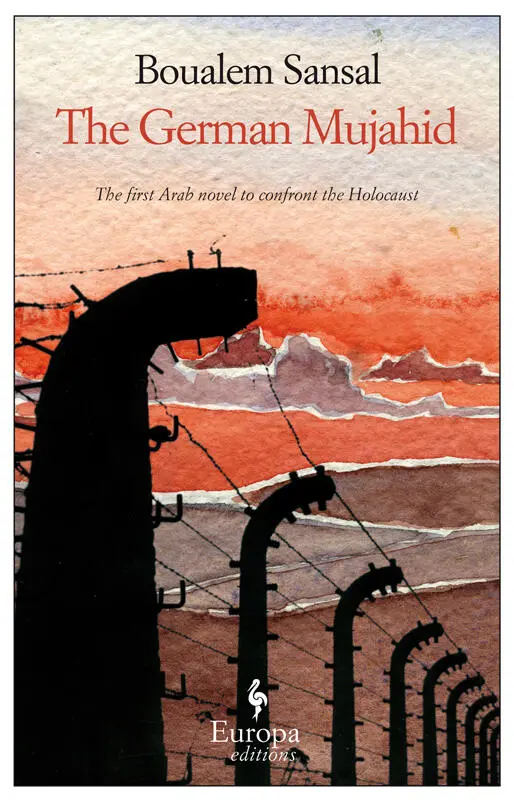
- Название:The German Mujahid
- Автор:
- Издательство:Europa Editions
- Жанр:
- Год:2009
- ISBN:нет данных
- Рейтинг книги:4 / 5. Голосов: 1
-
Избранное:Добавить в избранное
- Отзывы:
-
Ваша оценка:
The German Mujahid: краткое содержание, описание и аннотация
Предлагаем к чтению аннотацию, описание, краткое содержание или предисловие (зависит от того, что написал сам автор книги «The German Mujahid»). Если вы не нашли необходимую информацию о книге — напишите в комментариях, мы постараемся отыскать её.
is a heartfelt reflection on guilt and the harsh imperatives of history.
The two brothers Schiller, Rachel and Malrich, couldn't be more dissimilar. They were born in a small village in Algeria to a German father and an Algerian mother, and raised by an elderly uncle in one of the toughest ghettos in France. But there the similarities end. Rachel is a model immigrant — hard working, upstanding, law-abiding. Malrich has drifted. Increasingly alienated and angry, his future seems certain: incarceration at best. Then Islamic fundamentalists murder the young men's parents in Algeria and the event transforms the destinies of both brothers in unexpected ways. Rachel discovers the shocking truth about his family and buckles under the weight of the sins of his father, a former SS officer. Now Malrich, the outcast, will have to face that same awful truth alone.
Banned in the author's native Algeria for of the frankness with which it confronts several explosive themes, The German Mujahid is a truly groundbreaking novel. For the first time, an Arab author directly addresses the moral implications of the Shoah. But this richly plotted novel also leaves its author room enough to address other equally controversial issues; Islamic fundamentalism and Algeria's "dirty war" of the early 1990s, for example or the emergence of grim Muslim ghettos in France's low-income housing projects. In this gripping novel, Boualem Sansal confronts these and other explosive questions with unprecedented sincerity and courage.
The German Mujahid — читать онлайн бесплатно полную книгу (весь текст) целиком
Ниже представлен текст книги, разбитый по страницам. Система сохранения места последней прочитанной страницы, позволяет с удобством читать онлайн бесплатно книгу «The German Mujahid», без необходимости каждый раз заново искать на чём Вы остановились. Поставьте закладку, и сможете в любой момент перейти на страницу, на которой закончили чтение.
Интервал:
Закладка:
I need to know, I need to understand. Rachel made a mistake, he got caught up in his grief and it destroyed him, just like his boss Monsieur Candela told him it would. You have to try and put things in context, like Com’Dad said to me, “First you have to understand.” Com’Dad thinks Rachel understood, but he’s wrong, Rachel wanted to understand to take away the grief — or maybe so he could finally grieve. He became obsessed with evil and he turned it on himself. He got so caught up in it that he tried to take papa’s guilt upon himself. He even imagined he’d lived in the camps, imagined himself as an SS officer’s son playing with other kids, beating and killing poor little bastards who never did anything to him. The most dangerous traps are the ones we set for ourselves. Rachel even imagined putting on his black suit and going before a judge to confess to every crime committed in the Third Reich. I think what really finished him off was that poem by Primo Levi that starts off blaming the readers: “ You who live secure / In your warm houses, / Who return at evening to find / Hot food and friendly faces: / Consider whether this is a man. . ” It was like the poem was describing Rachel’s life, he’s trundling along with no real worries, and then he suddenly finds out about the massacre in Aïn Deb, finds out our parents have been murdered, then he discovers papa was an SS officer who worked in the death camps for the Third Reich. When it came to me, I got straight to the point. I asked myself, what has papa’s past got to do with us? That was his life, this is ours. How can we be blamed for that war, that tragedy, the Holocaust, what they call the Shoah ? Ophélie was right: “It’s not like we killed the Jews, I can’t see why you’re so obsessed with this whole thing.” History is like that, it’s a steamroller crushing everyone in its path, it’s horrible, it tragic, but what can we do about it? Like Monsieur Candela said to Rachel, “Your grieving for your parents and feeling sorry for yourself isn’t going to bring them back.” I can’t rewrite history, and feeling sorry for myself won’t bring anyone back — not my parents, not Rachel, not poor Nadia, not the millions of people I didn’t know who died in the gas chambers. I need to do something. To act. But do what? “Read if you want, campaign if you want, make a difference however you can. Anything else you do is the devil’s work.” That’s what Monsieur Candela said, and he’d seen enough of life to have more faith in the devil than he had in God. And I remembered something Monsieur Vincent used to say when he’d see us scratching our heads over some clapped-out old banger: “If you stop thinking so hard, you might see things better.” And a lot of the time he was right: we’d push start the old rust bucket and it would be fine. People are always making problems for themselves and then wondering why they end up with a headache.
Over and over I ask myself the same question: where in all of this is papa — the man I knew, the man who married maman, the Cheïkh of Aïn Deb, the man everyone loved and respected, uncle Ali’s oldest, closest friend? Because he did exist, the father we spent all those years missing, he had two healthy sons, Rachel the brainy one and me who was never much good at anything, but I’m smart enough to know right from wrong. Am I supposed to believe the man I called papa and the SS officer are really the same person? How is it possible to blame one and honour the other, to hate the killer he was — a man I never knew — and love the father, the victim he is now, a victim of the same terrorists who are gunning for us? Did my father pay for his crimes? What about us, are we paying because we are his sons? Is this fate, mektoub , is it a curse? “ I commend these words to you. / Engrave them on your hearts / When you are in your house, when you walk on your way, / When you go to bed, when you rise. / Repeat them to your children. / Or may your house crumble, / Disease render you powerless, / Your offspring avert their faces from you. ” That’s what Primo Levi says: the children are doomed from the start because parents never tell their children about their crimes, if parents told their children everything it would be like killing them in the womb. This Primo Levi guy is crazy. I refuse to believe that God is more evil than man, that children are doomed to their fate.
Some of my mates come by the house from time to time, they say they do it just to annoy me, but actually they’re shit scared that I’m losing it. They come right out and say it too, but when they see how I react, they start joking around, grabbing each other by the sleeve, by the neck, by the dick, calling each other wacko. The crazier you are, the more you laugh, they say, laughing like lunatics. You can’t choose your friends. I play along just to get it over with. After they’ve trashed the place, we collapse on the sofa and talk. We talk for hours. It’s always the same conversation. It starts with me. Why don’t I go out any more? Why am I always going round with a face like an undertaker? Why am I always reading? And what the fuck am I writing in this notebook? Then they start with their stupid questions: Am I eating properly? Who washes my clothes? Who does the cleaning? Who takes out the rubbish? Who’s paying the electric? I don’t bother to try and explain, they’ve all got mothers and sisters who do everything for them. I can’t imagine Bidochon — who’s done, like, three days of work in his whole life — or Momo, who lives off the halal meat from his father’s butcher’s shop, know what a direct debit is, or how to wash a pair of boxers, make an omelette, cut a slice of bread, clean up after themselves, flush the toilet. All they’ve ever done is sit back and wait for everything to be done for them. The only one who can actually think is Idir-Quoi, but he can’t tell you what he thinks because the minute he opens his mouth he starts stammering. There’s no point even talking about Togo-au-Lait, he’s black as the ace of spades, he’s got his hair in cornrows like some gangsta and he thinks he’s clever as a monkey. When you see the way he rolls his eyes as soon as he sees a question mark, you realise he doesn’t know anything about monkeys — a lot of them are incredibly stupid. Raymou’s got two brains that don’t connect, a brain full of working-class common sense he inherited from his dad, and his own brain, which chews up common sense and spits it out. How much sense you get out of Raymou depends on whether you’re talking to the father or the son. Or the Holy Ghost. At the end of the day, Cinq-Pouces is the only one of the lot of them with a clue, his nickname means he’s all thumbs, but he’s a hard worker. He’s the only one of them who’s ever held down a job. He used to work with his father and he can turn his hand to pretty much anything. The things at the end of his arms aren’t hands, they’re Swiss army knives. Like I said, you can’t choose your friends. But I love them the way they are, crazy, dumb, ungrateful, awkward, useless, infuriating, and all out of benefits, even the benefit of the doubt. They’re prisoners. Yeah, I love them.
When they came by today they said they had news — some good, most bad. The good news is that the imam from Block 17 was arrested as an accessory in Nadia’s murder. “That calls for a beer,” I said. “The thing is,” they said, “now the whole estate has gone to shit, we couldn’t stand it anymore, we had to get out.” This was why they had come round, they couldn’t breathe there. On the one hand, you’ve got the people living on the estate playing dead, waiting to see what happens before they make a move, on the other hand you’ve got people running round all over the place: the imam’s suicide bombers, his sleeper cells, Com’Dad’s informants, the cops, the CRS, people from all kinds of organisations, reporters, academics, rubberneckers, counsellors from City Hall, representatives from Sensitive Urban Areas all over France and one or two from Belgium. We’re all over the news. When the sink estates in Paris catch a cold, the whole of France ends up spitting blood. Everywhere you go on the estate you get ambushed. On their way here Momo and the guys were stopped and full-body searched thirty times, questioned fifteen times, interviewed seven times, called in as backup three times, and once they managed to slip through the cordon. They came up with a brilliant way of getting rid of the TV reporters: whenever a journalist tried to talk to them they shoved Idir-Quoi to the front, stood well back and pissed themselves laughing.
Читать дальшеИнтервал:
Закладка:
Похожие книги на «The German Mujahid»
Представляем Вашему вниманию похожие книги на «The German Mujahid» списком для выбора. Мы отобрали схожую по названию и смыслу литературу в надежде предоставить читателям больше вариантов отыскать новые, интересные, ещё непрочитанные произведения.







Обсуждение, отзывы о книге «The German Mujahid» и просто собственные мнения читателей. Оставьте ваши комментарии, напишите, что Вы думаете о произведении, его смысле или главных героях. Укажите что конкретно понравилось, а что нет, и почему Вы так считаете.