Boualem Sansal - The German Mujahid
Здесь есть возможность читать онлайн «Boualem Sansal - The German Mujahid» весь текст электронной книги совершенно бесплатно (целиком полную версию без сокращений). В некоторых случаях можно слушать аудио, скачать через торрент в формате fb2 и присутствует краткое содержание. Год выпуска: 2009, Издательство: Europa Editions, Жанр: Современная проза, на английском языке. Описание произведения, (предисловие) а так же отзывы посетителей доступны на портале библиотеки ЛибКат.
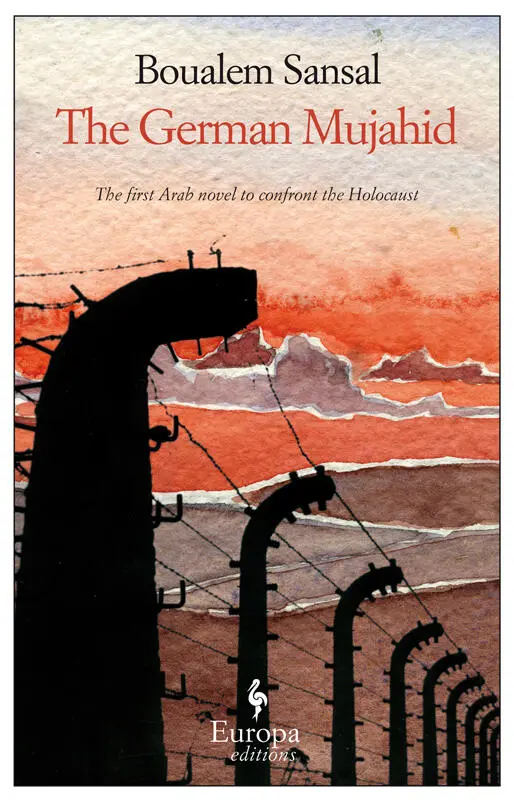
- Название:The German Mujahid
- Автор:
- Издательство:Europa Editions
- Жанр:
- Год:2009
- ISBN:нет данных
- Рейтинг книги:4 / 5. Голосов: 1
-
Избранное:Добавить в избранное
- Отзывы:
-
Ваша оценка:
The German Mujahid: краткое содержание, описание и аннотация
Предлагаем к чтению аннотацию, описание, краткое содержание или предисловие (зависит от того, что написал сам автор книги «The German Mujahid»). Если вы не нашли необходимую информацию о книге — напишите в комментариях, мы постараемся отыскать её.
is a heartfelt reflection on guilt and the harsh imperatives of history.
The two brothers Schiller, Rachel and Malrich, couldn't be more dissimilar. They were born in a small village in Algeria to a German father and an Algerian mother, and raised by an elderly uncle in one of the toughest ghettos in France. But there the similarities end. Rachel is a model immigrant — hard working, upstanding, law-abiding. Malrich has drifted. Increasingly alienated and angry, his future seems certain: incarceration at best. Then Islamic fundamentalists murder the young men's parents in Algeria and the event transforms the destinies of both brothers in unexpected ways. Rachel discovers the shocking truth about his family and buckles under the weight of the sins of his father, a former SS officer. Now Malrich, the outcast, will have to face that same awful truth alone.
Banned in the author's native Algeria for of the frankness with which it confronts several explosive themes, The German Mujahid is a truly groundbreaking novel. For the first time, an Arab author directly addresses the moral implications of the Shoah. But this richly plotted novel also leaves its author room enough to address other equally controversial issues; Islamic fundamentalism and Algeria's "dirty war" of the early 1990s, for example or the emergence of grim Muslim ghettos in France's low-income housing projects. In this gripping novel, Boualem Sansal confronts these and other explosive questions with unprecedented sincerity and courage.
The German Mujahid — читать онлайн бесплатно полную книгу (весь текст) целиком
Ниже представлен текст книги, разбитый по страницам. Система сохранения места последней прочитанной страницы, позволяет с удобством читать онлайн бесплатно книгу «The German Mujahid», без необходимости каждый раз заново искать на чём Вы остановились. Поставьте закладку, и сможете в любой момент перейти на страницу, на которой закончили чтение.
Интервал:
Закладка:
I don’t know what I said. Nothing, probably. I was tumbling into a black hole. I could see shadows. . my father, my mother, Rachel spiralling into madness, poor Nadia screaming as she died, the emir burning her with a blowtorch, the shadow of the imam looming over the estate; I thought about the massacre in Aïn Deb, about. . I don’t remember. I remember yelling, “What are you telling me all this for? What’s it got to do with me?”
He leaned over and said, “It’s got everything to do with you. I know what’s going on in that head of yours. You’re confusing the past and the present, you’re comparing yourself and Rachel, your father and the imam, you’re thinking about the Nazis who stole your father from you and used him as a tool in their genocide, you’re thinking about the Islamic fundamentalists who murdered your parents, who murdered poor Nadia, you want revenge, you want to take down the imam because he’s the leader, the Führer, because you used to belong to his Brotherhood of pathetic losers busy trying to wipe out humanity and you think this gives you a way to redeem yourself, to see your father differently, to forgive him. Do you understand?”
“This is bullshit. Can I go now?”
“Sure, you can go. But read your brother’s diary again, maybe you’ll realise something that even Rachel didn’t realise, though it was staring him in the face: you can’t get justice for a crime by committing another crime, or by committing suicide. We have laws to do that. For the rest, we have to rely on memory and wisdom. But the most important thing you need to learn is this: we are not responsible for the crimes of our parents.”
“Can I go now?”
“My door is always open, come back if you feel like it.”
I went up to see uncle Ali and aunt Sakina. I was planning to sleep at their place that night, I felt terrible, I hadn’t seen them in over a month. Actually, I was scared to be alone in Rachel’s house, I didn’t know what I might do. But there was another reason: there was something I wanted to ask aunt Sakina, something that hadn’t occurred to me before, or to Rachel — at least there was nothing in his diary about it: how did papa and uncle Ali meet? It’s weird the stuff you don’t know, that you don’t even think about. Ten years I’d been living with uncle Ali and aunt Sakina and I didn’t know anything about them, I didn’t know how they knew papa.
Uncle Ali and aunt Sakina are exactly like you’d imagine, they’re immigrants who’ve stayed immigrants. Their life in France is the same as if they still lived in Algeria, it would be exactly the same if they lived on another planet. “Allah decides all things,” they say, and that’s all there is to it. They’re good people, they don’t ask for much out of life: enough to eat, somewhere to sleep, a little peace, and now and then some news from the bled . They love getting letters. I used to have to read the letters to them and write the letters back. Back then I thought it was a pain, but now I look back on it fondly. Papa used to send them standard-issue letters: Dear Ali, just a few lines to let you know that I and the family are well. I hope that you, your wife and your children are well. We send you our love . Then he’d write a bit about life in the village, about the weather. Uncle Ali would write back: Dear Hassan, thank you for you letter which we received. We are happy to know that you are well. Allah be praised. Everything here is fine, the children send their love. Please write again soon. The peace of Allah be with you. I have sent the medicines you asked for, I hope they will arrive safely. If you need anything else, let me know . Then he’d write a bit about life on the estate, about the weather. I wrote dozens and dozens of letters, every one of them exactly the same — the only thing different was the date, the weather and the names of the medicines.
Now that I finally wanted to talk to them, I realised I didn’t know how to begin. We’d only ever talked in set phrases. Me saying, Hi uncle Ali, Hi aunt Sakina, I’m hungry, I’m going out, and them saying, Hello, Hello, Are you hungry? Can I get you some coffee? Put a coat on, you’ll get cold, God go with you . The rest was silence, politeness, the routine clichés of family life.
“ Am’ti , how did papa and uncle Ali meet?”
I have never seen my aunt Sakina look surprised by anything. She answered perfectly calmly.
“They were in the maquis together during the War of Independence, they became great friends, they were like brothers.”
“Is that it? What about afterwards?”
“When independence came, times were hard, everyone was poor, people were sleeping in the streets while our leaders were feasting in the palaces left by the colonists and killing each other over who should take power. Your father and uncle Ali were disgusted by what was happening. Ali came to France, he couldn’t bear it. As soon as he found a job, he went back and asked for my hand, and I came back to France with him. Allah has watched over us, we have never wanted for anything.”
“What about papa?”
“He had problems with the new leaders, I know that. There were people who wanted him to leave Algeria — they threatened to kill him. But there were many people who wanted him to stay so he could go on training army officers.”
“Why did some people hate him?”
“I don’t know. Your Ali would have been able to tell you, but the poor man is not himself anymore. I do know that he hid your father for many months in our village in Kabylia. Later, after we left for France, your papa went into hiding in Aïn Deb with a friend from the maquis . Tahar, his name was, he was your uncle. Your father married his sister Aïcha. Tahar died long ago, before you and your brother were even born.”
“Why did papa never come to France?”
“I don’t know, oulidi . He had fought the French in the war back when he lived in Germany, and when he came to Algeria he was afraid he might be arrested.”
“But uncle Ali fought against the French, and he came to live here, and he never had any problems.”
“Well, I’m sure your father had his reasons, but I don’t know what they were.”
“Why did he send us here to live with you in France, why didn’t he want us to stay with him and maman? I mean, is that normal?”
“Don’t judge your father, oulidi , he was thinking of you, of your future, he wanted you to study, to be successful, to live in peace. Why are you asking me all these questions?”
“No reason, am’ti . . no reason.”
“You’re not well, oulidi , ever since your brother died, you haven’t been the same. You are not happy, you spend too much time thinking. But it will pass, you are young, Allah watches over you.”
That night I slept like a baby. It was the first time in a long time.
RACHEL’S DIARY, MARCH 1995
My life is a living hell. Everything is going wrong. Ophélie is always nagging me, she won’t give me a minute’s peace, she wants things to go back to the way they were, she wants me to be the man I was when we first met. I know now why women love soap operas — they tell the same stories over and over with the same dialogue, the same sets, actors who barely age a day in twenty years. The characters never change. Maybe this is their way of taking revenge on life. But I can understand Ophélie. Her whole world has been turned upside down, she’s living with a stranger, an intruder, an impostor, someone who is not interesting or exciting, some lunatic who is constantly brooding about horrors from another time, another world. This is not the man she married, this stranger has no business being in her life, in our soap-opera love story. I’ve tried to keep things to myself, but it’s getting harder and harder. I’ve tried hiding behind my work, I’ve made up emergencies, deals going south, I’ve blamed the recession the economists are always talking about, I’ve blamed tough negotiations, I’ve blamed the Chinese and the Indians and the Koreans for underbidding and stealing our market share, senior management for their obsession with endless meetings, flurries of last-minute orders, endless seminars and conferences, the unions terrified of losing their benefits just making things worse. I talk to her about these things the way you might explain a war film to a pacifist or a conscientious objector, I try to keep up the suspense, putting in just enough high-minded principles to justify the ruthlessness of our reactions. Our jobs are on the line, we’re fighting for our lives, for her. But she doesn’t care about any of this. In her eyes, none of these things can justify my silence, my constant absences, the bags under my eyes, my lack of interest in food, in sex, and nothing can justify my obsession with those books— those vile books , she calls them — about the war, the SS, the deportations, the extermination camps, the machinery of death, the post-war trials, the worldwide hunt for war criminals. In fact, she once threatened to throw them in the fire, but one look at me and she knew it wouldn’t be a good move. I moved the books out to the garage and put a lock on the tool cabinet. Sometimes she said things that were really hurtful, though I knew it wasn’t really her, it was her mother talking. One day she said to me, “You’re all the same, you half-breeds, it’s all six of one and half a dozen of the other, you have no idea what you want really.” I said, “You can tell your mother from me that six of one and half a dozen of the other are not the same thing, though that’s what the expression is supposed to mean.” Ophélie sulked for a whole week because I corrected her, and her mother phoned me and screamed that she wasn’t about to take French lessons from a foreigner. I didn’t know what she was talking about, but I said, “It’s all relative. A foreigner is only foreign to a foreigner. In the absolute he is just a person and there’s no law that says he can’t read Molière and Maupassant.” She slammed the phone down. One night, when I came home with a pile of new books under my arm, Ophélie, with an ingenuousness that scared me, said, “It’s not like we killed the Jews, I can’t see why you’re so obsessed with this whole thing.” This was the last straw. I answered with the same chilly detachment, “You’re right, it wasn’t us, but it could have been us!” I didn’t try to explain and she quickly changed the subject. “My mother’s coming over for dinner tonight, so do me a favour and snap out of this mood.”
Читать дальшеИнтервал:
Закладка:
Похожие книги на «The German Mujahid»
Представляем Вашему вниманию похожие книги на «The German Mujahid» списком для выбора. Мы отобрали схожую по названию и смыслу литературу в надежде предоставить читателям больше вариантов отыскать новые, интересные, ещё непрочитанные произведения.







Обсуждение, отзывы о книге «The German Mujahid» и просто собственные мнения читателей. Оставьте ваши комментарии, напишите, что Вы думаете о произведении, его смысле или главных героях. Укажите что конкретно понравилось, а что нет, и почему Вы так считаете.