Boualem Sansal - The German Mujahid
Здесь есть возможность читать онлайн «Boualem Sansal - The German Mujahid» весь текст электронной книги совершенно бесплатно (целиком полную версию без сокращений). В некоторых случаях можно слушать аудио, скачать через торрент в формате fb2 и присутствует краткое содержание. Год выпуска: 2009, Издательство: Europa Editions, Жанр: Современная проза, на английском языке. Описание произведения, (предисловие) а так же отзывы посетителей доступны на портале библиотеки ЛибКат.
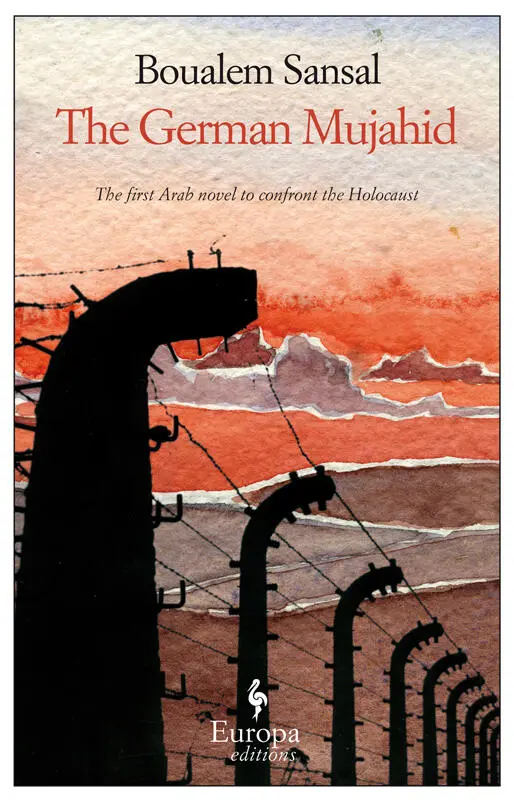
- Название:The German Mujahid
- Автор:
- Издательство:Europa Editions
- Жанр:
- Год:2009
- ISBN:нет данных
- Рейтинг книги:4 / 5. Голосов: 1
-
Избранное:Добавить в избранное
- Отзывы:
-
Ваша оценка:
The German Mujahid: краткое содержание, описание и аннотация
Предлагаем к чтению аннотацию, описание, краткое содержание или предисловие (зависит от того, что написал сам автор книги «The German Mujahid»). Если вы не нашли необходимую информацию о книге — напишите в комментариях, мы постараемся отыскать её.
is a heartfelt reflection on guilt and the harsh imperatives of history.
The two brothers Schiller, Rachel and Malrich, couldn't be more dissimilar. They were born in a small village in Algeria to a German father and an Algerian mother, and raised by an elderly uncle in one of the toughest ghettos in France. But there the similarities end. Rachel is a model immigrant — hard working, upstanding, law-abiding. Malrich has drifted. Increasingly alienated and angry, his future seems certain: incarceration at best. Then Islamic fundamentalists murder the young men's parents in Algeria and the event transforms the destinies of both brothers in unexpected ways. Rachel discovers the shocking truth about his family and buckles under the weight of the sins of his father, a former SS officer. Now Malrich, the outcast, will have to face that same awful truth alone.
Banned in the author's native Algeria for of the frankness with which it confronts several explosive themes, The German Mujahid is a truly groundbreaking novel. For the first time, an Arab author directly addresses the moral implications of the Shoah. But this richly plotted novel also leaves its author room enough to address other equally controversial issues; Islamic fundamentalism and Algeria's "dirty war" of the early 1990s, for example or the emergence of grim Muslim ghettos in France's low-income housing projects. In this gripping novel, Boualem Sansal confronts these and other explosive questions with unprecedented sincerity and courage.
The German Mujahid — читать онлайн бесплатно полную книгу (весь текст) целиком
Ниже представлен текст книги, разбитый по страницам. Система сохранения места последней прочитанной страницы, позволяет с удобством читать онлайн бесплатно книгу «The German Mujahid», без необходимости каждый раз заново искать на чём Вы остановились. Поставьте закладку, и сможете в любой момент перейти на страницу, на которой закончили чтение.
Интервал:
Закладка:
I don’t know how many times I read it. Angrily, compulsively at first, then more calmly, finally with an increasingly anxious serenity. I was looking for the key, the spell that had persuaded intelligent, able-bodied men like my father to shed their humanity and become killing machines. There is nothing in this book, nothing but dishwater, the ramblings of a hick from the sticks, the pretentious claptrap of tin-pot chiefs who dream of being immortal dictators, slogans for election posters in a slave republic. “God helps those who kill the Jews; An Aryan in the hand is worth all the Jews in the world; Preserve the bloodline, beware of contamination; Is your neighbour sick or handicapped? Kill him.” If this was all it took for evil to sway the Germans and turn them into Nazis, you had to hand it to Hitler. I had been expecting some irrefutable line of reasoning, an alchemy of complex arguments, devastating revelations about a worldwide conspiracy against the German people, a chain reaction linking one chapter to the next, extraordinary circumstances skillfully orchestrated, I had expected Satan to have penned certain passages supplying the ink and the details for the rest of it. But there was nothing. All it had taken for evil to triumph was a beardless, blustering soldier, a depressive, syphilitic housepainter, a few well-turned phrases, a muscular title— My Struggle— and a socioeconomic context that fostered grievances, condemnations, recriminations and hyperbole. There were, of course, other factors: the history of the country, its roots in centuries-old sects, in age-old myths filled with vague esoteric ideas, echoes of this or that, far-fetched theories, rediscovered mythology, new philosophies born in the heat of action, dreams of glory that might have come from an inmate at the local lunatic asylum or a drunk in the bar next door, and the lust for power that technical progress and scientific advancements inspire in a society desperate to reassert itself. You didn’t have to look too hard. What country doesn’t have demons locked up in its ancient cellars, what country doesn’t have warmongers, dreams of immortality, what people doesn’t have a few genes damaged by history, what people is not exposed to life’s slings and arrows, what religion hasn’t been rocked by scientific discoveries? There is but one humanity and evil lurks within us, in our very marrow.
I was sinking, I knew that. Worse still, I was gappling with trivial details when what I needed to do was cling to the simple facts. There was no reason for what had happened. To try to find a root cause for evil was absurd. Evil is. It has existed since the dawn of time. Looking for a means to analyse it or a ready-made explanation is pointless, and weighing every detail in the balance is self-defeating. I believe that evil is an endlessly recurring accident that sends good and bad drivers alike crashing into a wall. Good has meaning only at funerals, it is only at such moments that we see ourselves for what we truly are: dust which will be swept away with the next breath of wind. This, I firmly believe, is what goodness means. There is no better deterrent, there is no more salutary lesson. If this person has died, we too will die, there is nothing more to it. But there is no good, evil reigns supreme. What happened to my father happened to others in Germany and elsewhere, yesterday and the day before, and it will go on happening tomorrow and the day after. For as long as the earth revolves around the sun, for as long as life — this sweet madness — keeps company with its antidote mankind — this furious madness — there will be crimes and criminals and victims. And grief beyond measure. And accomplices. And bystanders. And despots who wash their hands of our suffering. And yet, this crime is not like other crimes, and it is this uniqueness I must face. Alone. More alone than anyone in the world.
Rereading what I have just written, I realise I’ve missed the most important point. I’ve ducked the issue, what I’ve written is just gobbledy-gook and cheap philosophy. I have to face the facts. They are what they are, nothing and no one, not even God, can go back and deal the cards again. My father did what he did of his own free will, he acted according to his conscience, the proof being that others refused to do what he did and paid with their lives, or managed to emigrate in time. The other, irrefutable proof is that he kept his files like sacred relics, his military record, his medals, that fucking SS Death’s Head, preserved like blessed sacraments. When you can do nothing in the face of totalitarianism, when you are already caught in the trap, there is still one last means of self-preservation: suicide. It is our last resort, our wild card, invisible, invincible. It is why when the wolf, that magnificent beast, gets his paw caught in a trap, he gnaws on it, he chews it off and finds his freedom, whole, intact, troubling as Psyche herself, struggles on to the last drop of blood and dies of exhaustion and overwhelming relief. Even after the crime was committed, papa still had this recourse, to give himself up, demand justice in the name of his victims, become again the man he had been, regain his dignity. Instead he ran away, he hid, he lied, he disowned himself and, in doing so, left his crime unpunished, silence was his refuge. He consecrated it. I would have preferred him to have appeared before a jury of his peers with the Bonzen of the Third Reich, Hess, Rippentrop and the rest of them. Solemn judgement gives the crimes back their full horror and restores to the guilty some part of their lost humanity. Silence perpetuates a crime, gives it new life, closes the door on justice and truth and throws opens the door to forgetfulness, to the possibility that it might happen again.
One question drives me mad: Did papa know what he was doing in Dachau, in Buchenwald, in Majdanek, in Auschwitz? I can’t think of him as a victim anymore, as some fresh-faced innocent unwittingly infected by evil. And even if he was, there comes a moment, a split second, some event, however trivial, some unexpected, fleeting series of terrible images which lead to realisation, doubt, revolt. At that moment something within us cries out, it must do, if it did not then there is nothing, no God, no man, no truth. How could anyone fail to react, if only with an imperceptible shudder, when faced with the haunted eyes of a sickly child shivering with cold in the desolation of a death camp, with a naked woman hiding her pudenda as she is dragged to the gas chambers, a woman without hair or name, with no more strength to remember, eyes empty and womb cold as a frog in winter, with a man clinging to a dignity long since destroyed even as the last tatters of humanity are stripped from him, a man who dies at a yes or a no .
I tell myself: if a single crime goes unpunished on this earth, if silence prevails over anger, then men do not deserve to live. In a better world, I would have given myself up, put on my black suit, stood before a judge and confessed: “My father tortured and killed thousands of people who never did him any harm and he got away scot-free. By the time I knew what he had done, he was dead, so I have come here in his place. Judge me, save me, please.” But in this world, I wouldn’t even be thought of as laughable, I would be thrown out of court, I would be summarily ejected, lectured. My God, they might wink at me! All I can do is deal with this thing alone. But I don’t know, everything is shocking, secret, squalid, everything in this world that has survived the end of the world is governed by prevarication and procrastination; once again we have come to believe that a lie is a necessary social protection for a people, a useful gift for an unruly child, a comfort for the anxious. I tell myself all sorts of things, I am drowning in a nightmare of horror, I have no raft to cling to. I am alone. More alone than anyone in the world. This world that to me seems so remote, deceptively preoccupied, obsessed with itself, its vague desires, its inconsequential joys, its follies, feeding on them as a cannibal feeds on himself, obsessed with its own time, its own tragedies, its dreams, its powerlessness. I’m struggling. Usually, I’ve got no time for self pity, for interminable obsessions. I remind myself that all this is simply history, that history belongs to the past, that the past is dead, we have forgotten, we no longer know, we have put things in perspective, that we live in an age that has its own problems, problems that are so great, so terrible, we cannot see our way out, while tomorrow, our only choice in life bears down on us with all its cruelties and sorrows. To me, it is an entire world that has collapsed on my head, it is the entire history of evil that stares me in the face, probes at my heart, my guts, steals into my memory, asks to be remembered, tells me endlessly how things were, who we were. The image haunts me, the fog suffocates me, my head aches, my ears are ringing. . I hear a commotion. . I see the dreary camp. . watch the procession of shadows. . men, women, children, all skin and bone, numberless, naked, marching obediently towards a vast inferno beneath the watchful eye of the SS officer. . help!. . I peer further into this horror. . I scream for help, I look around for my father. . Where are you, papa? What are you doing? I need to find him, to wake him, I need to wake up. . to save my father. . my father who is lost. . who has ruined us. My house has crumbled, grief has made me powerless; and I do not know why, my father never told me. . There he is, papa, immaculate in his black uniform, wearing the famous red armband. . He smiles at me, tender but stern, the affectionate smile of a father. . I don’t know how it happened, but he is here with me, just as he was in our house in Aïn Deb. We are living in a beautiful house just outside. . the camp. . the Konzentratzionlager . . Nearby is a beautiful forest, glorious flowers, shimmering colours, and behind the hill. . that place , all black, all grey, the place where I am not allowed to go. . I play with the other boys, the officers’ children and with children they bring over from that place to keep us company, to play games, to be our playthings, our whipping boys when we’re angry, to serve our whims. . but we hate these children, they’re scrawny and sickly, flea-ridden and scrofulous, they have no hair, no teeth, they don’t know how to play, they’re silent and stupid and we don’t understand them. All they can think about is eating, keeping warm, sleeping. . we shout at them, we hit them but still they don’t react, they just curl up like hedgehogs. . Around us, inhuman wretches with sunken eyes shamble through the pretty village, pretending to till the ground, rake the gravel, paint the fences. They are our prisoners, these creatures who have maimed our country, incensed our Führer, they wear filthy striped pyjamas, they are ugly, foul-smelling, deceitful, fawning, ungrateful, they steal whatever they can — cigarette butts, scraps of papers, stale crumbs of bread, the sight of a rusty nail can make their eyes pop out, the sight of a bone can have them slavering like dogs, they poke through our garbage, stare at us enviously. . Sometimes they stop pretending to work, they look up, look out into the distance, past the camp, past the hill. . to the tall column of oily fetid smoke that rises into the sky. . Oh, that scream!. . the sky is dark with wheeling carrion crows, filling the air with their baleful cawing. . Get out of here!. . You too, you fucking kikes. . The prisoners stare up at the sky. They seem constantly surprised by the sudden whirr that sometimes wakes us in the night, at dawn, in the cold, a grinding noise that grows louder, a series of dull metallic sounds, chains clanking, the slamming of heavy metal doors, the quiet fitful hiss of the pumps, the sudden drop in voltage that makes the lights flicker. . screams, perhaps. . a ghostly clamour that grows louder and louder, then gradually dies away, leaving a haunting silence. . My God, how strange this silence sounds, how painful. . people who. . more shaven heads appear by the foot of the hill. . another column of smoke advances stolidly. . emerges from the darkness, trudges through the dull grey day to disappear into the night. . it is far away. . the wind is blowing in the other direction. . the prisoners stop, lost in contemplation, so our Kapos rush over and knock them to the ground, lice hopping from their clothes as the Kapos lash out with clubs and guttural roars “ Arbeit!. . Arbeit!. . Schnell!. . Schnell!” We roll on the ground laughing. Ha ha ha! Ha ha ha!. . It’s strange that flayed and wasted as they are, the prisoners feel nothing, say nothing, do nothing, some laugh, baring their horrid teeth, staring up at the sky, they look as though they might sing. . They are fascinated. Then, when they are ready, they scramble to their feet, pick up their tools and pretend to till the ground, rake the gravel, paint the fences, check that everything is spick and span. Infuriating automata, they look as though all their lives they have done nothing but make these same gestures, as though they were born to this. Sometimes, there are two or three still sprawled on the ground but their comrades do not see them, pretend not to see them. The Kapos bark orders and they are carried off on stretchers past the camp, over there, past the hill. . Officers laugh or yell angrily, their whips whistle, slapping against their boots. . the Kapos laugh, they bow and scrape. . the Kapos are favoured prisoners, they have some flesh on their bones at the expense of their suffering brothers. . they speak a language I don’t understand, or barely. “Gut, gut, Juden kaput, fini, Konetz, danke, Dûkuji, merci beaucoup, dobry¯den .” Papa calls me inside for something to eat. . I. . I. . the wind has shifted, the air is suddenly rank and muggy. . We go inside and close the windows.
Читать дальшеИнтервал:
Закладка:
Похожие книги на «The German Mujahid»
Представляем Вашему вниманию похожие книги на «The German Mujahid» списком для выбора. Мы отобрали схожую по названию и смыслу литературу в надежде предоставить читателям больше вариантов отыскать новые, интересные, ещё непрочитанные произведения.







Обсуждение, отзывы о книге «The German Mujahid» и просто собственные мнения читателей. Оставьте ваши комментарии, напишите, что Вы думаете о произведении, его смысле или главных героях. Укажите что конкретно понравилось, а что нет, и почему Вы так считаете.