Carrie Brown - The Stargazer's Sister
Здесь есть возможность читать онлайн «Carrie Brown - The Stargazer's Sister» весь текст электронной книги совершенно бесплатно (целиком полную версию без сокращений). В некоторых случаях можно слушать аудио, скачать через торрент в формате fb2 и присутствует краткое содержание. Год выпуска: 2016, Издательство: Knopf Doubleday Publishing Group, Жанр: Современная проза, на английском языке. Описание произведения, (предисловие) а так же отзывы посетителей доступны на портале библиотеки ЛибКат.
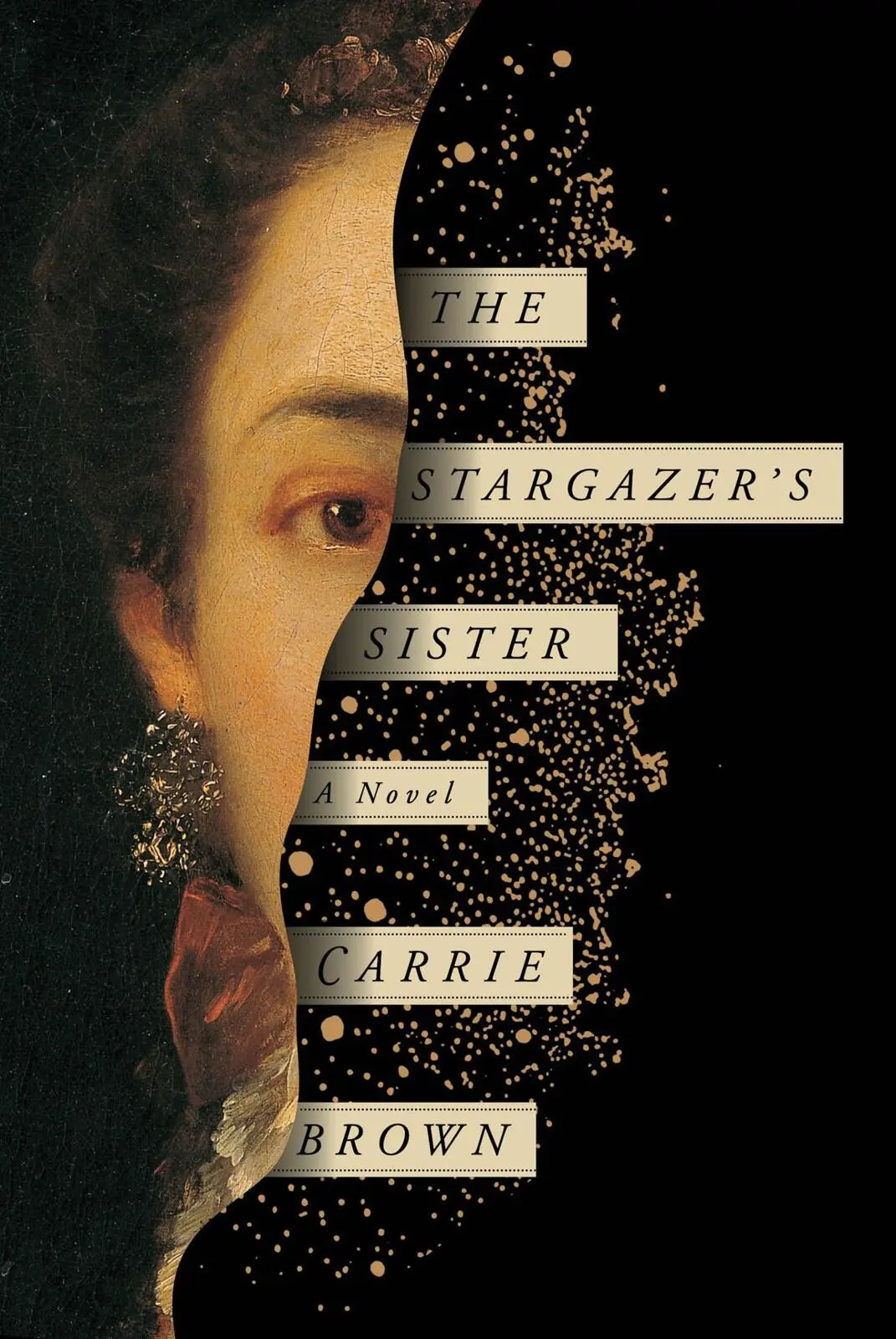
- Название:The Stargazer's Sister
- Автор:
- Издательство:Knopf Doubleday Publishing Group
- Жанр:
- Год:2016
- ISBN:нет данных
- Рейтинг книги:5 / 5. Голосов: 1
-
Избранное:Добавить в избранное
- Отзывы:
-
Ваша оценка:
The Stargazer's Sister: краткое содержание, описание и аннотация
Предлагаем к чтению аннотацию, описание, краткое содержание или предисловие (зависит от того, что написал сам автор книги «The Stargazer's Sister»). Если вы не нашли необходимую информацию о книге — напишите в комментариях, мы постараемся отыскать её.
a beautiful new period novel — a nineteenth-century story of female empowerment before its time — based on the life of Caroline Herschel, sister of the great astronomer William Herschel and an astronomer in her own right. This exquisitely imagined novel opens as the great astronomer and composer William Herschel rescues his sister Caroline from a life of drudgery in Germany and brings her to England and a world of music-making and stargazing. Lina, as Caroline is known, serves as William’s assistant and the captain of his exhilaratingly busy household. William is generous, wise, and charismatic, an obsessive genius whom Lina adores and serves with the fervency of a beloved wife. When William suddenly announces that he will be married, Lina watches as her world collapses.
With her characteristically elegant prose, Brown creates from history a compelling story of familial collaboration and conflict, the sublime beauty of astronomy, and the small but essential place we have within a vast and astonishing cosmos. Through Lina’s trials and successes, we witness the dawning of an early feminist consciousness, of a woman struggling to find her own place among the stars.
The Stargazer's Sister — читать онлайн бесплатно полную книгу (весь текст) целиком
Ниже представлен текст книги, разбитый по страницам. Система сохранения места последней прочитанной страницы, позволяет с удобством читать онлайн бесплатно книгу «The Stargazer's Sister», без необходимости каждый раз заново искать на чём Вы остановились. Поставьте закладку, и сможете в любой момент перейти на страницу, на которой закончили чтение.
Интервал:
Закладка:
She has seen no fondness between her parents. She knows, though, for she has seen it between Margaretta’s parents — Margaretta’s father’s hands on his wife’s waist or cupping her bottom when they thought no one was looking — that sometimes there is love between husbands and their wives, that there is love between a blushing girl and boy who dance the Ländler, their arms intertwined, the girl’s face upturned toward the boy’s, smiling.
But that is not to be her life.
Hers is not a face to turn toward anyone.
—
THE NEXT MORNING she is awakened at dawn by the sound of her mother’s screams and by Hilda’s wailing. She comes to the top of the stairs in her nightdress and looks down. Her mother and Hilda are cringing against the bottom steps in each other’s arms.
“I can’t touch him,” her mother says. “I can’t. It’s disgusting, disgusting!”
The fire is cold.
Lina wavers in her stockings on the landing, a shawl around her shoulders, her hair wild.
Her father is dead in his chair, his hands curled on his lap like bird claws and his eyes and mouth open.
—
THE GULF THAT OPENS at Lina’s feet with her father’s death lasts for five years, time that later in her memory is characterized by nothing, an empty plain almost without event, or at least events so trivial as to mystify her with their strange permanence in her mind: Dietrich being lifted to a table and playing a solo on his Adempken at a concert, a beautiful lady putting a gold coin in his pocket and complimenting his technique on the violin; the two months she spends lodging with a sempstress, where she learns to sew household linens and is given too little to eat; the cold floor of the garrison church where she goes alone sometimes to kneel and bow her head and ask for something, anything to relieve the barren days stretching before her. She remembers word for word a passage from one of William’s letters, and which she often rereads: There are two kinds of happiness or contentment for which we mortals are adapted; the first we experience in thinking and the other in feeling. Let a man once know what sort of being he is; how great the Being which brought him into existence, how utterly transitory is everything in the material world, and let him realize this without passion in a quiet philosophical temper, and I maintain then that he is happy; as happy indeed as it is possible for him to be. She reads this letter so frequently that eventually the paper tears where she had folded it. At night she sits outside on the bench and looks up at the sky, at the familiar constellations. She thinks about the Being who created this life for her. She knows that it is, as William said, transitory. But she does not know where she might find a “quiet philosophical temper” with which to bear it, while it is still hers to live.
One day, her mother raises a hand to strike her. She has done so before, but this time, something in Lina’s face must arrest her, for she drops her hand. They stare at each other, but it is her mother who turns away finally. Lina will make that moment last, make her mother look at her lifted hand. Yet the incident occasions no sense of triumph in Lina. It is that moment, in fact — the stark presence of her mother’s fear, along with her chronic anger and lack of affection — that prompts Lina at last to write to William, to plead for his help, to beg for his rescue.
Dearest Lina. I am making plans, William writes to her after receiving her desperate letter. I have not forgotten you.
Finally a letter to Lina and their mother containing William’s proposal arrives. He will return to Hanover in August and plans to take Lina back to England with him, where he is now installed as concertmaster and organist at the Octagon Chapel in Bath. He knows Lina’s voice is a fine one, he writes, and he needs a singer he can train and keep with him all the time. The performers on whom he depends now are itinerant, their services too expensive.
He will compensate their mother for the loss of Lina.
“He will never have you sing,” her mother says, folding the letter and tucking it away in her gown, as if to deny Lina the pleasure of reading his words again. “Not with your face.”
But she does not say no to William, does not forbid the arrangement — she will be happy for the money, Lina thinks — and soon he writes again with a date on which he hopes to arrive.
The day William is expected, Lina leaves the house and goes down through the orchard to the river.
Finally, after years of no tears, the tears come.
When he opens the door of the house just before darkness, she is alone in the room.
She has already packed everything she owns. She stands up, but her legs are trembling.
She cannot make her feet move.
He puts down a satchel and crosses the room.
More tears. She had thought herself emptied out.
He puts his arms around her.
She knows he sees now how terrible it has been to wait.
“Lina,” he says, his voice breaking. “You will be a great gift to me.”
—
THE NEXT EVENING, William takes the chair before the fire.
He begins with a preamble: Certainly Lina’s loss to the household will be felt, he says. Of course their mother will need to be compensated. He speaks to the firelight, not looking at their mother.
Lina knows that their mother has been expecting this conversation and has been scheming. Now she fretfully enumerates Lina’s daily labors for William.
Lina is surprised at the length of the list of her own chores, but she sits quietly, waiting. It is all just a matter of the money, she sees now. It has always been just a matter of the money, her mother’s greed winning out over her cruelty. She would rather have the money than punish Lina further.
But is it possible William does not have enough? Will her mother prevent Lina’s freedom, after all? Is it only a further cruelty in her that she has allowed Lina to believe she will be permitted to go with William?
William looks away from the fire and gazes down at the paper on which he has been scratching figures.
“You have Hilda to help you,” he says. “Dietrich and Leonard may assist you when they are at home.”
The little boys. Lina still thinks of them in this way — Leonard’s sweetness, and Dietrich’s sensitivity, his feelings so easily bruised — though they are tall boys now and both apprenticed to the duke’s vintner, a man who has been deprived of sons. William does not mention Jacob, of course, who has disappeared with such finality that they all believe him dead; it has been years now, and none of them has had any news of him.
“And you always may call on Alexander,” William adds, “if you have need of him.”
Lina thinks that Alexander would not refuse a request, but he has drifted far from the family. He has a position as Hanover’s Stadt-Musicus, whose duty is to blow the Chorale in the middle of the day from the market tower. She hears it sometimes and imagines he is thinking of her, that the notes are for her, but he rarely comes to visit. She does not blame him.
Their mother scoffs. “ Boys will not do women’s work,” she says bitterly.
Poor Hilda. It is a great worry to Lina that she will leave Hilda, who is now an orphan and meanwhile has developed an ugly growth on her neck like a burled knot on a tree.
William frowns down at the papers in his lap.
Lina has looked at them on the table: the familiar triangles with long hypotenuse and arrows and endless, downward-sloping equations.
“And I do not have Hilda forever,” their mother says after a minute. “ She will not stay forever, as a daughter would, though she is so ugly, I wonder that anyone even would have her as a servant now. She will only be a further burden to me.”
Читать дальшеИнтервал:
Закладка:
Похожие книги на «The Stargazer's Sister»
Представляем Вашему вниманию похожие книги на «The Stargazer's Sister» списком для выбора. Мы отобрали схожую по названию и смыслу литературу в надежде предоставить читателям больше вариантов отыскать новые, интересные, ещё непрочитанные произведения.











Обсуждение, отзывы о книге «The Stargazer's Sister» и просто собственные мнения читателей. Оставьте ваши комментарии, напишите, что Вы думаете о произведении, его смысле или главных героях. Укажите что конкретно понравилось, а что нет, и почему Вы так считаете.