Carrie Brown - The Stargazer's Sister
Здесь есть возможность читать онлайн «Carrie Brown - The Stargazer's Sister» весь текст электронной книги совершенно бесплатно (целиком полную версию без сокращений). В некоторых случаях можно слушать аудио, скачать через торрент в формате fb2 и присутствует краткое содержание. Год выпуска: 2016, Издательство: Knopf Doubleday Publishing Group, Жанр: Современная проза, на английском языке. Описание произведения, (предисловие) а так же отзывы посетителей доступны на портале библиотеки ЛибКат.
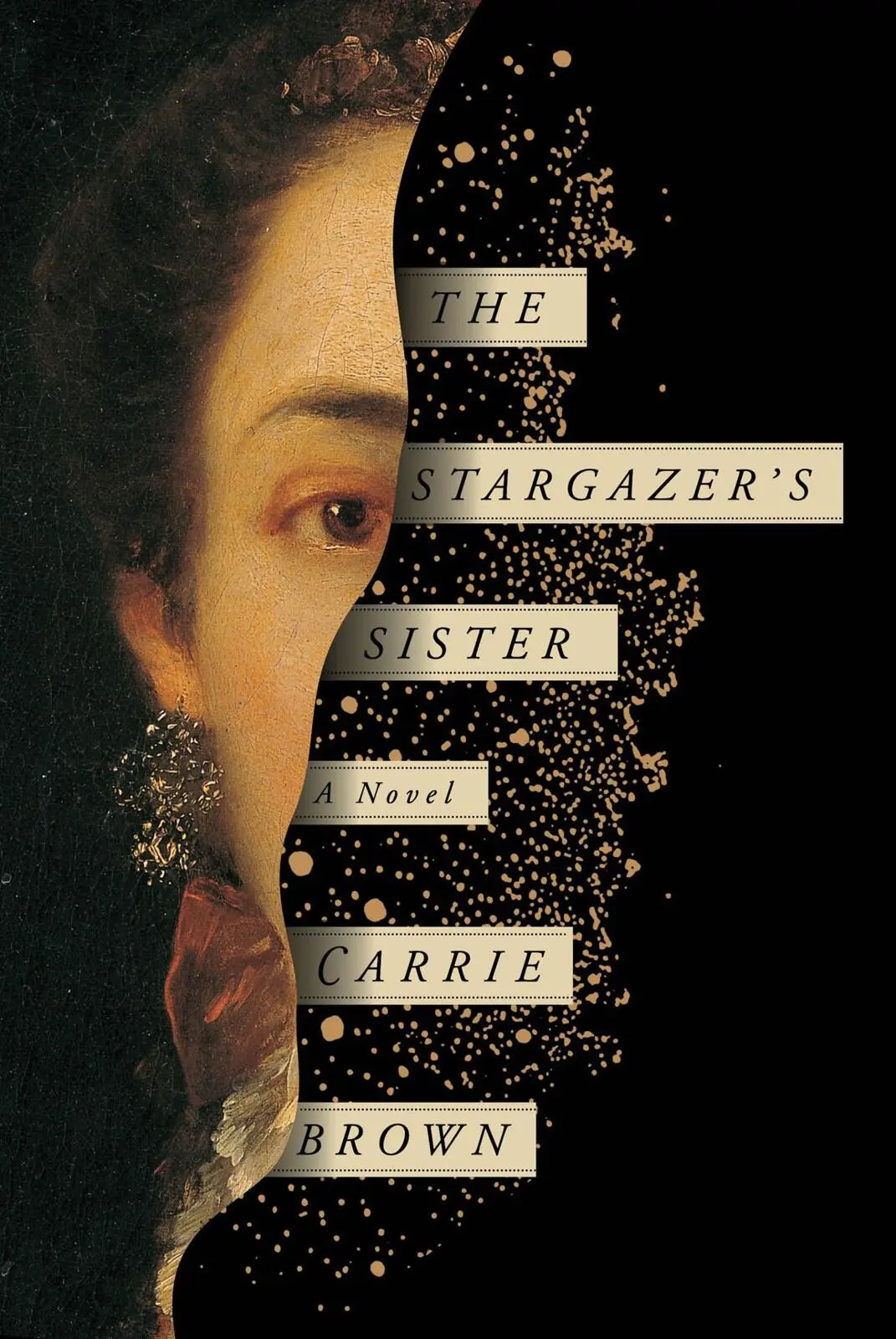
- Название:The Stargazer's Sister
- Автор:
- Издательство:Knopf Doubleday Publishing Group
- Жанр:
- Год:2016
- ISBN:нет данных
- Рейтинг книги:5 / 5. Голосов: 1
-
Избранное:Добавить в избранное
- Отзывы:
-
Ваша оценка:
The Stargazer's Sister: краткое содержание, описание и аннотация
Предлагаем к чтению аннотацию, описание, краткое содержание или предисловие (зависит от того, что написал сам автор книги «The Stargazer's Sister»). Если вы не нашли необходимую информацию о книге — напишите в комментариях, мы постараемся отыскать её.
a beautiful new period novel — a nineteenth-century story of female empowerment before its time — based on the life of Caroline Herschel, sister of the great astronomer William Herschel and an astronomer in her own right. This exquisitely imagined novel opens as the great astronomer and composer William Herschel rescues his sister Caroline from a life of drudgery in Germany and brings her to England and a world of music-making and stargazing. Lina, as Caroline is known, serves as William’s assistant and the captain of his exhilaratingly busy household. William is generous, wise, and charismatic, an obsessive genius whom Lina adores and serves with the fervency of a beloved wife. When William suddenly announces that he will be married, Lina watches as her world collapses.
With her characteristically elegant prose, Brown creates from history a compelling story of familial collaboration and conflict, the sublime beauty of astronomy, and the small but essential place we have within a vast and astonishing cosmos. Through Lina’s trials and successes, we witness the dawning of an early feminist consciousness, of a woman struggling to find her own place among the stars.
The Stargazer's Sister — читать онлайн бесплатно полную книгу (весь текст) целиком
Ниже представлен текст книги, разбитый по страницам. Система сохранения места последней прочитанной страницы, позволяет с удобством читать онлайн бесплатно книгу «The Stargazer's Sister», без необходимости каждый раз заново искать на чём Вы остановились. Поставьте закладку, и сможете в любой момент перейти на страницу, на которой закончили чтение.
Интервал:
Закладка:
“It’s very sweet, ” she says finally, as if Lina has hurt her feelings by not appreciating this idea. “You will help him to walk in the garden, his arm in yours, and he will adore you beyond everything.”
But Lina knows why Margaretta imagined Lina’s future husband to be blind: so he would not have to look at her.
Still, she thinks that maybe she could bear this future, books everywhere in her learned husband’s house from before he lost his sight.
She has no faith, however, that this future will occur.
—
THAT FALL, Margaretta falls ill with consumption.
Lina wants to visit her, but her mother forbids it.
“You almost killed us all once,” she says. “What a thoughtless girl you are, to want to bring death into our house again.”
Instead, Lina leaves gifts at the gate to Margaretta’s family’s courtyard: eggs in a basket, wildflowers from along the river, rye rolls wrapped in a napkin, letters in which she encourages Margaretta to recover as quickly as she can.
She tells her she loves her.
The houses are close together, their walls separated by only a few feet, wide enough to allow a cart to pass between them. In her bedroom at night, Lina can hear Margaretta coughing next door. It lasts for weeks, through September and into October. Lina lies in bed, listening, her eyes on the beams running across the ceiling, her hands clasped tightly over her own chest, the pain there.
Hilda sleeps through it all, snoring and farting and muttering beside her.
Then one day in late October, there is a killing frost. No more coughing comes from Margaretta’s window.
—
IT IS HER FATHER who tries to comfort Lina.
He shoos away Hilda, sits beside Lina where she lies on the bed under the quilts, her hands clenched so tightly they ache.
He pries apart her fingers. He has brought her one of the late-hatched ducklings, brown-feathered and leggy.
Lina turns her face aside, but she feels the creature’s heart beating in her hands, and the weeping that follows finally is good.
—
THE AFTERNOON OF THE FUNERAL for Margaretta, Lina goes to the stable. It has been years since she has added anything to her childhood collection of pebbles and feathers, acorns and chestnuts. She unfolds the cloth in which they are wrapped and puts the items into her apron.
She has not changed yet from her good dress. She wears the brooch with the locket of Margaretta’s hair given to her by Margaretta’s weeping mother.
The bantams and guineas follow Lina down through the orchard to the river. She knows they imagine that her bulging apron holds grain, and she feels sorry that she has nothing for them. She is comforted by their company, their foolish air of busy industry.
She stands on the riverbank. Beside her, the feathers of the bantams ruffle in the wind. Surely a storm will come before long, perhaps even snow. The hens cluck and complain at her feet. She stares at the scene before her: the dark brown water rippling by, the yellow stubble of the field on the far shore, the gray sky. Her father had helped the others carry Margaretta from her house feetfirst, so that she should not look back with longing but will be free to go joyfully to heaven.
At the cemetery, Lina had seen that the family had been persuaded to have a bell installed. Afterward, Lina’s father had complained. Such customs, he said — imagining that a dead person might revive in her coffin and pull the string to ring a bell mounted on the grave, thereby alerting the night watchman to unearth the coffin — are nothing but a way to part a grieving family from its money.
Yet surely some sort of passage awaits Margaretta, Lina thinks. Then, for the first time, she realizes that it is only faith that sustains the notion of Margaretta’s soul ascending toward God. The migration to heaven cannot be understood except as a mystery that neither science nor any man can explain.
She misses William terribly. The thought of him causes an actual pain in her stomach. Sometimes it is difficult for her to stand upright, her belly hurts her so much. She wishes he could be with her now. He is not troubled by the idea of a God he cannot understand. She knows from his letters that he is able to hold the two ideas — the unfathomable God, a fathomable universe — without compromise to his faith.
She knows, too, that ancient Egyptian kings were buried in tombs stocked with possessions for the afterlife, canisters of honey and mountains of gold coins. She does not believe that Margaretta will wake in her coffin, that her little white finger around which they had tied the string will twitch, that the bell on her grave will tinkle in the empty cemetery over which the fall leaves tumble and darkness now descends. At the cemetery she had listened to the priest and murmured the words of the prayers, but she had not felt closer through them either to Margaretta or to God. Still, she wants to make a gesture, to send Margaretta with something from her.
Hilda is in the courtyard, calling in the hens. They have settled at Lina’s feet like loyal dogs, but they stir now uneasily. They are used to being brought in at night, and they sense rain approaching with the dark.
Lina steps closer to the water and shakes her apron, emptying its contents into the river. The stones and chestnuts tumble at once into the current moving at her feet, but the feathers are picked up by the wind and carried a distance over the water before she loses sight of them.
If God sees everything, she thinks, then perhaps he sees Lina make this offering. She feels that with Margaretta goes the last of her happiness. How will she bear the life before her?
She knows from maps that the river at her feet travels toward other rivers — the Aller, the Weser — and from there to the North Sea. She has William to thank for helping her to understand their place in the world, how small it is, how…accidental. When he had first shown Lina a map of the world, she had not believed it to be a true representation.
“But how came we to be here?” she had asked him. “Why not there”—pointing with her finger at one place and then another—“or there? What determines it?”
“Nothing determines it,” William had said. “It is just God’s design.”
She looks up now. The first stars are out. Some shine with a steady light. Others are smaller and fainter. She is comforted by their presence, understanding that they are the same stars William sees. As far away as he is in England, he and she are overarched by the same sky. It feels beyond her to memorize the positions of all the stars, though she recognizes many constellations, but she knows from William’s letters that others have done so. William has a star atlas, she knows, a copious record of the universe. He has sent her carefully drawn copies of a few of its pages so she may look for the constellations, and so that they may watch for them together.
No one has heard from Jacob since the night the three brothers left home. Lina is glad. Her mother cries and cries over him, but Lina hopes he will never come back.
As soon as the occupation ended, Alexander, who had struggled in England working as a tutor, returned to Hanover for a position in the court orchestra, but William was given a job as music master to the militia under the Earl of Darlington, and he wanted to stay in England. He writes that he performs as an organist, as well as on the violin and oboe and harpsichord. At one concert, he tells them, he accompanied the Duke of York, brother of King George III, who played the violoncello. One advantage of being a stranger in a strange land is that he has few diversions, William writes, and he composes new music at a great rate, seven symphonies so far. As he rides across the countryside to give concerts or to meet with his music pupils, he studies the night sky, and his mind is occupied by many cosmological quandaries and questions. He makes lists of his questions for Lina and their father: What is the size of the Milky Way and how is it to be measured? How far from the earth is the nearest star? Of what material is the sun composed? If there is life on the moon — and he believes there is — what sorts of creatures are they, and how do they organize themselves?
Читать дальшеИнтервал:
Закладка:
Похожие книги на «The Stargazer's Sister»
Представляем Вашему вниманию похожие книги на «The Stargazer's Sister» списком для выбора. Мы отобрали схожую по названию и смыслу литературу в надежде предоставить читателям больше вариантов отыскать новые, интересные, ещё непрочитанные произведения.











Обсуждение, отзывы о книге «The Stargazer's Sister» и просто собственные мнения читателей. Оставьте ваши комментарии, напишите, что Вы думаете о произведении, его смысле или главных героях. Укажите что конкретно понравилось, а что нет, и почему Вы так считаете.