Carrie Brown - The Stargazer's Sister
Здесь есть возможность читать онлайн «Carrie Brown - The Stargazer's Sister» весь текст электронной книги совершенно бесплатно (целиком полную версию без сокращений). В некоторых случаях можно слушать аудио, скачать через торрент в формате fb2 и присутствует краткое содержание. Год выпуска: 2016, Издательство: Knopf Doubleday Publishing Group, Жанр: Современная проза, на английском языке. Описание произведения, (предисловие) а так же отзывы посетителей доступны на портале библиотеки ЛибКат.
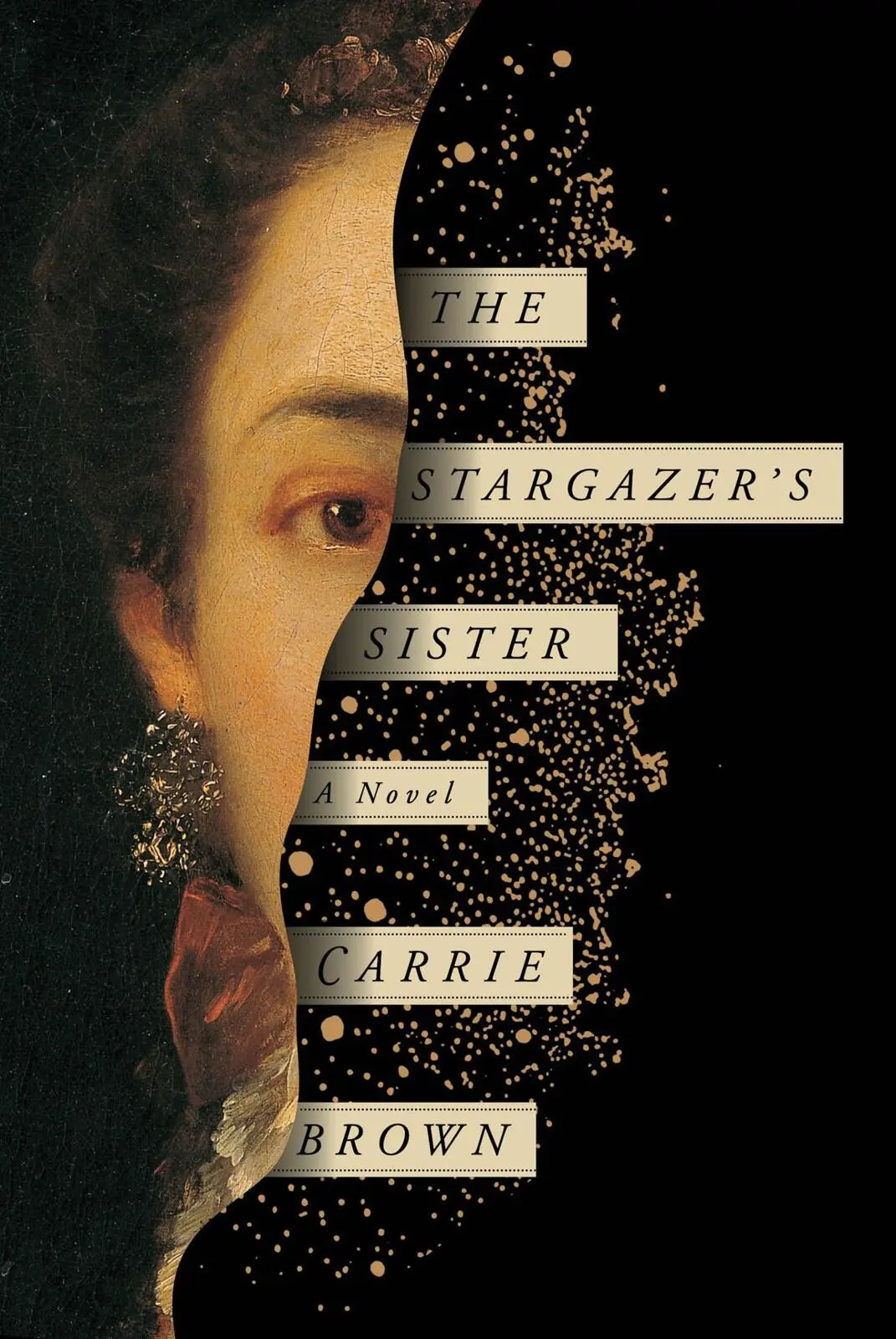
- Название:The Stargazer's Sister
- Автор:
- Издательство:Knopf Doubleday Publishing Group
- Жанр:
- Год:2016
- ISBN:нет данных
- Рейтинг книги:5 / 5. Голосов: 1
-
Избранное:Добавить в избранное
- Отзывы:
-
Ваша оценка:
The Stargazer's Sister: краткое содержание, описание и аннотация
Предлагаем к чтению аннотацию, описание, краткое содержание или предисловие (зависит от того, что написал сам автор книги «The Stargazer's Sister»). Если вы не нашли необходимую информацию о книге — напишите в комментариях, мы постараемся отыскать её.
a beautiful new period novel — a nineteenth-century story of female empowerment before its time — based on the life of Caroline Herschel, sister of the great astronomer William Herschel and an astronomer in her own right. This exquisitely imagined novel opens as the great astronomer and composer William Herschel rescues his sister Caroline from a life of drudgery in Germany and brings her to England and a world of music-making and stargazing. Lina, as Caroline is known, serves as William’s assistant and the captain of his exhilaratingly busy household. William is generous, wise, and charismatic, an obsessive genius whom Lina adores and serves with the fervency of a beloved wife. When William suddenly announces that he will be married, Lina watches as her world collapses.
With her characteristically elegant prose, Brown creates from history a compelling story of familial collaboration and conflict, the sublime beauty of astronomy, and the small but essential place we have within a vast and astonishing cosmos. Through Lina’s trials and successes, we witness the dawning of an early feminist consciousness, of a woman struggling to find her own place among the stars.
The Stargazer's Sister — читать онлайн бесплатно полную книгу (весь текст) целиком
Ниже представлен текст книги, разбитый по страницам. Система сохранения места последней прочитанной страницы, позволяет с удобством читать онлайн бесплатно книгу «The Stargazer's Sister», без необходимости каждый раз заново искать на чём Вы остановились. Поставьте закладку, и сможете в любой момент перейти на страницу, на которой закончили чтение.
Интервал:
Закладка:
William sits in the hall upstairs, reading. Sometimes he paces.
Better that they not be seen at all right now, their father says, whispering.
Hilda cries when she is made to go to the market, afraid that even though the French have not yet arrived, she will see one and catch something and die.
“Someone make her shut up,” Jacob says.
—
ONE NIGHT WHEN LINA WAKES, she hears lowered voices coming from the room downstairs. She can tell that it is late. She knows the hour by the sounds of the animals that live so closely quartered around them, and there is nothing but silence from them now.
It has been months since her illness, but she is still weak and unsteady on her feet from so many weeks of being confined to bed and her room. She makes her way down the hall and to the stairs on her hands and knees like an infant. She moves down the treads until she can see into the big room.
Her father holds first William’s face in his hands, then Alexander’s, kissing them on both cheeks.
Jacob sulks by the fire. Their mother fusses over him, murmuring something, stroking his hair. Lina watches him flinch from her touch.
William holds a pair of cloaks over his arm.
There will be a sentry at Herrenhausen, their father is saying. If the boys can slip past that point, they can make their way to Hamburg and from there to a ship that will take them to England.
“I’m not going with them,” Jacob says from the fire. “It’s stupid for them to travel together. They are more likely to be detained that way. Anyway, they won’t draft me; they’ll want me in the orchestra.”
“They will have a French orchestra,” their father, says, but Jacob shrugs.
Hilda hunches on a stool. She puts her face in her hands and begins to wail.
“Stop,” their mother hisses at her. “Stop it!”
Lina stands up shakily.
She does not care about Jacob. She cannot believe that Alexander and William are leaving, will leave without speaking to her, without coming to find her and say goodbye.
But as she stands, William turns as if looking for her. He comes to the bottom of the stairs. She knows from his expression as he looks up at her that he sees what Jacob sees, what she saw in the mirror: the ruined face, the scabbed skull. But he keeps his eyes on hers.
“Now that you are recovered,” he says, “you must promise to read to the horse to keep him entertained.”
He widens his eyes meaningfully.
At first, Lina does not understand.
“He is bored,” William says. “I fear we have underestimated his appetite for knowledge.”
“What a foolish idea,” their mother says. “Reading to a horse.”
William holds Lina’s gaze, his face serious.
Then he smiles. His eyes are shining. “Don’t forget,” he says quietly. “He is so very clever, our dear horse.”
Jacob pushes away from their mother’s embrace and storms out of the house.
Lina wants to speak, but a moment later, William and Alexander are in the open doorway, dark against the warm darkness. Lina can see the stars behind them.
And then they are gone. Hilda puts her apron over her head.
—
THE NEXT DAY, Lina leaves the house on trembling legs when her mother is out and finds William’s books wrapped in cloth, hidden in the stable for her. She sits on a pile of straw and opens to the first page of Locke’s essay, the Epistle to the Reader: I have put into thy hands what has been the diversion of some of my idle and heavy hours.
The door of the stable is open. The air is light and clean and the scent of the orchard reaches her.
Her hair will grow back, William has told her; she will have a crop of beautiful curls. While she reads, she touches her scalp absently, her fingertips finding the pits in the skin of her face.
A piece of paper flutters to the floor from between the pages in her hands.
It is a note from William, written in his familiar hand: The moon you see from Hanover is the same moon I will see in England. I will come back for you.
—
YEARS AND YEARS LATER, long after she has become intimately familiar with the view of the night sky through the telescope, she still begins her evening sweep of the stars by visiting for a few minutes with the moon. She notes the caverns on its round cheek, its terrain of ancient streambeds and crags, its deep, dry lakes and plains and mountains and volcanoes.
She likes to reacquaint herself with the moon, as if it is someone from whom she has been separated.
Her whole life she feels consoled by the moon’s presence. Its patient head with its ruined visage follows her, keeping her in its sight.
FOUR Friend

In the years that follow William and Alexander’s escape to England, Lina has one friend, Margaretta, who lives next door. They sit side by side to do their embroidery in Lina’s courtyard or on the bench at the end of Margaretta’s family’s garden, a location Lina prefers. A stand of hollyhocks so red they are almost black towers over them, and the hives against the brick wall are alive with bees and the scent of honey. Lina has neither talent nor patience for the task of embroidery, but she loves to watch what Margaretta makes: grapes on the vine, tassels of gold thread on the grasses, snowflakes against a cloth of dark blue. Sometimes Lina lies with her head in Margaretta’s lap and plays with the ends of Margaretta’s long braids. Her hair is thick and soft, the color of butter. The afternoon’s warmth on Lina’s face, and the feel of Margaretta’s hair in her fingers and grazing her cheek can put Lina into a trance. Behind her closed eyelids, the sun makes spots like the golden bees floating among the flowers.
The only cloud between them is the subject of marriage.
Margaretta is a year older than Lina — sixteen this past July. Her favorite game is to speculate about her future husband, whoever he will be, and about the many children they will have. She has already named them all and can describe their features at length to Lina.
Lina is bored by this conversation, the silliness that overcomes Margaretta when this is the topic. Margaretta is the only person other than William or her father with whom she can have a serious discussion, though usually it is Lina who does the talking. Margaretta has not had the benefit of having William as a brother, Lina understands. It is not her fault that she knows less than Lina. She is curious, though. That is enough.
Lina is uncooperative when Margaretta wants to talk about marriage.
She thinks of the old man her mother prays will one day take her.
Margaretta’s own mother is a flush-faced, loud-voiced woman with plump hands and a heavy bosom draped in dingy lace, the lace at her cuffs torn and soiled, too. She likes to speak with her girls of their future weddings, and she reassures Lina: of course there will be someone to love such a clever girl. Lina will depend on her intelligence, her imaginative company, to attract a husband.
She never says that men will be revolted by her looks, her scarred face, as Lina’s own mother does.
Margaretta has decided that Lina’s husband will be a rich old blind man. This notion Margaretta finds romantic. She has developed a sentimental picture of this eventual union, Lina reading aloud to him while he strokes her hand, his eyeballs like two glass marbles. She likes to describe the servants they will have, the finery in which Lina will be dressed, the delicious meals they will be served, sweetmeats and goose, truffles and figs.
“Why blind ?” Lina says.
Margaretta blinks, looks confused.
Читать дальшеИнтервал:
Закладка:
Похожие книги на «The Stargazer's Sister»
Представляем Вашему вниманию похожие книги на «The Stargazer's Sister» списком для выбора. Мы отобрали схожую по названию и смыслу литературу в надежде предоставить читателям больше вариантов отыскать новые, интересные, ещё непрочитанные произведения.








Обсуждение, отзывы о книге «The Stargazer's Sister» и просто собственные мнения читателей. Оставьте ваши комментарии, напишите, что Вы думаете о произведении, его смысле или главных героях. Укажите что конкретно понравилось, а что нет, и почему Вы так считаете.