Carrie Brown - The Stargazer's Sister
Здесь есть возможность читать онлайн «Carrie Brown - The Stargazer's Sister» весь текст электронной книги совершенно бесплатно (целиком полную версию без сокращений). В некоторых случаях можно слушать аудио, скачать через торрент в формате fb2 и присутствует краткое содержание. Год выпуска: 2016, Издательство: Knopf Doubleday Publishing Group, Жанр: Современная проза, на английском языке. Описание произведения, (предисловие) а так же отзывы посетителей доступны на портале библиотеки ЛибКат.
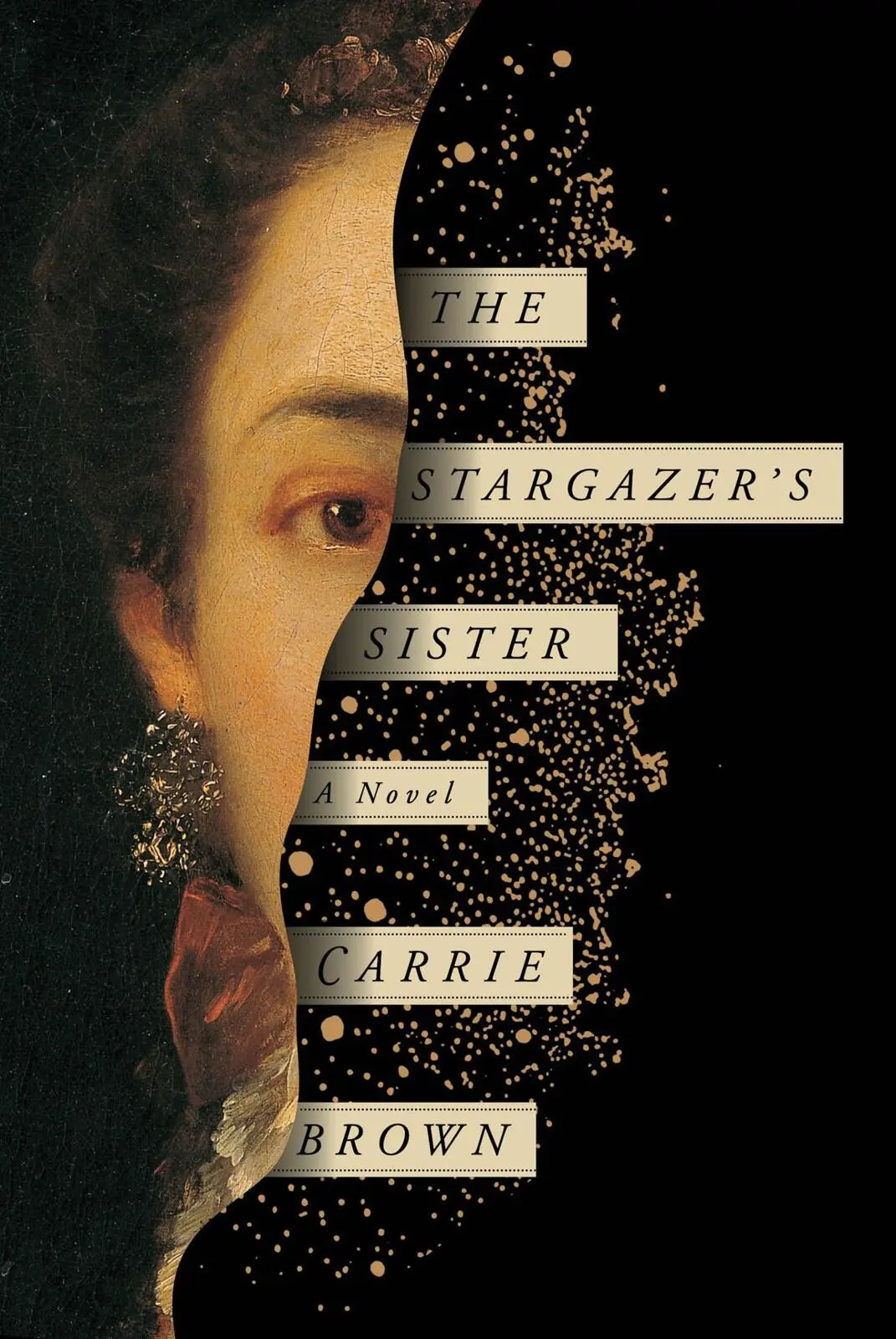
- Название:The Stargazer's Sister
- Автор:
- Издательство:Knopf Doubleday Publishing Group
- Жанр:
- Год:2016
- ISBN:нет данных
- Рейтинг книги:5 / 5. Голосов: 1
-
Избранное:Добавить в избранное
- Отзывы:
-
Ваша оценка:
The Stargazer's Sister: краткое содержание, описание и аннотация
Предлагаем к чтению аннотацию, описание, краткое содержание или предисловие (зависит от того, что написал сам автор книги «The Stargazer's Sister»). Если вы не нашли необходимую информацию о книге — напишите в комментариях, мы постараемся отыскать её.
a beautiful new period novel — a nineteenth-century story of female empowerment before its time — based on the life of Caroline Herschel, sister of the great astronomer William Herschel and an astronomer in her own right. This exquisitely imagined novel opens as the great astronomer and composer William Herschel rescues his sister Caroline from a life of drudgery in Germany and brings her to England and a world of music-making and stargazing. Lina, as Caroline is known, serves as William’s assistant and the captain of his exhilaratingly busy household. William is generous, wise, and charismatic, an obsessive genius whom Lina adores and serves with the fervency of a beloved wife. When William suddenly announces that he will be married, Lina watches as her world collapses.
With her characteristically elegant prose, Brown creates from history a compelling story of familial collaboration and conflict, the sublime beauty of astronomy, and the small but essential place we have within a vast and astonishing cosmos. Through Lina’s trials and successes, we witness the dawning of an early feminist consciousness, of a woman struggling to find her own place among the stars.
The Stargazer's Sister — читать онлайн бесплатно полную книгу (весь текст) целиком
Ниже представлен текст книги, разбитый по страницам. Система сохранения места последней прочитанной страницы, позволяет с удобством читать онлайн бесплатно книгу «The Stargazer's Sister», без необходимости каждый раз заново искать на чём Вы остановились. Поставьте закладку, и сможете в любой момент перейти на страницу, на которой закончили чтение.
Интервал:
Закладка:
At the sound of her name, Hilda appears like a dog, lurking by the door to the stairs. She scratches her arms, distressed by the tension in her mistress’s tone. Hilda’s slowness, her big ears and wet mouth, enrages Lina’s mother.
Hilda stands now, empty-faced and staring, as if her brain has dropped out of her head.
“Go away,” Lina’s mother says. “Stop your spying.”
Hilda scrambles up the stairs.
Lina feels how satisfying it would be to slap her mother. It is an effort to stay her hand.
“Certainly you will not deserve Hilda, if you treat her so,” William says.
There is silence in the room, their mother sulking at his rebuke.
“You do not know how difficult it was for me, all these years,” she says at last, “married to your father.”
Lina is amazed at William’s restraint.
At first he says nothing.
“I will send you plenty of money,” he says finally, his voice quiet. “Lina will be paid for her singing. And there will be only yourself and Hilda to care for.”
Lina understands that this is William’s final reproach to their mother, who has so successfully driven away her children that now none will remain with her.
Lina feels her face flush at the mention of her singing. She has never sung before an audience. She does not believe William actually intends to stand her before concert patrons at Bath; her mother is right.
It is only an excuse he offers, further proof of his love and kindness, she thinks.
What will she not do to repay him with her gratitude?
She will do anything, everything.
Lina watches her mother turn away, her mouth pursed sourly. Yet Lina sees now that she does not intend to oppose William. There will be no hysterics, no false protestations of love, Lina understands. Indeed, her mother wants the money more than she wants Lina, and she will live alone except for Hilda, whom she will abuse, and one day she will die, steeped in her own bitterness. Leonard and Dietrich and Alexander and Sophia will rarely visit. No one will come to her funeral.
Lina is shocked to feel a telltale pressure in her chest, her old Überangst.
No, she thinks. No pity now !
Her mother is everything Lina knows that men believe true of women: that they are governed by heedless and selfish emotion rather than reason. That they are trivial and inclined to spite. That they are lovely when charming and obedient and kind, but when not? They are a trial for men to bear, or worse: a cause of ruination.
But all those babies, Lina thinks. Women have to bear the children. And how can they elevate themselves to the level of men when they are forever forced to spread their legs and then attend to the consequences?
She looks at her mother. She wants — she longs — to convey this strange moment of sympathy; she does not want to leave without some understanding between them. It is true that her father was a trial sometimes. Lina knows that he was weak, a sufferer by nature.
But her mother looks away.
“ Someone might marry her,” she says at last, bitterly, “and then a husband might take in a poor mother-in-law.”
Lina feels these words as she used to feel her mother’s hand.
How could her mother be so awful? How could she have invoked so often the cruel husband with the bald head and stick legs, the unlovable man whom she imagined would hold her younger daughter’s fate?
William responds mildly. “Lina will have many admirers,” he says, “with a voice such as hers.”
Earlier that day, as if to persuade both Lina and their mother of the truth of his intentions, he’d had Lina sing a Te Deum, a canticle, an ode for Saint Cecilia’s Day, some glees and catches. He had looked at the floor until she finished, his chin in his hand, and then he had raised his eyes, smiling.
“You won’t really,” Lina had said.
“Why not?” he had said.
But she does not believe him.
He glances at Lina now. We are done, his expression says, but there is little happiness in it.
She knows they are both exhausted by what their mother has done to them.
—
THAT NIGHT, Hilda weeps quietly in bed, her back to Lina in reproach.
Lina puts her arm around Hilda’s thick waist, the heavy sag of flesh at her middle.
Hilda tries to bat her arm away, pinches and slaps, but Lina will not let go.
She puts her forehead to Hilda’s warm back. Her own tears make cool tracks on her cheeks in the chilly room.
—
THE NEXT MORNING, before they are to leave, Hilda will not speak to them. She stands outside in the courtyard, her hands bunched under her apron, staring off toward the river. When Lina goes out to bring her in to say goodbye, she runs down to the orchard.
Lina stares after her for a moment and then goes back inside the house.
“I can’t do it,” she tells William. “I can’t leave her.”
The kitchen is in disarray. Their mother has not come downstairs, perhaps does not intend to say goodbye at all, and Hilda has burned a pot of porridge. Lina has no appetite. She had crept downstairs before daylight to make a cup of tea for herself and think, but she has eaten nothing.
“If I had any money of my own,” Lina says to William now, “I would pay someone else to work for Mama, and I would give Hilda her freedom. Two of Margaretta’s sisters are still at home. They could come for an hour or two a day. It’s all the help Mama needs. And Hilda could go to our uncle’s, where she will not be mistreated. I know he would take her in to help with the house.”
William turns around from the table, where he has been rolling up sheets of their father’s music.
“I can’t leave her here, William,” Lina says.
“We are to depart in less than an hour,” he replies.
His eyes go to the stairs. Their mother remains in her bedroom, complaining of a headache they know is designed to elicit their sympathy and worry.
“I know,” Lina says, following his gaze. “I know we are to go.
“Loan me the money,” she says after a minute. “I’ll find a way to repay you.” She cannot imagine what this might be, but she must say it.
He fits a book into his bag.
“Run next door,” he says. “Make arrangements with the Hennings. I’ll give Mama a purse and write a brief letter to Uncle, explaining. He’ll be happy enough to have Hilda, if I send him a payment.”
Lina cannot move. She has so little power in the world, she thinks. All she has is her wanting.
She wants now to take her brother’s hand and kiss it, but such a display would embarrass him.
“You are very good, William,” she says fiercely.
He glances at her again, but he is smiling.
“Hurry now,” he says. “You and your soft heart.”
—
THE HENNINGS ARE PERFECTLY amenable to Lina’s proposal. The girls stand by in the kitchen while Lina explains what she needs. Margaretta’s mother assures Lina that she will see Hilda safely conveyed to their uncle’s farm and vineyard.
The Hennings are glad of the money, Lina knows, and her own mother will not dare be cruel to the girls for fear of reproach by Margaretta’s mother. If she loses the Henning girls, she loses all assistance.
Hilda is at the bottom of the orchard, wandering among the trees and hitting their trunks with a stick. Lina is in her good black dress and shoes. She walks carefully down the hill through the trees, past the baskets of fruit gathered from the days of harvesting and left for collection under the boughs.
Hilda has stopped and leans against a tree, her big chest heaving and her face red from crying.
Lina’s shoes are covered with mud.
Lina takes Hilda’s hands and tells her their plan. Margaretta’s mother will see that Hilda is taken to their uncle’s. Hilda will go by cart and enjoy the ride into the countryside, Lina says.
Читать дальшеИнтервал:
Закладка:
Похожие книги на «The Stargazer's Sister»
Представляем Вашему вниманию похожие книги на «The Stargazer's Sister» списком для выбора. Мы отобрали схожую по названию и смыслу литературу в надежде предоставить читателям больше вариантов отыскать новые, интересные, ещё непрочитанные произведения.








Обсуждение, отзывы о книге «The Stargazer's Sister» и просто собственные мнения читателей. Оставьте ваши комментарии, напишите, что Вы думаете о произведении, его смысле или главных героях. Укажите что конкретно понравилось, а что нет, и почему Вы так считаете.