Carrie Brown - The Stargazer's Sister
Здесь есть возможность читать онлайн «Carrie Brown - The Stargazer's Sister» весь текст электронной книги совершенно бесплатно (целиком полную версию без сокращений). В некоторых случаях можно слушать аудио, скачать через торрент в формате fb2 и присутствует краткое содержание. Год выпуска: 2016, Издательство: Knopf Doubleday Publishing Group, Жанр: Современная проза, на английском языке. Описание произведения, (предисловие) а так же отзывы посетителей доступны на портале библиотеки ЛибКат.
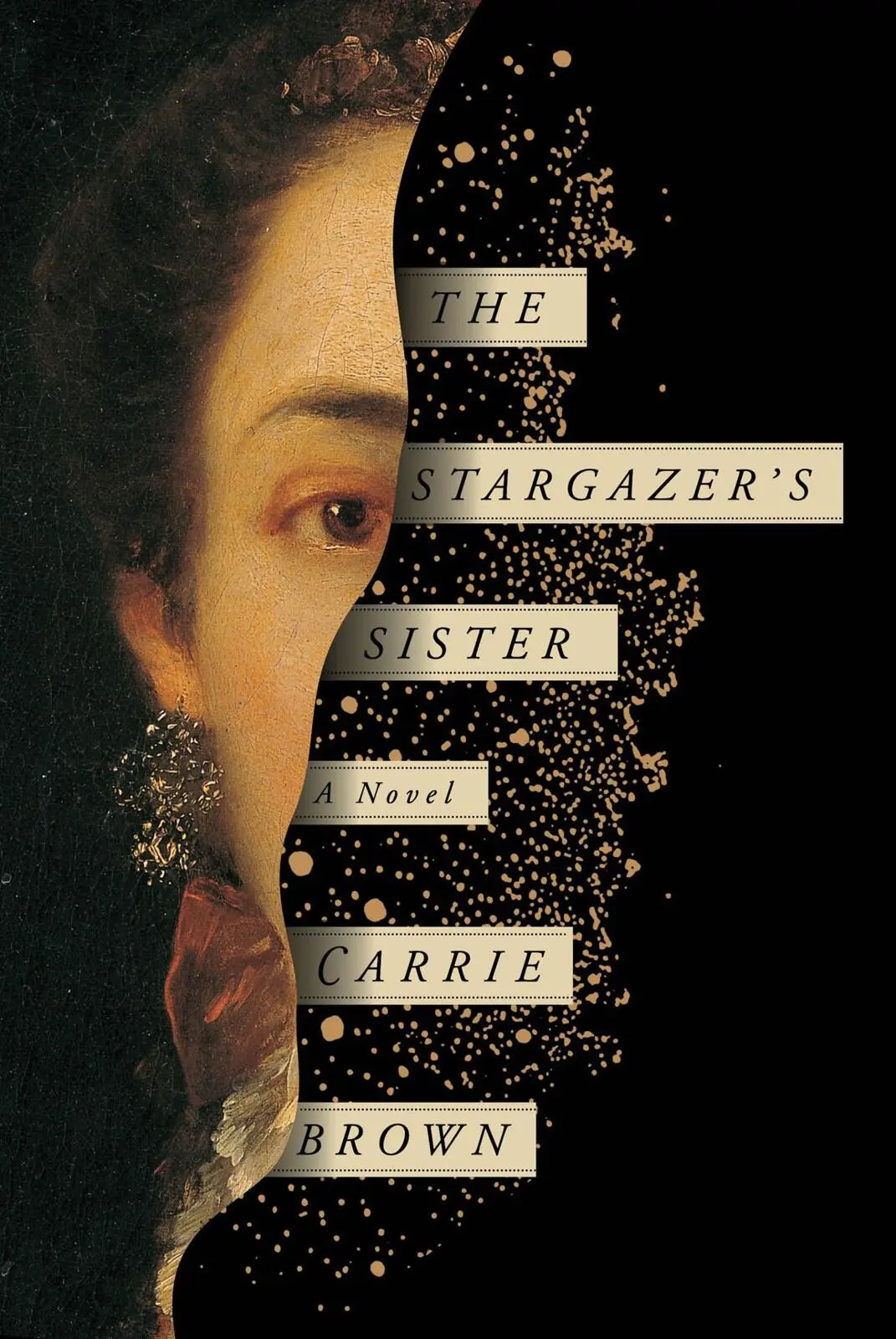
- Название:The Stargazer's Sister
- Автор:
- Издательство:Knopf Doubleday Publishing Group
- Жанр:
- Год:2016
- ISBN:нет данных
- Рейтинг книги:5 / 5. Голосов: 1
-
Избранное:Добавить в избранное
- Отзывы:
-
Ваша оценка:
The Stargazer's Sister: краткое содержание, описание и аннотация
Предлагаем к чтению аннотацию, описание, краткое содержание или предисловие (зависит от того, что написал сам автор книги «The Stargazer's Sister»). Если вы не нашли необходимую информацию о книге — напишите в комментариях, мы постараемся отыскать её.
a beautiful new period novel — a nineteenth-century story of female empowerment before its time — based on the life of Caroline Herschel, sister of the great astronomer William Herschel and an astronomer in her own right. This exquisitely imagined novel opens as the great astronomer and composer William Herschel rescues his sister Caroline from a life of drudgery in Germany and brings her to England and a world of music-making and stargazing. Lina, as Caroline is known, serves as William’s assistant and the captain of his exhilaratingly busy household. William is generous, wise, and charismatic, an obsessive genius whom Lina adores and serves with the fervency of a beloved wife. When William suddenly announces that he will be married, Lina watches as her world collapses.
With her characteristically elegant prose, Brown creates from history a compelling story of familial collaboration and conflict, the sublime beauty of astronomy, and the small but essential place we have within a vast and astonishing cosmos. Through Lina’s trials and successes, we witness the dawning of an early feminist consciousness, of a woman struggling to find her own place among the stars.
The Stargazer's Sister — читать онлайн бесплатно полную книгу (весь текст) целиком
Ниже представлен текст книги, разбитый по страницам. Система сохранения места последней прочитанной страницы, позволяет с удобством читать онлайн бесплатно книгу «The Stargazer's Sister», без необходимости каждый раз заново искать на чём Вы остановились. Поставьте закладку, и сможете в любой момент перейти на страницу, на которой закончили чтение.
Интервал:
Закладка:
Yet there is a familiar pressure in her chest: too much feeling, she knows.
As often as she has gazed into the night sky, the stars establishing by the arrangement of their lights the perimeter of the universe, she has never felt nearer the mystery of the world than she does right now. It is not until this moment, in fact, that she sees exactly how small her life has been: the path from house to courtyard to church or shop, only the river running past the orchard a reminder that somewhere there was an elsewhere. That was the full expression of her hopelessness, she thinks: the idea of never being anything other than what she was and what she had always been, her miserable mother’s miserable companion.
But now she is here, thanks to William. She is elsewhere after all, with a different life before her.
And she is with William.
She knows exactly what she has escaped: that grandfather who might have married her for her housekeeping, but who surely would have exacted a price for his kindness in taking her. It did not bear thinking of, that price, now or then.
Now there will be no grandfather husband to berate her.
Likely she will never see her mother again. She is not sorry.
Earlier that afternoon she had stood for a long time with the other passengers, gazing over the water. They are a quiet group, sober-faced, perhaps leaving loved ones behind or anxious about the voyage. Her tremulous joy in the presence of their gravity and apprehension — for days now this laughter inside her that is so close to tears — had felt indecent.
She’d looked up at William beside her, the wind blowing his hair away from his face.
There was no man in the world more handsome than her brother, she’d thought.
Anyone would like to look at him. But no one, she’d known, was looking at her, Lina with her pockmarked cheeks and forehead, and so she had let drop the shawl she customarily wore in public to obscure her features. Everyone’s attention had been on the vanished shore as if by staring at it they could cause it to creep back over the horizon and reappear. Closing her eyes, she had tilted her face to the sun.
The ship will take them down the Channel and across to Yarmouth in England. She has no idea what awaits her, really, except that now she will be always in her beloved brother’s company, and that is enough.
—
AS DARKNESS HAS COME ON, she becomes more aware of the weight of the sails above them, the weight of the air they hold. It is surprisingly loud on the deck. William speaks against her ear so that she can hear him as he explains the telescope’s features above the creaking of the ship.
He puts his fingers to the back of her neck.
“It is difficult, with the ship moving, but to the south is Pegasus. You can see the box even without the telescope, of course, the big rib cage. And there’s Jupiter below Pegasus, much brighter than all the others. And to the east”—she feels pressure from his fingertips again, the suggestion that she shift her view—“there’s Perseus, and the Pleiades rising in the east.” His warm hand cups against her neck now. “And rising in the north, Ursa Major and Ursa Minor.”
Big bear and little bear. Despite seeing the moon so readily, she has no mastery over the telescope, and she feels she has lost her way in the night sky. Still she knows these constellations from childhood, the evenings when William had set forth with her on his shoulders, her hands clasped over his forehead. Sometimes he’d left the house at night to walk along the Leinestrom, where the banks bordering the river were ruffled with grasses that shone in the moonlight. She had learned to wait for him in the dark courtyard. Finding her there, he would stop, and she would look up at him, knowing her heart would break if he did not take her with him.
But she had never had to ask. He had lifted her to his shoulders.
They’d never spoken about what they left behind — their mother’s anger, their father’s melancholy, Jacob’s insults.
William did not talk much on those walks, but she had not sensed that his mind was empty, or that he brooded over some unpleasantness in their family. That was his great freedom, she thinks; he could free his mind of what he did not wish to consider.
“Your mind is a world without end, Lina,” he had told her. “ In saecula saeculorum. You are free to think anything.”
Sometimes, though, she had been unable to refrain from interrupting his thoughts: What are you thinking?
He’d never said nothing.
She’d understood from William that it is in curiosity, first, and then in knowledge and reflection that freedom rests. To know something is a kind of power. Even to ask a question about the world is a kind of power.
As they had walked, he had shown her the fish and the ram and the dog in the night sky, the two bright stars that formed the forepaws of the lion. He knew the names of trees. He plucked leaves and handed them up to her. Sometimes he walked for so long, so far into the country that she fell asleep, her cheek on his head, feeling the rhythm of his stride in her body. She would wake to see Hanover’s steeples in the distance behind them, that world far off as in a little picture hung on the wall.
—
THE DECK TILTS SLIGHTLY. She feels so unsteady from looking up at the sky that she loses her balance and lurches again against William. The wet, cool breeze is in her ears. The telescope swings, streamers of light rushing past like bright rivers. The sensation makes her dizzy. Her stomach seizes.
William steadies her, holds her against him, his legs splayed to keep his balance. His body, so powerful and so close to hers, makes her shy. Ever since boarding the ship he has seemed to grow more unfamiliar to her, a stranger, his new life and identity in England approaching as their shared history at home in Hanover recedes. For the years he had been away in England, she had marked the anniversaries of his departure — all the years she lived without him — and his birthday on the wall in the stable. He will be thirty-four in November.
“It’s too rough now,” he says. “No use trying to hold anything in sight through the telescope.”
But she returns her face to the eyepiece anyway. The sky through the telescope is dazzling, fields of darkness and light that keep folding and unfolding before her. Everything is soft and blurred, even the moon.
“The Milky Way is like a tether,” William says. “You can follow the nebulae end to end, horizon to horizon. See where Capella stands, just outside the stream at the eastern edge?”
She does not know the word nebulae. She cannot identify the stars he mentions. There is so much to look at, but she does not know where to look or what she is looking for.
His flapping cape wraps around her skirts in the wind.
She pulls back from the telescope and takes a breath. When she looks directly at the sky, the stars are much sharper, the moon as clean as if carved with a knife. When she returns to the eyepiece, she begins to move the telescope slowly, by degrees. She feels unbalanced, as if she is being tugged into the sky. Or is falling into it.
“The telescope magnifies the effect of the earth’s rotation,” William says. “You’ll quickly lose sight of any particular star this way. You’ll learn to track a star by applying pressure to the telescope’s tube. For now just be patient. Hold your gaze, if you can.”
She sees after a while that if she is able to keep just a small area in view, more stars gradually reveal themselves. She begins to understand that it is not that the stars are moving toward her, stepping forward, but that she is seeing more deeply into the sky.
Читать дальшеИнтервал:
Закладка:
Похожие книги на «The Stargazer's Sister»
Представляем Вашему вниманию похожие книги на «The Stargazer's Sister» списком для выбора. Мы отобрали схожую по названию и смыслу литературу в надежде предоставить читателям больше вариантов отыскать новые, интересные, ещё непрочитанные произведения.











Обсуждение, отзывы о книге «The Stargazer's Sister» и просто собственные мнения читателей. Оставьте ваши комментарии, напишите, что Вы думаете о произведении, его смысле или главных героях. Укажите что конкретно понравилось, а что нет, и почему Вы так считаете.