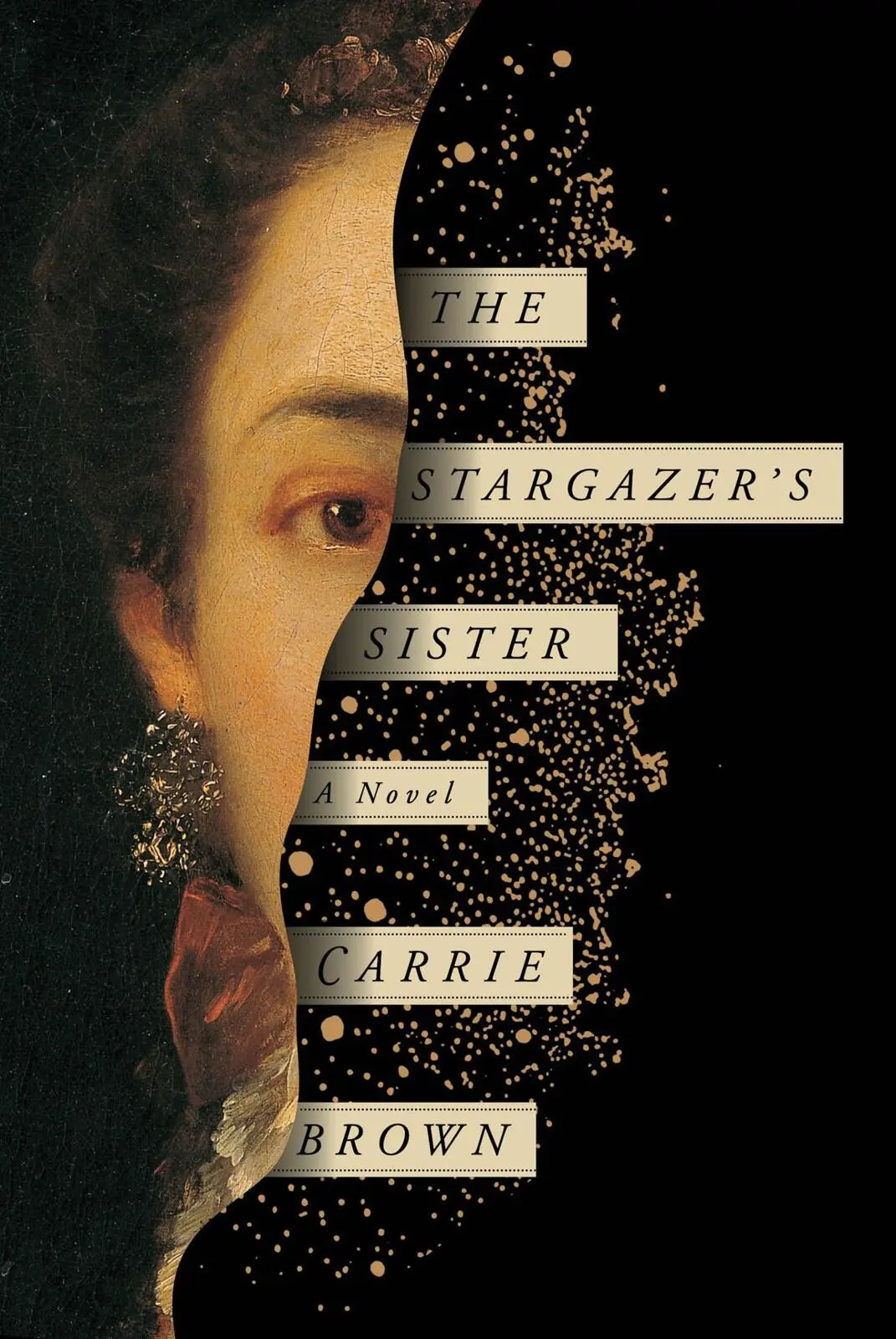
Carrie Brown - The Stargazer's Sister
Здесь есть возможность читать онлайн «Carrie Brown - The Stargazer's Sister» весь текст электронной книги совершенно бесплатно (целиком полную версию без сокращений). В некоторых случаях можно слушать аудио, скачать через торрент в формате fb2 и присутствует краткое содержание. Год выпуска: 2016, Издательство: Knopf Doubleday Publishing Group, Жанр: Современная проза, на английском языке. Описание произведения, (предисловие) а так же отзывы посетителей доступны на портале библиотеки ЛибКат.
- Название:The Stargazer's Sister
- Автор:
- Издательство:Knopf Doubleday Publishing Group
- Жанр:
- Год:2016
- ISBN:нет данных
- Рейтинг книги:5 / 5. Голосов: 1
-
Избранное:Добавить в избранное
- Отзывы:
-
Ваша оценка:
The Stargazer's Sister: краткое содержание, описание и аннотация
Предлагаем к чтению аннотацию, описание, краткое содержание или предисловие (зависит от того, что написал сам автор книги «The Stargazer's Sister»). Если вы не нашли необходимую информацию о книге — напишите в комментариях, мы постараемся отыскать её.
a beautiful new period novel — a nineteenth-century story of female empowerment before its time — based on the life of Caroline Herschel, sister of the great astronomer William Herschel and an astronomer in her own right. This exquisitely imagined novel opens as the great astronomer and composer William Herschel rescues his sister Caroline from a life of drudgery in Germany and brings her to England and a world of music-making and stargazing. Lina, as Caroline is known, serves as William’s assistant and the captain of his exhilaratingly busy household. William is generous, wise, and charismatic, an obsessive genius whom Lina adores and serves with the fervency of a beloved wife. When William suddenly announces that he will be married, Lina watches as her world collapses.
With her characteristically elegant prose, Brown creates from history a compelling story of familial collaboration and conflict, the sublime beauty of astronomy, and the small but essential place we have within a vast and astonishing cosmos. Through Lina’s trials and successes, we witness the dawning of an early feminist consciousness, of a woman struggling to find her own place among the stars.
The Stargazer's Sister — читать онлайн бесплатно полную книгу (весь текст) целиком
Ниже представлен текст книги, разбитый по страницам. Система сохранения места последней прочитанной страницы, позволяет с удобством читать онлайн бесплатно книгу «The Stargazer's Sister», без необходимости каждый раз заново искать на чём Вы остановились. Поставьте закладку, и сможете в любой момент перейти на страницу, на которой закончили чтение.
Интервал:
Закладка:
William is nowhere in sight.
She touches her hair again. It has come loose, no doubt when the man threw her over his shoulder. She remembers the sensation of his arms around her, her body pressed against his. She tries to secure the pins and push her curls back into place, but her hands are trembling.
On the ship she had forgotten about her face. Troubling about her appearance would have been absurd under such conditions. Now, though, standing alone on the sand at Great Yarmouth, surrounded by the bustling activity, she is aware of the condition of her clothing, her disarranged hair, her pocked skin. She has resolved to do as William proposed; she will no longer go about with her face covered. Here she has a new life, with no mother to complain about her wretched prospects. Still she has to resist the impulse to draw her shawl across her cheek.
She gathers her wet skirt and climbs unsteadily to a place higher on the rocks, where she can oversee the activity below. How will William find her among all these people? She assumes he is making his way through the chaos to recover their belongings, that he will spy her here alone against the seawall.
Unlike the rich light in the forests of Hanover or the silver haze that hovered over Holland’s watery fields — William had explained to her on the post wagon about the brilliance of the higher latitudes — the gray English light is plangent, the sun a hazy circle behind the clouds. She judges by its position that the hour must be nearly midday. A moment later church bells begin to ring in the town above her on the strand. Indeed it is the noon hour.
She remembers that church bells had been ringing when they left Holland. Suddenly she wants to sit down.
She had expected happiness at this moment of arrival, but instead she feels weak in the knees. Is it the melancholy light? The sound of the bells? She realizes that she is a complete stranger in this new place. In all her expectations of this arrival, she had not imagined this: her trembling legs. Her fear.
She berates herself. Now, after so many days of terror, now her courage fails her? The stones of the wall at her back are covered with moss. She runs a hand over their furred surface. From the street above come the sounds of horses’ hooves, the trickling of water from somewhere nearby. Silver lichen grows on the slate roofs of the houses, she sees, and the windows facing the sea reflect the clouds. She feels submerged, as if her ears are filled with water. She turns to face the ocean again, trying to breathe deeply. The Englishmen have pale skin and slashes of bright red as if drawn with a paintbrush on their cheeks. They shout to be heard over the surf, but the sound of the waves swallows their words.
In the post wagon traveling from Hanover, she and William had practiced speaking in English. She has been studying it for months, ever since the arrival of William’s letter announcing that he would come to fetch her in Hanover.
“I am delighted to make your acquaintance,” William had said, prompting her.
“No, kindly, beautiful sir! It is I who is very delighted to make your happy and many years acquaintance again,” she had replied.
William had laughed.
“Excuse me,” she had said to William, pretending offense. “I am very, very lost. Where is my monkey? Have you ten cows? I am twenty-two years old, and I have no feathers like a bird.”
William had fallen over on the seat with laughter.
“Did you get my many thousand letters to the king?” Lina had continued. “I tell her — no, it is I told him, him —that I wish only for twenty geese and cheeses and a red frock.”
William had laughed and laughed. “You are a comedienne, my little sister,” he’d said, delighted. “I would not have guessed.”
She had rehearsed many sentences: I am very well, I am my brother’s sister, I have blue eyes and a green dress and a red hat, you are very kind, it is satisfactory. I can ride a horse, yes.
William also had given her a book, One Thousand and One Nights. “It will improve your accent to read aloud,” he’d said.
—
SITTING ACROSS FROM HIM on the post wagon, she had bent over the pages: On the black road of life, she read aloud, think not to find either a friend or lover to your mind. If you must love, oh then, love solitude, for solitude alone is true and kind.
She’d looked up.
William had been writing on the wooden lapboard he had built for this purpose. When she did not continue, he looked up, too.
“Not solitude alone,” he said. “Other things, also — other people —are true and kind.” He had reached over and tapped her knee with his knuckles, smiling.
She had felt her face grow warm at the compliment. He meant her, she realized.
She had looked away to gaze at the landscape through which they’d been passing. As they had moved closer to the sea, the trees had grown smaller, as if bowed under the weight of a larger sky. She had felt exposed beneath it, their tiny conveyance bearing them at its infinitesimal pace over the landscape. The world outside Hanover had been for her only a fiction, she’d realized, no more real to her than descriptions of places in stories. She’d let her hand drift outside the window of the coach, spreading her fingers to feel the cool air move through them.
They would always be true and kind to each other, she and William.
—
AS IF HER EARS are clearing finally, other sounds begin to reach her now as she waits on the rocks — an animated conversation between men on the street above, gulls crying. Finally she spies William making his way toward her over the sand, two boys carrying their trunks behind him. Carts and horses wait on the street; William waves to her, and then he climbs a set of stone steps to the street and speaks to the driver of one of the carts.
She assumes William is engaging the man to take them to an inn. From Yarmouth there will be diligences going east to London and stopping at nearby inns, he has explained to her.
She longs to wash. Every item of her clothing is filthy. Her hair is horribly sticky.
William comes back down from the street and gives her his hand to help her over the rocks.
“We will stay here for the night?” she asks. “Tomorrow there is a carriage to London?”
“There will be an overnight coach,” he says. “We can catch that.”
“William,” she says. She stops on the rocks. “My clothing. I must wash. For you, it is different.”
She cannot believe he will ride with her into London looking as she does. She is horrified at the thought.
They reach the street, and the driver produces a crate for her to step on so she may climb to the back of the cart. William lifts one of their trunks and fits it beside her. She remembers her promise: she will do anything.
“All right,” he says finally. “We will stop.”
Then, more kindly, he says, “I understand. All will be well. But from now on,” he continues, “we will speak only in English. Yes? It is a good idea.”
“William,” she says. “No.”
If William will not speak to her in their native tongue…
But he has left her to climb up beside the driver. He turns around in the seat, and she has no difficulty with his meaning when he points to his cheek, pulls up the corner of his mouth in a smile.
—
LINA HANGS ON TO the side of the cart as they make their way through the streets. The horse is clearly young and unused to the shafts, lunging ahead; the driver has the animal under poor control. From having driven their own horse and cart through the orchard at harvest to collect the baskets of apples, she knows enough of horse behavior to see that this one is skittish. She used to like standing by their old horse’s head while the wagon was loaded, murmuring nonsense into his feathery ear. It would be wonderful if she could ride a horse sometimes in England, she thinks.
Читать дальшеИнтервал:
Закладка:
Похожие книги на «The Stargazer's Sister»
Представляем Вашему вниманию похожие книги на «The Stargazer's Sister» списком для выбора. Мы отобрали схожую по названию и смыслу литературу в надежде предоставить читателям больше вариантов отыскать новые, интересные, ещё непрочитанные произведения.










Обсуждение, отзывы о книге «The Stargazer's Sister» и просто собственные мнения читателей. Оставьте ваши комментарии, напишите, что Вы думаете о произведении, его смысле или главных героях. Укажите что конкретно понравилось, а что нет, и почему Вы так считаете.