Amir Gutfreund - Our Holocaust
Здесь есть возможность читать онлайн «Amir Gutfreund - Our Holocaust» весь текст электронной книги совершенно бесплатно (целиком полную версию без сокращений). В некоторых случаях можно слушать аудио, скачать через торрент в формате fb2 и присутствует краткое содержание. Год выпуска: 2006, Издательство: Toby Press Ltd, Жанр: Современная проза, Прочая документальная литература, на английском языке. Описание произведения, (предисловие) а так же отзывы посетителей доступны на портале библиотеки ЛибКат.
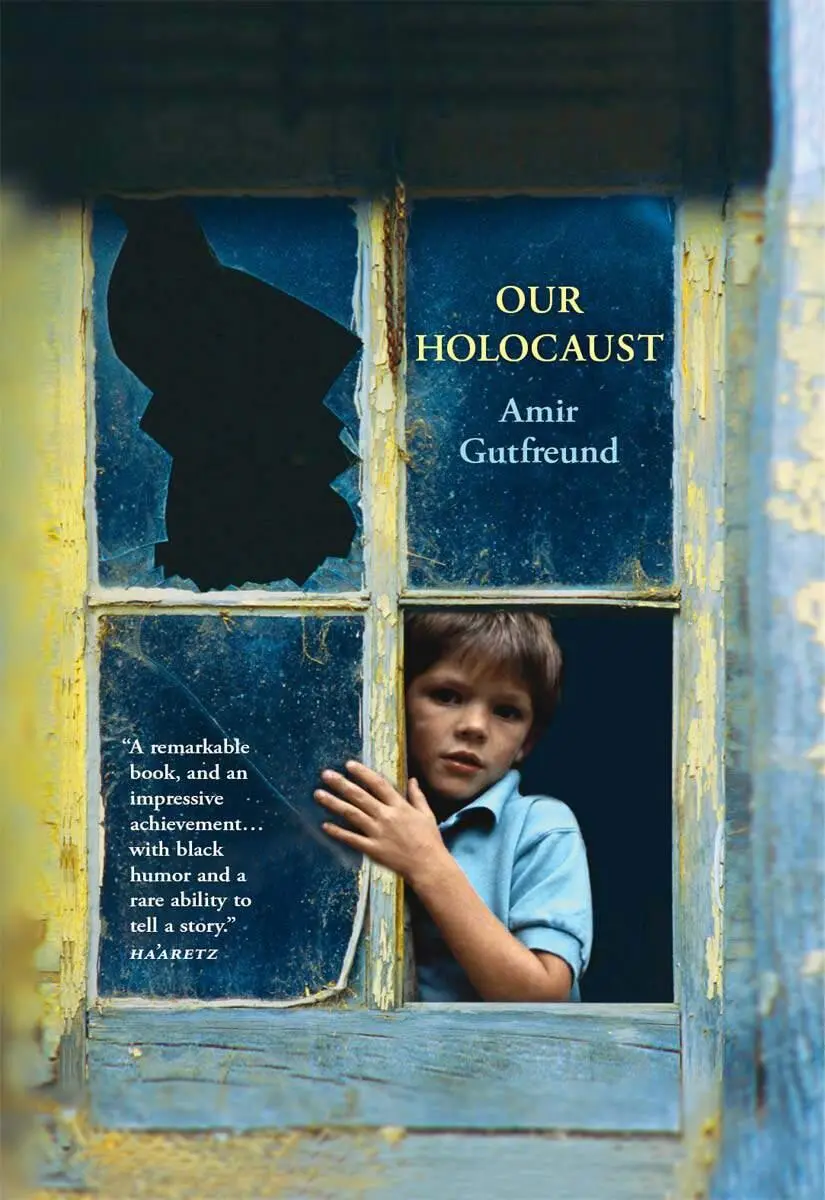
- Название:Our Holocaust
- Автор:
- Издательство:Toby Press Ltd
- Жанр:
- Год:2006
- ISBN:нет данных
- Рейтинг книги:4 / 5. Голосов: 1
-
Избранное:Добавить в избранное
- Отзывы:
-
Ваша оценка:
Our Holocaust: краткое содержание, описание и аннотация
Предлагаем к чтению аннотацию, описание, краткое содержание или предисловие (зависит от того, что написал сам автор книги «Our Holocaust»). Если вы не нашли необходимую информацию о книге — напишите в комментариях, мы постараемся отыскать её.
Our Holocaust — читать онлайн бесплатно полную книгу (весь текст) целиком
Ниже представлен текст книги, разбитый по страницам. Система сохранения места последней прочитанной страницы, позволяет с удобством читать онлайн бесплатно книгу «Our Holocaust», без необходимости каждый раз заново искать на чём Вы остановились. Поставьте закладку, и сможете в любой момент перейти на страницу, на которой закончили чтение.
Интервал:
Закладка:
In contrast to Adella Greuner and the rumors, in contrast to Genia Mintz and the suspicions, in the window of 12 Katznelson there usually stood the angelic character of Eva Lanczer. She was young and beautiful and had come to the neighborhood with her mother, who died shortly thereafter and whose name they could barely remember. It was quickly discovered that Lanczer was searching for her fiancé. They sat her down by the radio to listen to the Bureau for Missing Relatives broadcast and went to great efforts, searching everywhere. Anyone able was enlisted for the benefit of Eva Lanczer, because she was young and beautiful and never smiled or wore makeup or met nice young boys — she had a fiancé. Grandpa Yosef spearheaded the campaign and made every effort to locate the fiancé.
The fiancé was named Meirke Geltzner, from Dynow, and the entire neighborhood searched for him. One day, they found him. In Dimona. They dressed up Eva Lanczer like a bride, persuaded her to put makeup on, and Yehoshua gave her a free haircut, modeled on the style of the Queen of Belgium. When everything was ready, one last thing was required: Eva Lanczer put on a smile and became a princess.
That evening, she came back home. It wasn’t him. There were those who claimed that it was him, and others who simply said, Why not? According to the testimonies, this Meirke Geltzner wanted her to stay with him. But Eva Lanczer came home, turned off the Missing Relatives program, gave back the clothes and removed her makeup. Only the smile remained.
The encounter with Meirke Geltzner from Dimona, who some say even came to the neighborhood once to try another proposal, happened before we were born. We had always known Eva Lanczer like a picture, standing in the window at 12 Katznelson with a frozen smile on her lily-white face. She stood in her window like Rachela Kempler, but without Rachela Kempler’s strength. She dressed palely, in clothes that aged quickly, emphasizing how much she herself did not change. She lived a small life. No complaints, no sounds. Not even a murmur. She stood with pursed lips, arms hanging at the sides of her body, a white sentry. A man named Eliyahu brought her cotton threads and she made strange and colorful embroidery which he sold in stores. They used to find her sometimes in all sorts of places where she walked to without realizing she was walking, like Moshe but without Moshe’s thwarted sense of purpose. She went out sailing, not walking. Drifting away. Floating like a fairy among the falling leaves, only to be discovered near the train station, in a kiosk, or at an intersection. Once, the doctors found that she had been taken advantage of. The virginal Eva Lanczer was no longer a virgin. Several times they talked to Grandpa Yosef, who acted as neighborhood consul for the insane. They explained the situation and sought his advice. But Eva Lanczer kept standing at the window, weakening, imperceptibly detaching, disappearing on little journeys with her white smile, her slender hands and her clean dress. It always ended with a voyage.
We always heard that Eva Lanczer was only doing “what she had to.” That was it. Adella Greuner, they did not forgive. Eva Lanczer they did. Because they loved Eva Lanczer and she was only doing what she had to. Here lay the key to the delicate balance, the watershed line between hatred and compassion.
Her life trickled down into points of silence. You could not hear her living — eating, bathing, cleaning. A transparent silence lay on her house. Movement in the two little rooms winnowed down to the flickers of her mouth, bodily flutters barely detectible through the cracks. We did not bother Eva Lanczer. Her window image begged us to let her be, and we did.
With others, we were less kind. Not much further, at 10-A Katznelson, lived Linow Community. Her real name was Hinda Goldberg, but since it was said that she alone remained out of all the Jews in her town of Linow, Effi came up with her nickname, Linow Community. Right below her lived Sarkow Community, a similar case. They had lost husbands, parents, families. And every morning at precisely nine o clock, their two green front doors opened. Linow Community and Sarkow Community went down to buy vegetables at Sammy’s. One tomato, one onion, a cucumber or a carrot. They peeked at the watermelons, prodded the apricots, bought another onion. They walked down the path, diminutive and unsteady. A green basket for Linow Community, a yellow one for Sarkow Community. They walked. Deadly afraid of Sammy the greengrocer. His voice. His huge belly. His chest-hair.
The mechanism kicked in every day at nine and there was no stopping it. Once every seven days: Shabbat. Malfunction. Linow Community and Sarkow Community walk down the path with baskets in hand. They get to the bars in front of the store and put their thin cold hands on the fence. Their knuckles turn white. Linow Community wears wine-red nail polish, reflected as dark brown in the store window. Who knows what is reflected on the vegetables beyond, lying in wooden crates, no reaching them through the fence. Sarkow Community gives in first and turns around. Linow Community follows. A dim recollection of yesterday, when Sammy put another cucumber in their baskets, another carrot, another onion. “All the best, Ma’am.” They walk, swerving. Disappear until the next day at nine.
We used to follow the Communities. We suspected there were still a few remaining Jews from Linow and Sarkow and that they were hiding them; they had reason to. Linow Community had a kind face and we hoped to find her a little Linowik man one day. Sarkow Community, with a mole on her cheek, we did not like. We carefully checked every piece of mail she got to see if there wasn’t someone from Sarkow corresponding with her. We read the addresses, in Polish letters that looked almost like English, and compared them with the stamps to make sure they matched. She wasn’t the only one we checked up on. Whenever we heard talk about someone the others couldn’t be bothered to deal with, we took the responsibility upon ourselves. We tailed the seven-thirty AM postman like crows behind a plough, removing everything he dropped in the boxes, just to check.
There were a few address-less people in the neighborhood. Crazy Hirsch, for example. A pasty old man, not much more than a yellowing beard with red lips that stood out against the pale whiteness of his face. Sometimes he roved the neighborhood in daylight, emerging from a distance and disappearing back into it. Roaming evil-faced on Katznelson, he reeked and jabbered, sometimes even sitting himself down on a bench. He had a long black coat like Orthodox men wore, and a book of Psalms in his hand. You never knew when he would start ripping out pages, tossing them into the bushes or up into the air or into houses through low windows. But you knew he would always find just the right minute to stop, stand in front of the neighbors or simply in front of thin air and scream, “Only saints were gassed?!” Rebuking. Spraying his question. His one and only question. Then he would disappear. We brushed his question off. Even when left without answers to our many questions, we never touched Crazy Hirsch’s. First we needed the energy to gather answers to the straightforward questions. Crazy Hirsch could come later.
You could ask lots of questions in the neighborhood — it was populated by people with answers. But Grandpa Yosef forbade them from talking. “Don’t get worked up about things that don’t matter anymore,” he said. He believed the Holocaust was not for children, and he imposed this opinion tyrannically.
We tried. We harassed old people. Interrogated them, told them what others had said, snitched and invented. It wasn’t bad enough the fights they already had, the old accounts to settle, we had to add new reasons. “What do you mean by saying that—?” “I was in—?” We had no choice. We had to understand. Had to know. Effi had to understand why her mother cried at nights. Why Uncle Antek, who was a real relative of hers and also lived in the neighborhood, had numbers on his arm that never came off. We searched for hidden gaps.
Читать дальшеИнтервал:
Закладка:
Похожие книги на «Our Holocaust»
Представляем Вашему вниманию похожие книги на «Our Holocaust» списком для выбора. Мы отобрали схожую по названию и смыслу литературу в надежде предоставить читателям больше вариантов отыскать новые, интересные, ещё непрочитанные произведения.







Обсуждение, отзывы о книге «Our Holocaust» и просто собственные мнения читателей. Оставьте ваши комментарии, напишите, что Вы думаете о произведении, его смысле или главных героях. Укажите что конкретно понравилось, а что нет, и почему Вы так считаете.