Greg Jackson - Prodigals - Stories
Здесь есть возможность читать онлайн «Greg Jackson - Prodigals - Stories» весь текст электронной книги совершенно бесплатно (целиком полную версию без сокращений). В некоторых случаях можно слушать аудио, скачать через торрент в формате fb2 и присутствует краткое содержание. Год выпуска: 2016, Издательство: Farrar, Straus and Giroux, Жанр: Современная проза, на английском языке. Описание произведения, (предисловие) а так же отзывы посетителей доступны на портале библиотеки ЛибКат.
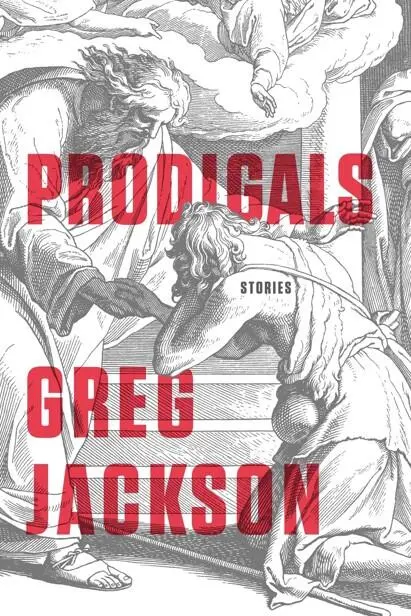
- Название:Prodigals: Stories
- Автор:
- Издательство:Farrar, Straus and Giroux
- Жанр:
- Год:2016
- ISBN:нет данных
- Рейтинг книги:4 / 5. Голосов: 1
-
Избранное:Добавить в избранное
- Отзывы:
-
Ваша оценка:
Prodigals: Stories: краткое содержание, описание и аннотация
Предлагаем к чтению аннотацию, описание, краткое содержание или предисловие (зависит от того, что написал сам автор книги «Prodigals: Stories»). Если вы не нашли необходимую информацию о книге — напишите в комментариях, мы постараемся отыскать её.
A filmmaker escapes New York, accompanied by a woman who may be his therapist, as a violent storm bears down. A lawyer in the throes of divorce seeks refuge at her seaside cottage only to find a vagrant girl living in it. A dilettantish banker sees his ambitions laid bare when he comes under the influence of two strange sisters. A group of friends gathers in the California desert for one last bacchanal, and a journalist finds his visit to the French country home of a former tennis star taking a deeply unnerving turn.
Strivers, misfits, and children of privilege, the restless, sympathetic characters in Jackson's astonishing debut hew to passion and perversity through life's tempests. Theirs is a quest for meaning and authenticity in lives spoiled by self-knowledge and haunted by spiritual longing. Lyrical and unflinching, cerebral and surreal,
maps the degradations of contemporary life with insight and grace, from the comedy of our foibles, to the granular dignity of experience, to the pathos of our yearning for home.
Prodigals: Stories — читать онлайн бесплатно полную книгу (весь текст) целиком
Ниже представлен текст книги, разбитый по страницам. Система сохранения места последней прочитанной страницы, позволяет с удобством читать онлайн бесплатно книгу «Prodigals: Stories», без необходимости каждый раз заново искать на чём Вы остановились. Поставьте закладку, и сможете в любой момент перейти на страницу, на которой закончили чтение.
Интервал:
Закладка:
We were quiet a minute. Then Gaby said, “You said something about our souls?”
Wendill laughed. “What do you think is that ludicrous dirigible in your hand?”
And when he said it our eyes went to our hands, which indeed were holding a length of poly curling ribbon, and from there up the line to the pair of Mylar balloons floating four or five feet overhead, balloons hungry, you could tell, for the very heights where they would pop, and on which, indeed looking rather ridiculous, were printed our own smiling faces.
* * *
Pop. Pop. Confetti. A blink. The swollen nighttime luster drifts. Lights return easy to their pinpoints and peel sleepily from the glass. The car recovered, the crack rock smoked, the meth — whatever. Gaby is at the wheel and I can feel her trying with all she has to keep us in the lane. The dashed lines converge at a point beyond the horizon and blink our way home. The road had become, I saw, the line of our lives. The yarn-path not out of the labyrinth maybe, but onward. If we could just follow it, it would keep us in our lives. But it was narrow, very narrow. One deviation and who knew? The highway curves, the macadam thread spinning off its distaff before us, yes, the chord in any circle being less than the arc which it subtends, but sometimes you’re stuck on the arc, aren’t you, and Atropos is posed there with her shears. If I could have I might have said, Parents, guardians of the metanarrative, we are the minotaur. Half child, half beast. Bury us in the heart of your maze. Hide the primal insanity of your culture from view. You will know us soon enough. We are the displacements of your wounds. Bundled lies sold off in tranches. Captured carbon shut up below the streets of Knossos. We are howl, destroying all you have given us to claim it fully — and still Gaby clenches, and I clench too, praying to keep on straight through the midnight highway, to find our way home, knowing all the same that if we make it back, we will be too joy-drunk on our improbable escape to remember to change black sails to white, too misted still in the amnesiac dawn of what Little Dionysius sold us to recall that when we got to the central chamber of the labyrinth it was empty, an echoing cavity, those Indian caves. We were the monster or there was none.
There is not much to say about drugs, hard drugs, drugs in combination, except that at some point you cease to exist. This is what you wanted, to sleep, to dream. To see the moment of your greatness flicker — out. That’s it. Take someone else’s word for it. It is unexciting and unnecessary. And that’s the last thing I have to say about drugs. The day will come when we get to rest forever, no need to hasten it.
In the meantime the responsibilities weighing on us all — starting with the responsibility to take one breath after the next — are exhausting. They are also life. The day Gaby leaves we watch cats hunt mice in the overgrown grass behind the house. The crows watch from the field, sheening and idle lords who might be killing a few minutes between meetings. Lethargy in the heat interleaves with desire, tedium with panic. We laugh to keep the sadness at bay. I can feel it at the edges of my mind, waiting for its moment, the knowledge that I will soon be alone, that we are ever being left to ourselves, so that beyond simple aloneness a deeper architecture of loneliness exists, one obscured in the structures of identity and routine we build on top of it but laid bare in those structures’ demolition, a feeling I hadn’t sifted down through the rubble to meet since childhood, a full despair, as when, sent away and on your own for the first time, you see at last the sheer scope of the indifference hidden from you, the world’s indifference, and how nowhere in the background of life hovers the metaphysical ghost of sentient care. It had been years since I’d considered that no one was taking care of me. The notion had no place in adulthood. I’d sloughed it off. But this is what I returned to in the days following Gabrielle’s departure, as I stood in the middle of the field smoking, looking into the trees emptied of mystery, the red berries gone discreetly into shadow, the road beyond where the cars passed at the brisk, uninteresting speed they do, without the sluggish drama of film, the languor of prose. There was no one taking care of me. There wouldn’t be any time soon. And I could fight the metanarrative all I wanted, slip its grasp for an evening, punish it for its tyranny by slowly destroying myself, but in the field that afternoon, among the stalking cats and crows, the rough dry grass and clover, under a sun too richly and heavily summered, dressing my exposed body in its violent cinnamon, it was me and the metanarrative alone. That even ticking beat.
You do not get to stop.
You do not really get to stop.
When I went back inside I put on The Köln Concert , got a straw broom out of the closet, and swept the house. I sweated. The sweat came in torrents. As Keith built in intensity, departing and returning to his theme, an elaborately toxic water spilled from me. I brought in beer bottles and cans, glasses with crushed lime crescents, viscid residues, the tan remains of onetime ice; I wiped down tables and knocked out ashtrays; I did laundry — clothes, bedding, towels — watered plants, washed dishes, knocked grit from rugs and doormats, took out the trash. Because I am a person I did these things. This is what a person does. You make peace with the melancholy. You invite it in. You say goodbye — to friends, to lovers, to family who are dying. To stray moments of understanding and of being understood. You clean, you shop. You go for runs. Sometimes you cry. Sometimes you want to cry and can’t. You are too old, too big, the wrong gender; you have pushed away tears too long. There is a child trembling inside you but that isn’t enough. No one cares. No one has time to care. People’s lives are shot through with suffering, indignity, and privation you can’t imagine. You know this. We all do. And still to say “people” is to refuse to see the child.
Who sees the child?
In the days that follow, it is books and books alone that make me not want to die. At school there was a class called Poetry Will Save Your Life, which we laughed at a little for its pomposity — because so many other things come first, I suppose, because art is always being asked to apologize for its inutility and superfluity. But I think it’s true that poetry will save your life, if for no more than that I found it to be true that week, that literature was the only sort of arrival I could count on, an intimacy that wouldn’t desert me, that didn’t ask too much or fray fatally in the endless conflict of our competing needs, that permitted — or maybe simply was —the passage of experience back through us, our way of ravaging the endless ravishment of life. Heaven too is merely a dream of arrival, which we know from our inability to imagine anything ever happening in heaven.
So stop shortchanging poetry. Stop shortchanging art. Seriously. We’re sick of it. Art has nothing to apologize for.
It is sick of apologizing.
* * *
A comedy ends in a wedding, they say. A tragedy in death. An epic comes full circle to end where it began, but — oh, endings! — take your time, I say. Come late!
Back on the island, my grandfather is living. I am living. The woods are living. Bumblebees as big as a child’s thumb drift among living flowers. The harrumph of a lawn mower coming to life in the distance references the enveloping determination of growth. My aunts, lively in the morning, setting the coffee machine to burble, return from the garden with tomatoes, squash, parsley, chives, leeks, cabbage, zucchini, corn, thyme, rosemary, carrots, and beets, all of which, through the months of spring and early summer, feasting on the rot of soil, have slowly swelled. And if we are to believe Greimasian semiotics, bound up in any sense of dying must be living , along with the not-living, not-dying rock of the coast, oil-black here and grained like a pompadour, the roll of seawater, the nescient wind that laps the flag with its fanciful coat of arms, stretches the cupped palms of canvas sails, splits on bird wings, and touches off the texture of the bay.
Читать дальшеИнтервал:
Закладка:
Похожие книги на «Prodigals: Stories»
Представляем Вашему вниманию похожие книги на «Prodigals: Stories» списком для выбора. Мы отобрали схожую по названию и смыслу литературу в надежде предоставить читателям больше вариантов отыскать новые, интересные, ещё непрочитанные произведения.







Обсуждение, отзывы о книге «Prodigals: Stories» и просто собственные мнения читателей. Оставьте ваши комментарии, напишите, что Вы думаете о произведении, его смысле или главных героях. Укажите что конкретно понравилось, а что нет, и почему Вы так считаете.