Greg Jackson - Prodigals - Stories
Здесь есть возможность читать онлайн «Greg Jackson - Prodigals - Stories» весь текст электронной книги совершенно бесплатно (целиком полную версию без сокращений). В некоторых случаях можно слушать аудио, скачать через торрент в формате fb2 и присутствует краткое содержание. Год выпуска: 2016, Издательство: Farrar, Straus and Giroux, Жанр: Современная проза, на английском языке. Описание произведения, (предисловие) а так же отзывы посетителей доступны на портале библиотеки ЛибКат.
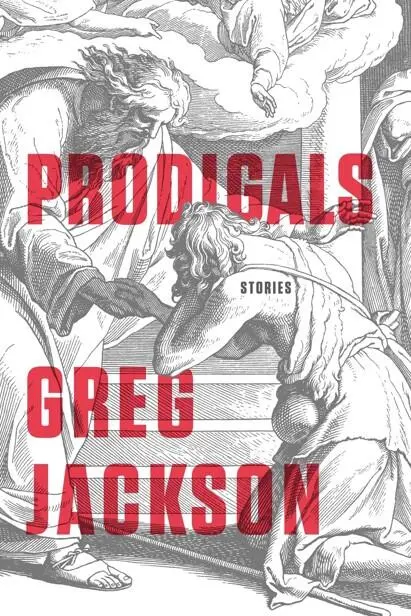
- Название:Prodigals: Stories
- Автор:
- Издательство:Farrar, Straus and Giroux
- Жанр:
- Год:2016
- ISBN:нет данных
- Рейтинг книги:4 / 5. Голосов: 1
-
Избранное:Добавить в избранное
- Отзывы:
-
Ваша оценка:
Prodigals: Stories: краткое содержание, описание и аннотация
Предлагаем к чтению аннотацию, описание, краткое содержание или предисловие (зависит от того, что написал сам автор книги «Prodigals: Stories»). Если вы не нашли необходимую информацию о книге — напишите в комментариях, мы постараемся отыскать её.
A filmmaker escapes New York, accompanied by a woman who may be his therapist, as a violent storm bears down. A lawyer in the throes of divorce seeks refuge at her seaside cottage only to find a vagrant girl living in it. A dilettantish banker sees his ambitions laid bare when he comes under the influence of two strange sisters. A group of friends gathers in the California desert for one last bacchanal, and a journalist finds his visit to the French country home of a former tennis star taking a deeply unnerving turn.
Strivers, misfits, and children of privilege, the restless, sympathetic characters in Jackson's astonishing debut hew to passion and perversity through life's tempests. Theirs is a quest for meaning and authenticity in lives spoiled by self-knowledge and haunted by spiritual longing. Lyrical and unflinching, cerebral and surreal,
maps the degradations of contemporary life with insight and grace, from the comedy of our foibles, to the granular dignity of experience, to the pathos of our yearning for home.
Prodigals: Stories — читать онлайн бесплатно полную книгу (весь текст) целиком
Ниже представлен текст книги, разбитый по страницам. Система сохранения места последней прочитанной страницы, позволяет с удобством читать онлайн бесплатно книгу «Prodigals: Stories», без необходимости каждый раз заново искать на чём Вы остановились. Поставьте закладку, и сможете в любой момент перейти на страницу, на которой закончили чтение.
Интервал:
Закладка:
“Can we just take a look,” Gaby asked, “make sure it’s the right car?”
“Can’t open the gate until you pay me.”
“I don’t think that’s true,” I said. “I think you won’t open the gate until we pay you. You can do whatever the hell you want.”
“If you like it better than way,” he said.
It came to $120, and Gaby and I had maybe $80 between us. I was regretting a bit the business deal I’d entered into with Little D, and, in a more general sense, the subjective experience of being alive. I had the urge to say to the man something like, How did we get here, how did this chain-link fence with its small padlock come between us, strangers, men, women, with nothing against one another, acting out the offices of far-flung and abstracted necessities, gutter kings, cursed and shambling exiles muttering an obfuscatory patois, recreants with no faith left in the conduit metaphor of language, abandoned to our preterition of cash transfers, synthetic highs, and a reflexive sabotage that may be at heart no more than contempt for the self-importance and medicalized vanity of other people, the more comfortably unelect, and yet content, it seems, to waste our lives in a pointless standoff at this insignificant gate? I was a bit skeptical of my ability to make myself understood, however, and so I did the one thing I could think to do, which was to take the crack/meth rock/crystal from my pocket and say, “You got somewhere you need to be?”
“You’re looking at it,” he said. He took the parcel from my hand and unscrewed a lightbulb from a string wreathing the lot, deftly picking out contact, stem, and filament with needle-nose pliers.
“What’s your name?” Gaby said as he cleaned the bulb’s cavity with a bit of towel and deposited some crushed drug inside it. He held the flame below the glass.
“Wendill,” he said.
The smoke drifted up from the bulb as thick as milk.
The silence of the lot struck me at that moment, the moment of inhalation, the faint wind like a memory of elsewheres, the threnody of distance, and as the vapor replaced the chill in me with a lithe magma of hot blood, as the euphoria took hold, Wendill said, and I can only relate, not explain, what follows, “Now I will tell you the story of the human soul.”
The Story of the Human Soul, Per Wendill
As you may imagine, I was not always as you see me now. I have lived, oh, many lives, gone by many names, worked all kinda jobs. Not that it’s such a long way from claims adjuster to tugboat captain if you — ahem — catch my drift. You are not “before the law.” The gate is locked, I assure you. Or maybe not. I forgot to check, I think. My memory … well. But what I mean is, see me as a friend, doomed for a certain term to walk the night, alas, but a father figure. I find you apt. Not like those egregious weeds on the riverbank. I spray and spray … But no, they will not shut up like a telescope. And I won’t either. Ha ha!
Do you remember, in the Jungian sense, I mean, the sense of anamnesis, that day long ago when a slate sky dripped silver tears in the sky-painted lakes above the veldt, when you came upon the briar-caged creature and a man and a woman were one — androgynes, atmen, call them what you will — and a man and a woman and a blackbird were one? When the creature died on the hard point of a rock? How later you baited the briars with fruit, and when the man died and the woman died it was not different from when the creature died. Lush flowers fattened on their graves. And the men picked flowers for the women to remind them how life grows on the cusps of death, playing the B side of Houses of the Holy while everyone got laid?
And when the first jockey climbs aboard a creature struggling in the mud, and indestructible space foreshortens, might we not say the rider is the mind of the animal, the way a priest is the mind of the ritual, the way God is the mind of order and accident? The hippie boys and girls of North Beach, entheogenic rapscallions and the best minds of their generation, apparently, take soma to become the mind of the sacrifice. And order and accident have their uneasy marriage, of course, which like all marriages it would be pointless to try to understand from the outside.
That food in the briars begets more food is the initial form the offering takes. The offering is order’s humility before accident. A violation brought to consciousness. A horse let wander for a year shadowed everywhere by a hundred young men who could really use some direction in their lives. Do you know what kids in Minoan Crete have to do? their moralizing parents ask. Dance with bulls — can you imagine? You have to follow this fucking horse around, but at least you aren’t getting gored by bulls all the time.
And when the year is up, in some extreme unction, they coat the horse in butter, tie it to a post, and kill it. But you’ve grown fond of the horse over the year, haven’t you? So: agenbite of inwit. Was the horse really down ? You wonder, you perseverate. But perhaps, they say, perhaps it offered itself up like Odin, who hanged himself from a tree in sacrifice to himself. Well, perhaps. The queen must spend a night with the dead horse, anyway, sleep with it. The spirit of the horse whinnies in the wind.
Are you with me? Have you drifted off, begun gnashing your teeth and looking for something to obsessively clean for the next few hours, because this is where the turn comes, the morning sun stretches its rosy fingers into the lit sky, crests mountain and hill, rolls the golden carpet of day over sparkling sea and fruited plain, over man and woman stilled of need, free of menace, stumbling into the light a little hungover, shading their eyes, like: Not bad. Supposing that thing worked. What, the offering? Yeah. Worked? (Shrugging) I dunno.
And so in fallow years, on battlefields against long odds, on beaches dark with homesick siege forces, in the halls of anxious kings and paranoid queens, inheritance-minded princes, before the hearths of childless mothers, hapless fathers, and on the rafts of enterprising castaways, the fire set to consume the creature’s flesh is a chemical transaction, no more, a currency, an act not of subservience but of control, a way not to honor the gods but to enjoin them. A moment of fraud, for when we purchase something, let us be clear, we do not call this act a sacrifice .
Where is the creature on its Wanderjahr , a hundred shiftless youths behind it? We cannot say. We have lost the creature. The horse now claims the land on which he trespasses for the king, as a wooden horse enters a walled city to claim it for those outside the gates. Do not, as I say, see me as a gatekeeper. See me as the blind man with a riddle at the crossroads. Dispenser of an ambiguous viaticum. We can await the barbarians long enough to become them, because it is always a question of whose bidding we do. And do not say, simply, our own. For is it then the bidding of our hunger, our fear, our lust? Are we not ever in danger of becoming slaves to what we merely can do, conscious procurers for our unconscious natures? Is it not always easier to gratify an appetite than to understand one?
The alternative? I confess I sometimes wonder whether it is not romanticism, or only hope, that leads us to imagine a time when spiritual life was more than ornamental garnish on material, a cult of consciousness, cult from the Latin colere of course ( colo, colere, colui, cultus ), to cultivate, to till, life spent in radical contemplation of the tidal nuance of a thinking-feeling involvement with all around us, the character, qualities, and rhythms picked out in reflection, so, like a shoreline seen from above, relinquishing shape and pattern on approach, the play of moods and shadings in a bright meadow, say, might evolve ever more complexly in the scrutiny of leaves and blades of grass shaking in the wind, the specific motion of each trembling, the tones in the arrangement of the day as things seek their fleeting equilibria, as branches rustle and petals fall, as the air makes its way through itself immured in the maze of its fluid pressures, bearing the grains of an endless pollination, as the vibrancies set off by stridulating wing or leg contour the static breeze, below the veined crags of mountain, monuments to the gravities that bind our ardor, skirted in tree and shrub running to the silt-swept banks, the plains where snowmelt carves silver fingers into humus and loam, where banyans and mangroves reach out like old hands rung in arthritic knots, berries gather the hidden colors of soil, where deer eat them, where the wolves eat deer, where the humans gather to eat, kill, fuck, and love, to stop and listen, pause within the violence and joy and take some measure of the unaccountable processes of which we are a part, and you might say, How I long to be a gypsy running free in the riot of my heart! through tall grasses to the song of canebrakes, wild in the pleated dirges of a light knit from hay, sewn from straw verdure, the flaxen clothing of the evening, and those plucked frequencies of the day that sum to rapture. I could a tale unfold whose lightest word would harrow up thy soul, but — well, don’t blame your mother.
Читать дальшеИнтервал:
Закладка:
Похожие книги на «Prodigals: Stories»
Представляем Вашему вниманию похожие книги на «Prodigals: Stories» списком для выбора. Мы отобрали схожую по названию и смыслу литературу в надежде предоставить читателям больше вариантов отыскать новые, интересные, ещё непрочитанные произведения.








Обсуждение, отзывы о книге «Prodigals: Stories» и просто собственные мнения читателей. Оставьте ваши комментарии, напишите, что Вы думаете о произведении, его смысле или главных героях. Укажите что конкретно понравилось, а что нет, и почему Вы так считаете.