Breyten Breytenbach - Mouroir
Здесь есть возможность читать онлайн «Breyten Breytenbach - Mouroir» весь текст электронной книги совершенно бесплатно (целиком полную версию без сокращений). В некоторых случаях можно слушать аудио, скачать через торрент в формате fb2 и присутствует краткое содержание. Год выпуска: 2009, Издательство: Archipelago Books, Жанр: Современная проза, на английском языке. Описание произведения, (предисловие) а так же отзывы посетителей доступны на портале библиотеки ЛибКат.
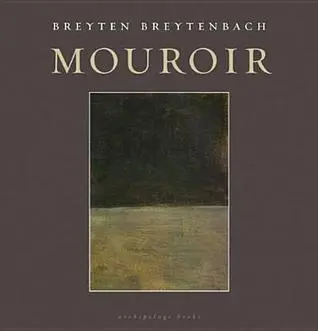
- Название:Mouroir
- Автор:
- Издательство:Archipelago Books
- Жанр:
- Год:2009
- ISBN:нет данных
- Рейтинг книги:3 / 5. Голосов: 1
-
Избранное:Добавить в избранное
- Отзывы:
-
Ваша оценка:
Mouroir: краткое содержание, описание и аннотация
Предлагаем к чтению аннотацию, описание, краткое содержание или предисловие (зависит от того, что написал сам автор книги «Mouroir»). Если вы не нашли необходимую информацию о книге — напишите в комментариях, мы постараемся отыскать её.
An outspoken human rights activist,
is a poet, novelist, memoirist, essayist, and visual artist. His paintings and drawings have been exhibited around the world. Born in South Africa, he immigrated to Paris in the late ’60s and became deeply involved in the anti-Apartheid movement. Breytenbach is the author of
, and
, among many others. He received the Alan Paton Award for
in 1994 and the prestigious Hertzog Prize for Poetry for
in 1999 and for
(
) in 2008.
Mouroir — читать онлайн бесплатно полную книгу (весь текст) целиком
Ниже представлен текст книги, разбитый по страницам. Система сохранения места последней прочитанной страницы, позволяет с удобством читать онлайн бесплатно книгу «Mouroir», без необходимости каждый раз заново искать на чём Вы остановились. Поставьте закладку, и сможете в любой момент перейти на страницу, на которой закончили чтение.
Интервал:
Закладка:
4. He orders, reviews, refines. Every prisoner must be escorted by a guard-with-dog at all times of the day or the night.
5. No more contact between inmates.
6. The warder-with-dog shall get into the bath with the prisoner. Yes, man, of course the State will issue you with overalls for the purpose!
7. All eating utensils shall henceforth be of plastic. No mirrors anywhere. No exercise outside. (Or inside.) No more smoking. Quiet there! And your grandmother’s cunt!
8. Listen. The dogboer-and-dog shall spend the nights in bed with the convict, man on man, a second warder with FN and baton and whistle and walkietalkie outside the locked, mastered, bolted, padlocked, padlocked, padlocked, steel-reinforced cell door and inside grill. Changing of the shift at midnight.
Ah, but it is good to run a rehabilitation centre fulfilling its first and foremost function: to keep the wards of the State in safe-keeping.
9. The night was an agony. Behind his eyelids, even with orbs staring into the dark, he visualized all the horrors. The headlines. The sanctions. The total breaking. Today, at noon, an escapee from Maxim um Security . . Oh sweet dear compassionate cruel merciless God. What if? What the fuckin’ hell if, for instance. .! He is an old wreck, crushed by responsibility, by the spectre of overthrow.
He has the prisoners, the blind worms, taken out into the central courtyard, stood against a wall, one by one, murmuring, shot.
Now the prisoners are in maximum security, sir.
10. He struggles up, suffocating through layer upon layer of not having slept at all.
The Break
The “Terminus” — so called because it is the worst degree of a series of detention places and for the large majority of those landing there it also means the final point of their peregrination (but the correct name is the Calabozō) — is housed in a tent of enormous proportions. The roof of this tent, one can call it a circus tent, is very high. From up top banners descend, long dark-dyed flags, trapezes on oily ropes, and tatters of another material. The inside space is entirely occupied by cages made of steel bars in which the prisoners are held, two storeys high but without solid floors (everywhere the grid only) so that people can spy on one another from every angle. Between the stacked cages, every stack consists of a block covering nearly 100 x 100 metres, there are streets wide enough for lorries to pass. The streets are slushy with pools of water. High above all this the sombre roof of the tent sings and blows as if it were a membrane moved by breathing, an infundibulum perhaps. It is so high that all sounds caused by it are inaudible. Only rarely a dull ruffle is understood, or a sudden bang. It may be a flock of angels, involved in a quick accident or an altercation — you then think. Nobody underneath this roof, in any event certainly not the prisoners, can know whether it is day or night outside, grey-time or sunshine, summer or winter or autumn. In strategic places along the miry streets poles have been erected, with pale light bulbs burning permanently. But it is always too gloomy to be able to see from one end of the tent to the other.
The lorries come to remove those condemned to die when it is the time to execute them. (In the tent one referred to “prisoners of death” or PODs.) The place of dying is apparently somewhere in the city. On the flat bed of the truck is a steel cage exactly like the units in the tent itself. Armed guards in khaki overalls make the reprobates climb on to the lorry and then into the cage. The prisoners have their wrists handcuffed. While they are being led to the lorry, often with blows and curses, they sing their leave-taking songs. Usually they are already in a trance and the corners of their mouths are stained by a whitish froth. The prisoners remaining behind swing like apes from their own bars to shout good-byes and other encouragements, hasta la vista compadre, vaya con Dios ! or to sing in company nearly as defiantly as those being removed. Some just look on with stiff jaws and the knuckles of the hands clenched around the staves white also.
The truck is parked in the alley between Block C and Block D. Prisoner 3926/75 looks down it from his cage, sees how the PODs with great difficulty clamber on to the vehicle until the barred container is filled to bursting. All at once he notices the last passenger of death, shackled like the others: C. He can’t believe his own eyes and with the shuddering shock he has to grab hold of the bars to remain standing. Wasn’t C in particular one of the privileged class? Surely he was not condemned to die and indeed, according to the rumour running from section to section, was even due for release in a few short weeks! It means therefore that no one can be safe. Or that the selection of executees is arbitrary. South African roulette! Or that the number of detainees is just thinned out from time to time. That all eventually are destined for the strangling cord!
C looks up at him with a pale face, tries to smile one last time and to wave with his entangled hands. The hair falls over his forehead. He is wearing his winter-issue moleskin jacket. 3926/75 hears his call: “You can grab my lunch ration this afternoon, amigo.” As one of the last he is helped on to the lorry. The engine snores and the exhaust emits blue fumes. The guards lock the grill with the rattling of keys and key-rings and then get into the cabin with the driver.
3926/75 jerks and tugs at his bars and suddenly notices that the door of his cage gives way, that for some reason it was not closed. The truck has just started moving off. In a flash he is outside his cage, jumping from there into the oozy street, and in a loping run he catches up with the conveyance and climbs up behind the cooped-in prisoners. There he squats down very low, flinging his arms round his knees. If only the warder next to the driver doesn’t detect him!
It is a windy day outside with heavy tumbling clouds in the heavens, like an amorphous and inconceivable sea battle. But the passage from eternal twilight in there where he grew old and empty to the penumbra out here is nevertheless blinding. It could be autumn. It would seem that the city is deserted, rocking slightly, or perhaps the route to the abattoir is selected thus with special care. They go rumbling on and he has to lean into the wind so as not to be blown off. Thick and hot tears are squeezed from his eyes.
At the corner of boulevard M and rue S where the traffic lights are, the lorry stops abruptly in front of a Wimpy Bar with glaring neon lights. One of the guards steps down quite unconcernedly, probably to go buy cigarettes or monkeynuts. 3926/75 jumps off at the back. His knees, cramped from his sitting on his haunches for such a long time, give way under him. But bent over to be inconspicuous he trots at an angle across the boulevard to where he can see the tall trees in the L-gardens groaning in the wind. Then at last (God save our gracious Secretary-General!) he is under the first trees with the lorry-load of PODs far behind him, and he jogs past the big trunks. The leaves clatter above his head.
When he got thus far he realized — whereto now? — that the story would not work out, that one mustn’t cover the ground too rapidly, and he decided to start again from scratch.
The truck with its haulage of alive and hale people who within a few hours will be under the sods, limp and cold already in the kingdom of decay has left now. The sound and the aftersounds of their ultimate dirge have died away. The trembling voice of C too, one of the contingent merely to fill the quota. (“We are all here to complete some or other quota.”) Perhaps the vision of their waving chained arms, the staring ecstasy in their eyes, the tight cords of their neck tendons — perhaps that will fade away too. In the huge dark tent the murmuring, sometimes the growling, of convict voices will huff and puff, will be black roses. The yellow light bulbs shake in the wind.
Читать дальшеИнтервал:
Закладка:
Похожие книги на «Mouroir»
Представляем Вашему вниманию похожие книги на «Mouroir» списком для выбора. Мы отобрали схожую по названию и смыслу литературу в надежде предоставить читателям больше вариантов отыскать новые, интересные, ещё непрочитанные произведения.









Обсуждение, отзывы о книге «Mouroir» и просто собственные мнения читателей. Оставьте ваши комментарии, напишите, что Вы думаете о произведении, его смысле или главных героях. Укажите что конкретно понравилось, а что нет, и почему Вы так считаете.