Breyten Breytenbach - Mouroir
Здесь есть возможность читать онлайн «Breyten Breytenbach - Mouroir» весь текст электронной книги совершенно бесплатно (целиком полную версию без сокращений). В некоторых случаях можно слушать аудио, скачать через торрент в формате fb2 и присутствует краткое содержание. Год выпуска: 2009, Издательство: Archipelago Books, Жанр: Современная проза, на английском языке. Описание произведения, (предисловие) а так же отзывы посетителей доступны на портале библиотеки ЛибКат.
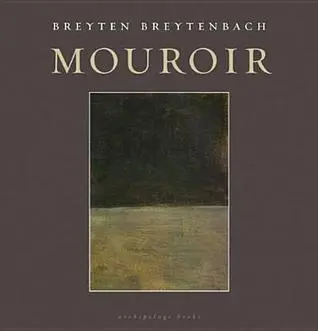
- Название:Mouroir
- Автор:
- Издательство:Archipelago Books
- Жанр:
- Год:2009
- ISBN:нет данных
- Рейтинг книги:3 / 5. Голосов: 1
-
Избранное:Добавить в избранное
- Отзывы:
-
Ваша оценка:
Mouroir: краткое содержание, описание и аннотация
Предлагаем к чтению аннотацию, описание, краткое содержание или предисловие (зависит от того, что написал сам автор книги «Mouroir»). Если вы не нашли необходимую информацию о книге — напишите в комментариях, мы постараемся отыскать её.
An outspoken human rights activist,
is a poet, novelist, memoirist, essayist, and visual artist. His paintings and drawings have been exhibited around the world. Born in South Africa, he immigrated to Paris in the late ’60s and became deeply involved in the anti-Apartheid movement. Breytenbach is the author of
, and
, among many others. He received the Alan Paton Award for
in 1994 and the prestigious Hertzog Prize for Poetry for
in 1999 and for
(
) in 2008.
Mouroir — читать онлайн бесплатно полную книгу (весь текст) целиком
Ниже представлен текст книги, разбитый по страницам. Система сохранения места последней прочитанной страницы, позволяет с удобством читать онлайн бесплатно книгу «Mouroir», без необходимости каждый раз заново искать на чём Вы остановились. Поставьте закладку, и сможете в любой момент перейти на страницу, на которой закончили чтение.
Интервал:
Закладка:
“And this here,” and the Old One bends down to lift with both hands something which had been lying under the hat rack in the shadow-pool of the gown, “this I picked up more than twenty years ago on the beach of Paris.” In his hands he holds a roundish, pale object emitting a horrible rattling noise. It is, so the Old One explains, a bag or a ball made of skin and devoid of any colour — very likely the featherless skin of the older birds themselves — in which the gulls kept their chickens for security and protection when they went out looking for carrion. Indeed, he notices then the smooth, miniature skulls, bone-riddles without clues, and the wide-open beaks of the chickens protruding from the mouth of the purse, and among the other sounds he distinguishes again the cheeping and the hissing. At the bottom of the bag there are some more eggs or maybe even whitewashed pebbles — nobody has ever been in the position to verify — and with the trampling of the chickens (“look, thus”) these eggs or these things click against one another, the ball oscillates as anything with a rounded bottom will be wont to do, and this movement causes a noise fit to frighten off any predator or enemy. Suddenly it reeks of rotten eggs, of old-old iodine-saturated sea. And the hall is entirely filled with the ghastly chainlike clack-clack clack-clack.
“In this way there is no distinction between life and death,” he then also says.
The Oasis
Quien mucho abarco poco aprieta.
You insist. You wish me to tell you again that old tale about the horses. Why, nobody knows. And besides, it is such a long time ago that memory itself is covered with wrinkles and dust. But since it is what you desire.
It is an old town, the streets more or less depressed through the various quarters so that one is left with the impression that the houses are built on high banks. (The kind of town of which a Yevgeni Zamyatin could have written: “This conversation took place one quiet revolutionary evening, on a bench in Martha’s garden. A machinegun gently tick-tocked in the distant hills, calling its mate. A cow sighed bitterly in the shed behind the hedge. . ”) Wistaria thread a wealth of shadows over the stoops. Ceylon roses are planted in tins painted red. And trees, trees. Everywhere trees. There are so many trees in the town that the wind will never accomplish its tasks, will never dispose of enough time to go blow elsewhere also. The wind is breathless, without wind! There is day and there is night and all the pale mysterious hours between day and night, the thrashing of leaves. There is the eternal shiver as of countless hands waving green greetings. It is never still — silver blots before your eyes, the scales of the sky, a mobile catching the light and turning it over, turning it inside out and grasping. And always the ripples streaming through space as if a net filled with reflecting sound is dragged over the town. Wind nesting in the trees of the old professor’s courtyard. Wind rubbing a caress over the many trees around the dwelling of the neighbouring girl. Permit me the confession: that must be why I took an interest in horses. Up high from the loft day after day I could look down on the lass horsebacked under the trees — her sharp young body with its stretchand-hop, hopping and stretching with the trot, sit-sitting with the triple, the coat-tails flapping away from the round buttocks solidly outlined in the corduroy jodhpurs, her stick-straight back ending in curls, the horse’s hoofs flop and the leaves rustling their silver. And I am not allowed to go and play with her. It remains an unexplored secret.
I have two horses, two young foals. It’s true, there used to be an earlier, older nag in the family: Patanjali. But we hadn’t trained him all that well and we later did away with him, rather in the way one would get rid of an illegitimate child. Sometimes I see him moving through the streets with his little cart — we called him Easel for short, because of his long ears — and one may still observe in his movements traces of his education with us. When he wishes to evacuate the bowels he goes down on his haunches. The tan-coloured skin (like a jersey) drops in folds. He struggles with the forelegs, trying to transform his knees into elbows so that he may scratch with a bashful hoof behind the ears. The foldings are left behind in the street. But I take the necessary precautions not to be seen by his shiny eyes.
I have two horses, two young foals, the one a nick bigger than the other. Their names, Savopopo and Savokampi. I keep them in the loft. In front, giving on to the street, the high veranda runs down the loft’s west wall. Up the inner staircase in the back of the building I surreptitiously climb. There they are on the veranda, unaware of my presence. They stand whispering, on their toes, the young one with the dark curls and the slightly bigger one with stiff white lips, both totally dedicated to the effort of lifting the peg from the gate closing the veranda off from the outside stairs, intent upon climbing down and absconding. Ah, and they are blood-young. Until they see me and become frightened and covered with shame. Why do they want to run away then, I ask myself. They serenade me in the way I taught them until I can no longer rein in my sorrow and am obliged to turn my sobbing face to the wall so as not to inconvenience them. A man doesn’t cry in front of his horses. Then it is time to sleep and I prepare a couch of litter in the warmest corner of the loft. We lie down, Savokampi by Savopopo, and I pressed tight against them, above us the cool hushing of leaves, thousands upon thousands of cards shutter-flickering punching data. Savokampi’s dark eyelashes, I notice, are wet with tears.
In the late night I’m sitting in the old professor’s house, telling him the tale of my two horses. The room glimmers. The professor has a grey visage. I wrap up my story in words and try to present it in patterns which he may comprehend. Actually I display everything but when I deviate from the truth the grey face becomes quite hidebound and then he wags an admonishing finger to correct the lessons. I always have to report to him, starting from the beginning afresh. Among my words the leaves rustle. When I relate how they sang for me my heart is deeply moved and weeping I have to turn to the blindness of the room’s wall.
All of that is so deep in the past. You did want to hear the telling. The whole night through I sat at the table by the window with the night-writing under my fingers. I can see far across this town where we decided to while away the darker hours. It is only a traveller’s halt in the desert — perhaps their only income is from the pilgrims interrupting their journey here for the night. On either side of the speedway, quiet now, are three or four rows of hotels; and further still more, up the hillsides. All the windows are dull gleaming squares. There is the same light, barely sombred by the passage of night, in all the many windows, but I can scarcely believe that slumbering or cold people may in fact be stretched out behind the walls and the panes. Wind is moving through the leaves. The entire town is a paradise of mulberry trees so that the wind at least may have a hollow for its foot, and the only sound discernible is the on-going soft rooting of all the many lungs. The night isn’t all black for the remaining stains of snow (the stripped beards) in the gutters and along the rooftops’ slopes throw back the starlight. It is as if, somewhere not far off, there should be bubbling water, perhaps underground. The earth is full of wind.
Now it’s lighter and we climb up the slight incline of the street to go breakfast on the patio of one of the big hotels. Your hand clings to mine. Your stride is youthful and vigorous. You’ve slept well, your eyes are clear, and with every step the long black hair (reminding me so much of a horse’s mane) lashes your shoulder. You insist. You want me to relate the story of the horses. Agreed, agreed — but later.
Читать дальшеИнтервал:
Закладка:
Похожие книги на «Mouroir»
Представляем Вашему вниманию похожие книги на «Mouroir» списком для выбора. Мы отобрали схожую по названию и смыслу литературу в надежде предоставить читателям больше вариантов отыскать новые, интересные, ещё непрочитанные произведения.









Обсуждение, отзывы о книге «Mouroir» и просто собственные мнения читателей. Оставьте ваши комментарии, напишите, что Вы думаете о произведении, его смысле или главных героях. Укажите что конкретно понравилось, а что нет, и почему Вы так считаете.