Breyten Breytenbach - Mouroir
Здесь есть возможность читать онлайн «Breyten Breytenbach - Mouroir» весь текст электронной книги совершенно бесплатно (целиком полную версию без сокращений). В некоторых случаях можно слушать аудио, скачать через торрент в формате fb2 и присутствует краткое содержание. Год выпуска: 2009, Издательство: Archipelago Books, Жанр: Современная проза, на английском языке. Описание произведения, (предисловие) а так же отзывы посетителей доступны на портале библиотеки ЛибКат.
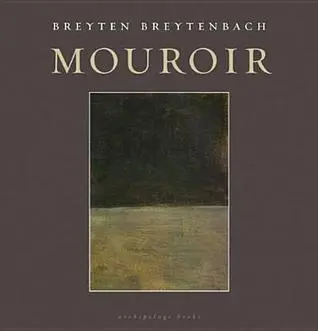
- Название:Mouroir
- Автор:
- Издательство:Archipelago Books
- Жанр:
- Год:2009
- ISBN:нет данных
- Рейтинг книги:3 / 5. Голосов: 1
-
Избранное:Добавить в избранное
- Отзывы:
-
Ваша оценка:
Mouroir: краткое содержание, описание и аннотация
Предлагаем к чтению аннотацию, описание, краткое содержание или предисловие (зависит от того, что написал сам автор книги «Mouroir»). Если вы не нашли необходимую информацию о книге — напишите в комментариях, мы постараемся отыскать её.
An outspoken human rights activist,
is a poet, novelist, memoirist, essayist, and visual artist. His paintings and drawings have been exhibited around the world. Born in South Africa, he immigrated to Paris in the late ’60s and became deeply involved in the anti-Apartheid movement. Breytenbach is the author of
, and
, among many others. He received the Alan Paton Award for
in 1994 and the prestigious Hertzog Prize for Poetry for
in 1999 and for
(
) in 2008.
Mouroir — читать онлайн бесплатно полную книгу (весь текст) целиком
Ниже представлен текст книги, разбитый по страницам. Система сохранения места последней прочитанной страницы, позволяет с удобством читать онлайн бесплатно книгу «Mouroir», без необходимости каждый раз заново искать на чём Вы остановились. Поставьте закладку, и сможете в любой момент перейти на страницу, на которой закончили чтение.
Интервал:
Закладка:
Boy saw. He advanced and he observed in these surfaces the deer he had always seen, but so distant and small now. He also perceived among the gazelles something, a being, a creature resembling those standing behind the surfaces looking at him and making hawking noises. He saw as if seeing the stars broken from their flight and firmament, and flung falling on the earth, flickering, hurting now so much deeper than the eyes. He saw the cracks and advanced toward the pools of water held aloft as if by magic. He didn’t realize that he was looking behind reality. He didn’t know that these tongues could never be lapped up or integrated. He was not aware that he was to forgo for ever the taste of water.
No, Baba
Time, he then says, must move ahead although it has no destination. (There is no time. Only we ourselves who run smash into dismantling, and try to force the regulating correlative “time” in an attempt to measure, comprehend, excuse.) But still we need it as a catalyst of life; it is only in the searchlight of time that there is life. Life is in the present, in the now. (Commonplace!) That which lies behind is death and ahead is death. Like the view from an aeroplane — when that would be time — flying over an immeasurable landscape, thus is life. That which sharp-immediately sweeps by under the wings and that which the eye up here may frame, are alive. Unpredictable, involuntary, unprejudiced it crawls forth from under the wings, is unrolled. (Cover, flyleaves, title-page, text, endpaper.) Once you have moved over it, it is swallowed by distance; the further back it is the quicker it disappears, becomes that and then imagination. It is like a page of written words falling in the changeable water (when trees lose their manuscripts) — the letters run and change their language, the paper will be part of the water and the water in the end will be clear. Theoretically such a craft should be able to return and to quiver over the already stroked surface, but it can never be the same terrain because in the dark, in the past sense, certain shafts and funnels and towers and neutral zones decay and crumble faster than others, are changed, become stains or even nothing, so that a hypothetical second passage would reveal a modified landscape. (Behind your back everything grows to hell.) Quicker, always quicker they sink; the further you are the faster they go. The future, that which may not yet be illuminated by time and thus by life, is similarly subject to change, tearing and careening, birth and decline, mutation and syncretism and bastardization, destruction and slaughter (frost over the yard), which we will never be aware of because it takes place in the penumbra. It is only the clear light of time-at-work, that fleeting moment and tangent point of relationships, people, objects, dreams, which generates the illusion that we may grasp and hold something existing and immutable. The environment is perpetually changeable changing death. The difference between life and death is that there is actually no difference; it is the play between illusion and reality. . Life is that which in the twinkling of an eye is lit up in a never-ending, pulsating and crackling darkness. (Isolated in the temporary.)
Naturally one also realizes it from within, he thereupon says. Or you think that you experience it from inside. There is the internal cohesion of the momentary which is not sudden, at least, that is not the way you live it. You experience it as something growing inside — let’s project it as the inner form of a bird solidifying in you. But which then rises in flight and disappears or which is plucked from you or is flushed and frightened off before you could even observe its description. It flies away and vanishes in the dark because you could neither recognize nor follow it with the senses, and totality is never completed. If it were to be completed you wouldn’t know it since you were part thereof. You never knew the outlines etched clearly. Thus the witnessing is for you like the inwardness of a bird departing from you or put up before it could decently take on shape, and in the nature of things you don’t realize that it was the “self” of the moment which has been displaced. Emptiness is form and form is emptiness. And emptiness is loneliness. Without emotional connotations. You add on two letters when you wish to transform the moment into a monument: NU — that’s naked. Monakedment.
The memory too, storeroom of experience, is subject to the same process: time/life is a lighting up of death, the spotlight picking out a grain of sand — and everything occurs in that grainy look — if the universe were a beach. Try to imagine what lies beyond the universe: you on the thrumming, eroding edge; to one side the sea with what it contains, its watery secrets, its sunken civilizations, its shells carrying the echo of absence on the dry land; on the other side the interior which had to come from the sea via the beach, with its wounds, its journeys and its trips, its spotted animals, its mountain roads, cities and deserts. In the convolutions of that storeroom the experienced, the shapeless birds, the full birds — since we cannot take in the concept “emptiness” — are stocked, to such an extent that they become entangled with the roots of the mind because we must assume that the mind, primordial shape, houses the memory, primeval void. And like the unspeakable black land of death — of which it is a component, which it has part of — it mates and twitches and dies and changes without tracing the consciousness. Back of your mind everything laughs to hell. No wonder then that the mind is so fertile. And it is clear why it should have such a bad smell when opened. Here and there, selectively, we cling to something in that memory, small mirrors mostly, thinking (as if thinking isn’t dissolution!) that these are immutable, more or less on the principle that that which momentarily we close our eyes to will stop playing tricks on us; that which I do not let live in my seeing is fixed for ever, is dead and thus immortalized in life. But everywhere behind us the mirrors are growing deaf. Or pulling their own faces. When the image is gone, the mirror reigns. And that lying furthest wastes away the soonest, in the same way as that waiting ahead the most distantly will approach the fastest; they depart and mutate the most and we notice no change. We live — what we envisage as living — based on the images in departing mirrors without being able to observe the measure of deformation, even without any consciousness thereof. Yes, sometimes only on the afterglow of an image as reflected in another polished surface. But it is of little importance. I, he says, am us. We are the aviaries of birds without amplitude which have smashed into mirrors because they/we wanted to be aeroplanes. Thus we live in death. The black traces in the glass. And in this way life is a growing death. There is only one tense. The dead season. Isolated in the temporal.
What happened the furthest back was that he had something to do with boats. Perhaps he had been, in his tender youth, a cabin boy on board a three-master sailing with bulging cloth the trade routes between continents, perhaps particularly towards the Orient and there from one island to the following, mornings when the sun in an aureola broke through the fogbanks above the oil-grey sea or else came to dip the tips of slender palm trees in bloody luminosity; evenings when a baked wind from the land propelled the hint of spices, particularly cloves, over the waves, and also the rancid stench of villages which as yet knew nothing of modern drainage systems. Hamlets on mouldy stilts, their roots in the rotting. Perhaps he had been a galley slave on one of the Phoenician longboats in the Mare Anticum, and perhaps they travelled all along the vague coast of North Africa where the sea, in places, is light green and very shallow with sandbanks, and under these ridges some skeletons and cuirass pieces remain preserved, with the drum beats in his ear like the heart’s nibbling in his chest and the lashes of a whip over shoulders and back. Perhaps he jumped without outer garment from a dhow to dive for coral in the Red Sea and slapped his hands on the water to scare off the sharks. Or perhaps he trawled for sardines with his mates while the sea was very stormy and blue-black like the fear of an ink-fish, and ice, several centimetres thick, blossomed on the boat deck and the handrails; but once the catch flip-flopped over the planks like handfuls of living coins, then they could return to Björnholm or one of the other Baltic islands where grey winds eddy in the shrieking of mews to drown a fortnight’s cares and joys in drink.
Читать дальшеИнтервал:
Закладка:
Похожие книги на «Mouroir»
Представляем Вашему вниманию похожие книги на «Mouroir» списком для выбора. Мы отобрали схожую по названию и смыслу литературу в надежде предоставить читателям больше вариантов отыскать новые, интересные, ещё непрочитанные произведения.







Обсуждение, отзывы о книге «Mouroir» и просто собственные мнения читателей. Оставьте ваши комментарии, напишите, что Вы думаете о произведении, его смысле или главных героях. Укажите что конкретно понравилось, а что нет, и почему Вы так считаете.