Breyten Breytenbach - Mouroir
Здесь есть возможность читать онлайн «Breyten Breytenbach - Mouroir» весь текст электронной книги совершенно бесплатно (целиком полную версию без сокращений). В некоторых случаях можно слушать аудио, скачать через торрент в формате fb2 и присутствует краткое содержание. Год выпуска: 2009, Издательство: Archipelago Books, Жанр: Современная проза, на английском языке. Описание произведения, (предисловие) а так же отзывы посетителей доступны на портале библиотеки ЛибКат.
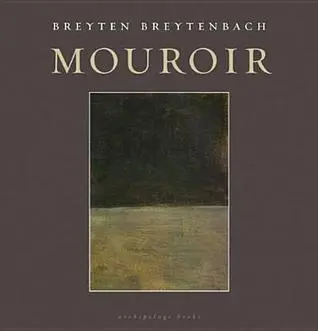
- Название:Mouroir
- Автор:
- Издательство:Archipelago Books
- Жанр:
- Год:2009
- ISBN:нет данных
- Рейтинг книги:3 / 5. Голосов: 1
-
Избранное:Добавить в избранное
- Отзывы:
-
Ваша оценка:
Mouroir: краткое содержание, описание и аннотация
Предлагаем к чтению аннотацию, описание, краткое содержание или предисловие (зависит от того, что написал сам автор книги «Mouroir»). Если вы не нашли необходимую информацию о книге — напишите в комментариях, мы постараемся отыскать её.
An outspoken human rights activist,
is a poet, novelist, memoirist, essayist, and visual artist. His paintings and drawings have been exhibited around the world. Born in South Africa, he immigrated to Paris in the late ’60s and became deeply involved in the anti-Apartheid movement. Breytenbach is the author of
, and
, among many others. He received the Alan Paton Award for
in 1994 and the prestigious Hertzog Prize for Poetry for
in 1999 and for
(
) in 2008.
Mouroir — читать онлайн бесплатно полную книгу (весь текст) целиком
Ниже представлен текст книги, разбитый по страницам. Система сохранения места последней прочитанной страницы, позволяет с удобством читать онлайн бесплатно книгу «Mouroir», без необходимости каждый раз заново искать на чём Вы остановились. Поставьте закладку, и сможете в любой момент перейти на страницу, на которой закончили чтение.
Интервал:
Закладка:
Above, on the plateau, it is altogether silent. The wind still strains but since there is nothing opposing it or holding it up there is also no sound. You see nothing except this table-landscape which is flat and limitless and yellow. No mountain chain or cloud-castle, neither smoke-column nor leaf-tree nor any other irregularity: just nothing.
With Albert he sits at a chess table while the wind keeps plucking inaudibly at their clothes and their hair. The chess table is made of clear glass but it has no legs. It is only a transparent block placed on the plateau. They execute their moves with intense concentration, without exchanging a single word. He can feel the watches ticking in his trouser pocket. He imagines that he can sense the little hands moving like a caress over the tender flesh of his inner thighs. A streaming silence. Albert has pinned his watch to the crown of his silver hat where it now shows off like a spare eye to indicate the flow of time. There is no one — neither angel nor bird nor fly nor labyrinth-maker — to look at the time on the face of the watch. Nothing. You would have been able to see the fly-wheels shuddering with movement but not to hear their throbbing. A reduced wrist suspended there, which has not yet deciphered the message that it is dead. A scare-time. When a piece — pawn, bishop, knight or rook — is eliminated, it sinks through the board into the glassy depths of the table. Then it shrinks, slowly at first and gradually ever faster, but it remains part of a game with the other pieces. The two players also are moves in the ritual. Invisible threads of correlation entangle everything. All go down in the game. There are different layers of volatilization amplifying and tied into each other, and all dimensionless. The two contestants are manoeuvred. Arrive at a position of tension or aggression or defence in the relation to the pieces on the board and those again to the pieces moving in the glass depths. From the result of each move hang life and death. A game endlessly renewed. Mate, opening, Polish defence, Berlin counter-attack, check. Smaller and smaller. In this way and at this distance there is no difference between life and death.
Then there was the court case. There they all sit, man and mouse, in the sanctified courtroom. The largish room is paneled in a dark, varnished wood. High up one wall are the stained-glass windows (with vulgar motives, he reflects: vine-leaves, grape-bunches, owls with dead feathers, sheep’s heads with glass eyes — the multiple adornments of death; even as those against the walls of the place of ashes outside P — where Wella was cremated long ago, he remembers) which permit coloured light-staves to grope through the musty interior. The judge, an old man with little grey feathers of hair over a shiny skull — the Old One he is called — sits fretfully wrapped in a red gown, cushioned on a kind of enclosed dais built into one wall of the hall. This hierarchical construction resembles a roomy pulpit. It is shadowed by a baldachin similarly decorated with patterns carved in the wood, of the same vulgarity as those of the windows. There the Old One perches, lofty, malicious, as if he could be an auctioneer. The rest of the hall is just the dock. No public, no legal representatives. The accused pack the space from door to doom.
He knows not why he is there. He doesn’t know yet of what he will be accused. It may turn out to be of the theft of a string of jewels, of underhandedness in chess-playing, of terrorism or some such nefarious act. Or perhaps because of what he attempted to describe in the first couple of paragraphs. Or because of a blue streak of which he no longer knows the lapsed meaning. For the time being it doesn’t really matter either since the group of people amongst whom he finds himself (his izintanga ?) are seated right at the back of the hall. The benches on which they sit are sunk at various levels into the floor. Some, therefore, can truly be said to be in the well.
Right in front directly underneath the throne of the Old One prisoners are lined up. They are all Unwhite. Among them also an immigrant. He is easily as aged as the Old One, but he wears a big, awkward pair of glasses slipped down to the tip of his nose. His bony face — the head is a bone-riddle — has vaguely the same appearance as that of a pelican. He has only a few very long grey hairs left, combed flat over this domed head. His name is Mister Murphy. Mister Albert Murphy.
Apparently it was his case which was just now disposed of. Two hundred rands is the fine imposed. Upon hearing this Mister Murphy pulls himself up straight with umbrage and starts objecting with violent gestures. His face has taken on the purplish glow of a beet. “Two hundred rands!” he screeches. “Is an insult! At the very least it should have been twenty-one thousand. Who, who do you (seamheads) take me for? My name is Mister Murphy. Albert! I am the immigrant, a businessman, and I was in the war, dammit man!” At this he bends down and starts unscrewing his right leg. It is evident that the artificial limb was attached to a stump hardly twenty centimetres long. The stump, enclosed in a blue leather cap, now grotesquely jerks up and down like the severed tip of a tail of a farm hound. Mister Murphy waves the loose limb with the neatly polished shoe about him. Two court orderlies fray their way through the shackled Unwhites and Mister Murphy hands them the leg with the shoe. The defence’s exhibit A. The leg with its calf and knee of imitation flesh shines like a largish pink fish in the dusk-light of the court.
Next to him on the last bench right at the back of the hall someone was busy filling a sheet of paper with words and his attention is drawn to it now. The paper is nearly entirely covered with letters and squiggles. It looks like a poem. He can make out the first line: “No, Baba — don’t trust the chains on your ankles. . ” The rest is illegibly entwined in flowery letters and letter-like flowers. All of a dark blue colour. This drawing or description in fact becomes hazy lower down the page. It is only like a written page gradually inserted in water and the ink is dissolved. The lines and arabesques which have remained the longest in the liquid, fade the fastest. The water will become whole again.
Now at last the Old One has found his legs. The hubbub roused him from the swoon or the sleep in which, as is customary, he sank after pronouncing sentence. He lifts his two balled, vengeful firsts to heaven — flabby with age and the momentous weighing of pros and cons, being proposed to and disposing — and cries: “Holy! Holy! Did I not also fight in the war then?” He climbs down from the referee’s chair and plods with difficulty to the back of the hall.
Then he notices for the first time the hallstand behind them. And draped over the stand is something. . something like a birdrobe. It is another gown belonging to the Old One. Under the robe, this he can observe now that the Old One starts manipulating it, there is a hanger. The Old One brings the hanger to light. It is filled from end to end by a row of medals pinned to it. The badges are like ancient watches grown blind and useless. When picking them up and straightening them out, the row of medals on their faded ribbons jingle and quake. Look, the Old One demonstrates, these are for all the skirmishes and battles in which I took part. . The Great War with Delville Wood, Passchendaele, Papawerkop, Verdun, Festubert, Vimy, Somme, Etaples, Fort Douaumont, Bapaume, Thermopylae, Tin Hats. . and the line of words drooling from his mouth becomes ever longer, like jewels strung on a cord with clotsapphires in between. These names, these words, convey an old odour of musty blood and clods mixed with quicklime. . “And these here were for the Other War. This is for the relief of Berlin, and that one for the liberation of Paris afterwards.” It strikes him as strange that Paris should come after Berlin. He had always thought it the other way around.
Читать дальшеИнтервал:
Закладка:
Похожие книги на «Mouroir»
Представляем Вашему вниманию похожие книги на «Mouroir» списком для выбора. Мы отобрали схожую по названию и смыслу литературу в надежде предоставить читателям больше вариантов отыскать новые, интересные, ещё непрочитанные произведения.







Обсуждение, отзывы о книге «Mouroir» и просто собственные мнения читателей. Оставьте ваши комментарии, напишите, что Вы думаете о произведении, его смысле или главных героях. Укажите что конкретно понравилось, а что нет, и почему Вы так считаете.