Breyten Breytenbach - Mouroir
Здесь есть возможность читать онлайн «Breyten Breytenbach - Mouroir» весь текст электронной книги совершенно бесплатно (целиком полную версию без сокращений). В некоторых случаях можно слушать аудио, скачать через торрент в формате fb2 и присутствует краткое содержание. Год выпуска: 2009, Издательство: Archipelago Books, Жанр: Современная проза, на английском языке. Описание произведения, (предисловие) а так же отзывы посетителей доступны на портале библиотеки ЛибКат.
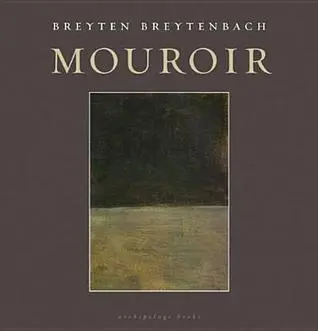
- Название:Mouroir
- Автор:
- Издательство:Archipelago Books
- Жанр:
- Год:2009
- ISBN:нет данных
- Рейтинг книги:3 / 5. Голосов: 1
-
Избранное:Добавить в избранное
- Отзывы:
-
Ваша оценка:
Mouroir: краткое содержание, описание и аннотация
Предлагаем к чтению аннотацию, описание, краткое содержание или предисловие (зависит от того, что написал сам автор книги «Mouroir»). Если вы не нашли необходимую информацию о книге — напишите в комментариях, мы постараемся отыскать её.
An outspoken human rights activist,
is a poet, novelist, memoirist, essayist, and visual artist. His paintings and drawings have been exhibited around the world. Born in South Africa, he immigrated to Paris in the late ’60s and became deeply involved in the anti-Apartheid movement. Breytenbach is the author of
, and
, among many others. He received the Alan Paton Award for
in 1994 and the prestigious Hertzog Prize for Poetry for
in 1999 and for
(
) in 2008.
Mouroir — читать онлайн бесплатно полную книгу (весь текст) целиком
Ниже представлен текст книги, разбитый по страницам. Система сохранения места последней прочитанной страницы, позволяет с удобством читать онлайн бесплатно книгу «Mouroir», без необходимости каждый раз заново искать на чём Вы остановились. Поставьте закладку, и сможете в любой момент перейти на страницу, на которой закончили чтение.
Интервал:
Закладка:
Carefully he opens the gate of his barred cage, casts a quick glance all around to see if anyone paid attention to the squeaks, and then jumps down to the street. Hardly has he hit ground when he scurries with humped back to the wall of the tent where shadows repose in thicker layers. Nobody will take any notice now. He moves away from the principal exit through which the lorry trundled just recently because he knows that this is guarded, all down the narrow alley between the last row of cages and the tent wall. There are prisoners watching him with dull eyes — eyes without the smallest spark of expectation, eyes full of ashes — but it seems as if they don’t see him.
Perhaps a quarter of a mile further along he comes across a loose flap in the wall of the tent. He pulls the flap slightly to one side and crawls out. Outside he gets up and starts walking without looking at his footprints, his back still turned to the main entrance where guards dawdle with rifles over their shoulders smoking cigarettes and kick-kicking at the mud with their bootcaps.
The earth-tracks outside are dark and wet. The sombre clouds of the sky are mirrored in the stagnant pools. From wires stretched across the road big limp standards droop, black sheets, frayed lengths of rag: in places one can still discern the bleached writing of some painted slogan. These banners are barely lifted by the wind. They are heavy with dampness. Some reach so far down that the extremities or the seams sweep over his neck and shoulders when he passes by underneath them. Like a cold hand touching his neck. He feels the shivers down his spine. He shudders at the thought and at the touch and senses the contraction of his skin.
When he has progressed further than the length of the tent he sees some back roads forking away from the route he is walking. These back streets are sludgy too, slimy with rubbish and soot swimming on the water. All along the little streets there are inner courts he can look into in passing. This veritable labyrinth is manifestly a continuation of the Department’s fief. He knew that the Department’s interests were extended over a large terrain around Central with workshops, rubbish heaps, housing for the staff, and probably also vegetable gardens, dance halls and fields for grazing.
In the backyards are labourers with big leather aprons tied around the hips. Some carry spades or pitchforks. He sees smouldering stacks of charred carcasses and he gets a whiff of the pungent and nauseating stench of scorched flesh. A purplish smoke drifts over the wooden partitions between workplaces, curling among the banners and the standards. The workers’ faces and forearms are besmirched, black. From time to time soot and ash come sifting down. In other workplaces he sees stacked bones glinting still with humidity after a recent downpour. Or he sees workers (warders perhaps? prisoners?) digging in the earth. In one spot he notices that the aproned people are wielding long whips; he sees the bloodstains on their trouser legs and aprons — as if smeared axes were wiped clean there — and also that the pools of water reflect an oily red colour. He hears inhuman sounds, a cacophony of terror as from the milling-about of the dying who smell the blood, sometimes a raw crescendo and then a fading rattle, but he does not see the origin of these sounds. The workers must observe him going by; they seemingly give it no thought though.
Further than the fenced-in nest of workshops and studios, than the burbling smoke, the shrieks and the bone-scraping aching of power saws, he reaches a point where fields and untilled scrubland gently heave and roll away in the distance. On either side of the road a hedge of brambles. The grass in the fields a dirty green. The inhabited area is already quite far in the background from whence he came, it lies veiled in a thin smokiness. Roads start turning away from him, roads leading to arable lands or sometimes even to clumps of trees which he can see as denser blurs of green on the horizon, and he must decide intuitively like a hunted animal on the right way, or the most convenient one. When he reaches a gap in the hedge he sets off to the right, all along the edge of a field lying fallow. He must try working his way back to the city in a wide, cautious curve, and then to R’s house, for that has always been the intention — that he should, if he could make the break, try to reach R’s house; the latter would then as go-between effect the contact with his people.
He hears a faint halloooo and one or two distant thumps like inflated paper bags being exploded by a fist very far off. He looks up and sees a few persons hardly bigger than the palm of his hand: they are dressed in red jackets, or red shirts maybe, or maybe their torsos are burnt very red from an excessively long exposure to the sun. He sees how they gesticulate and lift long objects to their shoulders: then there are sudden little eruptions of silvery-white smoke. Much closer to him he sees the leaping hither and thither of a hare, elegant to the eye, the zig-zag course and the abrupt changes of direction over shrubs, tufts and stones, the long ears down in the neck like blinkers which have slipped down, the bobbing powder-puff of the tail. He lies low in a hollow in the earth with his nose nestled close to the dirty wet soil. He doesn’t hear the hare and he doesn’t hear the grassroots either. Nobody will bother about him here. He does hear a vague rumbling which may emanate from tanks being deployed behind a distant hill. There is neither sun nor birds.
In the dog-watch of the night he arrives at R’s house on the outskirts of the city. He knocks and the door is opened. R is not at home — or is the old man with the grey crewcut and the heavily framed glasses R after all? In his memory lies a grey desert of empty time-passages, of tastelessness and cottonwool and cardboard. The inhabitants of the house are not surprised to see him. The house consists of a large number of small rooms, all painted white and roughly plastered, and nearly all situated at different levels so that you continually have to climb up a few steps or step down to the next room. The house is full of women and girls in white nightshifts, their eyelids swollen with sleep. Their cheeks have the hue of tomatoes. Must be R’s family, he reflects.
He explains that he should like to reach his own people but that the authorities have probably started a manhunt for him by now. R, or the convivial old gentleman who might have been R, his friend from youth, says that there is no hurry and also no need to worry. That much time has evaporated in the meanwhile. That his own wife no longer resides where she used to live before but elsewhere now in an unknown sector of the city, and in any case that she remarried and so she has another family. Also that it will not be necessary for him to apply a disguise, only that he should get rid of his prison garb, but that has already been taken care of, look, here is exactly the right white shorts and here a white shirt for tomorrow, they will fit him. And that they will then put a bicycle at his disposal so that he may go looking for his people somewhere in Market Street it would appear, hard by the yellow cathedral. But for now he must first relax, listen, he should take a bath and then eat something — why not a few peaches? That it is after all still night outdoors and that they are glad to have him there with them.
It is still night outside and wind pushes cool against the walls of the houses, rustles in the papers and the tatters on the street, the dusty branches. He hears the muted rumbling of the city which never really sleeps. He is taken to a small white room where there’s a bath. On a chair, next to the bath, there lie a pair of white pants and a white shirt neatly folded. A girl — R’s daughter? sister? niece? third wife? — has placed an oil lamp on the table with its dark marble top. He sees their shadows flowing excessively large and grotesque against the white walls. Like fire they move. Now she brings pitchers with steaming hot water which she pours into the ancient bath. He enters the bath. One should not cover the ground too rapidly. She also lifts her nightdress over her head and takes off her glasses. Her breasts are small and crumpled. Without the spectacles her eyes are huge and watery like those of a hare. On her thin thighs small black hairs grow. She gets into the bath with him. Under the water her yellowish body seems to be shivering. The bathroom has no door. He is aware of other figures in their nightclothes in the corridor. And the huff-puffing fluttering of shadows against the wall.
Читать дальшеИнтервал:
Закладка:
Похожие книги на «Mouroir»
Представляем Вашему вниманию похожие книги на «Mouroir» списком для выбора. Мы отобрали схожую по названию и смыслу литературу в надежде предоставить читателям больше вариантов отыскать новые, интересные, ещё непрочитанные произведения.











Обсуждение, отзывы о книге «Mouroir» и просто собственные мнения читателей. Оставьте ваши комментарии, напишите, что Вы думаете о произведении, его смысле или главных героях. Укажите что конкретно понравилось, а что нет, и почему Вы так считаете.