Breyten Breytenbach - Mouroir
Здесь есть возможность читать онлайн «Breyten Breytenbach - Mouroir» весь текст электронной книги совершенно бесплатно (целиком полную версию без сокращений). В некоторых случаях можно слушать аудио, скачать через торрент в формате fb2 и присутствует краткое содержание. Год выпуска: 2009, Издательство: Archipelago Books, Жанр: Современная проза, на английском языке. Описание произведения, (предисловие) а так же отзывы посетителей доступны на портале библиотеки ЛибКат.
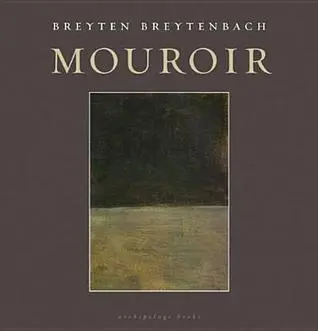
- Название:Mouroir
- Автор:
- Издательство:Archipelago Books
- Жанр:
- Год:2009
- ISBN:нет данных
- Рейтинг книги:3 / 5. Голосов: 1
-
Избранное:Добавить в избранное
- Отзывы:
-
Ваша оценка:
Mouroir: краткое содержание, описание и аннотация
Предлагаем к чтению аннотацию, описание, краткое содержание или предисловие (зависит от того, что написал сам автор книги «Mouroir»). Если вы не нашли необходимую информацию о книге — напишите в комментариях, мы постараемся отыскать её.
An outspoken human rights activist,
is a poet, novelist, memoirist, essayist, and visual artist. His paintings and drawings have been exhibited around the world. Born in South Africa, he immigrated to Paris in the late ’60s and became deeply involved in the anti-Apartheid movement. Breytenbach is the author of
, and
, among many others. He received the Alan Paton Award for
in 1994 and the prestigious Hertzog Prize for Poetry for
in 1999 and for
(
) in 2008.
Mouroir — читать онлайн бесплатно полную книгу (весь текст) целиком
Ниже представлен текст книги, разбитый по страницам. Система сохранения места последней прочитанной страницы, позволяет с удобством читать онлайн бесплатно книгу «Mouroir», без необходимости каждый раз заново искать на чём Вы остановились. Поставьте закладку, и сможете в любой момент перейти на страницу, на которой закончили чтение.
Интервал:
Закладка:
But that, I felt, really belonged to another story. And I was quite enjoying the ride despite the unfamiliar proletariat all around me. The day was caught motionless in a decline of dappled lights; distances held the sheen of lacquer rather like the soft sateen of my shirt. Ja , I ruminated, this day is finally just like a smile saturated, soaked in sunshine. (But my pants were damp.)
We passed by the lakes. We passed over a bridge with the railway tracks below us. Workers got on and got off. They mumbled and moved their caps with black hands. Horse whinnied and kicked against the steel-plated partition behind which he was standing. We came to a forest. Hills and green trees and the opaque but silver surfaces of water. Porcelain and peppermint and pink. And then behind the tip of the woods the city reappeared.
I knew that this was the same city, I instinctively appropriated the memory of it, and as we entered the first streets I saw in fact that I was now so very nearly home — just approaching it, you know, as it were from behind. I felt quite content. More precisely: I was heavy with contentment. Now I should go home, I thought. And forgive my wife my immobility. And perhaps I should go out more often and then reabsorb the familiar from this unexpected angle and show it to her and to my friends Galgenvogel and Tuchverderber too. One could have picnics here. I even felt benign towards The Horse. In truth of course I have the edge over him, I am superior to him — for whereas he hates me I like him. But that has to do with fatness and the blight of a festering class consciousness.
The bus halted. There were now crowds of people milling about in the streets here on the edge of the city. Some girls were dressed in our national costume. It was strange because unannounced and inexplicable. I just couldn’t work out what the processions were in aid of. Was this a national holiday then? Or — G. God forbid! — an uprising? revolution? anarchy? Already? (If at all.)
And I found myself as suddenly abandoned in the bus. I called (or burped) for The Horse, but he was no longer in the little stable. So, with great toil and difficulty I managed to alight by myself. People were jostling over one another in the teeming streets. But this must be the same town, I thought: after all I practically know this area and those houses from behind.
In the street I tried to ask my way from a prancing youngster. His teeth flashed. All the people had flashes in their mouths. But neither he nor anyone else among the frenzied bypassers knew any French. A few trees from the nearby forest grew to within the city limits. Under their high canopies the room-like spaces were already dark. Ah, I thought — now the day is finally going.
I felt rather than saw a shuffling of people (skirmishing? dancing? imitating horses?) in a narrow and leafy alley leading off the paved main thoroughfare where the bus was now being rocked by a gaggle of dark-faced juveniles. So I heaved myself over in that direction, feeling true, feeling solid.
When I came near the gesticulating throng gave way (before my weight). Two men crouched in the sudden circle, flecked with patterns of darkness, and they looked at me with saurian eyes, their scaly lips dappled with blood and their grey chins wobbling.
They came to me in a streak of understanding, my two friends: Tuchverderber and Galgenvogel. “Ah,” one of them — or it might have been both — breathed, and the other one so rapidly and deftly produced a kukri or a kris — the blade a steely white flash-tongue of all clarity and knowingness and simplicity — jiggling it — that my comprehension froze. And plunged it with a curious little falsetto snigger into the layers of my dumbness. Splitting the blubber, spilling extravagantly the writhing white worms. Death. Yes. D. Death.
(One never digests death my friends.) (If at all.)
Flight Aid
We had lost the sea battle and on rafts or clutching to pickle vats and flotsam we washed up soaked right through on this godforsaken stretch of beach — but our enemies were vengeful, they weren’t going to let us get away with our lives. . Or, as castaways, expatriates, refugees and at a loss in this strange land, we remained on the lookout towards the sea all the days and all the nights, for where else could our succour come from? and then suddenly we noticed the ships, two, but they could not approach the land for anchorage among the cresting waves. . I no longer know, Minnaar, and it is futile that you should keep on questioning me on the how and the why of our being there — it has escaped me as so many other causes did too, the way my words now leave me in the lurch, a runniness. The only clarity is: we were on a sand strip stretching in a half moon around the bay and there was no civilization or settlement or metropolis or dune farm or neon sign or lighthouse or caravan park or life-saver’s hut or hamburger stall anywhere near, and we were parched right down to our chapped snail-tongues. The sky was blue. The sea was blue but swollen. Away from the beach, still unfathomably deep in the heaving waters, to port and starboard two ships stood. Three-masters both, and the wind was lavish in the rigging and the sails so that these were bulging like men’s fists or like small clouds in the lower sky. Heeling in the water they were, but still they could get no nearer to the land. Nemesis? Deliverance? We (that is Murphy and Don Espejuelo and Breytenbach and I, and our companions — Mooityd, Sweetime, Elefteria, Levedi Tjeling and Marlin Manrob) turned our backs on the thundering ocean slithering over the wet sand and we started searching for direction about us. The long dresses of the women were sodden up to the hips, and clusters of sand grains were glistening in the folds. On the ridge of the nearest high dune an Arab all at once loomed large and after staring for a long moment (at us? at the ships in the bay?) with a hand like a falcon above the eyebrows to protect his eyes from the sun — or was he, because of a sore back, praying on his feet to a Mecca around the curve of the horizon? — after thinking through his eyes for a long while, he waved to us to come closer. Over his white robe in which the wind was trapped like the wings of anxious seagulls he wore a jacket buttoned to the chin and around the head he had wrapped a turban and on his face he had a pointed beard. He thoughtfully fondled the sharpness of the hairy little sword on his chin and carefully and slowly explained to us from deep in his throat that he could, upon request, rapidly accompany us to a place where we might obtain assistance, but only the men would be allowed to come. This after all, was dictated by the customs of Islam. And concerning the women we weren’t to worry excessively for they would be safe here during our brief absence. But we had to take our shoes off. With the guide we clambered over the sandhill and sunk to our knees in the shifts and the slides of the surface. Behind the hill we saw the grey sandflats decorated with shadows of all shapes. Like more palpable shadows there were also broad drawers standing upright, half buried in the sand itself, with shiny knobs by which they could be opened upwards. There were five different drawers. The Arab with the burnt-out eyes asked us whether we wished to arrive at our destination quickly or less quickly or less slowly or slowly or in God’s own time then. We said: as soon as possible, please. Rather, that was my answer, and I assume the others answered in the same way. Thus he opened the left most “drawer” and we climbed in. And with a giddy speed we tumbled down, transported by a vertical conveyer belt, black and rough like sandpaper, down, down, down, until down below we were spilt head over heels on a square. In the middle of the square was a fountain. Around this square with its fountain there were the fronts of tall buildings — some were even palaces. A crowd of people with smiles wreathed around their mouths strolled up and down and then stopped to listen with cocked heads how the spouting water plunges back with a rinkletinkle. It was warm in that place. And it was evening because spray-lights lit up the buildings and shone through the tree of water. I think it must have been in Switzerland. A long long time ago.
Читать дальшеИнтервал:
Закладка:
Похожие книги на «Mouroir»
Представляем Вашему вниманию похожие книги на «Mouroir» списком для выбора. Мы отобрали схожую по названию и смыслу литературу в надежде предоставить читателям больше вариантов отыскать новые, интересные, ещё непрочитанные произведения.











Обсуждение, отзывы о книге «Mouroir» и просто собственные мнения читателей. Оставьте ваши комментарии, напишите, что Вы думаете о произведении, его смысле или главных героях. Укажите что конкретно понравилось, а что нет, и почему Вы так считаете.