Breyten Breytenbach - Mouroir
Здесь есть возможность читать онлайн «Breyten Breytenbach - Mouroir» весь текст электронной книги совершенно бесплатно (целиком полную версию без сокращений). В некоторых случаях можно слушать аудио, скачать через торрент в формате fb2 и присутствует краткое содержание. Год выпуска: 2009, Издательство: Archipelago Books, Жанр: Современная проза, на английском языке. Описание произведения, (предисловие) а так же отзывы посетителей доступны на портале библиотеки ЛибКат.
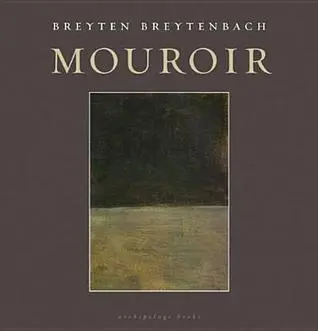
- Название:Mouroir
- Автор:
- Издательство:Archipelago Books
- Жанр:
- Год:2009
- ISBN:нет данных
- Рейтинг книги:3 / 5. Голосов: 1
-
Избранное:Добавить в избранное
- Отзывы:
-
Ваша оценка:
Mouroir: краткое содержание, описание и аннотация
Предлагаем к чтению аннотацию, описание, краткое содержание или предисловие (зависит от того, что написал сам автор книги «Mouroir»). Если вы не нашли необходимую информацию о книге — напишите в комментариях, мы постараемся отыскать её.
An outspoken human rights activist,
is a poet, novelist, memoirist, essayist, and visual artist. His paintings and drawings have been exhibited around the world. Born in South Africa, he immigrated to Paris in the late ’60s and became deeply involved in the anti-Apartheid movement. Breytenbach is the author of
, and
, among many others. He received the Alan Paton Award for
in 1994 and the prestigious Hertzog Prize for Poetry for
in 1999 and for
(
) in 2008.
Mouroir — читать онлайн бесплатно полную книгу (весь текст) целиком
Ниже представлен текст книги, разбитый по страницам. Система сохранения места последней прочитанной страницы, позволяет с удобством читать онлайн бесплатно книгу «Mouroir», без необходимости каждый раз заново искать на чём Вы остановились. Поставьте закладку, и сможете в любой момент перейти на страницу, на которой закончили чтение.
Интервал:
Закладка:
Think, think. Because then you found yourself outside the township on the beach. When it was night still you knew of the black depths which cannot be plumbed above the light-sphere of fog-banks, salt-layers, grey streets and decrepit structures. Beyond the settlement it is day however, the darkness becoming light but remaining as far and as deep as ever, and everything just as grey. You are with Ganesh, he with his bleached blue jeans and towel over the shoulder. The beach is all pebble: grey and wet and round. You considered the thought that weird animals may, with the rhythm of the dead moon, have crawled from the sea — fools conditioned by their own procreative instincts — to stupidly come and lay these millions of stillborn stone-eggs. You can hear the sea lapping and flowing against the pebbles — these are only a few metres away but with the pale haze on water and land you cannot see it. You walk along the coastline. After some time you meet on the beach an Indian family who come strolling from the opposite direction. Not a complete family though, just a young girl and her two small brothers. The girl has a small figure and is very white in the face. Her hair is straight and black and her arms and legs covered with little black hairs. Ganesh (with his deep dark voice) and the girl tie a twittering conversation and start walking ahead of the others. She has swinging from the one hand an imitation leather handbag. The two little Hindus stay behind with you. It seems that they are wearing their best going-out outfits: dark blazers and shorts, shirts and black ties. With huge dark eyes they look at you. Their eyes are like oily tie knots. Some little distance further you arrive at a name board, fixed with stones around the base, standing practically in the water. On the board big letters, black originally, but now weathered to grey, probably indicate the name of this place: PASS PORT. ( Spergebiet .) Grey trails of fog are adrift all over and there is an intense luminosity, a glistening faintness refracted from stone and mistiness and water surface. The light stabs at your eyes and you now regret that your sunglasses remained in your rucksack, perhaps even in another country’s hotel’s hotel room’s bedside cabinet’s second drawer from the bottom. At this place there are all around you, in the sea itself, the ruins of houses. From the beach dykes of stones were built, paths leading to the houses; there are also little ponds or dams, maybe used by earlier inhabitants of long ago as vivaria for fish. All grey now, and probably since long fallen into disuse. You and the two little Indians wish to go swimming and you wade into the grey water — which immediately becomes deep. The coast is treacherous. Therefore you decide not to risk it any farther from the side and you shout warnings at the two boys. With quite a lot of difficulty you scramble over the rolling and shifting stones up the bank again. Even though there is no direct sunshine you are rapidly dry. Your body is rough from the salt and it itches terribly. When you lay your hands on the shoulders of the two boys — they entered the water just like that, fully clothed — you feel the rustle under your fingertips of the salty film now causing white blotches on the dark material. They are all fidgety in their clothes. You wish to take their minds off their bodily discomfort and because they are inquisitive also you decide to try reaching one of the houses all along the ridge of a stone dyke. But close up you notice turtles and iguanas in the ooze of the pools, and still others lying motionless in the silver flickering on the banks. Finally you find a path of stacked stones which is not occupied and you walk out to a dwelling fallen in disrepair, about twenty-five yards from the edge, with the two black-eyed brothers hard on your heels. .
You opened that white-painted front door and entered a room where, so it seemed, thousands upon thousands of moths were fluttering; as living, caressing, abstract, hairy snowflakes were the wingbeats against your face and bare hands. You advance the hands before, pale as faces, and immediately they are covered by countless little wings. How the hands are shuddering! A light bulb was burning in the room and there were pieces of furniture which didn’t look mouldy at all although the floor was at least heel-deep under water. You couldn’t detect any switch for the lamp. The moths did not in the least attempt escaping through the open door. When your eyes became used to the gloom, you started deciphering with much effort the inscriptions and bits of writing and graffiti on the walls. Most were German words. In Gothic script. There was, inter alia , the fable, reduced to a minimum of words, of the man who had a green parrot chained to him, of how he had intercourse with the parrot, of how it is the bird’s ambition to one day hijack an aeroplane. . After a while you closed the door of the ruined house behind you and walked back to the beach, away from the room of prayers. Down the beach you saw Ganesh and the girl returning, all along the nibbling of the water. Despite the fact that they weren’t touching one another you surmised instinctively that, in the short period they were absent together, a “relationship” had sprung up between them. When they came nearer to where you waited — her sari was draped in an enticing way and stuck to the body to emphasize the meagre curves — she looked at Ganesh with roguish eyes and then — so fast and so small and so intimate was the movement that you had to put your memory to it in order to see it — she wrote a little line over his thigh with one red thumbnail. Then you did understand it all? And now.
Departure
(Rome. He will force his way through the throng in the palazzo . His expensive suit of clothes of a natty but sober cut will fit well around the body. The collar and the cuffs of his silvery shirt. The tie hand-knitted. The bronze colour of healthy skin over cheekbones and forehead, and guileless but defiant below the nose the line of a moustache a fragrant thread-worm. In an inner chamber, first there are delicately veined marble pillars defining a sort of atrium and thick bright-coloured hand-woven carpets from Persia over the glossy floor — hunting scenes, timorous love, swans, trees with sun and pomegranates and other birds — journalists will be grouped around a table with a pitch-black wooden top reflecting the light like satin, waiting for him: famous columnists, to start with two from Le Monde, Corriere della Sera , bourgeois with well-kept pink carcasses, black frockcoats, striped diplomatic trousers, glasses with cautious eyes, bald pates flashing and grey coiffures , gold pens, porcelain smiles. He will take his place in a chair with a high carved back at the head of the conference table, distinguished, grey wings above the temples; manicured fingertips a steeple under the chin. “Signore e signori, Messieurs,” — his eyes on the dignified but respectful faces around the table, the whole gamut of noses from flat A to F sharp — “comme vous le savez. . ” Make it known, in fact, yes, that it is his intention to go to Nomansland not only as observer, but to throw in his lot with the guerrilla movement. The people are calling. Injustices crying to high heaven. That it concerns, precisely, messieurs, signore e signori, the age-old contradiction between dreams and action. (A modest little cough.) And can this be overcome? reconciled? mutually complementary? The finer fibres of morality, a clear knowing, investigating, searching. La condition humaine. That man carries within him the godliness of neighbourly love. Not in salons and ivory towers will revolutions be made. Purification in the struggle. Self-sacrifice. Freedom! Liberté! ) One pale hand will be clutched in a fist. Fierce fire in the pupils before the lashes are lowered. Pens scratching over notebook pages. Floop-floop the pages will be turned but polite eyes will not be withdrawn from his facial features. “ Voilà! And therefore must I go!” There will be some further questions — the economic dimension, the articulation of internal unrest with the tension of international relations, Africa, strategic shifts in the balance of forces, in the light of, cultural survival, and don’t you think that? Also at the last moment. But already with a slight bow, gallantly self-controlled but just a touch sardonic, he will be taking leave. A young man, paunchy, with red cheeks and dark hair, will insist keenly. Will then offer to accompany him to the passenger terminus of the airport. Just a few more questions, please. The grands reporteurs will object, will try to warn him about the young man. One of the fashionable gentlemen will climb on the table, flap his coat-tails with both hands. Others will be making the movements of puppets, root through the grey hair-do’s, crack the eyeglasses, froth on the lips and blubber-sounds of the mouths. He will however withdraw with a smile. With the young man’s Volvo will they drive to a tavern on the square opposite the terminus. They will order two dark beers, in thick fluted glasses. The young man will start babbling excitedly. He will be wearing a black leather jacket and his dark hair will be oily, a thick railway-quiff. Seen in close-up his eyeballs will be tainted with a network of red capillaries. His mouth will be weak, with contusions on the lips. If you’d consider contributing to one of our publications, since you will be there anyway. Streich or Streichholz or some such name the rag will be called. And with a paranoid smile he will make a clean breast of it, that he is in fact an unrepentant Nazi, such is life, no? — partially proud, half-ashamed. Then the young man (young?) will confirm his statement by showing two badges pinned to the reverse of his leather jacket’s lapels — the SS-snakes. And in dismay and consternation he will leave the young man there, the wet circles of the beer glasses on the table-top, and rush to the terminus building across the square. It will be a gigantic construction of domes and glass walls held together by steel rafters — a green house for tropical plants of enormous dimensions. The building will be filled with sounds, the murmuring of the many, the clacking of escalators, the echo of loudspeakers, and there will be a fiery wind. Doves freed high under the canopy. In vain will he try, despite the confusion, to reach the right counter. Then he will notice the guards — or are they spies? — centrally positioned at all the nerve-centres of the complex, the smooth jackets with slight bulges under the armpits where the pistols are tucked away, the smooth hair looking like wigs, the smooth faces like rubber toys, the dark glasses as those of blind beggars worn, in fact, to sharpen the vision, the heads smoothly and incessantly swivelling on the necks from left to right and back again to cover the entire view, the hands with the little hairs on the fingers — like well-trained dogs. And he will catch a fright and hurry-scurry be looking for a way out. Outside on the esplanade he will consciously have to refrain from starting to run, so as not to draw attention to his back. There will be a stickiness between collar and neck, and under his arms. He will pick a street leading to a darker, more desolate part of the city. Snow will start falling, in flurries first but then in a steadier way, not stopping, white, small flutters of flesh. His shoes will be soggy and his trouser legs wet from turn-up to knee. He will feel his hands becoming blue, and the shivers down the back and over the thighs, because he won’t be wearing an undershirt. The streets will become ever narrower and more empty. But in a small open space, at a crossing, the vague attempt at a garden, now whitely obliterated, a sentence of grass and two or three benches where aged city dwellers can come sit on warmer evenings to breathe through the mouth, he will see a statue. Encircled by a low row of wrought-iron staves. On a cement stand a knight lies on his back, in full dress, the helmet and the armour rusted green. Next to the knight a lion will be resting stretched out on the belly, white snowdandruff in the brown-yellow fur, with one hefty front paw on top of the knight’s tarnished left wrist. The verdigris. The amber-tinted eyes of the lion and the fangs with the colour of snow. The knight’s lack-lustre head will be lifted slightly in a futile straining to get up again. In the hollow between helmet and cement already a hand-heap of snow like an inadequate head pillow. On the footpiece all kinds of Latinish words will be chiselled, words like REQUIESCAT and QUAM and UNUM and ET IN ARCADIA EGO and ARS AMANDI and more in the same vein. Until he makes out that it is the monument to a crusader, fallen in action, a certain Helmut Zeller, or was it Zieler? And when he becomes aware of the snowflakes in his hair, the silver droplets being ropes of cold, and cold against the cheeks, and the clamminess soaked through the cloth of the jacket and the wrinkled shirt, the shoulders wet and chilly, then he will walk further. In a poverty-stricken quarter he will enter the vestibule of a dilapidated block of flats, climb up the flight of stairs. There is scarcely any light and outside it is as dark as a hand before the eyes, like a tight run of doves all about the sun. The stairwell will be so full of stale odours, old shoes, potato peels, cabbage leaves, rats’ droppings. And unclaimed things underfoot, slippery, pulpy. On the last floor at the end of a corridor with brown walls he will unlock a door, awkward the frozen key between silly fingers, and by the very last lick of light filtering through the vasistas he will see lying on the bed by the wall, lying on its side on the bed, bloated and bleached with a naked skin, lying on the bed with the swollen face turned to the doorway, he himself. And over his own corpse, caressing and teeming, already in mouth and nostrils and earholes and in the filmy white eyes, uncountable ants. And how the light captures the waving of the shifting black mass of ants. One blue movement without any sound!)
Читать дальшеИнтервал:
Закладка:
Похожие книги на «Mouroir»
Представляем Вашему вниманию похожие книги на «Mouroir» списком для выбора. Мы отобрали схожую по названию и смыслу литературу в надежде предоставить читателям больше вариантов отыскать новые, интересные, ещё непрочитанные произведения.










Обсуждение, отзывы о книге «Mouroir» и просто собственные мнения читателей. Оставьте ваши комментарии, напишите, что Вы думаете о произведении, его смысле или главных героях. Укажите что конкретно понравилось, а что нет, и почему Вы так считаете.