Breyten Breytenbach - Mouroir
Здесь есть возможность читать онлайн «Breyten Breytenbach - Mouroir» весь текст электронной книги совершенно бесплатно (целиком полную версию без сокращений). В некоторых случаях можно слушать аудио, скачать через торрент в формате fb2 и присутствует краткое содержание. Год выпуска: 2009, Издательство: Archipelago Books, Жанр: Современная проза, на английском языке. Описание произведения, (предисловие) а так же отзывы посетителей доступны на портале библиотеки ЛибКат.
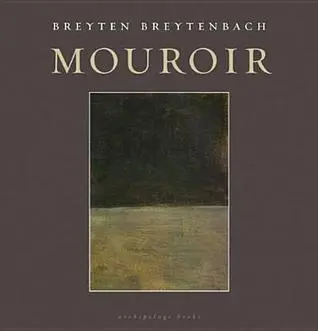
- Название:Mouroir
- Автор:
- Издательство:Archipelago Books
- Жанр:
- Год:2009
- ISBN:нет данных
- Рейтинг книги:3 / 5. Голосов: 1
-
Избранное:Добавить в избранное
- Отзывы:
-
Ваша оценка:
Mouroir: краткое содержание, описание и аннотация
Предлагаем к чтению аннотацию, описание, краткое содержание или предисловие (зависит от того, что написал сам автор книги «Mouroir»). Если вы не нашли необходимую информацию о книге — напишите в комментариях, мы постараемся отыскать её.
An outspoken human rights activist,
is a poet, novelist, memoirist, essayist, and visual artist. His paintings and drawings have been exhibited around the world. Born in South Africa, he immigrated to Paris in the late ’60s and became deeply involved in the anti-Apartheid movement. Breytenbach is the author of
, and
, among many others. He received the Alan Paton Award for
in 1994 and the prestigious Hertzog Prize for Poetry for
in 1999 and for
(
) in 2008.
Mouroir — читать онлайн бесплатно полную книгу (весь текст) целиком
Ниже представлен текст книги, разбитый по страницам. Система сохранения места последней прочитанной страницы, позволяет с удобством читать онлайн бесплатно книгу «Mouroir», без необходимости каждый раз заново искать на чём Вы остановились. Поставьте закладку, и сможете в любой момент перейти на страницу, на которой закончили чтение.
Интервал:
Закладка:
Then time came and went and Nefesj started remembering ever less about EN, of what EN had originally been like or even whether he-she had ever been at all and what was he-she before he-she became EN? Or wasn’t there ever a beginning? (Because Nefesj had forgotten the beginning and started believing that the beginning had forgotten him: indeed — do I do it or does it do an I .) Galgenvogel had him convinced that, if he wanted to see a return on his investment, he had to understand that EN had made him (Nefesj) after his likeness; only, Galgenvogel said, there should be no talk of investment and value — it’s commercial. Thus Galgenvogel made for Nefesj an image of EN which he could hang on the wall of the sanctuary lest he forget. And is this what EN looks like? the confused Nefesj asked himself. It is certainly not the way I remember him-her. But how can I remember if I have forgotten? And if I didn’t forget why would it be necessary for me to remember? For I do remember that I’d forgotten, yes, precisely that I had forgotten to remember. Still, that reproduction there looks so. . sick! It is so because it is impossible to create an image of what cannot be imagined, Galgenvogel pointed out. If a true image could be made it would not have been something of which an image could not be made and then it would not have been EN. The first principle, says Galgenvogel, is that EN has no face and that she-he lives inside you. Only in this fashion can you hope ever to become EN. And it is the unshakeable desire of creator and creature to be one . Doing doing dung.
Then time passed and Galgenvogel came towards Nefesj and said unto him, EN is dead, passed away. What’s that? What are you telling me now? the dumbfounded Nefesj wanted to know. What have you done with him-her? Not I, but you, was Galgenvogel’s rejoinder. You permitted her-him to die for she-he has passed away in you after a prolonged sad-sickness. If only she-he had lived in you and had not been turned into just a name without rhyme or reason, she-he would never have gone dead. Now I’m exactly where I was, Nefesj thought, except that in the meantime I must have been elsewhere and now I’m not where I was because something I did not know I had has gone waste in me and therefore without my realizing it.
And after some time Galgenvogel again approached Nefesj and said, listen, I’m a disenchanted thinker. I have a function in society (and you as society have the duty and the privilege to keep me): namely that it is my task to expose society’s myths to public contempt and to demonstrate that they are but figments of your imagination. Take as an example the god idea. It is said that it is dead. Now, if it’s dead it could never have existed because that would have been contradictory to the god idea. Similarly to the no-god idea. What you carry around inside you is a dead idea and a dead idea is no idea. Nor could you ever have ideated a god, for the being of divinity is precisely that it is the avatar which ideates you . The first principle is that there should be a mystery but it is only in relation to your consciousness that a mystery may exist and make sense. If you cannot think a god it signifies that there is no god which could have thought you and then you would not exist. But seeing that you do exist it may just be that there is indeed a god which conceptualized you. Even that you then passed away in the god and now no longer exist. You see, I’m a creative sceptic and it may therefore just happen that I end up thinking differently about the matter. Or the question. But I now know you could not have ideated a god which is capable of ideating you. It’s logical, not so? See here, I also exposed everything clearly in this book The First Principle and you may have it at a discount seventy pence only.
Thereafter time passed and without remembering a thing Nefesj went strolling along the river, hands clasped behind the back, in the vicinity of the station over the empty land where the annual carnival and buttocks bazaar take place. There were many distractions and all manner of booths where modern beep-beep contrivances could be admired and others where sausage sandwiches also were for sale. And there was to be seen amongst others a big striped tent with a huge poster proclaiming that one Prof. Galgenvogel daily at such-and-such a time allows to be seen ALL THE MIRACULOUS FABRICATIONS OF THE ANCIENT WORLD CONCRETIZED admission fee very reasonable. And since it was the time Nefesj bought a ticket and entered the tent and saw a man there with on a table before him vestments, robes, gowns, mitres, strings of beads, incensories, icons, fetishes, prayer wheels, books and all sorts of exotic tools and bric-à-brac. The man was reciting a historical review of the cycle of creation (or “where does the idea of commencement originate from and whence does it proceed if indeed it did originate”) and exhibited under glass behind him there were wondrous things indexed on cards identified in Hebrew and Mandarin and Sanskrit and Lap-language and Kitchendutch. One wonderful thing’s name (or title? description? serial number?) was EN.
Forefinger
A little knowledge is dangerous;
and how exhilarating to live dangerously!
D.E.Flashes of light and, prevalent, zones of darkness. A veritable book of darkness, the paler flip of pages being turned. He related of how they had crossed the border into C — — in the dark. (All the while as it were weaving among the words, weaverbirds, experiencing the obstacles, becoming enmeshed, woven into the fabric of sound and its cessation, limitations which are possibilities, hesitantly; lighting up the road to see the darkness.) They must have gone over the line illegally. At the least surreptitiously. On the other side of the barbed wire they stumbled by many people lying in the dark fully clothed in vestments which were as fluttering patches or wads of undarkness. Some of these old ones, he continued, were squatting by the footpath along which they had had to walk. He thought that they must be either drunk or very melancholy. True, some were only gurgling or expectorating. But many were humming. It sounded like humming. Crooning the sad songs in Spanish; more correctly Argentinian — he heard the word “Argentine” caught in the refrain. Soft wind from the nearby marshes rustled the clothes of the bearded old drunkards and their equally ancient female companions. Undigested flowers. Bone-bags spread on the mushy soil, in voluminous skirts and pantaloons. Also the colour of vomit.
The bird had grown accustomed to its cage; outside that captivity it was wing-blind — a state of freedom — its flesh sprung and useless. Thus his hand strangely vulnerable and bald as it perched above the board. Before it came down to coax one of the men into a position of defence or attack, temporarily questioning. As if every move were a murmured j’adoube . He was playing white. The forehead was white too.
They had walked on through the night until they came to a hotel. Nearby the hotel there must have been a beach with the constant lap-lapping of water too heavy with the weight of the moon by night and the glare of the sun by day to be still active. And in the several buildings constituting the hotel, he remembered, there was quite a mumbo of mirrors in the halls and down the corridors. He kept on preening, glancing at his vitreous self as he passed by them. Then it would take some time before the images faded from the surfaces. Something to do with the afterglow of fires on the retina. Wet ashes. He was wearing dark glasses and already his eyesight had grown weak. He noticed but always only in the glass, the reflection of an old man with completely white hair and similarly wearing black spectacles. He could see that this old man obviously disapproved of his narcissism, establishing a silence. Yet his behaviour was not self-loving — oh, he was quite vehement about that — but merely the total surprise at meeting his own or supposed likeness again in the light dressed up in a suit now clean-shaven except for the shades. He couldn’t be sure that the old fellow was his aged alter ego , a Doppelgänger preserved in the quicksilver of time. And so he vigorously shook his head denying himself whenever he noticed the old one’s reflection at his back. One has to pretend. One has to construct. One has to proceed. (Or complete.) One has to create an image of distance. At default what may pass for objectivity.
Читать дальшеИнтервал:
Закладка:
Похожие книги на «Mouroir»
Представляем Вашему вниманию похожие книги на «Mouroir» списком для выбора. Мы отобрали схожую по названию и смыслу литературу в надежде предоставить читателям больше вариантов отыскать новые, интересные, ещё непрочитанные произведения.










Обсуждение, отзывы о книге «Mouroir» и просто собственные мнения читателей. Оставьте ваши комментарии, напишите, что Вы думаете о произведении, его смысле или главных героях. Укажите что конкретно понравилось, а что нет, и почему Вы так считаете.