Breyten Breytenbach - Mouroir
Здесь есть возможность читать онлайн «Breyten Breytenbach - Mouroir» весь текст электронной книги совершенно бесплатно (целиком полную версию без сокращений). В некоторых случаях можно слушать аудио, скачать через торрент в формате fb2 и присутствует краткое содержание. Год выпуска: 2009, Издательство: Archipelago Books, Жанр: Современная проза, на английском языке. Описание произведения, (предисловие) а так же отзывы посетителей доступны на портале библиотеки ЛибКат.
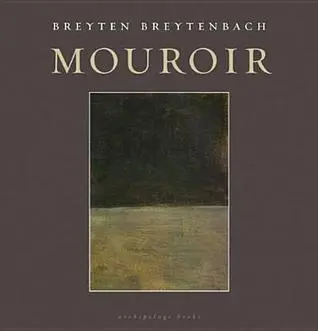
- Название:Mouroir
- Автор:
- Издательство:Archipelago Books
- Жанр:
- Год:2009
- ISBN:нет данных
- Рейтинг книги:3 / 5. Голосов: 1
-
Избранное:Добавить в избранное
- Отзывы:
-
Ваша оценка:
Mouroir: краткое содержание, описание и аннотация
Предлагаем к чтению аннотацию, описание, краткое содержание или предисловие (зависит от того, что написал сам автор книги «Mouroir»). Если вы не нашли необходимую информацию о книге — напишите в комментариях, мы постараемся отыскать её.
An outspoken human rights activist,
is a poet, novelist, memoirist, essayist, and visual artist. His paintings and drawings have been exhibited around the world. Born in South Africa, he immigrated to Paris in the late ’60s and became deeply involved in the anti-Apartheid movement. Breytenbach is the author of
, and
, among many others. He received the Alan Paton Award for
in 1994 and the prestigious Hertzog Prize for Poetry for
in 1999 and for
(
) in 2008.
Mouroir — читать онлайн бесплатно полную книгу (весь текст) целиком
Ниже представлен текст книги, разбитый по страницам. Система сохранения места последней прочитанной страницы, позволяет с удобством читать онлайн бесплатно книгу «Mouroir», без необходимости каждый раз заново искать на чём Вы остановились. Поставьте закладку, и сможете в любой момент перейти на страницу, на которой закончили чтение.
Интервал:
Закладка:
And Then
It is all really very simple, for it is as it is.
D.E.When it was still the modern epoch Nefesj decided, with a vague and nearly rancorous feeling of disaffection, to make a god for himself; through all the preceding centuries his predecessors had always favoured some or other deity; sometimes passed the latter on from one generation to the next with instructions and rites and restrictions, sometimes traded it in for a replacement, a fiercer conception, and it was worshipped or at least looked upon as supernatural or paranatural or all-natural — powerful in any event; because there were peaks of culmination and more superficial periods in the intensity of subjugation, also by turns the conceptualization as war god, irenic god, destiny, transmitted aphorism, philosophical axiom, metaphysical jump, or such. But now his historically conditioned immediate ancestors, and so of course he too, had already since quite some time gone without, and started feeling the lack, like a lost soul, it was a lacuna. Somewhere there had to be a principle after all. One should have something above and apart from Nefesj. Senseless sentence.
So he started consulting musty writings as well as diverse manuals and, allowing himself to be guided by a need becoming ever clearer, gradually set out gathering the components of which the necessity for a god would be one. From the nature of the search it had to become a thing like any idea taking on shape, but with characteristics ascribed to it which would suspend its essential thing-ness. Another prerequisite of form was that it had to be Nefesj-like: it’s a matter of counterpart and short circuit and comprehension. The god had to commence at Nefesj’s edge of understanding and contact: a language. Not that it had to do anything. First just to be. From being comes doing. Of itself, in due time. (As opposed to man where action precedes being.) And the more incomprehensible the doing, the more powerful it would be. You must incorporate the inexplicability functionally with the idea, in fact you have to create that which you don’t understand — otherwise there’s neither fun nor development and ultimately no power or exorcism. But the modern epoch was generously endowed with the necessary views to achieve the desired result — much was fabricated and thought out without one being able to foresee the termination, and all the sciences were shot through with emergent references to infinitude, x, unfixed premises, gaps, break-off points, non-elucidated compounds, aimless groping, and the indefinable or unfixable was an integrated formula. Around the not-know the know was illuminated. Without the not-knows there could be no small-know. Simultaneously the techniques were perfected to infinity: a silicon chip could contain a total recall system, computers pointed out their errors to the designers and reprogrammed them, theirs was the procreation of memory, energy sparked off energy without the intervention of mass, there were closed circuits more minute than minus which no instrument could identify or measure and yet with a macro-effect, there were hosts of angels on the needle point. For instance, there were objects which would simply emit beep-beep-beep signals unto eternity.
Nefesj made the god for himself on the absolutely patternless pattern of his mind and put the thing in a room of his house and started adoring it, that is to say — he went to sit in its presence and groped within himself for contact with it. Then time passed and Nefesj started feeling uncomfortable. Some small element, he felt, was missing in the communication. Where the gap should have been there was a hole. It was also as if his god — quite passive there on his-her pedestal, it’s true — was sucking from him the words and the thoughts living off the words. He saw clearly that it must be a dimension or a step in the dimension of the relationship between them. He was not sure either that his god didn’t have other adherents (after all, he-she talked with the language of mutism) and Nefesj was a jealous creator. He felt the need for an interpreter. And he went forth and let it be known that there existed a vacancy for such an expert.
Then time passed. With the passing of time a man made contact with Nefesj and introduced himself as Brother Galgenvogel. And he claimed that he, Brother Galgenvogel, was indeed a sort of mechanic or technician of religion, a calling which many may look upon as archaic but it is surprising how often his services were still (or again) called for in these modern times. Well, there you have it. He allowed Nefesj to look over the paraphernalia of his craft — charters pertaining to the ritual, regulations and orders, long capes and cowls, pulpit cloths, broad-brimmed hats, cords, collars, candlesticks, incense, little bells, rectories and Cadillacs, and also a manuscript which could render or retrieve the Word and its family — and explained that the utilization of accessories would be defined by the acolyte’s individual needs depending on the fee the latter would be willing to fork out. Nefesj didn’t appreciate the fact that without a by-your-leave he found himself downgraded within the space of a single paragraph from the position of creator to that of adherent, but he decided that Galgenvogel certainly should know what he is talking about (the first principle being that you must resign yourself to the reference field of the explainer if you want to see the inexplicable explained in the embodiment of an explanation) and thus he did not quibble.
The first principle, Brother Galgenvogel declaimed, is that your god should have a name which nobody must know about for she-he ought not to have a name. The god’s name is EN he then alleged, but you who are Nefesj as disciple may not know or mention this. We shall name her-him EN, he furthermore proposed, because then we do not call her-him a god and thus the fact of her-his god-being can be hidden. And if you don’t know that she-he is a god you cannot speak ill of her-him. You confirm her-his godliness by calling her-him EN because in so doing you bear witness to the fact that she-he has a secret name which you may not pronounce or take in the mouth. And I, I who am Brother Galgenvogel, Galgenvogel says, I shall be the go-between betwixt thee and EN. Address yourself to me and ask for mediation. I am the mediator.
Then time passed. After a while Galgenvogel proclaimed that the first principle is that I shall reveal to thee through an oracle that you may not enter in the presence of EN, for you may not look upon her-his face. Nefesj said well there’s a fine fuck-up for you then because it has no face, since actually it is only the inface of. . of. . a. . of EN. But seeing that you now reveal this to me through an oracle I shall accept it because I pay you for it and if I pay you it’s because you know what you’re talking about in such a way that I don’t know what you’re talking of. (Isn’t it ultimately the first principle?) It’s an ill bird that fouls its own nest. And Nefesj withdrew from EN but Galgenvogel called out and warned him to look out as EN had withdrawn himself from Nefesj.
With the passing of time it seemed to Nefesj that he had become unfaithful to EN. What is the use, he enquired, if I am not allowed in the presence of him-her whom I have created and that I therefore forget his-her face and that he-she thus becomes unknowable to me? Because the primal attribute of EN (we may not name the name) is her-his unknowableness, Galgenvogel said. (And isn’t it exactly what you wanted? he slyly whispered from behind his hand.) But since you, Nefesj, are weak, and vain and presumptuous (I beg of you: “him-he whom I have created!” Hah!), you will once again be allowed into the sanctum; yes, you must have a place where you can isolate yourself and experience the presence of EN, but EN will not be there since the glory is not intended for your eyes and if EN is not there it means that she-he is all over. Trust me; I know what I’m doing; I swear to you by the beard of the eunuch. It’s not I (Brother Galgenvogel) saying so but EN speaking through me. (Well well now, thinks Nefesj, it’s starting to make sense: if he-she is talking with the tongues of Galgenvogel I’m not paying for nothing after all.) And thou shalt be meek, Galgenvogel also admonished. Thou shalt lay down thy will and accept hers-his. It is the first principle. He thereupon admitted Nefesj to the enclosure where the creation had originally been kept and let him perform all manner of actions and there was nothing in the room.
Читать дальшеИнтервал:
Закладка:
Похожие книги на «Mouroir»
Представляем Вашему вниманию похожие книги на «Mouroir» списком для выбора. Мы отобрали схожую по названию и смыслу литературу в надежде предоставить читателям больше вариантов отыскать новые, интересные, ещё непрочитанные произведения.











Обсуждение, отзывы о книге «Mouroir» и просто собственные мнения читателей. Оставьте ваши комментарии, напишите, что Вы думаете о произведении, его смысле или главных героях. Укажите что конкретно понравилось, а что нет, и почему Вы так считаете.