Esmé Wang - The Border of Paradise
Здесь есть возможность читать онлайн «Esmé Wang - The Border of Paradise» весь текст электронной книги совершенно бесплатно (целиком полную версию без сокращений). В некоторых случаях можно слушать аудио, скачать через торрент в формате fb2 и присутствует краткое содержание. Год выпуска: 2016, Издательство: The Unnamed Press, Жанр: Современная проза, на английском языке. Описание произведения, (предисловие) а так же отзывы посетителей доступны на портале библиотеки ЛибКат.
- Название:The Border of Paradise
- Автор:
- Издательство:The Unnamed Press
- Жанр:
- Год:2016
- ISBN:нет данных
- Рейтинг книги:3 / 5. Голосов: 1
-
Избранное:Добавить в избранное
- Отзывы:
-
Ваша оценка:
The Border of Paradise: краткое содержание, описание и аннотация
Предлагаем к чтению аннотацию, описание, краткое содержание или предисловие (зависит от того, что написал сам автор книги «The Border of Paradise»). Если вы не нашли необходимую информацию о книге — напишите в комментариях, мы постараемся отыскать её.
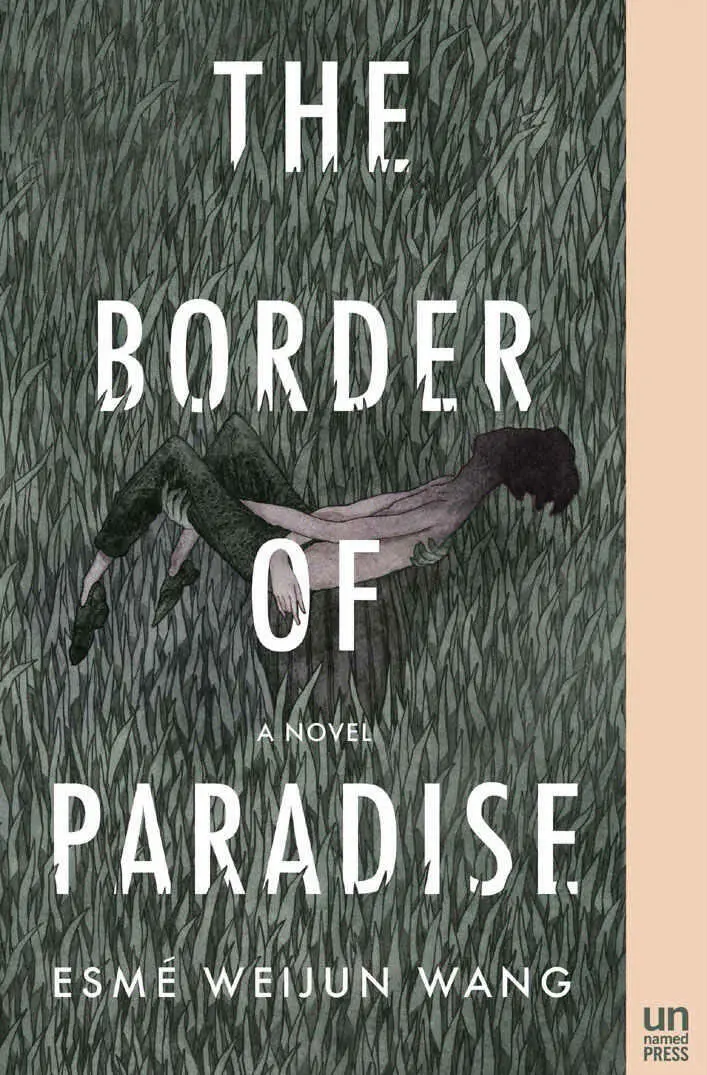
transports readers into the world of an iconoclastic midcentury family.
In booming postwar Brooklyn, the Nowak Piano Company is an American success story. There is just one problem: the Nowak’s only son, David. A handsome kid and shy like his mother, David struggles with neuroses. If not for his only friend, Marianne, David’s life would be intolerable. When David inherits the piano company at just 18 and Marianne breaks things off, David sells the company and travels around the world. In Taiwan, his life changes when he meets the daughter of a local madame — beautiful, sharp-tongued Daisy. Returning to the United States, the couple (and newborn son) buy an isolated country house in Northern California’s Polk Valley.
As David's mental health deteriorates, he has a brief affair with Marianne, producing a daughter. When Marianne appears at their doorstep, the couple's fateful decision to take the child as their own determines a tragic course of events for the entire family. Told from multiple perspectives,
culminates in heartrending fashion, as the young heirs to the Nowak fortune must confront their past and the tragic reality of their future.
The Border of Paradise — читать онлайн бесплатно полную книгу (весь текст) целиком
Ниже представлен текст книги, разбитый по страницам. Система сохранения места последней прочитанной страницы, позволяет с удобством читать онлайн бесплатно книгу «The Border of Paradise», без необходимости каждый раз заново искать на чём Вы остановились. Поставьте закладку, и сможете в любой момент перейти на страницу, на которой закончили чтение.
Интервал:
Закладка:
“She blamed you for having sex with David.”
“No. I don’t think that was it. It seemed that way in the beginning, but she never said a harsh word to me. And you know about the ashes. The ones in the garden. A week later, I called to try and see if there was any way she could be convinced about having William come back. I didn’t want to let them go, but the line was disconnected. I tried to find them through the operator, and their number was unlisted — if they still had a line. That was the end.”
Marty says, “You should have gone out to the house back then, if you really wanted to see them.”
“He was supposed to be dead.”
“Maybe. But if you cared about William so much… Or did you doubt the wife?”
“I cared. Did I doubt her? I had the ashes. Bone fragments. Why would I doubt that? I cried for months.”
“You should call Rob.”
“This is going to sound stupid,” I say, having smoked my cigarette dead, “but I’m afraid to call Rob.”
Marty sighs.
What I want to say is, David loved me, and then, What power that word has over us pathetic mortals. I love Gillian, and where will that get us? Marty stubs his cigarette on the arm of the chair, adding to a pointillist array of ash.

Gillian is still sleeping when the phone rings; I dash to answer, afraid that she will wake.
“Where are you?” Rob says. “These fucking articles are piling up. You said you’d be here at ten. It’s eleven fifteen.”
“I said I was—”
“No matter what is or is not going on between us, Marianne, I expect you to be professional. We are going to press. Or I really will have to find someone else, which is not going to make me very happy with you. In fact, it may very well cause me to fire you.” His threat may be real, or it might not be. Either way, there is Nowak money and there will always be Nowak money. We could live off blood money until we die.
I imagine Gillian on the sofa and smiling in her sleep, her hair the same soft shade as mine.
“I have to go,” I say.
“You’re not going to have a job the moment you hang up the line,” he says.
I hang up.
I had a daydream about the bus, which I took to work in the mornings, and which dropped me off downtown near a sandwich shop that I frequented for coffee. The fantasy always involved me facing the back, where the doors opened, and I would be sitting, alert. I would stop and some maternal inclination would cause me to turn; I would then see a slender girl of about twelve stepping across the threshold, perhaps holding a backpack casually over one shoulder.
Even though what she wore in the fantasy varied (I was never concerned with this detail), she would always take the farthest seat in back so that I’d have to turn to watch her. Her knees would be a soft pink. She would be tall, like David, and charmingly gawky.
I’d know her instantly. I’d say, Gillian? And I might even repeat myself, because she’d be absorbed in thought, and ask again, Gillian?
She’d look up from her hands — she always looked at her hands, which at first I thought was an attentive piano student’s habit, but which I now believe is a reflex born from always observing her father’s — and she’d stare at me.
Mommy, she’d say, with complete recognition and a smile.
The fantasy ended there. There was no better climax and no need for resolution. I could and did replay this fantasy over and over. The fantasy was sometimes a way to try to get to sleep, a self-comforting tactic, and sometimes a way that my mind would torture me and keep me awake like a record skipping, skipping. It was one volume in a small library. Perhaps I never believed Daisy when she said that Gillian was dead. Perhaps I felt so much guilt for agreeing to give her up that I forced myself to pay the consequences.
What I didn’t realize until Gillian actually showed up at my home was that I’d had no fantasies about what would happen if Gillian were actually in my life. All of them were about the reunion and the surprise and the happy shock. What would I do with real-life Gillian? I hadn’t thought of that. What did young girls like? What did adolescent girls like? Perhaps it didn’t matter. The thing about a true-blue fantasy is that it’s based on the assumption that it will never come to pass.
“I’ve lost my job,” I tell her. She’s making a tuna casserole for dinner. I’d told her that we could go out and eat anything she wanted, but she wanted this, so she’s boiling macaroni. The touchy subjects of court, of police, of the way Nowaks live — all of it has been set aside for now.
“So you have no job. No work. That’s great,” she says. “Now you can spend all your time with me.”
“Yes.” I kiss her on the head. “That’s exactly what I wanted.”
“How will you have money, if you have no job?”
“We…” There is no way to explain right now where our money comes from. Finally I say, “We have money saved up.”
“What will Marty think?”
“Oh, he’ll be glad. He’ll be glad that I can spend time with him, and glad that I can spend time with you.”
“Will he?”
“Of course.”
“He won’t be jealous of me?”
“What? No, he won’t be jealous. He’ll be glad that you’re staying with us.”
She stirs the noodles with a wooden spoon. “Do you love him? I need pot holders.” She finds them, and she finds a colander. She drains the pasta over the sink, and a cloud of steam rises and consumes her, making her look like an angel, fogging her glasses. When she puts the pot back on the stove, she says, wiping her lenses with her finger, “Gosh, I can’t see a thing. Sometimes I can’t stand wearing these, you know? Anyway. I was thinking about William. Do you remember him?”
“Of course.”
A long pause. “I don’t think I was very good to him.”
“Sometimes it’s hard for siblings to get along. That’s normal.”
“I made him miserable. But I couldn’t help it. It was like something was wrong with me. I know something was wrong with me. I don’t know what siblings are like, really, except for us, but now I know I really tortured him. But you’re kind to Marty, I can tell. You take care of him, and you let him be happy, which is something that I wasn’t any good at.”
“I’m sure your brother loved you.”
“That’s not the point. You understand, because you’re a good tongyangxi. I can tell.” She gives me a sidelong glance. When I don’t reply, she continues: “Will we still go to court, Mrs. Kucharski?”
“I don’t know. I want you to be comfortable. I don’t want to make you do anything you wouldn’t want to do. But what was it you said? About a tongyang —?” I ask, and she stares at me like she’s trying to do complex multiplication in her head. She seems to want to say something, but doesn’t. Instead, she turns to the noodles.
When it’s time for dinner I knock on Marty’s door. He opens it and he stands there in jeans and a white T-shirt under a black sweater with a hole at the breast, his face vacant the way it is when he’s been staring at his papers for too long under a too-dim light.
I say, “Gillian made tuna casserole.”
“It smells good,” he says. He lingers at the door.
“Well, come eat then. I’ve got plates out for everyone.”
He says, “I’m going to, uh, meet Leo.”
“Right now?”
“Clear my head.” I realize he’s got loafers on. “I’ll eat some if there’s any left when I get back.”
Читать дальшеИнтервал:
Закладка:
Похожие книги на «The Border of Paradise»
Представляем Вашему вниманию похожие книги на «The Border of Paradise» списком для выбора. Мы отобрали схожую по названию и смыслу литературу в надежде предоставить читателям больше вариантов отыскать новые, интересные, ещё непрочитанные произведения.







Обсуждение, отзывы о книге «The Border of Paradise» и просто собственные мнения читателей. Оставьте ваши комментарии, напишите, что Вы думаете о произведении, его смысле или главных героях. Укажите что конкретно понравилось, а что нет, и почему Вы так считаете.