Esmé Wang - The Border of Paradise
Здесь есть возможность читать онлайн «Esmé Wang - The Border of Paradise» весь текст электронной книги совершенно бесплатно (целиком полную версию без сокращений). В некоторых случаях можно слушать аудио, скачать через торрент в формате fb2 и присутствует краткое содержание. Год выпуска: 2016, Издательство: The Unnamed Press, Жанр: Современная проза, на английском языке. Описание произведения, (предисловие) а так же отзывы посетителей доступны на портале библиотеки ЛибКат.
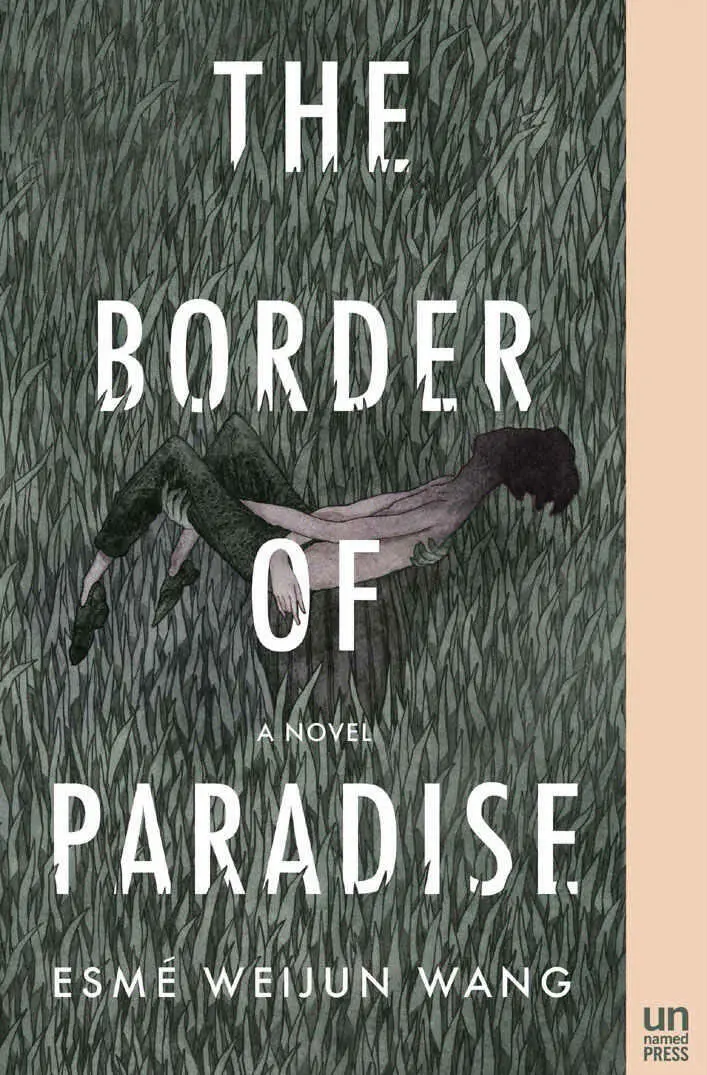
- Название:The Border of Paradise
- Автор:
- Издательство:The Unnamed Press
- Жанр:
- Год:2016
- ISBN:нет данных
- Рейтинг книги:3 / 5. Голосов: 1
-
Избранное:Добавить в избранное
- Отзывы:
-
Ваша оценка:
The Border of Paradise: краткое содержание, описание и аннотация
Предлагаем к чтению аннотацию, описание, краткое содержание или предисловие (зависит от того, что написал сам автор книги «The Border of Paradise»). Если вы не нашли необходимую информацию о книге — напишите в комментариях, мы постараемся отыскать её.
transports readers into the world of an iconoclastic midcentury family.
In booming postwar Brooklyn, the Nowak Piano Company is an American success story. There is just one problem: the Nowak’s only son, David. A handsome kid and shy like his mother, David struggles with neuroses. If not for his only friend, Marianne, David’s life would be intolerable. When David inherits the piano company at just 18 and Marianne breaks things off, David sells the company and travels around the world. In Taiwan, his life changes when he meets the daughter of a local madame — beautiful, sharp-tongued Daisy. Returning to the United States, the couple (and newborn son) buy an isolated country house in Northern California’s Polk Valley.
As David's mental health deteriorates, he has a brief affair with Marianne, producing a daughter. When Marianne appears at their doorstep, the couple's fateful decision to take the child as their own determines a tragic course of events for the entire family. Told from multiple perspectives,
culminates in heartrending fashion, as the young heirs to the Nowak fortune must confront their past and the tragic reality of their future.
The Border of Paradise — читать онлайн бесплатно полную книгу (весь текст) целиком
Ниже представлен текст книги, разбитый по страницам. Система сохранения места последней прочитанной страницы, позволяет с удобством читать онлайн бесплатно книгу «The Border of Paradise», без необходимости каждый раз заново искать на чём Вы остановились. Поставьте закладку, и сможете в любой момент перейти на страницу, на которой закончили чтение.
Интервал:
Закладка:
I said, “You can have my bed. I’ll sleep on the couch.”
“I want the couch,” she said. She paused. “Please.”
When I returned with some linens and a quilt I saw that she was lying on the sofa on her side, reading a notebook with her head propped up on one hand, and Marty had gone into his room, which was one relief.
“Do you keep a journal?” I asked.
“No.” She closed the notebook. “It’s not mine.”
I tucked her in. Had I dreamed of this? Had I imagined the movement of my hands with a blanket gathered in them, lifting the cloth over my daughter’s body to say good night? As I wrapped the blanket around her, she said, sleepily, “Why are you crying?” She put the notebook on the TV tray and my heart bled full into my chest. Could I kiss her forehead? I dared not. Instead I sat on the floor, next to the sofa, and though I hadn’t prayed in years, I did then.

In my diary on that night, I wrote: She came home. I waited for something more to come to me.
At six thirty Marty comes into my bedroom with coffee. He hands me a mug and says, “We should do something fun today. Bring that crazy kid of yours. We could take her to a diner. Visit a museum. Chuck pennies from a balcony at strangers.”
“Mmm.”
“What?”
“Nothing. Yes, let’s do something — something fun.”
Marty says nothing. How I hate this adult habit of his. I think it may come from years of psychoanalysis. Conversion therapy. He, of all people, ought to understand perverse desires.
“It’s hard,” I say.
“What’s hard.”
“She’s here. It’s a dream come true in the most literal sense.”
“But…”
“But all the old things come up…”
He makes a noise between a throat clearing and a snuffle. “Are you talking about what I think you’re talking about?”
“Let’s forget I said anything.”
“No,” he says, “really. Just say it. Go ahead.”
I’d spent the morning thinking of David. I didn’t want to, but he was as present as our daughter in the Orlich home.
I said, “I’m not angry with him. I mourned Gillian — I was devastated about Gillian — but he did love me, I’m sure of it. We did love each other. There was no way we could be together, but he loved me. Isn’t that worth something?”
“Like what?” Marty asked, and I can tell from his tone that I’ve made an error in judgment, but he has begun to respond and it is too late. “It couldn’t have been any clearer to him that it was a bad idea. He was married, for God’s sake. You were going to become a nun. A nun . He let his prick get the better of him, and then he had the stones to go ahead and say, ‘Okay, I’m rich, and you live in a garret, let me take your baby. But don’t worry, I’ll let you see her once a week, and if you’re lucky, maybe you can hug her on her fucking birthday.’ Annie, I don’t call that love. I call it bullshit.”
“Let’s talk about something else.”
His voice softens. “Loving your daughter, that I understand.”
“She’ll be awake soon.” I press my fingers to my throat; I don’t want to cry again. I am so tired of my own pain.
He pats my knee and squeezes it. “All will be well,” he says. So the saint said.
She is on her knees, leaning over the back of the couch with her hands parting the gauze curtains at not much of a view. The bottoms of her feet are made of rock, calluses on top of calluses. Even the lines that carve through are calluses themselves. Canyons. Marty is gone; he takes walks to clear his head before coming home to write, or he goes to see Leo — his lover, the printer.
“Good morning,” I say.
Her head turns. “Good morning,” she says, serious.
I boil water for oatmeal while I call in sick at the office.
“Eleven new articles came in over the weekend,” says Rob. “We go to press this week.”
“I’m really sick,” I tell him.
“You sound fine. Healthy as a horse, in fact.”
“I might feel better by Wednesday.”
He sighs. “I expect to see you by ten. Today .”
When I hang up, Gillian is in the kitchen doorway. “Who were you talking to?”
“My boss. Everything’s fine. I’m not going to work today,” I say, and smile. “I’m going to spend the day with you.”
“How can work be a place?”
“Work… is a job. My job.”
“A job is where you do things to make money.”
“Yes.”
“My parents didn’t have jobs,” she says. She looks out the window for a moment, as if they’re on the other side of the glass. “But we had money anyway.”
The water boils. In go the dry oats, cascading like rain. “Your parents were in an unusual situation. But your friends must have parents with jobs.”
“Yes.”
“You’ll have to tell me about them.”
“Sure.” And then, “We’re going to have a nice life together.”
This last line of hers reverberates, and I don’t know how to answer.
I ask, “How do you like your oatmeal?”
“Is that what you’re making?” She moves to stand behind me. I feel her height, her shoulders inches above mine. “Oh, owsianka .”
“Yep,” I say, my eyes stinging, “ owsianka .”
“This is something my dad ate.”
“Oh?”
“Yeah. Ma put a fried egg in hers, and so did William. I did whatever my father did, so I had fruit and brown sugar in mine.” She wanders to the refrigerator and opens it, expelling a chill into the already cold kitchen. She leaves the door open for a long time, examining its contents.
“Where’s your husband?” she asks, her head still in the fridge. “Did he leave?”
I say, “I don’t have one.”
“But there’s the man who lives here.” She closes the fridge.
“Marty? He’s not my husband. He’s my brother. He lives with me because it’s easier.”
“Easier than what?”
Easier, I think, and spoon the oatmeal into two white bowls. “We like living with each other.”
She goes quiet. I serve her al dente oatmeal with berries and whipped cream, and she eats without speaking, staring into the center of the bowl until it’s empty. Her movements are quick, intense, as if her gears and springs promise to erupt into irreparable chaos.
“What are you thinking about?” I ask.
“I never realized that I look so much like you,” she says, but leaves it there. So I ask her what she’d like to see.
“I’ve seen you,” she says, “which is all I really came for.”
“What about the state capitol?”
“What?”
“The government building.”
She frowns. “It wasn’t in the atlas,” she says, as if that explains something.
I sift through my old clothes for something suitable, and then she emerges from the washroom in a dress that has long since ceased to be flattering on the ever-decreasing flesh of my body. I see that she doesn’t fill out the bust, but the waist sits well, and what’s knee-length on me hits her thigh, showing off her lean, long legs.
“It looks nice,” I say.
She reaches her arms out on either side of her like wings, causing the spare fabric at the bodice to billow and pucker. She looks at her hands and down at her legs, and shrugs.
“I don’t like to think about how I look,” she says. “But the dress is nice. It smells like you.” She lifts an arm to her nose.
Читать дальшеИнтервал:
Закладка:
Похожие книги на «The Border of Paradise»
Представляем Вашему вниманию похожие книги на «The Border of Paradise» списком для выбора. Мы отобрали схожую по названию и смыслу литературу в надежде предоставить читателям больше вариантов отыскать новые, интересные, ещё непрочитанные произведения.










Обсуждение, отзывы о книге «The Border of Paradise» и просто собственные мнения читателей. Оставьте ваши комментарии, напишите, что Вы думаете о произведении, его смысле или главных героях. Укажите что конкретно понравилось, а что нет, и почему Вы так считаете.