Esmé Wang - The Border of Paradise
Здесь есть возможность читать онлайн «Esmé Wang - The Border of Paradise» весь текст электронной книги совершенно бесплатно (целиком полную версию без сокращений). В некоторых случаях можно слушать аудио, скачать через торрент в формате fb2 и присутствует краткое содержание. Год выпуска: 2016, Издательство: The Unnamed Press, Жанр: Современная проза, на английском языке. Описание произведения, (предисловие) а так же отзывы посетителей доступны на портале библиотеки ЛибКат.
- Название:The Border of Paradise
- Автор:
- Издательство:The Unnamed Press
- Жанр:
- Год:2016
- ISBN:нет данных
- Рейтинг книги:3 / 5. Голосов: 1
-
Избранное:Добавить в избранное
- Отзывы:
-
Ваша оценка:
The Border of Paradise: краткое содержание, описание и аннотация
Предлагаем к чтению аннотацию, описание, краткое содержание или предисловие (зависит от того, что написал сам автор книги «The Border of Paradise»). Если вы не нашли необходимую информацию о книге — напишите в комментариях, мы постараемся отыскать её.
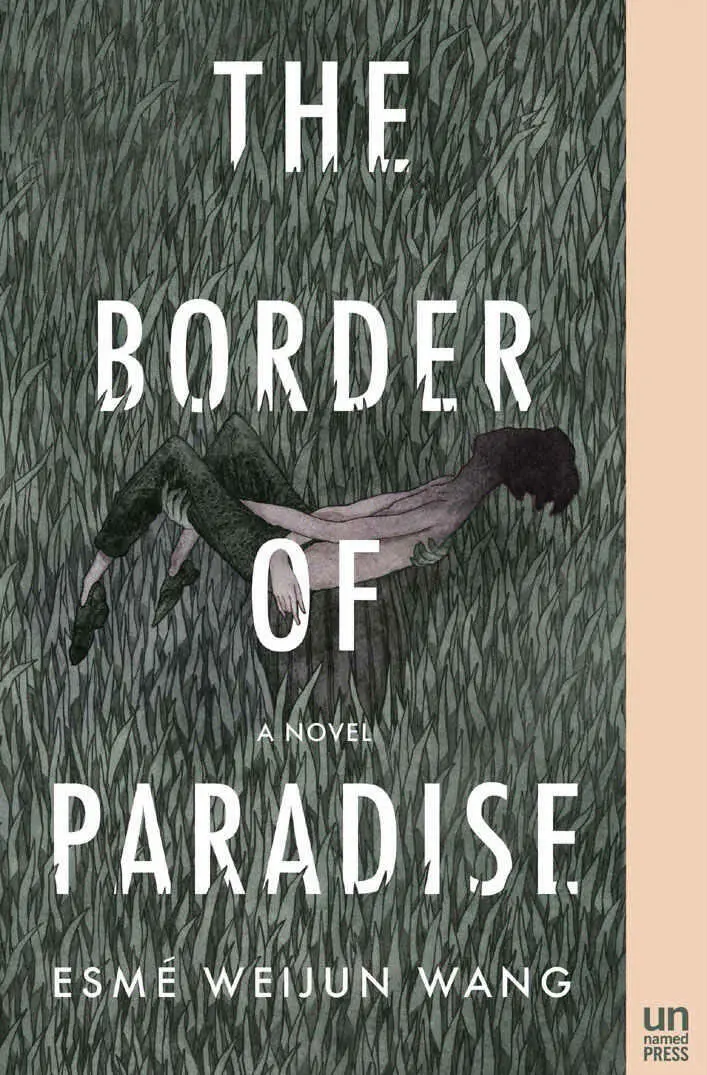
transports readers into the world of an iconoclastic midcentury family.
In booming postwar Brooklyn, the Nowak Piano Company is an American success story. There is just one problem: the Nowak’s only son, David. A handsome kid and shy like his mother, David struggles with neuroses. If not for his only friend, Marianne, David’s life would be intolerable. When David inherits the piano company at just 18 and Marianne breaks things off, David sells the company and travels around the world. In Taiwan, his life changes when he meets the daughter of a local madame — beautiful, sharp-tongued Daisy. Returning to the United States, the couple (and newborn son) buy an isolated country house in Northern California’s Polk Valley.
As David's mental health deteriorates, he has a brief affair with Marianne, producing a daughter. When Marianne appears at their doorstep, the couple's fateful decision to take the child as their own determines a tragic course of events for the entire family. Told from multiple perspectives,
culminates in heartrending fashion, as the young heirs to the Nowak fortune must confront their past and the tragic reality of their future.
The Border of Paradise — читать онлайн бесплатно полную книгу (весь текст) целиком
Ниже представлен текст книги, разбитый по страницам. Система сохранения места последней прочитанной страницы, позволяет с удобством читать онлайн бесплатно книгу «The Border of Paradise», без необходимости каждый раз заново искать на чём Вы остановились. Поставьте закладку, и сможете в любой момент перейти на страницу, на которой закончили чтение.
Интервал:
Закладка:
A tin of ashes arrived in the mail a few weeks later. I scattered them in my garden, amid the rosebushes, and the piano lessons — Mrs. Kucharski — and my life ended then.

When I arrived home from work and saw her for the first time in four years, Gillian the ghost, fifteen years old, was sitting on my sofa with a TV tray and a glass of milk in front of her, looking grown, looking much the same as she did when I last saw her with her small hand in David’s as they left this Sacramento home. Her hair was hacked short. Her gold glasses were slightly crooked, and she squinted despite their presence on her face. She looked like a beautiful farm girl — healthy and nourished, with lean and muscled arms and shoulders — but her floral, no doubt homemade, dress hugged too tightly at the armpits, and though its hem was let out and ragged, the skirt still rode up her thighs.
“Mrs. Kucharski,” she said.
“Gillian.”
“My mother said you were dead, but I came to your house anyway. I didn’t know where else to go.”
I reached for her. Without being fully aware of doing it, I touched her hair, her face, her hands. Her whole body was cold like marble; she didn’t move. I worked to stop crying as I sat next to her with Marty watching from the kitchen, judging the girl who was my daughter and the daughter who was a Nowak all over her face, a Nowak in the slight hunch of her shoulders and the gold of her hair. It was a miracle; I couldn’t dissect a miracle.
But I asked her if something happened. I asked her how she got here. She shook her head. “I walked to town,” she said, “and asked someone how I could get to Sacramento. I took a train, which was… I’d never done that before. And I remembered how to get to your house, sort of. One-nine-eight-three Samson Drive.”
“You’re here.”
She wasn’t dead. I had to remind myself of this. I was not being pursued by an angel, but by my flesh-and-blood daughter, who had come to find me.
“I feel like I’m dreaming. I’m so absolutely tired,” she said.
“Are you hungry?”
Gillian nodded. Her hands crossed, one over the other, in her lap, one scratching its partner. Not hard enough for me to tell her to stop, but hard enough to make pink lines on the skin. I still wanted to touch her, to put my hands on her, to feel her solid body under my fingers before she vanished. My mouth watered as my eyes leaked; I was tired of crying, had wept too much over the years, but this made no difference to my body, which made the tears as fast as I could shed them.
“Marty,” I said, “is there anything? Leftovers? Sandwich fixings?”
“I think there’s meat loaf,” Marty said.
“Please.”
He went to the kitchen. I said, “Where is your mother? Where’s William?”
She looked to the side. “She’s dead,” she said. “Ma and William died in the Buick on the way to town. I wasn’t with them.”
“I thought it was you and your father who had died.” A proliferation of alleged car accidents, one crashing after the other. But she herself was not dead. “Are you sure?” I asked, and then corrected myself. “No — I’m sorry. Of course you’re sure. What about your father? Where is he?”
“He’s dead,” she said simply.
I asked, “How?”
“He stabbed himself. Didn’t you know? I don’t know why you’d think I was dead.” She turned her head. “What’s that sound?”
“The microwave. It’s heating your meat loaf.”
“Microwave. We don’t have one of those.”
“Not everyone does.”
She looked around the room. I tried to see it through her eyes: green walls, botanical illustrations in frames, refurbished furniture bought on resale. We remain frugal with David’s money. Blood money, Marty calls it with hatred, and yet he has no job and lives off it all the same, having been dishonorably discharged from the navy for years now.
“Everyone is dead,” she said.
“What?”
“Ma and William were in the Buick and a car hit them. I’m all alone.” She stared at me. Her eyes were, I realized, the color of mine. They’d changed over the years from hazel to a brighter shade of green, and they gleamed as she said, “I came here, Mrs. Kucharski, because I didn’t know where else to go. You’re the only other person I know.”
Everyone is dead. David killed himself. I’d wondered for all those empty years if it was going to happen, his self-obliteration, and there it was. He was dead, had stabbed himself. I tried to imagine it. As a teenager his demons had repelled me, but with age came a deeper understanding of demons. Always there had been that potential death. Here it was. Everyone was dead but Gillian. In the end, Gillian was left behind for me. The occasion: an extraordinary one, and terrifying if true; I had wanted her returned to me, and perhaps it was my endless desire that tangled up truth and fiction, the succession of accidents that were simultaneously true and false. I was her old piano teacher, and she’d had to come a long way to reach me. She hadn’t called. She hadn’t even written a letter. Surely there would be someone else who could help an orphaned child — someone who saw her regularly, perhaps a schoolmate’s parent or her own teacher. This was a miracle, I thought again. She is here because of a miracle. And then I wondered if this was what a miracle felt like — to be commanded by an archangel and to encounter my phantom daughter being the same thing, all things considered — a miracle thus inducing the swollen hot lump between my ribs and forcing electricity along my limbs.
Marty brought the meat loaf into the room and put it on her tray next to the milk. Gillian picked up the fork and cut herself a piece, and then she began to eat ravenously, gulping it down. Once the plate was clean of meat, she scraped the sheen of ketchup onto her fork and sucked it off the tines, and the entire time I didn’t look at Marty and I knew that Marty was looking at us and trying to see the resemblance. She had my hair. It was the color of David’s, too, but with a wave to it like mine.
“It was good?” I asked.
“Yes. Thank you.” She hesitated.
“Do you want more?”
She nodded, not shyly.
“I’m tired,” she said after a moment. “I’m really very tired.”
“You must be. You came from Polk Valley?”
“I came a long way. Rainstorms on the land for a good while, too. Where’s your bathroom?”
I told her. Gillian went, leaving her canvas tote. The living room suddenly felt devoid of life. Out of curiosity, I lifted the drooping tote and peered inside. A Bible, a change of clothes, a drawstring coin purse, a notebook. An enormous knife. I stared at the clean, heavy blade and its worn handle, not comprehending the implications of this weapon, because what could it be but a weapon and a danger to myself and to Marty. And yet the fact that she had a weapon compounded my guilt for snooping; I stared at it, not knowing what to do, and Gillian returned as I put the tote and its knife back on the sofa. She wiped her hands on her dress. “You have a nice bathroom,” she said. “I like the green tiles and the bottles.” She sat down again, touching the glass of milk. “We don’t drink milk at home,” she said.
“Would you like something else?”
“Yes. Water.”
I knew that Marty wanted me to pry. Why was she really here, and how long did she intend to stay? Someone must miss her back home. Her school would be inquiring. I did not want to tell Marty about the knife, which would remain a secret; if he knew about the knife, he would never let her stay. He was suspicious of her, but I couldn’t afford to be suspicious of her. I had been the one to let her go, after all, and I was her mother; it was my job to protect her from everything, and if my brother was one of those things, so be it. So be it, I thought, as Marty came back with the glass of water and Gillian swallowed it down. She wiped her mouth with the back of her hand, and I saw for the first time moon-shaped marks on her palms. Her eyes kept darting to Marty as she ate the second piece of meat loaf, a bit more slowly this time, and then she said, “I’d like to sleep now.”
Читать дальшеИнтервал:
Закладка:
Похожие книги на «The Border of Paradise»
Представляем Вашему вниманию похожие книги на «The Border of Paradise» списком для выбора. Мы отобрали схожую по названию и смыслу литературу в надежде предоставить читателям больше вариантов отыскать новые, интересные, ещё непрочитанные произведения.








Обсуждение, отзывы о книге «The Border of Paradise» и просто собственные мнения читателей. Оставьте ваши комментарии, напишите, что Вы думаете о произведении, его смысле или главных героях. Укажите что конкретно понравилось, а что нет, и почему Вы так считаете.