Esmé Wang - The Border of Paradise
Здесь есть возможность читать онлайн «Esmé Wang - The Border of Paradise» весь текст электронной книги совершенно бесплатно (целиком полную версию без сокращений). В некоторых случаях можно слушать аудио, скачать через торрент в формате fb2 и присутствует краткое содержание. Год выпуска: 2016, Издательство: The Unnamed Press, Жанр: Современная проза, на английском языке. Описание произведения, (предисловие) а так же отзывы посетителей доступны на портале библиотеки ЛибКат.
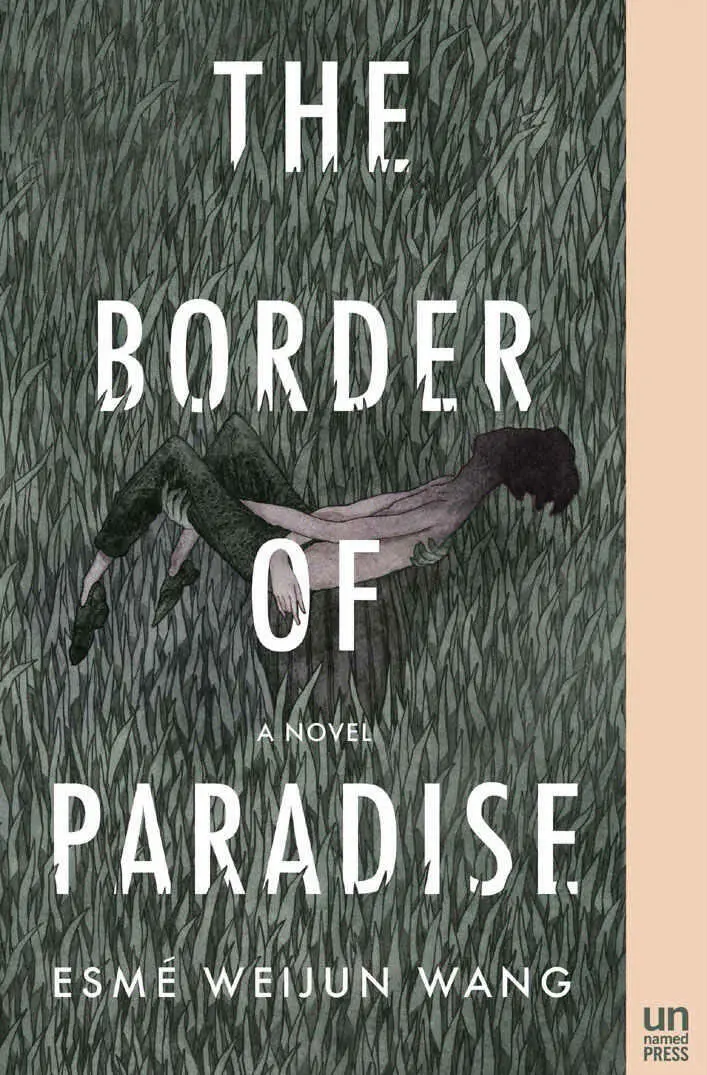
- Название:The Border of Paradise
- Автор:
- Издательство:The Unnamed Press
- Жанр:
- Год:2016
- ISBN:нет данных
- Рейтинг книги:3 / 5. Голосов: 1
-
Избранное:Добавить в избранное
- Отзывы:
-
Ваша оценка:
The Border of Paradise: краткое содержание, описание и аннотация
Предлагаем к чтению аннотацию, описание, краткое содержание или предисловие (зависит от того, что написал сам автор книги «The Border of Paradise»). Если вы не нашли необходимую информацию о книге — напишите в комментариях, мы постараемся отыскать её.
transports readers into the world of an iconoclastic midcentury family.
In booming postwar Brooklyn, the Nowak Piano Company is an American success story. There is just one problem: the Nowak’s only son, David. A handsome kid and shy like his mother, David struggles with neuroses. If not for his only friend, Marianne, David’s life would be intolerable. When David inherits the piano company at just 18 and Marianne breaks things off, David sells the company and travels around the world. In Taiwan, his life changes when he meets the daughter of a local madame — beautiful, sharp-tongued Daisy. Returning to the United States, the couple (and newborn son) buy an isolated country house in Northern California’s Polk Valley.
As David's mental health deteriorates, he has a brief affair with Marianne, producing a daughter. When Marianne appears at their doorstep, the couple's fateful decision to take the child as their own determines a tragic course of events for the entire family. Told from multiple perspectives,
culminates in heartrending fashion, as the young heirs to the Nowak fortune must confront their past and the tragic reality of their future.
The Border of Paradise — читать онлайн бесплатно полную книгу (весь текст) целиком
Ниже представлен текст книги, разбитый по страницам. Система сохранения места последней прочитанной страницы, позволяет с удобством читать онлайн бесплатно книгу «The Border of Paradise», без необходимости каждый раз заново искать на чём Вы остановились. Поставьте закладку, и сможете в любой момент перейти на страницу, на которой закончили чтение.
Интервал:
Закладка:
I find a purse for her. Gillian touches the thin mahogany leather, running her long and crooked fingers across the crackling edges. “This is nice, too. Am I supposed to put something in it?”
“If you want.”
“Do we really have to go?” she asks.
“To the capitol?”
“I don’t want to go.”
“All right. We don’t have to go.”
“You’ll still let me live with you, won’t you?”
“Of course!” What a relief, to be asked something that I can answer with certainty. “I want you to more than anything.”
She says, “I’m glad. I wanted you to say yes. I knew you would — you always liked me. I was a good student.”
“All we have to do,” I say, more to myself than to Gillian, “is go through certain things. It will work out, though, all of the legal things. We’ll go to court. Look,” I add soothingly, alarmed by the suddenly animal look on her face, “it will be all right.”
“Court?” Her mouth twitches, eyes big. “Why are you talking about a court? Just let me live with you. You don’t have to tell anyone that I’m here.”
“Oh, it’s more complicated than that. When I get you a doctor, they’ll need to know that I’m your legal guardian — when you go to school here, for example—”
“I don’t need a doctor. I have never needed a doctor. And why do I need to go to school? I learned everything I need to know from my father.”
“But,” I say, trying to surmount this revelation, “if anything should happen to you, the police would need to know that I’m taking care of you.”
Her face spasms at the sound of the word police, and when I try to put my arms around her she jerks away, slapping me before skin touches skin. So this is how it goes, my own flesh and blood hell-bent on rejection. My skin burns where she’s struck me.
Next there is a key in the lock, and Marty enters. I pray that my face gives away nothing. He touches his left ear, the way he does when the air has turned them numb, and then he takes both ears with his hands, rubbing them absently. “Everything all right?” he asks. Leo is not with him.
Gillian says, pointing, “It’s because of him, isn’t it? He doesn’t want me to stay!”
“What’s because of me?”
“She’s never been to a doctor,” I say, not knowing what I mean by it, but needing to state it as a fact aloud. “She’s never been to school, Marty.” And I think again of the knife that I will not mention, which looms now in my mind as I make the decision, again, to not mention it. For a girl who has never been to school, who has never been to a doctor, a knife can mean so many things, and I presume the knife is safety for her. I tell myself that the knife is for self-defense and nothing else.
“You don’t understand.” Abruptly she stands. “That’s not my life. I don’t do those things. No one can make us do those things. That’s why we don’t go out…We Nowaks, we don’t do those things. We’re not like other people…”

After a bout of wild sobs she passes out on the sofa, a lump beneath a quilt. I go to the bathroom, open the medicine cabinet, and down a handful of Valium while refusing to look at my face in the mirror. I go into Marty’s room and shut the door. His room is always at least seven degrees warmer than the rest of the house — he’s always cold, and cranks his space heater to maximum year-round. His room is also small, and crowded with things collected over years, most of which allegedly have sentimental value to him, but the importance of which he never bothers to explain when I ask. I sit on his rickety bed. He sinks into the easy chair.
“God. It’s like you dropped your baby off at the freak show, she’s raised by the mongoloids, and then…” A cough. “Sorry, sorry. I know I’m not being much help. Shit like this, I don’t know what to do with.”
“Shit like what?”
“Oh, I don’t know! Life’s various complications. What are you going to do with her?”
“What do you mean, what am I going to do with her? She’s my child .”
“She’s brainwashed.”
“It sounds so terrible.”
“What else did she say to you before I got home?”
“I don’t know. Things about not going to the doctor. Not going to school. I already told you.” Panic rises from the soft place between my ribs, but I push it down with effort because panic will do me no good at this moment. I must maintain some kind of control.
Marty says, “Christ.”
“I tried to hold her. She froze up like I was going to hit her.” I say nothing about being slapped.
“Well, you don’t know how she’s been living.”
“But I saw her until she was ten. I saw her every week. She seemed fine. Adorable. David obviously doted on her — she was, without a doubt, his favorite. I even felt a little sorry for William. I thought, Everything’s turned out okay. As if things were better for her. Oh God. I should have never…”
Marty reaches into his pocket and pulls out a pack of cigarettes. He lights one and hands it to me. I take it.
“Do you think she’s really an orphan?” he asks.
I wipe at my eyes, suck at the cigarette. “Does it matter?”
“It wouldn’t matter if she were, say, a scrappy black Lab who followed you home. It matters if she has living parents and a brother who’ve called the cops, and it turns out that you’re harboring a lying runaway. For all of her craziness, she’s. . healthy. She doesn’t look malnourished or neglected, although she does have a terrible haircut.”
“Marty!”
“There’s no way that a normal girl goes out in public regularly with a haircut like that.”
“You’re trying to tell me what to do.”
“I’m trying to keep you out of trouble. And you’re going to hate this,” Marty says, “but I do have one suggestion.”
“What?”
“You said that Rob used to be a lawyer before he started the magazine.”
“I’m not getting Rob involved in this.”
“Bring it up as a hypothetical. Say it’s your friend.”
“Marty, that’s what people say when they’re obviously talking about themselves.”
“All right.” A cigarette flick into the air. “Preserve your precious ego. We’ll see how this goes.”
“He was a criminal attorney. It has nothing to do with my ego. Isn’t there some other way to find out if her family is…”
“Dead.”
“Yes.”
“Obituaries. You could call her house.”
“No, that was never an option — their number was disconnected years ago, after the wreck. I guess there wasn’t… that wreck. Another wreck happened, but not that one.” With this, the car accidents jumble in my brain again. David and Gillian died. They did not die: David killed himself, and Gillian lived. But then Daisy and William died in a wreck, and Gillian lived. Gillian lived, lives, is living, is in the next room with a knife in her bag.
“I know some of it. But not the details…” I can tell before I speak that my voice will come out irritable and bordering on cruel: “No, I didn’t tell you details. You can’t stand to hear his name — why would I tell you anything about any of them?”
“Fine. I’m glad he’s dead. But who knows? No one seems to stay dead in this story.” He looks at the door.
“David’s wife called to say that he and Gillian had died. She’d met me when I was pregnant. She knew me as Marianne, but she didn’t know that I was teaching her children piano. It was the whole ruse —I was Mrs. Kucharski, teaching her children music in Sacramento. She was never supposed to know it was me. She never came to the lessons. And maybe she’d known all along, but I was a mess as soon as she told me about the accident, and she was smart enough to guess.”
Читать дальшеИнтервал:
Закладка:
Похожие книги на «The Border of Paradise»
Представляем Вашему вниманию похожие книги на «The Border of Paradise» списком для выбора. Мы отобрали схожую по названию и смыслу литературу в надежде предоставить читателям больше вариантов отыскать новые, интересные, ещё непрочитанные произведения.









Обсуждение, отзывы о книге «The Border of Paradise» и просто собственные мнения читателей. Оставьте ваши комментарии, напишите, что Вы думаете о произведении, его смысле или главных героях. Укажите что конкретно понравилось, а что нет, и почему Вы так считаете.