Esmé Wang - The Border of Paradise
Здесь есть возможность читать онлайн «Esmé Wang - The Border of Paradise» весь текст электронной книги совершенно бесплатно (целиком полную версию без сокращений). В некоторых случаях можно слушать аудио, скачать через торрент в формате fb2 и присутствует краткое содержание. Год выпуска: 2016, Издательство: The Unnamed Press, Жанр: Современная проза, на английском языке. Описание произведения, (предисловие) а так же отзывы посетителей доступны на портале библиотеки ЛибКат.
- Название:The Border of Paradise
- Автор:
- Издательство:The Unnamed Press
- Жанр:
- Год:2016
- ISBN:нет данных
- Рейтинг книги:3 / 5. Голосов: 1
-
Избранное:Добавить в избранное
- Отзывы:
-
Ваша оценка:
The Border of Paradise: краткое содержание, описание и аннотация
Предлагаем к чтению аннотацию, описание, краткое содержание или предисловие (зависит от того, что написал сам автор книги «The Border of Paradise»). Если вы не нашли необходимую информацию о книге — напишите в комментариях, мы постараемся отыскать её.
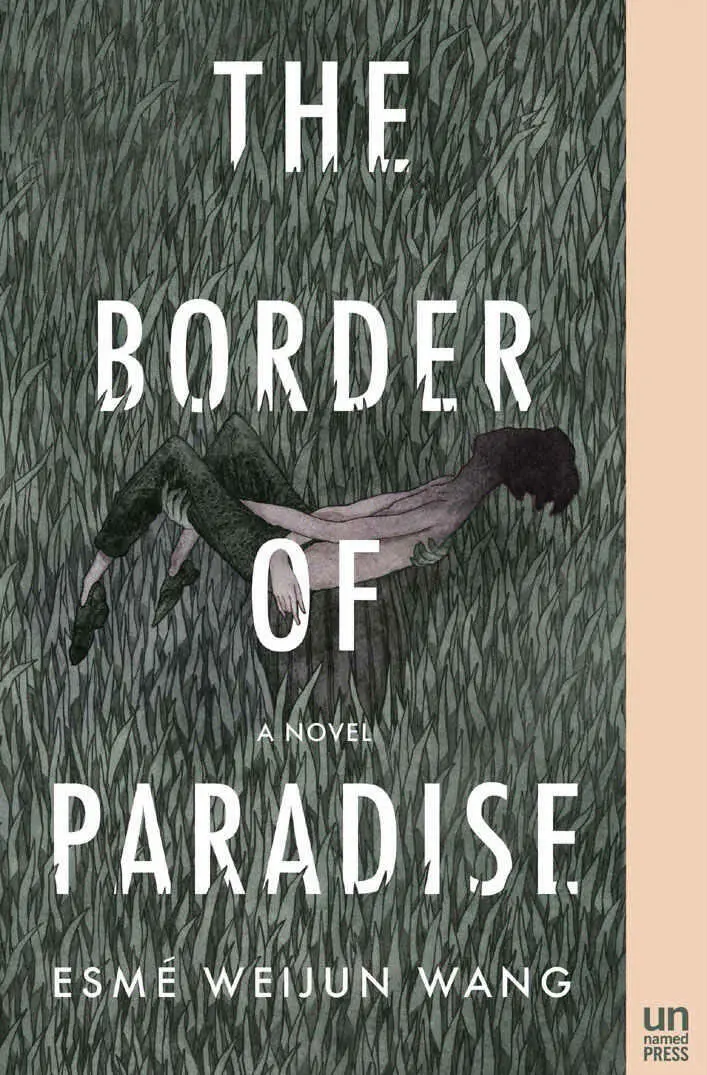
transports readers into the world of an iconoclastic midcentury family.
In booming postwar Brooklyn, the Nowak Piano Company is an American success story. There is just one problem: the Nowak’s only son, David. A handsome kid and shy like his mother, David struggles with neuroses. If not for his only friend, Marianne, David’s life would be intolerable. When David inherits the piano company at just 18 and Marianne breaks things off, David sells the company and travels around the world. In Taiwan, his life changes when he meets the daughter of a local madame — beautiful, sharp-tongued Daisy. Returning to the United States, the couple (and newborn son) buy an isolated country house in Northern California’s Polk Valley.
As David's mental health deteriorates, he has a brief affair with Marianne, producing a daughter. When Marianne appears at their doorstep, the couple's fateful decision to take the child as their own determines a tragic course of events for the entire family. Told from multiple perspectives,
culminates in heartrending fashion, as the young heirs to the Nowak fortune must confront their past and the tragic reality of their future.
The Border of Paradise — читать онлайн бесплатно полную книгу (весь текст) целиком
Ниже представлен текст книги, разбитый по страницам. Система сохранения места последней прочитанной страницы, позволяет с удобством читать онлайн бесплатно книгу «The Border of Paradise», без необходимости каждый раз заново искать на чём Вы остановились. Поставьте закладку, и сможете в любой момент перейти на страницу, на которой закончили чтение.
Интервал:
Закладка:
“To use the restroom. To check on the pie.”
“Something like that. My mother was playing and a man came up to her with a puppy on a leash. She was playing with the puppy and the man stabbed her in the back and strolled away. He left the puppy, which is a detail that I find excruciating. The knife remained in my mother’s back. She screamed. Of course, she tried to pull it out. Thank God she didn’t, or she would have died. My grandmother found her on the lawn with the puppy licking her ear and the knife sticking out of her body. I don’t know how she didn’t die. But you know how some people take a thing like that and never talk about it? My mom talked about it. She talked about it all the time. She showed me the scar. Marty,” he says, “be glad you’re not a woman.” I didn’t ask Leo what had happened to the puppy, although I wanted to.

The first man to take me in his mouth was another sailor. His name was, appropriately, Richard. He sucked me off and I fucked him in the fields; he seemed to have no control over his body, which went every which way, but God help me if I could give a shit. And then there was the lieutenant. After that, there was no stopping me from officially being a pervert. I was dishonorably discharged for being caught drunk and naked with another man on my ship. Still. Being caught was a relief, in a way. For a stretch of time I traveled Asia alone, and when I was tired of Asia I thought of my sister.
I found out through our mother that Marianne was already living in Sacramento at the time. I suggested, somewhat hubristically, that I join her, and she had no problem with that; in fact, she asked only a few questions, perhaps because she had her own secrets to keep. In the car on the way from the airport she told me about the second set of keys that she’d made for me. She told me about the job she had, how she was making her way as a secretary and then as a copy editor. But by the time we were having coffee in her kitchen she said, “I have something to tell you,” and then she told me, without going into detail, about what had happened with David. She was vague. I was jealous, though I tried not to be, that she had gotten her hands on him. It wasn’t until later that she mentioned that a baby was involved.
I told Leo a little bit about David, but not very much, and it was Leo who’d asked about it in a different way, saying, “Who was your first love?” I wanted to tell him, You, but the only thing that I know about love is that it makes you sick and starving, and Leo doesn’t make me feel that way, so I was honest, and he just smiled at me as if to say, It’s not a test.
He’s the one who first made friends with Gillian. I let him in and hugged him; he walked to her and handed her something small and green, Gillian with her tangled blond head in Annie’s lap.
“Leaves of Grass,” he said. “It’s a book of poems.”
“I thought we had all the books,” she said, and we didn’t say anything about this but knew what it meant, and when we tried not to look like she was wrong she knew that she was.
Leo brought her books: poems, cookbooks, plays, novels. After a week of this she asked him to stay in the living room and talk about e. e. cummings, which was like nothing she’d read before, she said. So they read together. While Leo read, Gillian looked at her hands, and Annie and I looked at each other — how the hell were we to react to any of this? And then Gillian started talking more, in a way that seemed like she was getting comfortable around us, but she still wouldn’t leave the apartment. Leo said that Gillian had left one life of isolation for another, and that Marianne knew this but seemed unwilling to change it.
“When I was trying to find your house,” Gillian said to Annie, “I saw things that scared me, but I knew that I had to get through them if I wanted to find you. But I remembered. I’m clever. Now I’m here, and I don’t see why I have to go anywhere.”
We celebrated Thanksgiving, which Gillian had never done before. I’d wanted Leo to have his Thanksgiving with us. I’d even asked him, as stupid as it was, and he smiled sadly at me and said that his daughters love Thanksgiving, which was something that I didn’t want to hear — but it was my fault for asking a stupid question. I try not to ask those questions. I try not to make things worse for him than they have to be.
I must have looked sad during the Thanksgiving preparations, mashing the potatoes with an air of melancholy, because Marianne turned to me and asked, “Marty, have you ever asked him to leave his family?”
“What?”
“Leo.” She blushed, not looking at me. “I was just wondering if you’ve ever thought about asking him to… leave them. To be with you.”
“No,” I said. “No, never.”
“I see how happy you are together, that’s all. And things are changing in this country.”
I didn’t say anything after that. Not about the politics of homosexuality. Nor did I say, Leo loves his daughters and would never, ever leave them. And especially not, Being happy together has nothing to do with it, even though it’s the truest thing I could have said, or could ever say, about us.
So on Thanksgiving it was just the Orlichs and the single Nowak, gathered around the table with the biggest turkey that Annie could find. I watched Annie carve the turkey, her face glowing.
“There is much to be thankful for,” she said.
Gillian nodded, and I said, “Hear, hear,” which could have been interpreted as sarcastic, but I did want Annie to smile, and there hadn’t been so much enthusiasm in the Orlich household in years and years.
“Wait,” I said, “let me get the wishbone for you,” and I pried it from the carcass while Gillian watched.
“You take one side and I’ll take the other,” Annie said. “Then we pull. Whoever gets the bigger piece will have their wish come true.” They pulled. Gillian won.
“I wished that everything will come out right in the end,” she said.
Still, this way of life couldn’t last. We all knew that. It was going to be winter, and the beginning of a new season meant Gillian would have to get ready to go to school in the spring, which seemed impossible given her current state, but what else could we do? After Thanksgiving, Annie made a call to social services and told them as much as she could bear to tell them, including a mix of truths and half-truths: a narrative about her biological daughter being unregistered and an informal adoption and a whole slew of deaths both recent and not recent, leaving the unregistered daughter without family, except for herself, the anonymous woman, and what should she do? Well. There would have to be records of the dead family members. There would have to be evidence of the anonymous woman being the unregistered girl’s mother. There would have to be an investigation of the anonymous woman’s home, to see if it was fit for a child. That was all Annie could remember; she hung up, overwhelmed, without finishing the conversation.
“What am I supposed to do?” she asked Leo and me. We were camping out in my room, whispering, while Gillian made tuna salad in the kitchen. She had an obsession with canned tuna.
“You have to do these things,” Leo said. “You — both of you — have to face reality.”
But there was no phone number. No way to reach the mother and the brother. The number had been disconnected forever ago. The phone call to social services had been anonymous, and nothing had been said about abuse, so it could be said that it wasn’t a completely urgent situation. The urgency was the urgency of people, both strangers and non-strangers, who felt they knew best about what Gillian needed, and Gillian could sense it — I knew she could. It frightened Gillian. How could it not? Anything we mentioned that had to do with authority figures scared the shit out of her.
Читать дальшеИнтервал:
Закладка:
Похожие книги на «The Border of Paradise»
Представляем Вашему вниманию похожие книги на «The Border of Paradise» списком для выбора. Мы отобрали схожую по названию и смыслу литературу в надежде предоставить читателям больше вариантов отыскать новые, интересные, ещё непрочитанные произведения.







Обсуждение, отзывы о книге «The Border of Paradise» и просто собственные мнения читателей. Оставьте ваши комментарии, напишите, что Вы думаете о произведении, его смысле или главных героях. Укажите что конкретно понравилось, а что нет, и почему Вы так считаете.