Esmé Wang - The Border of Paradise
Здесь есть возможность читать онлайн «Esmé Wang - The Border of Paradise» весь текст электронной книги совершенно бесплатно (целиком полную версию без сокращений). В некоторых случаях можно слушать аудио, скачать через торрент в формате fb2 и присутствует краткое содержание. Год выпуска: 2016, Издательство: The Unnamed Press, Жанр: Современная проза, на английском языке. Описание произведения, (предисловие) а так же отзывы посетителей доступны на портале библиотеки ЛибКат.
- Название:The Border of Paradise
- Автор:
- Издательство:The Unnamed Press
- Жанр:
- Год:2016
- ISBN:нет данных
- Рейтинг книги:3 / 5. Голосов: 1
-
Избранное:Добавить в избранное
- Отзывы:
-
Ваша оценка:
The Border of Paradise: краткое содержание, описание и аннотация
Предлагаем к чтению аннотацию, описание, краткое содержание или предисловие (зависит от того, что написал сам автор книги «The Border of Paradise»). Если вы не нашли необходимую информацию о книге — напишите в комментариях, мы постараемся отыскать её.
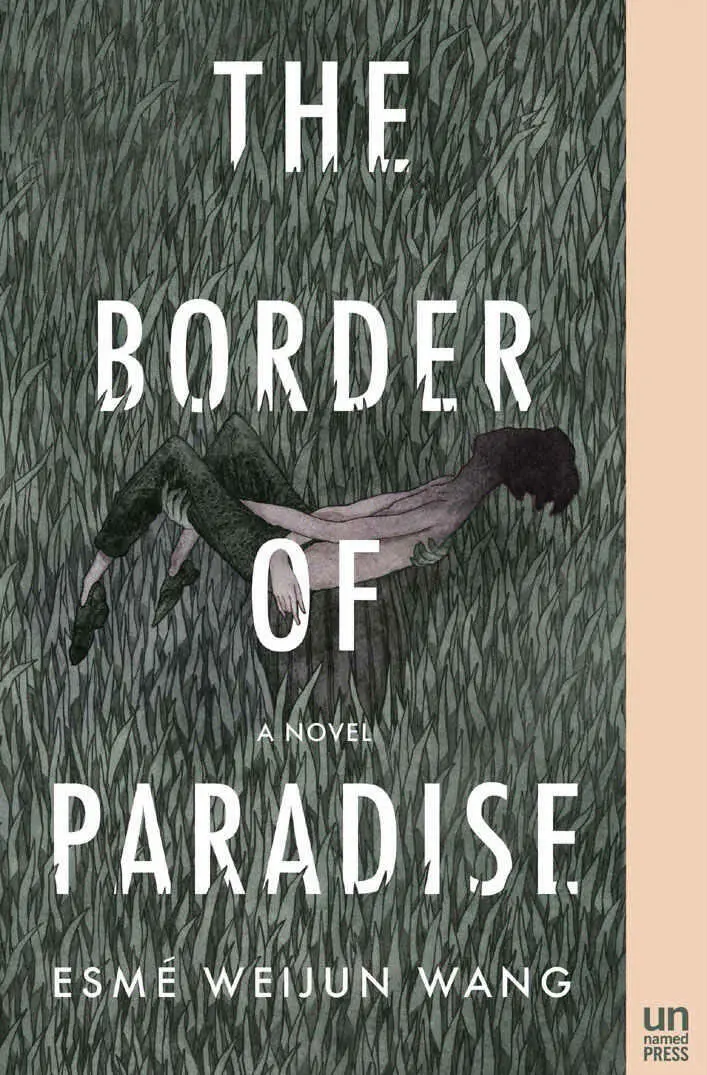
transports readers into the world of an iconoclastic midcentury family.
In booming postwar Brooklyn, the Nowak Piano Company is an American success story. There is just one problem: the Nowak’s only son, David. A handsome kid and shy like his mother, David struggles with neuroses. If not for his only friend, Marianne, David’s life would be intolerable. When David inherits the piano company at just 18 and Marianne breaks things off, David sells the company and travels around the world. In Taiwan, his life changes when he meets the daughter of a local madame — beautiful, sharp-tongued Daisy. Returning to the United States, the couple (and newborn son) buy an isolated country house in Northern California’s Polk Valley.
As David's mental health deteriorates, he has a brief affair with Marianne, producing a daughter. When Marianne appears at their doorstep, the couple's fateful decision to take the child as their own determines a tragic course of events for the entire family. Told from multiple perspectives,
culminates in heartrending fashion, as the young heirs to the Nowak fortune must confront their past and the tragic reality of their future.
The Border of Paradise — читать онлайн бесплатно полную книгу (весь текст) целиком
Ниже представлен текст книги, разбитый по страницам. Система сохранения места последней прочитанной страницы, позволяет с удобством читать онлайн бесплатно книгу «The Border of Paradise», без необходимости каждый раз заново искать на чём Вы остановились. Поставьте закладку, и сможете в любой момент перейти на страницу, на которой закончили чтение.
Интервал:
Закладка:
Soon Gillian began to make the sharp inhalations and exhalations of a toddler who’s just had a crying jag, and Annie said, softly, “Is it something about your parents?” I could barely hear her. I could see only the back of her head, which was turned toward me. When Gillian nodded, Annie said, in that same small voice, “I’m your mother, Gillian. I’m sorry it was a secret.”
Gillian said, “I don’t understand how it happened.”
So Annie told her, surrounded by scientific exhibits and glass cases full of bones. She told her daughter about knowing David as a child and then being separated from David as an adolescent; about her brief affair with David when he was married to Daisy and living in Polk Valley with baby William; about making the choice to let David and Daisy raise her. At this point her voice became halting, and the words came more slowly. I thought she wouldn’t be able to finish the story, but she did, including the tale of becoming Mrs. Kucharski, the piano teacher. She even told Gillian her real name, and Gillian repeated it, the echo cementing them both in place.
“Let’s go home,” I said. It seemed fitting after such emotional outbursts. No one objected, and we went back the way we’d come, through Africa and North America, to the double doors. I thought briefly of the whale that Gillian still hadn’t seen. I wondered whether she’d ever see it now. Annie kept her hand on Gillian’s shoulder until we got to the car, where we resumed our positions. The car pulled into the light, and then we were moving steadily into something I could not name.
Ten minutes into the ride back, Gillian said, “William is still at home.”
I almost said, Christ, but held my tongue. She admitted to lying about the car accident, which Annie couldn’t bring herself to be angry about given her own fresh revelations, and we couldn’t get Gillian to explain the context for her lies. Annie did ask if she’d known all along that Mrs. Kucharski — if she —was her mother. Was that the reason she’d run away from home, leaving William behind, to seek out the long-lost piano teacher’s husband? Why, in the end, did she come to Sacramento? But after her initial confession about William, Gillian deflated. All she would say, over and over again, was that Ma and David were dead and that William was alone. “We have to go get William,” she said.
“All right,” Annie said, and if I were the type of man who would throw up my hands in extremis, I would have.
I was losing what little patience with Gillian I had, but Annie had an infinite supply of patience for her. It was at this point — halfway during the car ride from the Natural History Museum to our little home — that Annie stopped consulting with me. I was no longer part of the little club in charge of making decisions about Gillian, nor was I made privy to Annie’s thought process as she decided that the two of them would find out on their own how William was. They would make their own way.
Leo and I did what men do: we performed the physical labor of loading them up in the Ford with snacks and suitcases. I watched Annie grow more agitated, her body twitching at loud noises and sudden movements; at the same time Gillian grew increasingly enigmatic. To me she was but a faint echo of her mother, after all, and as they prepared to leave that echo rang out and faded until it was almost nothing.
“Keep me updated,” I said to Annie, and pressed my lips to her palm. Gillian turned her face away. I asked my sister to at least give me the address of the Polk Valley house. “I don’t like the idea of you just heading out there, the two of you by yourselves.”

Now Leo and I are on the sofa, alone in the apartment without the women. Our faces are men’s faces in an apartment of lace and green glass bottles. He slouches in his seat, which he never does; his posture is always impeccable.
“What’s wrong?” I ask.
“Nothing.”
“Tired?”
He looks sideways at me and smiles. “Yeah. Sure.”
I say, “Let’s go to the ocean.”
We take a cab to his apartment — his wife isn’t home, is at a doctor’s appointment with the children — and we drive his car for hours, through valleys, to Stinson Beach, riding the skinny rope of road until we reach the shore. He parks. I get out and the wind is whipping the hems of our clothes. Barely anyone is around. We are, as always, careful not to touch, not even by accident. I don’t believe in God, but this is the closest that I’ve ever felt to him — in this place, always the same shore, where everything is the same dull shade of gray and holding the earth together with one gluey hue.
A young couple sits on a blanket on the sand, surrounded by twists of kelp and, nearby, one imperious gull. A man walks his black Labrador. I stand with my hands in my pockets next to Leo, who also has his hands in his pockets, and I say what I’ve been thinking during the entire drive, which is “We should go after them.”
“I have to get home,” Leo says, “but you should.” Then he turns and is on my mouth, is kissing me in front of no one and possibly everyone despite legalities, despite what’s proper, despite comfort. His lips are cold and chapped; his hands are on my arms, his firmly pressing fingers against my ribs as if we were dying.
AFFLICTIONS (1972)
In the car to Polk Valley both mother and daughter are afflicted, with Gillian exhibiting paroxysms of guilt: biting the middle joints of her fingers, leaving deep grooves. Her arms itch. When she looks at them she sees that hives have sprung up from wrist to elbow. She scratches the perimeter of one island and says, apropos of nothing, “I had to leave him.” At this, Marianne’s head tilts.
Gillian says, “If I didn’t leave him, I couldn’t have found you. I never would have found out that I had a different mother all along. It makes so much sense, though. You were the only outsider we saw for so many years.”
Marianne wants to ask, Why couldn’t William come with you? but to speak this would be accusatory. She has one eye on the road and one eye on Gillian, whose ad hoc pixie haircut is beginning to grow out in uneven patches. Again her beauty is coming through, a light through a crack. Marianne tries not to dwell on how this beauty reminds her of her own beauty, steadily fading since she moved to Sacramento, or maybe lost in the convent or during the pregnancy. Gillian fidgets with the window crank and rolls it down, rolls it up, then rolls it down again. She has changed back into her own green dress. She has her tote with her — her clothes, her undergarments, a bottle of barbiturates and another of opiates and tranquilizers that she found in the bathroom among other partially full bottles, her knife, a garnet ring that she took from Marianne’s jewelry box, her half of the wishbone, her Bible. Objects of safety, is what she tells herself. Talismans.
She had taken the pills in the middle of the night because she recognized them from the Physicians Desk Reference, which Ma referred to every so often for reasons of health, and Gillian knows those pills could kill her if only she took them all. Already she has been preparing herself for arriving at the house, their “home sweet home,” and finding William dead by suicide or other tragedy; and should this happen, she would want the escape hatch by which to end her own life; she would want to follow her brother and her mother and her father. A lineage of Nowaks, gone hand in hand from the valley to the shadow of Death, where she would likely go soon enough anyway — beyond what she’d already known from Ma about murder and muggings and unpreventable accidents, she’d found a newspaper on the train that spoke of a man who had killed people (“serially” was the term, he was called a “serial killer”); the serial killer apparently killed for no reason, which was a fresh horror that Gillian could barely contemplate. And this particular escape hatch of suicide is more of an idea than intent. She hasn’t thought it through.
Читать дальшеИнтервал:
Закладка:
Похожие книги на «The Border of Paradise»
Представляем Вашему вниманию похожие книги на «The Border of Paradise» списком для выбора. Мы отобрали схожую по названию и смыслу литературу в надежде предоставить читателям больше вариантов отыскать новые, интересные, ещё непрочитанные произведения.









Обсуждение, отзывы о книге «The Border of Paradise» и просто собственные мнения читателей. Оставьте ваши комментарии, напишите, что Вы думаете о произведении, его смысле или главных героях. Укажите что конкретно понравилось, а что нет, и почему Вы так считаете.