Esmé Wang - The Border of Paradise
Здесь есть возможность читать онлайн «Esmé Wang - The Border of Paradise» весь текст электронной книги совершенно бесплатно (целиком полную версию без сокращений). В некоторых случаях можно слушать аудио, скачать через торрент в формате fb2 и присутствует краткое содержание. Год выпуска: 2016, Издательство: The Unnamed Press, Жанр: Современная проза, на английском языке. Описание произведения, (предисловие) а так же отзывы посетителей доступны на портале библиотеки ЛибКат.
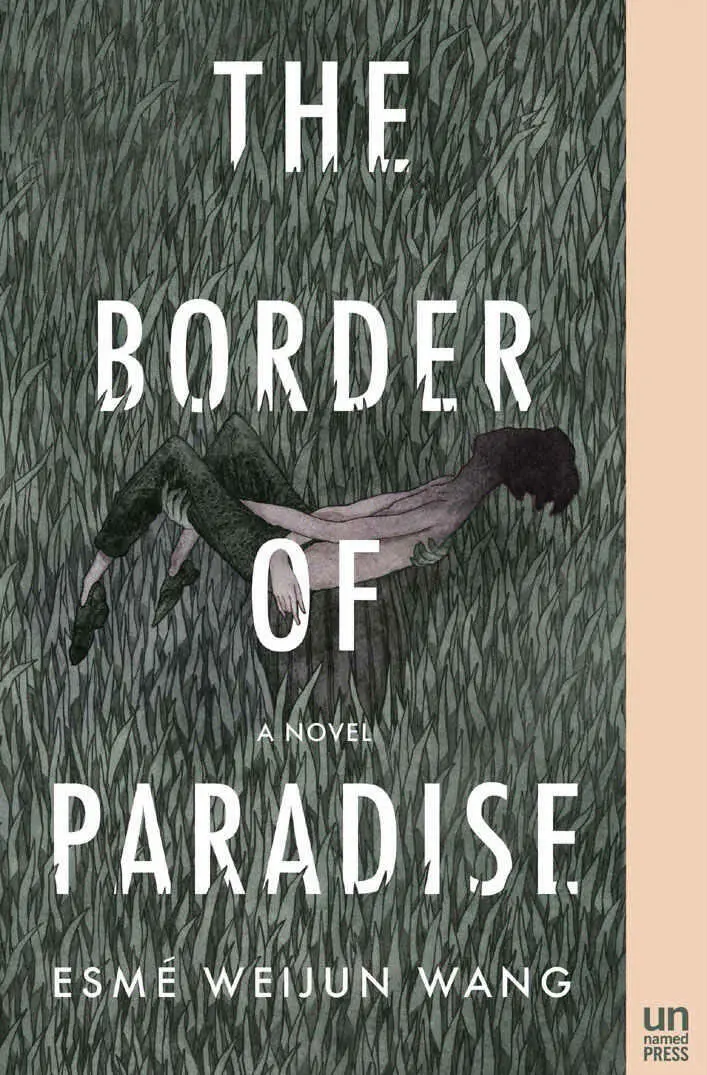
- Название:The Border of Paradise
- Автор:
- Издательство:The Unnamed Press
- Жанр:
- Год:2016
- ISBN:нет данных
- Рейтинг книги:3 / 5. Голосов: 1
-
Избранное:Добавить в избранное
- Отзывы:
-
Ваша оценка:
The Border of Paradise: краткое содержание, описание и аннотация
Предлагаем к чтению аннотацию, описание, краткое содержание или предисловие (зависит от того, что написал сам автор книги «The Border of Paradise»). Если вы не нашли необходимую информацию о книге — напишите в комментариях, мы постараемся отыскать её.
transports readers into the world of an iconoclastic midcentury family.
In booming postwar Brooklyn, the Nowak Piano Company is an American success story. There is just one problem: the Nowak’s only son, David. A handsome kid and shy like his mother, David struggles with neuroses. If not for his only friend, Marianne, David’s life would be intolerable. When David inherits the piano company at just 18 and Marianne breaks things off, David sells the company and travels around the world. In Taiwan, his life changes when he meets the daughter of a local madame — beautiful, sharp-tongued Daisy. Returning to the United States, the couple (and newborn son) buy an isolated country house in Northern California’s Polk Valley.
As David's mental health deteriorates, he has a brief affair with Marianne, producing a daughter. When Marianne appears at their doorstep, the couple's fateful decision to take the child as their own determines a tragic course of events for the entire family. Told from multiple perspectives,
culminates in heartrending fashion, as the young heirs to the Nowak fortune must confront their past and the tragic reality of their future.
The Border of Paradise — читать онлайн бесплатно полную книгу (весь текст) целиком
Ниже представлен текст книги, разбитый по страницам. Система сохранения места последней прочитанной страницы, позволяет с удобством читать онлайн бесплатно книгу «The Border of Paradise», без необходимости каждый раз заново искать на чём Вы остановились. Поставьте закладку, и сможете в любой момент перейти на страницу, на которой закончили чтение.
Интервал:
Закладка:
“You’re not a monster. You—”
“No.”
And Marianne thinks, My poor baby, my poor baby who almost stabbed someone, probably for putting his hand on your shoulder, you poor, inconsolable child.
“Why weren’t you there ?” Gillian finally asks, and starts to cry.
“I’m sorry,” Marianne says, wiping at her own face, “forgive me, forgive me.” She squeezes Gillian’s shoulder as she drives.
The roads turn to highway and they are moving quickly again with the valley all around them, hills the color of awakening grass, Gillian’s head turned with a wet face, pretending to sleep but really looking and thinking, There is so much of the world. Again one of the Nowak books, the world atlas, comes to mind; Eden was a place, and so, too, were Greece and Rome; so, too, were Africa and South America. And here she is seeing the spaces in between the only places she knows. How much more of the world can there be? The possibilities feel unfathomable, infinite. She pictures herself playing her familiar piano and peering over the top to see William, his head bobbing, his ecstatic fingers leaping, and she remembers him pressing his face against the warmth of her back in the sun in the endless long meadow, and she remembers her father and mother and William and herself sitting around the dinner table with golonka and a broiled fish and mustard greens. In her memory William pelts an insult at her for being grumpy: “The crabbiest crustacean of them all.”
Mother and daughter left at 12:43 P.M. and it’s now 1:22 P.M., with Gillian having just woken from a nap she didn’t mean to take. Her hives have faded but aren’t entirely gone. While she was asleep, Marianne quietly sang Carpenters songs to herself and smoked one-fourth of the pack of cigarettes she purchased from the Jesus-man’s machine; the Camels gave only borrowed calm. On the left and later on the right is a steep drop-off, with only stunted guardrails to keep them safe. When Gillian turns to her, her face light pink, Marianne asks, “How did you sleep?”
“I closed my eyes. It just happened,” Gillian says. She sits up straight. “Where are we?”
“Still on the highway.”
“I dreamed about my house,” she says. “William is going to give up if we don’t find him. He’s not strong — you don’t know him like I do. No one does. You’re not a tongyangxi —I know without you telling me.”
“No,” Marianne says. “I don’t think I am.”
“I’m William’s tongyangxi. I mean, his Eve. I was supposed to be. I was, for a while. I…” She props her glasses up her nose. “Then I ended it… It was about love, but I couldn’t do it anymore, I couldn’t keep letting him…It was making me crazy how foolish it made him, but I knew I was the fool because I couldn’t. Now I’m thinking, maybe my parents were the crazy ones. I don’t know.”
Christ, Marianne thinks, and she tries to say something normal. The two of them. The brother and the sister. What did I do? They ruined her. I ruined her. She entertains the thought of driving off the road, but catches herself, knowing what a melodramatic and stupid gesture that is. She’s not David. She will not commit suicide under any circumstances. She will fix this. No, she won’t cry anymore, but waits for her throat to relax and the pain to relent. She nods instead, gritting her teeth behind her lips.
“William, though, I made him so sad. It’s not okay, what I did to him. He called me his fish, when he felt like being sweet. Can you go faster?”
Marianne still can’t talk and won’t shake her head, so she nods again and drives with all of her muscles stiffening.
“What a beautiful day,” Marianne says finally. “I don’t remember this route being quite so beautiful.”
“I’m glad you think so.”
“We’re going to get William, all right, and then we’re going to go back to Sacramento, and then we’ll get things sorted. You don’t have to be afraid of anything bad ever again, because you have me, and you will always have me from now on, all right?”
“Yes.”
“You will always have me. I haven’t always been in your life, I know. And you have been through so many things that I can’t even begin to understand. But I am your mother, and I will make things right for you. I promise.”
But William, Gillian thinks, will always want me.
Soon there is a sign: WELCOME TO POLK VALLEY, POP. 2100. The rest of the sign is barely visible beneath a sheet of brush. To Gillian, the words are mystical. She needs to get home and see William, but knows that it’s likely William has no food and probably didn’t even cast an eye toward the map she’d drawn him; he’ll need something to eat, she says to Marianne, so they stop at the K & Bee to pick up sandwich fixings and juice. At the cash register, the woman behind the counter looks at Gillian and says, “Your family still sick?”
Gillian nods. She reaches into her tote and hands the woman a crumple of bills. “They’re very sick,” she says.
Gillian directs Marianne to Laurier and Sycamore, and then to the dirt roads that to Marianne look like nothing. She can’t imagine that she can bring a car up these roads, as though Gillian has invented them. But like seeing a doe among doe-colored trees, Marianne soon learns the casual edges of where cars have been. Several times she thinks she will kill them on the foothill drive — not because it’s worse than the mountainous roads, but because the roads, if that is what they will be called, are so much less demarcated. They pass the mailboxes, the trailer park, and the place where Gillian was nearly dragged to her death, which Gillian notices and says nothing about in a small allegiance to Ma.
And here is the house, which seems so small to Marianne now as opposed to how large it was in her memory, but to Gillian it remains enormous, a castle rising out of the fog. The dead grass stands sturdy and yellow. The plants in their pots on the steps. The welcoming arrangement of boulders. Marianne parks behind the Buick, which is encased in a sheer layer of dust, and Gillian jumps out of the car, her tote flapping on her shoulder. She runs up the steps to the door; Marianne has never seen a girl grow so long-legged in her stride. Gillian bangs on the door and calls for her brother. Marianne hefts the groceries in her arms. She was a girl when she last climbed up these steps. She tries to picture herself as that girl as she watches Gillian.
Gillian bangs and calls, “William!” as though she intends to break the door down. She even hops a little on both feet.
The door opens and Gillian sees William. She thinks, He is bird-boned and sallow, with hair unattended to and like my father’s when he was unwell, wearing pajamas, smelling of unwashed hair and body. I am hesitant to believe that I am here, and that he is still desiring me, but that this desire is now beyond lust or love but something that is pretty much killing him. Marianne thinks, This is a malnourished boy with no substance to him and reeking of, what else, canned tuna — how could Gillian have left this boy behind, this vulnerable, desperate creature?
“Gillian,” he says, and falls into her, wrapping his arms around her neck, not noticing the alleged Mrs. Kucharski in his passion or exhaustion.
“Hey there. Hey, you.” Gillian kisses the top of his head over and over. “It’s okay. I came back. It’s okay.” She says something in their language.
They stand there for what, to Marianne, is an awkwardly long time, until Gillian says, “Let’s go inside.”
Marianne had never gone to as many estate sales as David had, but she recognizes the smell of a death house when she enters one. The staleness of the air, as if nothing has moved or breathed or spoken for months, is a gas that fills the hall and then the living room where they sit. Where she sat before. The extravagance of two pianos, she thinks. William is still leaning on Gillian. She is someone new now. She holds her brother to her breast, her hand at his shoulder. Marianne stares openly at them — why not stare openly? The word incest, which she won’t allow herself to think, plays at the borders of her mind. What have they done? What have they done with each other? His face is too close to her chest for Marianne’s comfort. There are rotting food smells, too, she realizes. Gillian was right to ask for food. They’ll have a brief snack, and then she will bring them both back to Sacramento with her. They’ll deal with the Nowak house and this terrible brainwashing later. The paint is peeling and nothing has been cleaned in what looks like months or even years. Even the sofa is washed in gray now. She remembers that peach sofa as having a brighter shade.
Читать дальшеИнтервал:
Закладка:
Похожие книги на «The Border of Paradise»
Представляем Вашему вниманию похожие книги на «The Border of Paradise» списком для выбора. Мы отобрали схожую по названию и смыслу литературу в надежде предоставить читателям больше вариантов отыскать новые, интересные, ещё непрочитанные произведения.










Обсуждение, отзывы о книге «The Border of Paradise» и просто собственные мнения читателей. Оставьте ваши комментарии, напишите, что Вы думаете о произведении, его смысле или главных героях. Укажите что конкретно понравилось, а что нет, и почему Вы так считаете.