Esmé Wang - The Border of Paradise
Здесь есть возможность читать онлайн «Esmé Wang - The Border of Paradise» весь текст электронной книги совершенно бесплатно (целиком полную версию без сокращений). В некоторых случаях можно слушать аудио, скачать через торрент в формате fb2 и присутствует краткое содержание. Год выпуска: 2016, Издательство: The Unnamed Press, Жанр: Современная проза, на английском языке. Описание произведения, (предисловие) а так же отзывы посетителей доступны на портале библиотеки ЛибКат.
- Название:The Border of Paradise
- Автор:
- Издательство:The Unnamed Press
- Жанр:
- Год:2016
- ISBN:нет данных
- Рейтинг книги:3 / 5. Голосов: 1
-
Избранное:Добавить в избранное
- Отзывы:
-
Ваша оценка:
The Border of Paradise: краткое содержание, описание и аннотация
Предлагаем к чтению аннотацию, описание, краткое содержание или предисловие (зависит от того, что написал сам автор книги «The Border of Paradise»). Если вы не нашли необходимую информацию о книге — напишите в комментариях, мы постараемся отыскать её.
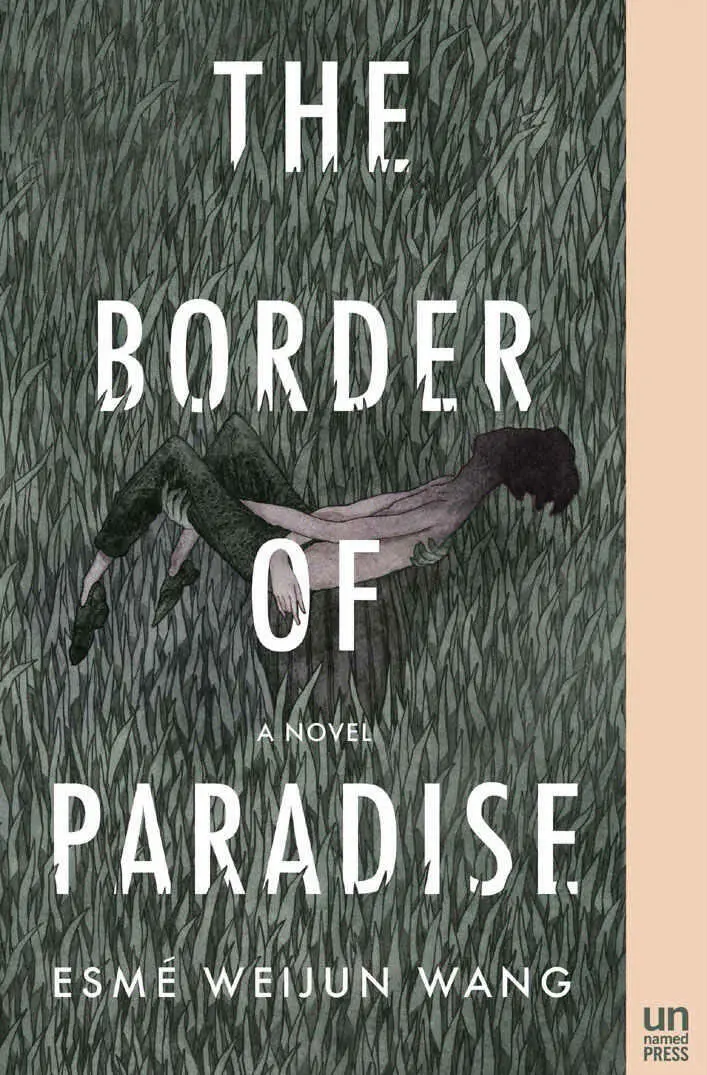
transports readers into the world of an iconoclastic midcentury family.
In booming postwar Brooklyn, the Nowak Piano Company is an American success story. There is just one problem: the Nowak’s only son, David. A handsome kid and shy like his mother, David struggles with neuroses. If not for his only friend, Marianne, David’s life would be intolerable. When David inherits the piano company at just 18 and Marianne breaks things off, David sells the company and travels around the world. In Taiwan, his life changes when he meets the daughter of a local madame — beautiful, sharp-tongued Daisy. Returning to the United States, the couple (and newborn son) buy an isolated country house in Northern California’s Polk Valley.
As David's mental health deteriorates, he has a brief affair with Marianne, producing a daughter. When Marianne appears at their doorstep, the couple's fateful decision to take the child as their own determines a tragic course of events for the entire family. Told from multiple perspectives,
culminates in heartrending fashion, as the young heirs to the Nowak fortune must confront their past and the tragic reality of their future.
The Border of Paradise — читать онлайн бесплатно полную книгу (весь текст) целиком
Ниже представлен текст книги, разбитый по страницам. Система сохранения места последней прочитанной страницы, позволяет с удобством читать онлайн бесплатно книгу «The Border of Paradise», без необходимости каждый раз заново искать на чём Вы остановились. Поставьте закладку, и сможете в любой момент перейти на страницу, на которой закончили чтение.
Интервал:
Закладка:
Annie and I told each other that we had time to think about the future, which meant that our concept of the future was of something that would never come. In this state of denied temporality Annie decided that she wanted to introduce Gillian, gently, to the world outside of our home. I agreed that this was a good idea. The two of us could bring Gillian somewhere fun. Perhaps, we said to each other, she wouldn’t be so afraid of the life to come, whatever that life was to be, if we took her somewhere benign. It had been a bad idea to suggest the capitol, for example, because the capitol implied government and authoritarian forces; we might as well have suggested a visit to Alcatraz for all of our foolishness.
“Somewhere whimsical,” Annie said. “Somewhere fun.”
It was her idea to bring Gillian to the Natural History Museum. “She’s mentioned David practicing taxidermy,” she said. “The Natural History Museum is essentially one giant taxidermy exhibit.”
We mulled over this possibility for half a day. The museum was perhaps not the best choice because of the crowds; still, there would be people no matter where we went, and part of the reasoning behind this excursion was to give Gillian the experience of crowds, and of acclimation to aimless groups of other humans. We would go to the museum on a weekday morning, when children would be at school. We reasoned that we could stay and have a gander for a few hours and maybe longer, if Gillian was having a good time, and then we would go home, having expanded her tiny world that much more.
I did wonder whether she’d be frightened to see the animals. It seemed impossible that she’d ever been to a zoo, and even though the museum’s animals were dead and stuffed, their corresponding size and realism might scare her. I had no idea what she’d make of an elephant. I tried to imagine the context of the situation, attempting to come to a conclusion about possible reactions, and found it impossible. Small children went to the Natural History Museum. They, too, were unaccustomed to enormous beasts and sharp-eyed birds, and were in fact delighted by them. Small children experienced such things with wonder. Was Gillian capable of wonder?
But Annie was so excited by the idea that I didn’t ask my pointless questions, and we piled into the car — I took the backseat — one Tuesday morning so that we could go to the museum.
“You’ll like the museum,” Annie said for the umpteenth time. I knew from the brittle sound of her voice that she was nervous. I could practically hear the words splintering as she said them, no matter how she tried to infuse the line with enthusiasm. “It’s simply remarkable how they’ve managed to make things so lifelike.”
I asked, “Is there any animal in particular that you’d like to see?”
Gillian fidgeted with the ceiling of the car with her fingertips, plucking at the fabric with her nails. I was afraid that she would begin to tear a gaping constellation of holes. “I would like to see a whale,” she said.
“Yes!” said Annie. “They do have a whale. I think they acquired a whale skeleton just last year.”
“What do you know about whales?” I asked.
“They’re like enormous fish,” Gillian said. “And Jonah was swallowed by one.”
“Yes,” Annie said.
We parked at the museum and entered the building, which was, as we had predicted, almost empty at that early weekday hour. The double doors opened into an alcove where an elderly woman with mottled skin and a clearly practiced smile sat and sold us tickets while Gillian played with the pen people used to sign checks, which was attached to the counter with a rope of metal beads. She pulled the pen tight on its leash and then dropped it, watching it dangle, and then she put it back on the counter and rolled it off so that it dangled again.
The Natural History Museum in Sacramento was small. Marianne and I had grown up visiting the one in New York City, which is the most famous of such museums, and I’d come to Sacramento’s version only once because I found it so paltry. I saw what Marianne meant when she said that it might be a good destination because of the taxidermy: the opening rooms were entirely composed of dioramas organized by climate and geographical location. North America came first. I followed Annie and Gillian as they walked to the first diorama, which depicted a pair of deer against a two-dimensional, painted background of hills and flat blue sky. I noticed the presence of an air duct disrupting a cloud, and Gillian said nothing, but she stared and stared. I thought that she must have seen deer where she lived; it was impossible to live in an even remotely rural area in Northern California without seeing deer, or even wild pigs. Mountain lions.
She did startle at one exhibit. It was the violence, I guessed, that bothered her in that diorama of wolves and a felled deer. The wolves’ mouths were painted a sticky red. The deer bore gaping wounds of the same color. I watched Gillian grab Annie’s arm even as she didn’t look away from the scene.
“Remember, it’s not real,” Annie soothed. She put one hand on Gillian’s.
“I know it’s not real.” But Gillian didn’t move from the diorama. She reached out over the waist-high wall, over the sign that detailed an explanation of the scene, and lowered her fingers to one of the wolves’ backs, at which I said sharply, “Gillian, no.” I tried to be gentle about it, but Gillian turned to me with a colorless face. I hadn’t intended to sound so harsh, or to scare her.
Annie said, “You can’t touch them. It’s not allowed,” and gave me a dirty look.
We saw beavers and sea lions and birds dangling from the ceiling on wires. We moved into the next room and saw lions. I worried about the lions because they, too, were shown attacking an antelope, but Gillian seemed less bothered by this faux violence. She barely looked at the lions, her eyes casting about to find something to snag upon. I had no idea what she was thinking as she saw these things, because she said nothing as she looked at the stuffed animals and the maps on the walls and read the placards by each diorama.
At some point she and Annie wandered over to an exhibit on pea plants. I assumed that it was something about Mendel; having no interest in feeling like a high school biology student, I stood a few feet away and examined a warthog. Leo would have a good time here, I thought. He and I would have a good laugh at these bizarre dioramas that tried to resemble real life, but were art forms in themselves, and not very good ones.
“Marty,” Annie hissed.
She was still standing by the pea plant display with Gillian. By the time I reunited with the two, Gillian was staring at the floor, unmoving. I had no idea what was happening. “Gillian?” I asked, and tilted her face up to mine.
“What’s wrong?” Her eyes wouldn’t focus. I looked at Annie. “What happened?”
“I don’t know,” Annie said. “We were reading about Mendel. Darwin. Finches.” She waved at the air.
“Let’s sit down,” I said, because I have always been good in a crisis, and I was afraid Gillian would faint. I found a bench and we sat with Gillian at the left, Annie in the middle, and myself at the right.
“Put your head between your knees,” I said to Gillian.
When she didn’t do anything, Annie repeated what I’d said, and Gillian folded neatly forward. Before long, she was crying. Her head dangled between her knees, which were bony and stuck out from beneath a plaid skirt Annie had dug up from somewhere, and Gillian was making an ugly sound like a baying dog in the quiet museum.
“Christ,” I said.
“What’s the matter, honey?” Annie put her hand on Gillian’s back.
I figured it out before Annie did. At least, I had the hunch. They’d been looking at an exhibit about genetics, and Gillian was clever enough. If she hadn’t been educated in genetics at home, she could still likely figure out from a cursory explanation of dominant and recessive genes that her mother and father, the mother and father that she knew, could not be her biological parents; on the other hand, this blond woman, her former piano teacher, a woman with sunshine hair like hers and the same thin mouth, could be her mother and probably was. But neither is Annie stupid, and I suspected her of being willfully ignorant about what had upset Gillian; perhaps she feared this revelation and was pretending not to recognize its arrival — perpetuating the confusion, buying time.
Читать дальшеИнтервал:
Закладка:
Похожие книги на «The Border of Paradise»
Представляем Вашему вниманию похожие книги на «The Border of Paradise» списком для выбора. Мы отобрали схожую по названию и смыслу литературу в надежде предоставить читателям больше вариантов отыскать новые, интересные, ещё непрочитанные произведения.





Обсуждение, отзывы о книге «The Border of Paradise» и просто собственные мнения читателей. Оставьте ваши комментарии, напишите, что Вы думаете о произведении, его смысле или главных героях. Укажите что конкретно понравилось, а что нет, и почему Вы так считаете.