Esmé Wang - The Border of Paradise
Здесь есть возможность читать онлайн «Esmé Wang - The Border of Paradise» весь текст электронной книги совершенно бесплатно (целиком полную версию без сокращений). В некоторых случаях можно слушать аудио, скачать через торрент в формате fb2 и присутствует краткое содержание. Год выпуска: 2016, Издательство: The Unnamed Press, Жанр: Современная проза, на английском языке. Описание произведения, (предисловие) а так же отзывы посетителей доступны на портале библиотеки ЛибКат.
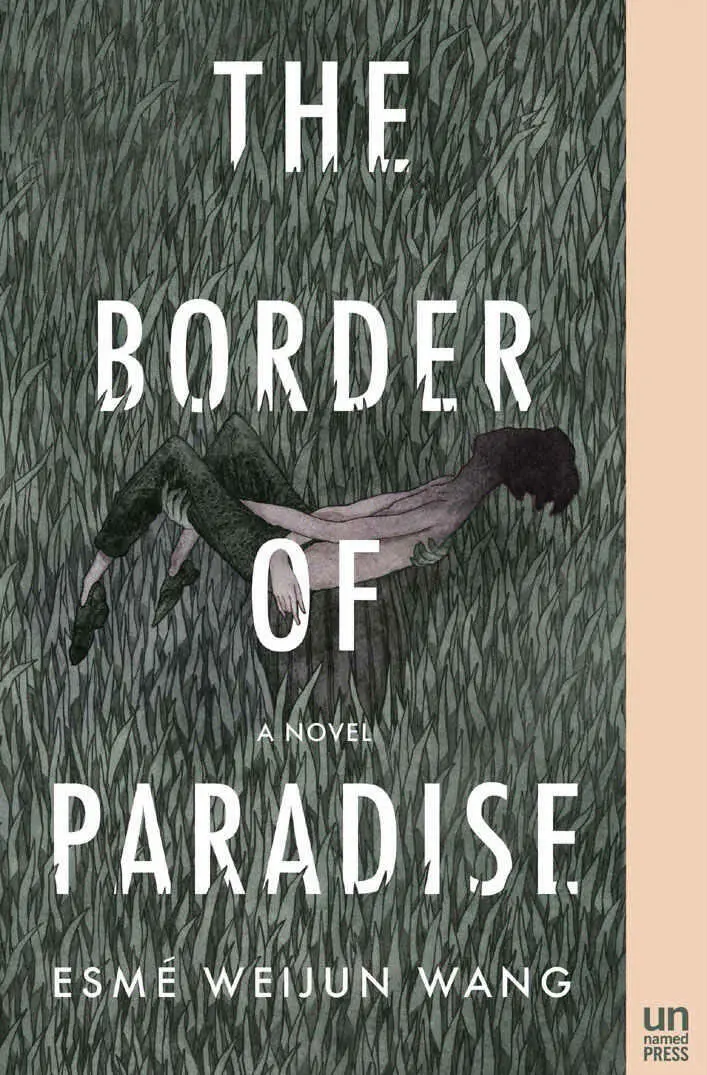
- Название:The Border of Paradise
- Автор:
- Издательство:The Unnamed Press
- Жанр:
- Год:2016
- ISBN:нет данных
- Рейтинг книги:3 / 5. Голосов: 1
-
Избранное:Добавить в избранное
- Отзывы:
-
Ваша оценка:
The Border of Paradise: краткое содержание, описание и аннотация
Предлагаем к чтению аннотацию, описание, краткое содержание или предисловие (зависит от того, что написал сам автор книги «The Border of Paradise»). Если вы не нашли необходимую информацию о книге — напишите в комментариях, мы постараемся отыскать её.
transports readers into the world of an iconoclastic midcentury family.
In booming postwar Brooklyn, the Nowak Piano Company is an American success story. There is just one problem: the Nowak’s only son, David. A handsome kid and shy like his mother, David struggles with neuroses. If not for his only friend, Marianne, David’s life would be intolerable. When David inherits the piano company at just 18 and Marianne breaks things off, David sells the company and travels around the world. In Taiwan, his life changes when he meets the daughter of a local madame — beautiful, sharp-tongued Daisy. Returning to the United States, the couple (and newborn son) buy an isolated country house in Northern California’s Polk Valley.
As David's mental health deteriorates, he has a brief affair with Marianne, producing a daughter. When Marianne appears at their doorstep, the couple's fateful decision to take the child as their own determines a tragic course of events for the entire family. Told from multiple perspectives,
culminates in heartrending fashion, as the young heirs to the Nowak fortune must confront their past and the tragic reality of their future.
The Border of Paradise — читать онлайн бесплатно полную книгу (весь текст) целиком
Ниже представлен текст книги, разбитый по страницам. Система сохранения места последней прочитанной страницы, позволяет с удобством читать онлайн бесплатно книгу «The Border of Paradise», без необходимости каждый раз заново искать на чём Вы остановились. Поставьте закладку, и сможете в любой момент перейти на страницу, на которой закончили чтение.
Интервал:
Закладка:
Down the hall, into the dim kitchen. Drawers of tools and errant notes reminding Gillian to do the laundry and telling William to mop the floors. One says, simply, MEAT. There is nothing of David’s left, not even a reminder to buy orange juice — his favorite. Everything of Ma’s left, including her body in the backyard buried not too deep. There are dirty dishes on the table covering years of carved messages. There is a place where an orange plopped onto the floor once and rolled one or two feet, and drawings of mountains scattered on the floor. The record player is silent. The refrigerator is empty.
And out of the kitchen, into the master bedroom. The room still smells like Ma’s jasmine and the faint fog of herbal remedies. It smells like cigarettes. The bed is made for two.
Here is the hatbox.
Here is Gillian, looking through the hatbox. She stares at the picture of Ma and David under the TSINGTAO sign, which she tucks into her pocket.
She goes back to the door to their old room and his body is still curled up tight at the side of the bed, having forgotten how to fill up space without her. Sweet William, make me an omelet; two kids, two omelets. She is not crying. Inside her head things have gotten very quiet.
When she lights the first curtain she’s surprised by how quickly the flame scampers up to the ceiling, a wild thing — her plan being to destroy all of it, her family and her house and, of course, herself, but it happens faster than she imagined, and with far more violence, which startles her. But she moves to the next curtain and lights that one, too, watching in fascination as the fire swallows it near whole. She sets the papers in the wastebasket on fire, and the flames shimmy up in search of something to catch. Her skin is bright with heat as she watches the room burn. Her eyes move to William, who is unmoving in the smoke.
Something in her stirs and then flares. She grabs William and begins to drag him out of the room. She can’t let him die. She can’t let any of them die; there has already been so much death, beginning with David. It all began with him in that motel room with a fatal knife wound and a piece of paper on the desk that read only, maddeningly, I’M SORRY, as if that were enough to make up for his absence. As if life were something that you could just cast aside, a carapace, in favor of something better. And yet she understands this impulse to escape. She is still her father’s daughter.

Marty can see the smoke from down the road. He drives faster in the pelting rain, unheeding of dirt turning to mud beneath the tires. He sees the house burning and panics. The panic freezes him; the car jolts and stops. He can see two dark figures in front of the house and stars falling all around them. One of them is his sister, lying in the cold mud. A young man, presumably William, is next to her and on all fours, staring at the house, pointing—
— and that is when Marty turns and sees it, too. It is something tearing itself away from the house, fleet of foot and fast. The house is a live thing and will continue to live for hours, snarling despite the rain, before it puts itself to sleep; but for now, before anyone can fully comprehend what is happening, something is sprinting into the woods, like a deer, or the ghost of something beautiful.
ACKNOWLEDGMENTS
This book would not be what it is without the following people, places, and institutions, for which I am gobsmackingly grateful.
To Miriam Lawrence, who has read this novel almost as many times as I have, randomly quoting bits of it back to me, and generously offered much-needed advice and cheerleading along the way; to Anna North, my former swimming companion and brilliant friend; to the keen mind and friendship of Anisse Gross. Gratitude to the writerly smarts of Andi Winnette and the present and former members of the No-Name Writing Group, all of whom took time and energy out of their busy lives for the Nowaks and me. A special note of thanks to Mira Ptacin, who, without knowing much about me at all, dragged me across the finish line when I was ready to lie down and die.
To my tireless agent, Amy Williams, who believed in this book when it was but a single chapter; to my editor, C. P. Heiser, who offered editorial insight and encouragement, as well as a wealth of support; and to all the folks at Unnamed Press, including Olivia Taylor Smith, for bringing this literary dark horse and its author into the fold.
To the Gibraltar Point Artscape, the Vermont Studio Center, Hedgebrook, and the Kimmel Harding Nelson Center for the Arts, for giving me time and space with which to write; to Sara Carbaugh, the Grass Valley Public Library, and the Nevada County Historical Center, for invaluable research assistance; to Helen Zell, the Hopwood Awards, and the Elizabeth George Foundation, for their financial resources; to Leigh Stein, Dyana Valentine, Jenny Zhang, Vauhini Vara, Tanya Geisler, Aaron Silberstein, and the women of BinderCon, for friendship, support, and community. To my doctors and counselor, Dr. Grieder, Dr. McInnes, and Grace Quantock, for helping to manage my body and mind.
To Stanford University and the University of Michigan, which gifted me writing teachers and mentors such as Malena Watrous, Katherine Noel, Eric Puchner, Elizabeth Tallent, Eileen Pollack, Nicholas Delbanco, and Michael Byers. To Yiyun Li, for permission. Special thanks to Doug Trevor, my thesis adviser for The Border of Paradise when it was in its infancy.
To those I have lost: thank you.
To my parents, and the people and places they came from; to Allen and Claudia; to the parents and family that I married into, and the people and places they came from.
And, finally, to Chris and Daphne, who remind me of everything that is good in this world.
ABOUT THE AUTHOR
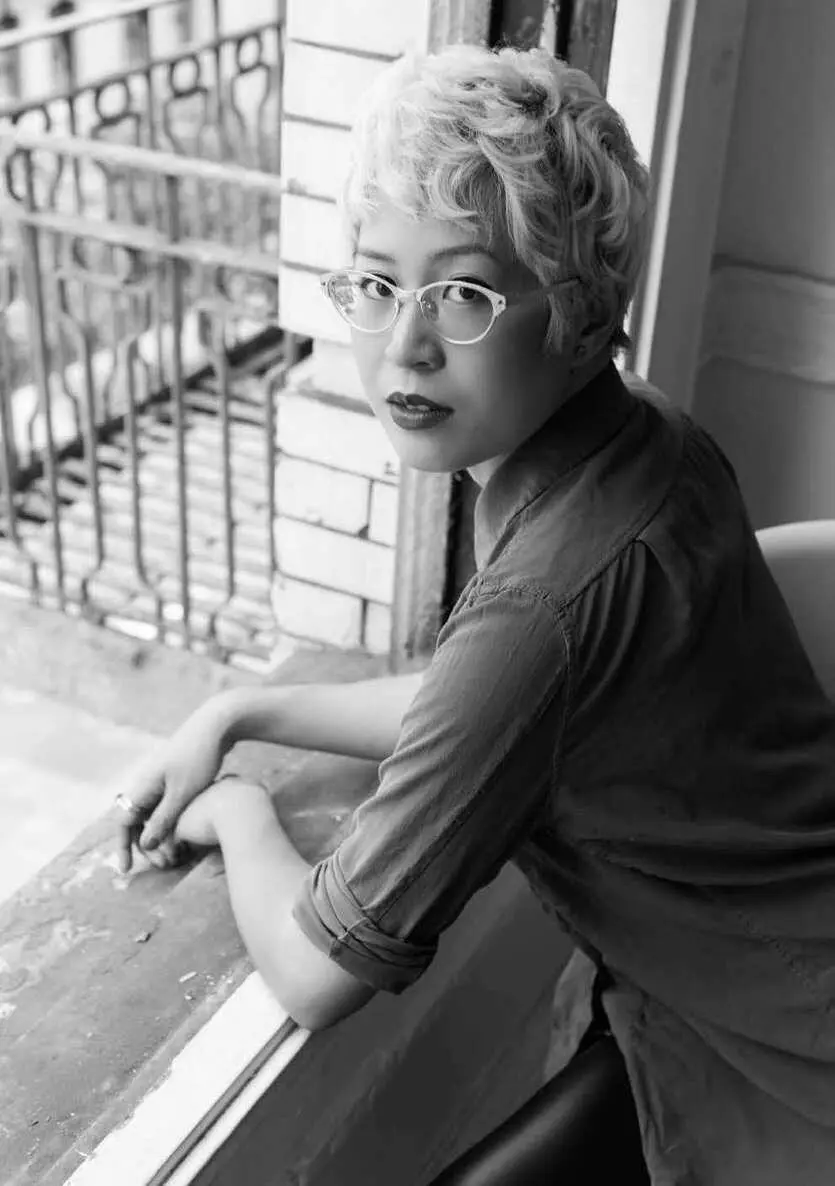
Esmé Weijun Wangwas born in Michigan to Taiwanese parents and grew up in the San Francisco Bay Area. She received her MFA at the University of Michigan. Her writing has appeared in such publications as Salon, Catapult, The New Inquiry, and The Believer; awards include the Hopwood Award for Novel-in-Progress, an Elizabeth George Foundation grant, and the Louis Sudler Prize. She writes at www.esmewang.com.
Интервал:
Закладка:
Похожие книги на «The Border of Paradise»
Представляем Вашему вниманию похожие книги на «The Border of Paradise» списком для выбора. Мы отобрали схожую по названию и смыслу литературу в надежде предоставить читателям больше вариантов отыскать новые, интересные, ещё непрочитанные произведения.






Обсуждение, отзывы о книге «The Border of Paradise» и просто собственные мнения читателей. Оставьте ваши комментарии, напишите, что Вы думаете о произведении, его смысле или главных героях. Укажите что конкретно понравилось, а что нет, и почему Вы так считаете.