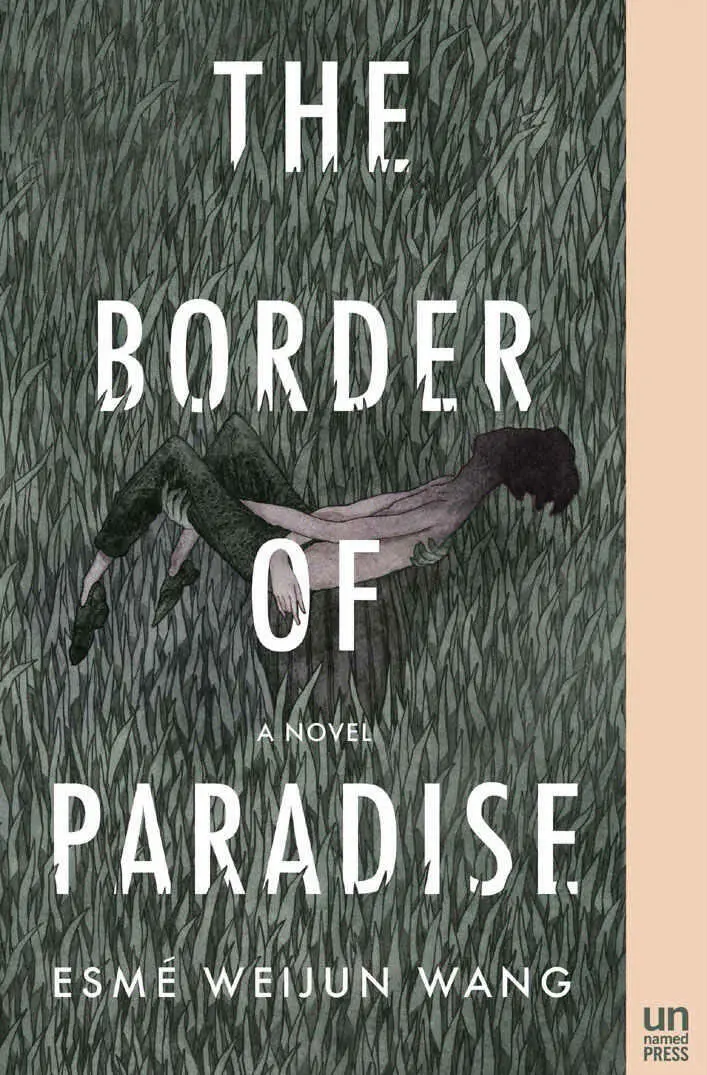
Esmé Wang - The Border of Paradise
Здесь есть возможность читать онлайн «Esmé Wang - The Border of Paradise» весь текст электронной книги совершенно бесплатно (целиком полную версию без сокращений). В некоторых случаях можно слушать аудио, скачать через торрент в формате fb2 и присутствует краткое содержание. Год выпуска: 2016, Издательство: The Unnamed Press, Жанр: Современная проза, на английском языке. Описание произведения, (предисловие) а так же отзывы посетителей доступны на портале библиотеки ЛибКат.
- Название:The Border of Paradise
- Автор:
- Издательство:The Unnamed Press
- Жанр:
- Год:2016
- ISBN:нет данных
- Рейтинг книги:3 / 5. Голосов: 1
-
Избранное:Добавить в избранное
- Отзывы:
-
Ваша оценка:
The Border of Paradise: краткое содержание, описание и аннотация
Предлагаем к чтению аннотацию, описание, краткое содержание или предисловие (зависит от того, что написал сам автор книги «The Border of Paradise»). Если вы не нашли необходимую информацию о книге — напишите в комментариях, мы постараемся отыскать её.
transports readers into the world of an iconoclastic midcentury family.
In booming postwar Brooklyn, the Nowak Piano Company is an American success story. There is just one problem: the Nowak’s only son, David. A handsome kid and shy like his mother, David struggles with neuroses. If not for his only friend, Marianne, David’s life would be intolerable. When David inherits the piano company at just 18 and Marianne breaks things off, David sells the company and travels around the world. In Taiwan, his life changes when he meets the daughter of a local madame — beautiful, sharp-tongued Daisy. Returning to the United States, the couple (and newborn son) buy an isolated country house in Northern California’s Polk Valley.
As David's mental health deteriorates, he has a brief affair with Marianne, producing a daughter. When Marianne appears at their doorstep, the couple's fateful decision to take the child as their own determines a tragic course of events for the entire family. Told from multiple perspectives,
culminates in heartrending fashion, as the young heirs to the Nowak fortune must confront their past and the tragic reality of their future.
The Border of Paradise — читать онлайн бесплатно полную книгу (весь текст) целиком
Ниже представлен текст книги, разбитый по страницам. Система сохранения места последней прочитанной страницы, позволяет с удобством читать онлайн бесплатно книгу «The Border of Paradise», без необходимости каждый раз заново искать на чём Вы остановились. Поставьте закладку, и сможете в любой момент перейти на страницу, на которой закончили чтение.
Интервал:
Закладка:
I was the one who named her Gillian. It is a form of the name Julian, meaning “belonging to Julius,” but I gave her that name because Gillian was my mother’s middle name, and my mother was perhaps not an exemplary mother, but endured so much that by the time I left home she had earned herself a steely exoskeleton that I couldn’t blame her for. I thought that by naming my baby Gillian, she might inherit some of my mother’s better qualities. On a more delusional level, I thought that by naming her, I was staking a claim. But I couldn’t have what I really wanted, though who was to say what I really wanted; nor could I care for a baby on my own. And yet the larger Gillian grew inside of me, the more inclined I was to keep her, even in poverty.
But it was the call David’s wife made that undid me. Daisy— what a name. I heard a goodness in her voice, and I’ve been clinging to that sound of a good soul for the last decade and a half of my life. Yes, I told myself, she would be Gillian’s mother. They would live in that house, that homey house in the great wide woods, and they would have the Nowaks’ resources to clothe and feed her. Her! Gillian! My offspring, a Nowak after all. I could give her nothing, and they could give her everything; she could be happy, she could wear nice things, she could read good books, David would teach her the piano, she would learn Latin, she would live a good life and grow up to be a better woman than I.
And months later my baby was in my arms in the apartment that David had rented for myself and the midwife, my baby a tiny squalling thing with a bright pink face that I loved with an immediacy more painful than the labor itself. I was twenty-two, penniless, husbandless. In labor I had lost all recollection of any sense but agony, but birthing Gillian put me solidly back into my torn and bloody body, and all I knew of it was that my love hurt like an echo of Hell and I did not want to let her go.
“Please,” David said. His hair was thinning. He was old in a young man’s body, his grotesquely scarred hand twisting between the fingers of the other. “Daisy and I will give her a good life. I promise you. Don’t make this harder than it has to be.” The midwife, a softly shaped Russian woman with ivory hair, remained expressionless in the face of our unshared emotion.
I sobbed. I said no. I held Gillian to my breast, and she pressed against it, hot and wailing. I swear she was saying, You are mine. But in the end I let him leave with our child, and because of this I had to believe in David’s fundamental goodness. I trusted — had to trust — that she would be all right. For a time after he took Gillian from me, I fell into melancholia, and there was no one to catch me — I had no friends, I lived alone. There was no one to implore that I wash my face or brush my teeth or, Heaven forbid, take a shower; there was no reason to eat, and I lost twenty pounds, and had to tuck a cushion between my knees before I slept because in lying on my side, my own bones hurt me. I cried until my eyes hurt, and then I waited and more tears came and I cried some more. At times, I plotted getting Gillian back. I imagined that I’d go to their home in the middle of the night and thieve her from her crib, but these dreams were countered by the self who looked into the mirror on the way to the toilet and saw a gaunt, oily-haired woman with feral eyes, who clearly could not take care of herself and therefore could not take care of a child.
Once the melancholia lessened enough for me to function, I fled the apartment. I moved into a small home in Sacramento with David’s money, receiving calls from him every so often with updates, and when William and Gillian were feasibly old enough for a music education, I begged him to bring the two to see me, which is how the piano lessons began. He brought our daughter and his son for instruction every week as a concession, as a form of custody. I would sit on the sofa with my hands gripping my knees and stare at the door at one fifteen, knowing that they would be there by one thirty. The doorbell would sound its chime; I’d open the door and there they were, the child I had lost and the half-Oriental child that was David’s, both wearing white linens and clutching book bags of sheet music, while David smiled at me and said, “Good afternoon, Mrs. Kucharski,” which was my pseudonym in those days.
Every week I had to hold myself back from tearing little Gillian into pieces and stuffing them into my mouth, to not touch her too much or touch William too little. Instead, I carefully hugged her hello. I held her at arm’s length, examining her shape and the contours of her face that looked so much like mine. I did the same with William, although my attention was always elsewhere when I was with William; even when I taught William his lessons I had half an eye on Gillian in the living room while she read, or drew with crayons on the sketchpad I made available to her every time she came.
I always looked through her drawings. I do still have them. She had an eye for detail, even with the clumsy crayons. Her tigers always had stripes that seemed authentically placed.
Every week I cried after she left, pressing my hand to the door and the other to my belly as if ready to birth her again. Despite my broodiness, I was eating and washing myself — I made sure that Mrs. Kucharski would be a charming figure to the children, and then I shed her skin as soon as they left. It was likely bouffant-headed Mrs. Kucharski who applied for, and was rewarded with, a job as a secretary at a real estate agency. Mrs. Kucharski was asked on dates to which she never said yes.
On two occasions did David betray himself to me. The first: Gillian and William were halfway out the door. I had said my customary good-byes. “The bright spot of my week,” I managed to say, and David flashed me a look of such longing that I couldn’t have misinterpreted it, no matter how many times I replayed it afterward. David always had a particularly legible face.
The second time occurred a month before he died. “Don’t get yourself into trouble while we’re gone,” he teased. He was helping Gillian with her coat. Their drive home was a drive of microclimates.
I said, “I have no one to get into trouble with.”
He did not look at me, but replied, “You know I love you,” before turning away, his hands perched on his children’s shoulders. What possessed him to say this in front of them, I do not know. I don’t think they were listening. The door closed so firmly that it was like he hadn’t said anything at all, but the words remained with me. I even whispered them to myself at times, as if by doing so I could keep the fluttering thing alive.
I loved them both, and in both cases I imagined my wounds might fester less if I tried to harden my heart fully. But the truth is that I never made an honest go of moving on; I was constantly looking back.
His wife called me one night after I came home from work at the agency. She had never spoken to the persona of Mrs. Kucharski, and when I heard her voice and introduction on the line I nearly dropped the phone. I responded in a voice that was not entirely in my normal register for my role as the piano teacher. It was audibly different from the way I’d answered the phone, but that had only been the one word hello and it didn’t matter anyway, because Mrs. Daisy Nowak was calling to tell me that her husband and daughter had died in a car wreck.
“William will not come for lessons,” she said.
I couldn’t breathe, and then I was crying before I could stop myself. If she hadn’t suspected me before, she suspected me then.
“How terrible,” I said, barely choking out the words.
“It is terrible.”
“I’m — I’m sorry.”
After a long moment, Daisy replied, “I understand.”
Читать дальшеИнтервал:
Закладка:
Похожие книги на «The Border of Paradise»
Представляем Вашему вниманию похожие книги на «The Border of Paradise» списком для выбора. Мы отобрали схожую по названию и смыслу литературу в надежде предоставить читателям больше вариантов отыскать новые, интересные, ещё непрочитанные произведения.










Обсуждение, отзывы о книге «The Border of Paradise» и просто собственные мнения читателей. Оставьте ваши комментарии, напишите, что Вы думаете о произведении, его смысле или главных героях. Укажите что конкретно понравилось, а что нет, и почему Вы так считаете.