Esmé Wang - The Border of Paradise
Здесь есть возможность читать онлайн «Esmé Wang - The Border of Paradise» весь текст электронной книги совершенно бесплатно (целиком полную версию без сокращений). В некоторых случаях можно слушать аудио, скачать через торрент в формате fb2 и присутствует краткое содержание. Год выпуска: 2016, Издательство: The Unnamed Press, Жанр: Современная проза, на английском языке. Описание произведения, (предисловие) а так же отзывы посетителей доступны на портале библиотеки ЛибКат.
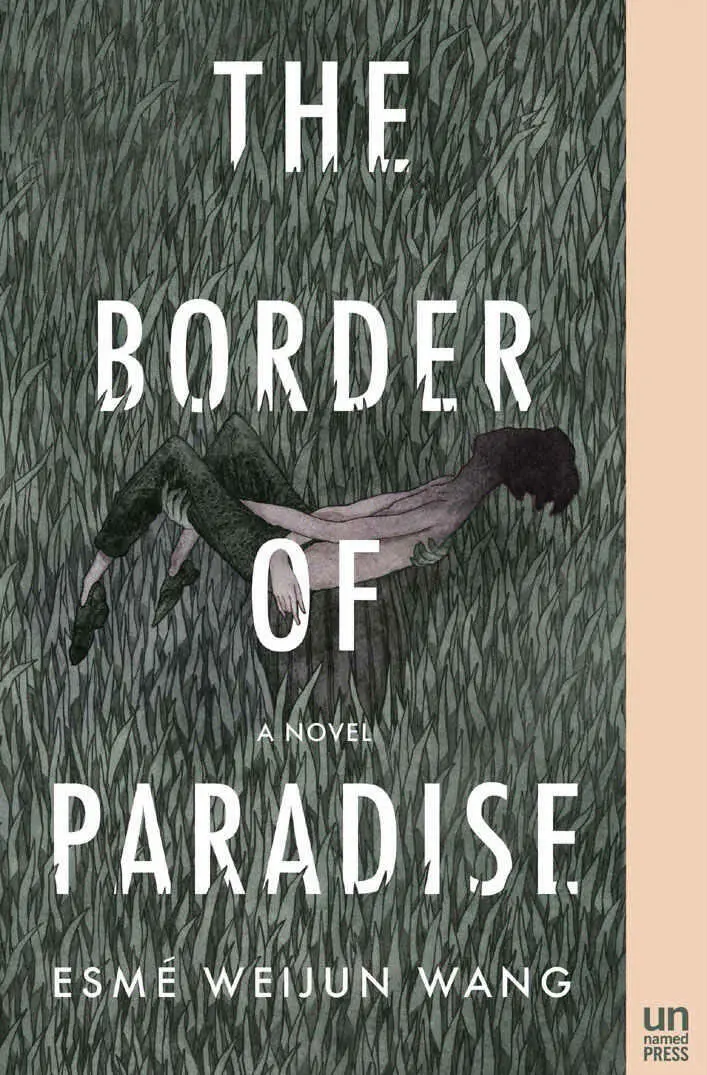
- Название:The Border of Paradise
- Автор:
- Издательство:The Unnamed Press
- Жанр:
- Год:2016
- ISBN:нет данных
- Рейтинг книги:3 / 5. Голосов: 1
-
Избранное:Добавить в избранное
- Отзывы:
-
Ваша оценка:
The Border of Paradise: краткое содержание, описание и аннотация
Предлагаем к чтению аннотацию, описание, краткое содержание или предисловие (зависит от того, что написал сам автор книги «The Border of Paradise»). Если вы не нашли необходимую информацию о книге — напишите в комментариях, мы постараемся отыскать её.
transports readers into the world of an iconoclastic midcentury family.
In booming postwar Brooklyn, the Nowak Piano Company is an American success story. There is just one problem: the Nowak’s only son, David. A handsome kid and shy like his mother, David struggles with neuroses. If not for his only friend, Marianne, David’s life would be intolerable. When David inherits the piano company at just 18 and Marianne breaks things off, David sells the company and travels around the world. In Taiwan, his life changes when he meets the daughter of a local madame — beautiful, sharp-tongued Daisy. Returning to the United States, the couple (and newborn son) buy an isolated country house in Northern California’s Polk Valley.
As David's mental health deteriorates, he has a brief affair with Marianne, producing a daughter. When Marianne appears at their doorstep, the couple's fateful decision to take the child as their own determines a tragic course of events for the entire family. Told from multiple perspectives,
culminates in heartrending fashion, as the young heirs to the Nowak fortune must confront their past and the tragic reality of their future.
The Border of Paradise — читать онлайн бесплатно полную книгу (весь текст) целиком
Ниже представлен текст книги, разбитый по страницам. Система сохранения места последней прочитанной страницы, позволяет с удобством читать онлайн бесплатно книгу «The Border of Paradise», без необходимости каждый раз заново искать на чём Вы остановились. Поставьте закладку, и сможете в любой момент перейти на страницу, на которой закончили чтение.
Интервал:
Закладка:
“Did your girlfriend die?” I ask.
“What? No. She’s at you-see-allay.”
“I see what?”
“What? It’s a school. A college in Los Angeles. Do you know about Los Angeles? No. Wow. Where did you come from?”
My face is hot. I’ve erred, of course, in a situation designed for mistakes. I say, “Leave me alone.” He tells me to hold on as I rise and walk past the old woman with her french fries, who is looking at us with a passive expression. I yank open the doors to get between the cars. The space is frighteningly open, and loud with the sound of wheels churning over tracks. I stumble backward slightly; it’s raining now, too, and cold.
“Come on,” he says. “It’s fine. Really.”
I close the door. I look over at the old woman, who stares back at me, her face-skin like the back of a dried apricot. It upsets me that I can’t interpret her reaction to our little drama, and consider my deficiency to be a result of everything — everything that came before this moment.
“It’s completely fine.” He guides me back to our seats. “Look, I was surprised, is all. I’ll tell you about my ex. Her name was— is Cassie Winters. She was devoted to the theater, which I tried to love. I went to every single one of her performances. She’d have five performances of Guys and Lolls in a week and I’d go to all of them. I’d bring her flowers for every performance, and she’d act embarrassed in front of her castmates, but she insisted that I keep bringing the flowers because it was making her friends jealous. That was the kind of girl she was. But she was a really good actress. I didn’t love the theater, but I could tell that she had star quality.”
I roll the parsley on my plate between my thumb and forefinger to make it a small, slender stick. “What did she look like?”
Randy closes his eyes for a few seconds. When he opens them, he says, “Dark, curly hair. Pale. Her real name was Rachel Winzer. As in she was Jewish, and really looked Jewish, which drove her crazy. She said all of the good parts in Hollywood went to the WASPy types, so she went by Cassie Winters. She was very practical that way. She was going to have her hair done and get a nose job after high school.”
“Are you Jewish?”
“No. So we had a lot of problems. I loved her, though. I was crazy about her. It didn’t work out.”
“Why not?”
“It didn’t work out.” He sighs. “I don’t want to talk about it.”
“You said you would tell me about your ex-girlfriend.”
“I did. I didn’t say that I’d go through every single horrible detail.”
“Did you have sex with her?”
Randy sucks his breath in through his teeth. “Geez.”
“I said something wrong.”
“Yeah, I’ll say you did.”
“I’m sorry.”
“You’re a very pretty girl, but strange,” says Randy. “I don’t mean anything by it. Just be careful what you say to people. Some won’t be as patient as I am. See, you make me want to have a cigarette. I quit, though.” He looks mournfully at his right hand. “Don’t ask people about sex unless you’re asking for trouble.”
“I don’t want trouble. I’ve had enough trouble.”
“Right. Keep your nose clean.”
The charade of being normal is exhausting. There are things I want to ask him: about Jewish people, or about the jobs of noses. I lean my head against the window and close my eyes for an indeterminate amount of time, holding the Bible inside the tote on my lap with the word Sacramento on my lips. When I awaken I look over and Randy is writing in a notebook. Despite my sleep-blurred eyes I catch, without meaning to, her ankle in blue ink before he looks over at me. He snaps his book shut. “I don’t let anyone read my notebooks. What did you see?”
“Nothing.”
“Yeah, right. What did you see?”
“Just ‘her ankle.’”
“Uh-huh.” He tucks the spiral-bound notebook into his rucksack. “You were asleep for forty minutes.”
“Wow.”
“I hope I wasn’t what woke you up. You seemed tired.”
“I guess I was.” The train is still. Our grim sky throws sheets of rain sideways in unceasing turns. “Are we stopped somewhere?”
“Yep. A tree fell across the tracks.”
“Can’t they move it?”
“Sure. But it’ll take a while. This kind of thing always takes forever. Is someone expecting you?”
“No.”
“No one at all? Who are you seeing in Sac if no one’s waiting for you?”
“It’s complicated,” I say. I can barely deal with it myself — only this afternoon did I slip out my bedroom window; only this afternoon did I leave my brother in my childhood home to do who knows what by himself. And who knows if I’ll ever go back to that place, which is a notion that I can’t entertain without panic — since the honeymoon week, I have managed to preserve my sanity only through making the mind into boxes and rooms, and entered hardly any of them.
He says, “I can deal with complicated. Cassie was very complicated.”
Somehow I managed to sleep without moving my hands at all in their configuration on the Bible. When I open my hands to look at my palms I see that there are deep red impressions from the hard cover.
“You’re very mysterious,” Randy says. “Like a runaway.”
“Yeah?”
“Yep. Though I’ve never met a runaway before. It’s more of a concept that I’m familiar with.”
“How long is it going to take for the train to move again?”
“It really could be hours. So is it a guy you’re meeting?” Randy asks. “Do you have a boyfriend you’re trying to get ahold of or something?”
“You ask a lot of questions.”
“You can tell me to stop, if it’s bothering you.”
“Please stop.”
Randy goes quiet. He reminds me of Sarah, Sarah who wanted to be adored and whose body vibrated with that desire. I wonder where she is now.
“There are certain things that I can’t talk about,” I say.
Next there is a strange wailing sound, and I whip my head around without meaning to and don’t see anything except for parts of people through the windows between cars, reading newspapers, and couples leaning into each other, heads on shoulders, and people reading books, and then, finally, a mother and child on the other side of the dining car.
“Babies hate storms,” Randy says. “I should know. I grew up with five brothers and sisters.”
I sit on my hands. How could I possibly tell him, or anyone, that I’ve lived my entire life without hearing a baby cry? And then: How can I tell anyone about the house, the two pianos, the life without playmates, a destiny without the possibility of exes?
Randy says, gently, “You okay?”
The baby is being soothed by its mother, who coos: “Yes, good boy, aren’t you my good boy — you’re my good boy, good boy, shh, my good boy, aren’t you, aren’t you?” and the baby is quiet, for the most part. I smooth my skirt with my hands and wonder why the baby must be told that it is good — a baby must be told that it’s good so that it knows that it will naturally be quiet and not grow up to love a dog that kills its mother, or run away. I turn my face toward the rain-slicked window and I cry some more, not caring that I look abominable, because who knows anyway if I’m a beauty; I’ve been told, but telling is just words, and I have learned better than to believe in words, and who is this Randy anyway? What does he want from me?
A godlike and scratchy voice comes on from above: “Hello, folks.” Everyone except for the baby is silent. “Looks like it’s taking longer than we thought it would to get this tree moved. The estimated time of departure is now — eh, it’s about ten P.M. We apologize for the inconvenience.”
Читать дальшеИнтервал:
Закладка:
Похожие книги на «The Border of Paradise»
Представляем Вашему вниманию похожие книги на «The Border of Paradise» списком для выбора. Мы отобрали схожую по названию и смыслу литературу в надежде предоставить читателям больше вариантов отыскать новые, интересные, ещё непрочитанные произведения.










Обсуждение, отзывы о книге «The Border of Paradise» и просто собственные мнения читателей. Оставьте ваши комментарии, напишите, что Вы думаете о произведении, его смысле или главных героях. Укажите что конкретно понравилось, а что нет, и почему Вы так считаете.