Esmé Wang - The Border of Paradise
Здесь есть возможность читать онлайн «Esmé Wang - The Border of Paradise» весь текст электронной книги совершенно бесплатно (целиком полную версию без сокращений). В некоторых случаях можно слушать аудио, скачать через торрент в формате fb2 и присутствует краткое содержание. Год выпуска: 2016, Издательство: The Unnamed Press, Жанр: Современная проза, на английском языке. Описание произведения, (предисловие) а так же отзывы посетителей доступны на портале библиотеки ЛибКат.
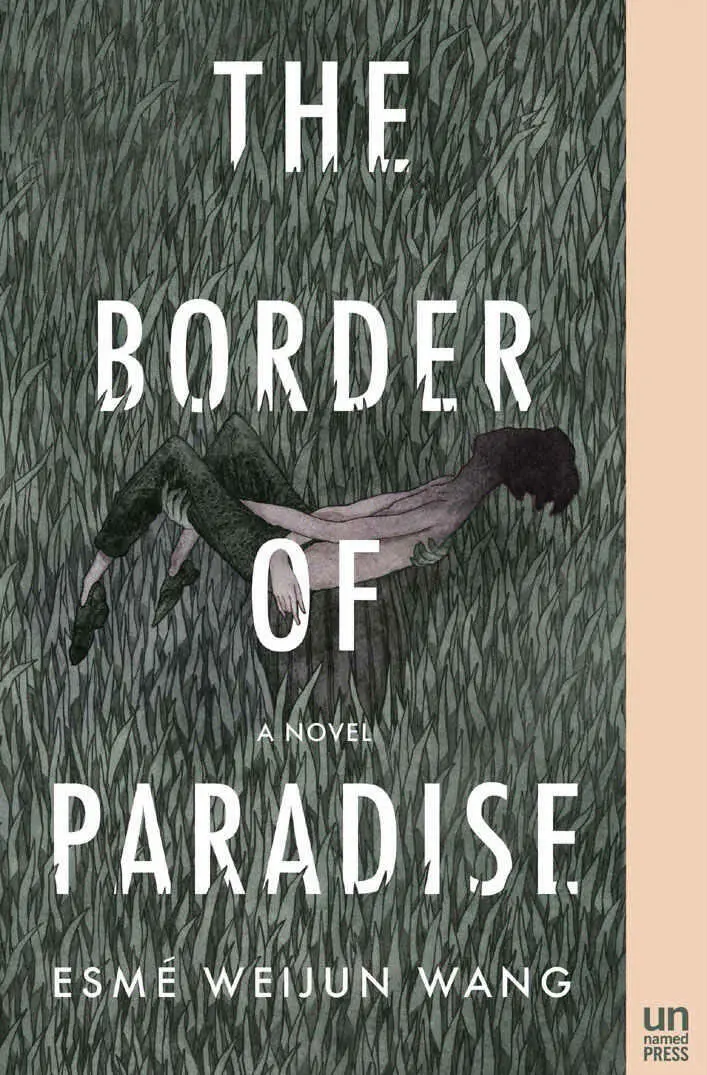
- Название:The Border of Paradise
- Автор:
- Издательство:The Unnamed Press
- Жанр:
- Год:2016
- ISBN:нет данных
- Рейтинг книги:3 / 5. Голосов: 1
-
Избранное:Добавить в избранное
- Отзывы:
-
Ваша оценка:
The Border of Paradise: краткое содержание, описание и аннотация
Предлагаем к чтению аннотацию, описание, краткое содержание или предисловие (зависит от того, что написал сам автор книги «The Border of Paradise»). Если вы не нашли необходимую информацию о книге — напишите в комментариях, мы постараемся отыскать её.
transports readers into the world of an iconoclastic midcentury family.
In booming postwar Brooklyn, the Nowak Piano Company is an American success story. There is just one problem: the Nowak’s only son, David. A handsome kid and shy like his mother, David struggles with neuroses. If not for his only friend, Marianne, David’s life would be intolerable. When David inherits the piano company at just 18 and Marianne breaks things off, David sells the company and travels around the world. In Taiwan, his life changes when he meets the daughter of a local madame — beautiful, sharp-tongued Daisy. Returning to the United States, the couple (and newborn son) buy an isolated country house in Northern California’s Polk Valley.
As David's mental health deteriorates, he has a brief affair with Marianne, producing a daughter. When Marianne appears at their doorstep, the couple's fateful decision to take the child as their own determines a tragic course of events for the entire family. Told from multiple perspectives,
culminates in heartrending fashion, as the young heirs to the Nowak fortune must confront their past and the tragic reality of their future.
The Border of Paradise — читать онлайн бесплатно полную книгу (весь текст) целиком
Ниже представлен текст книги, разбитый по страницам. Система сохранения места последней прочитанной страницы, позволяет с удобством читать онлайн бесплатно книгу «The Border of Paradise», без необходимости каждый раз заново искать на чём Вы остановились. Поставьте закладку, и сможете в любой момент перейти на страницу, на которой закончили чтение.
Интервал:
Закладка:

There are moments I can pinpoint in my life where I look and say, “This is where it decayed.” Like the first bruises on a fruit that suddenly rots without warning.
One morning I woke up and the chandelier was askew. The paintings of flowers — even the flowers had seemed to wilt — tilted on their nails. Our clothing was everywhere but not shed from our bodies; rather, someone had pulled them from their hangers and onto the floor and the chairs. I thought I was dreaming in the light and pulled myself and my heavy belly out of bed. I pressed my fingers into my skin and felt their strength: I wasn’t dreaming. It was February. Morning fog clouded the wide windows. I called David’s name, and when no one answered I checked the bathroom and then the parlor. What was new and what was old? How had I not noticed the paper containers stained with grease, the bags on their sides like fallen soldiers? David was gone, and I was too afraid to leave.
In the afternoon he came back with his peacoat buttoned and his shirt wrapped around his bleeding hand. I had been chewing the insides of my cheeks and flipping through old issues of Life, not reading any of it but needing to do something with my fingers.
“Your hand, what happened? You went to where?” In panic I pulled him to the sofa. He seemed confused. “Where?” I repeated. I tried to unwrap his makeshift bandage to see what had happened. He resisted, but my terror was stronger; I had never seen him behave this way before. His hand was covered in haphazard, deep gashes split with open sides: palm, back, fingers, a map on top of a map of scars, wounds so open that I thought the sides would never come together, and I pressed my own hand to my mouth to keep from screaming.
When Farmer Chu died, Fatty told me that her mother believed he had been possessed by a hungry ghost. My mother was not as superstitious as Fatty’s, and I wasn’t raised with such beliefs. But Fatty was adamant about the reasons for her father’s death. In his drunkenness he often wandered the streets at night, where any hungry ghost could have taken possession of his body. He could have encountered a snake or fox, or even fucked a beautiful ghost-woman in a neighbor’s field. Why else would he feed himself to pigs? I searched David’s coat pockets and found a bloody knife, and I cried. Yet I was in America. There were no hungry ghosts in America. I thought about Mrs. Nowak, and what she had said about her son: “He’s crazy .” The question was where the craziness came from. Was it in the spirit, or in the blood? I kept crying as I rewrapped the shirt around his hand. He sat on the couch until I told him to get into the bed, and he did that, like an obedient child, still in his peacoat, and stared at the ceiling and muttered to himself.
I was afraid to leave David in the room alone. I washed the knife and kept it in my purse until I could throw it out the window. I disposed of it in the middle of the night, chanting prayers as I did so, and then I watched him sleep with a bloody rag wrapped around his hand, red spotting the sheets.
He slept for only one or two hours at a time. The rest of the time he continued to stare at the ceiling. Sometimes he talked to himself, or shouted. Maybe he was talking and shouting at me, but I wasn’t certain. I had a difficult time understanding what he was saying, and I didn’t know if it was because he was speaking nonsense, or because my English wasn’t as good as I wished it to be. I stayed awake by pinching myself, careful not to pinch myself too hard lest it disturb the baby, and I also sang to myself all the old songs I knew, and the American bar songs, too. I lay beside David in the bed, crawling under the blankets, and I sang to him, but after accidentally falling asleep once I stopped lying in the bed with him and walked around the bedroom instead, in circles like a mindless donkey.
Day and night came the same. The fog swelled against the windows, and then the rain, which pinged on the glass and then pounded at it.
I took his wallet on the third slow day and put it in my purse. I checked the room for anything dangerous before I left. I had to return quickly so that nothing could happen, but I had to leave because there was no more food, not a single stale bun or grain of rice, and I was both dizzy from hunger and afraid for the baby. I took the elevator down to the lobby and stepped into the daylight, where crowds were scurrying up and down the sidewalk, teeming with the small, icky motions of their arms and legs.
I had not been outside of room 333 in months, and the emergence felt like falling. The sky seemed larger — I wasn’t standing beneath the heavens, but feeling the heavens suck me up in all directions. In a cloud of voices I waddled toward the biggest street that I could find. I’d had to fashion clothing to accommodate my belly: one of David’s shirts, tied at the waist; a yellow dress turned upside down and tied with a leather belt for a skirt. Everyone looked, frowning at my getup — looked at me, my small-eyed face, the darkness of my hair. A woman stopped and shook her dandelion head. I walked until I found a food store, and swiftly I picked up a loaf of white bread, a bag of oranges, and cheese, even though I had never liked cheese, but David did. I went to the counter, where a man with hair the color and sheen of tar was smoking a cigarette. He sorted through my things. No, I couldn’t care about the looks I received, or the shame, because I needed my thoughts to be so powerful that David would remain sleeping until I got back to the hotel. I was focusing with such concentration that I didn’t realize the man at the counter was speaking to me, but I didn’t care to understand because I needed to pay and leave, and I needed to get back to my husband or something terrible would happen. He said it again anyway: “ ______ Chinatown?”
I nodded. Of course. I paid him. To hell with him, to hell with Chinatown, to hell with all of them.
I could barely walk, so heavy were my things, so heavy was my belly, but I went back to the hotel. My heart was thumping, thumping, thumping. I gave the black man in the elevator a coin, and then I ran to the door. Again I felt myself on some kind of brink. I unlocked the door and I banged the door open and then closed as I went through the ruined parlor into the bedroom.
David was awake and sitting. His eyes were red. The skin beneath them sagged. “Where did you go,” he said. His bandaged hand lifted, and swatted at the nothingness in front of his face.
EROTICISM. DAVID (1954–1956)
I admit that for too long I only knew my wife as erotic. I don’t mean that she was wild and thrashing, or frothing at the mouth with her hand up her skirts. I meant that she was exotic to me, and that was the primary pleasure that I derived from her, I confess.
One might ask: Do I regret that we hadn’t had a Catholic wedding? I regret that I had to, in a sense, instruct a blind man in the art of color theory. I met her on her terms. Off the plane after a long-haul flight, I felt the new air first, a wet blanket that smothered everything, that smelled of not-quite-rotting garbage and, faintly, sewage. On the cart into the port city of Kaohsiung, with the wheels rattling below me such that my teeth clattered and clacked unless I clenched my jaw shut, I heard the words of people cawing in the same steady waves as the warm air that never lifted, the same air that pressed against the windows like hands.
Taiwan wasn’t what I had expected. If you weren’t there when I was you can’t know what I mean. If you’ve been there recently, and seen the modernity of what was once a third-world country, you know half of it. Imagine the roofs barely held together and the billboards covered in mysterious slashes and dots. Such a conflagration was the only thing I could understand after New York. I’d gone down to my white bones. I’d scalped my skull, cracked it open, and seen the putrefying brain beneath. The last thing I wanted to think about was how hard it was to be a person and how hard it was to be alive.
Читать дальшеИнтервал:
Закладка:
Похожие книги на «The Border of Paradise»
Представляем Вашему вниманию похожие книги на «The Border of Paradise» списком для выбора. Мы отобрали схожую по названию и смыслу литературу в надежде предоставить читателям больше вариантов отыскать новые, интересные, ещё непрочитанные произведения.










Обсуждение, отзывы о книге «The Border of Paradise» и просто собственные мнения читателей. Оставьте ваши комментарии, напишите, что Вы думаете о произведении, его смысле или главных героях. Укажите что конкретно понравилось, а что нет, и почему Вы так считаете.